Login for Member Savings
Sign in to unlock exclusive member discounts up to 15% on this luxury voyage.
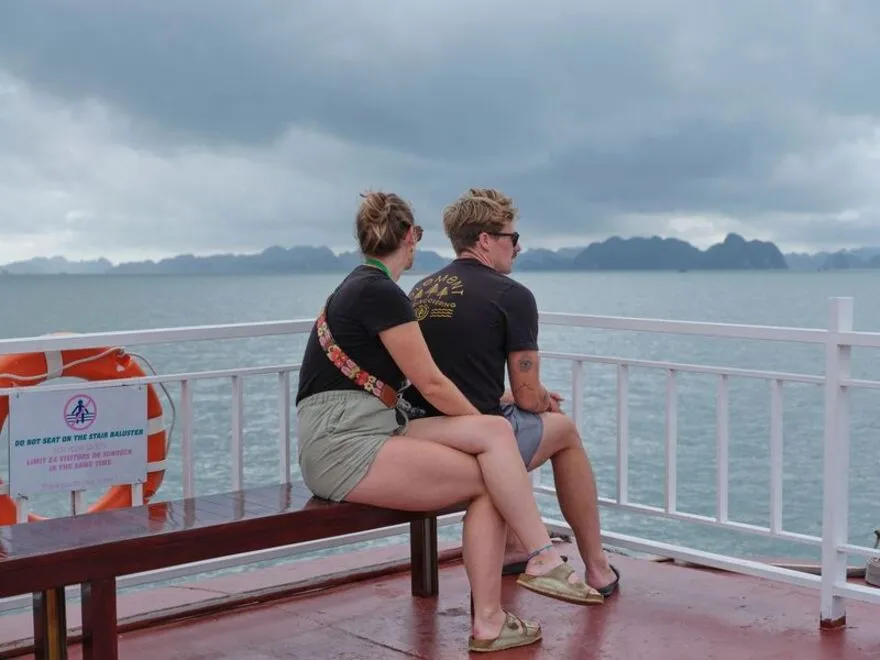
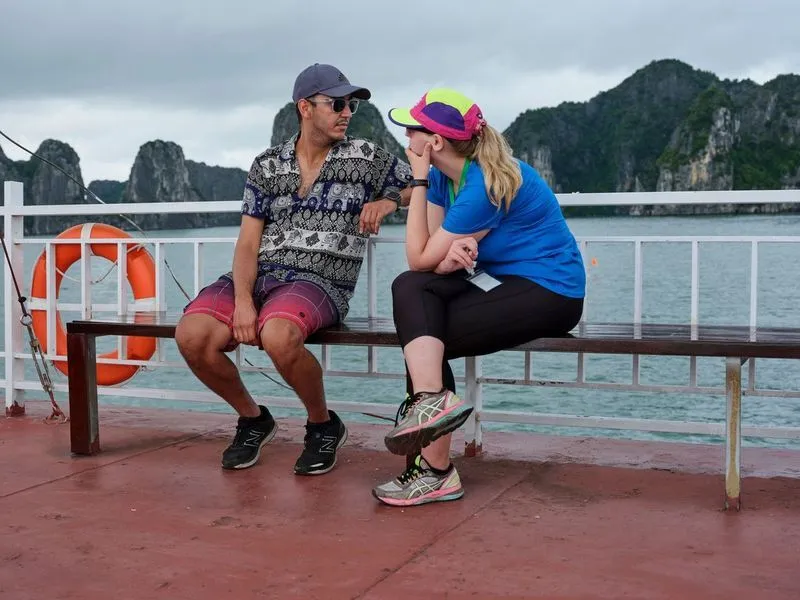
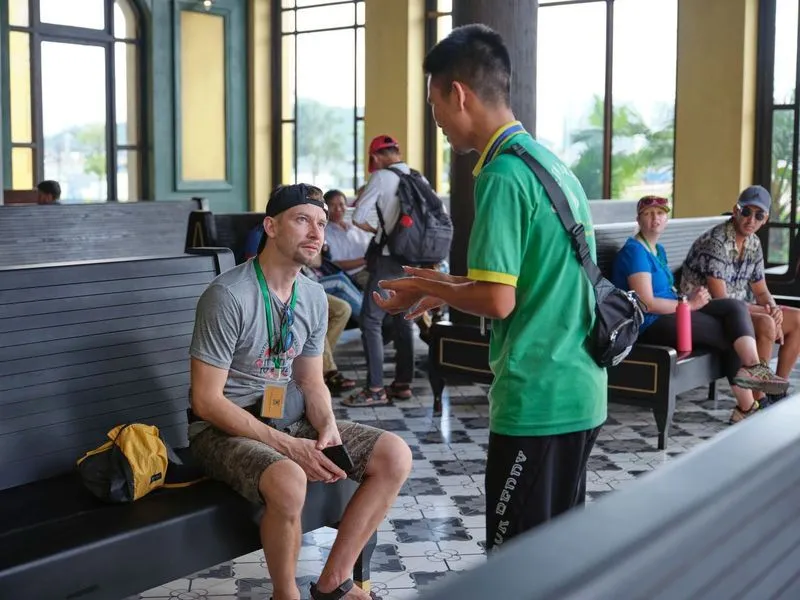
The transformation of Quang Ninh tourism over the past decade is not simply a growth in tourist arrivals, but is actually a revolution in thinking about heritage exploitation. From rudimentary wooden wharves, Ha Long has grown to become a high-class tourism brand with a synchronous infrastructure system, where each tourist experience is meticulously calculated to achieve a balance between conservation and development. In that overall picture, the 48-seat bay cruise ship segment emerges as a strategic “green zone”, acting as the main blood vessel regulating the flow of the service ecosystem on the bay.
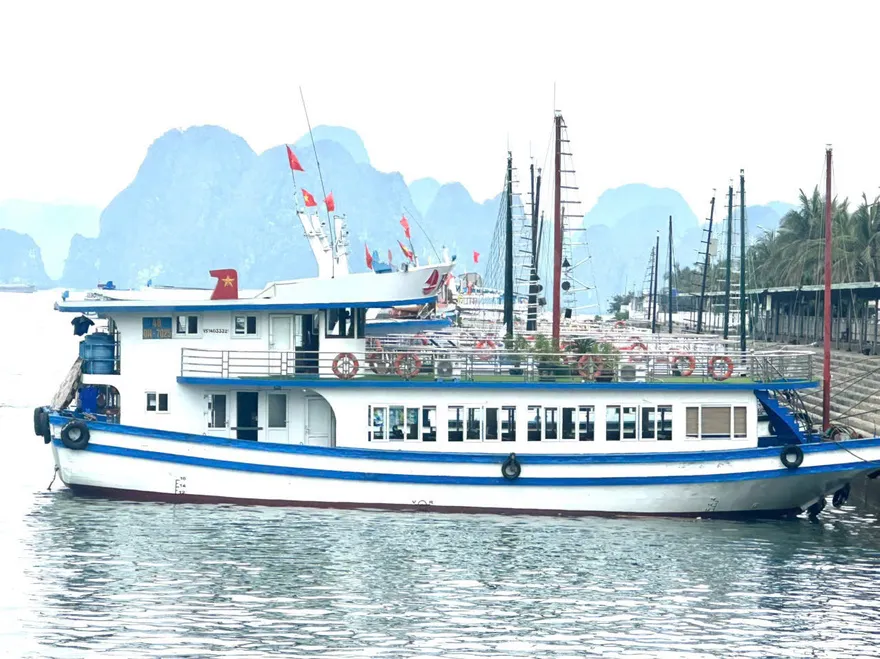
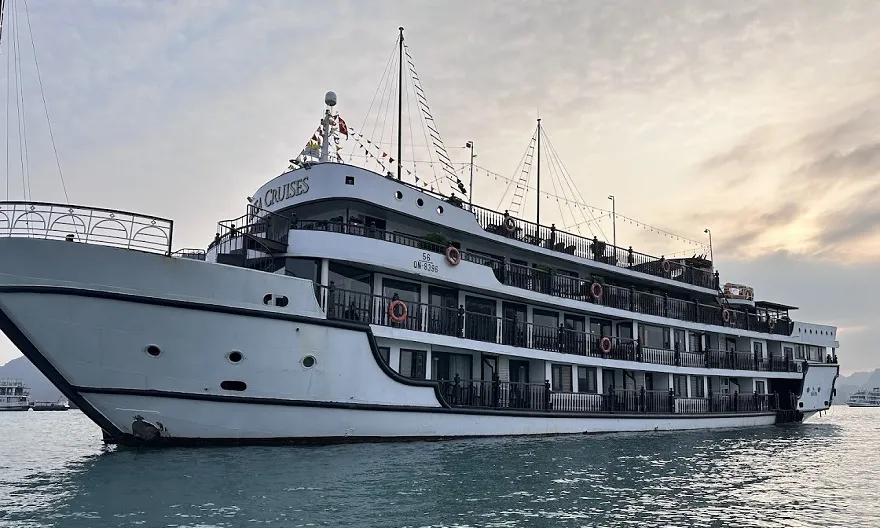
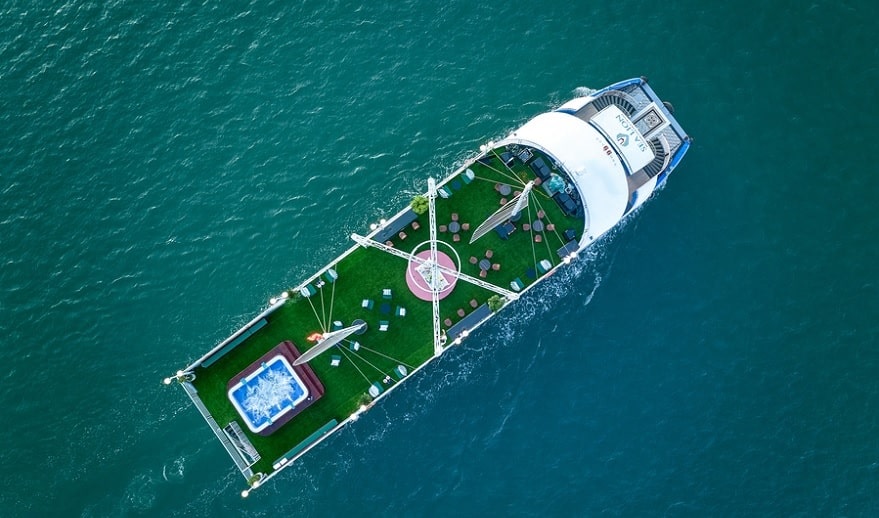
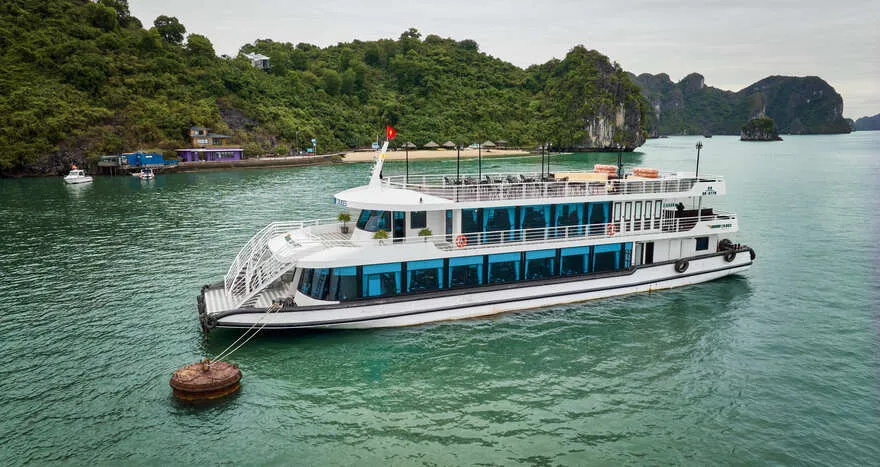
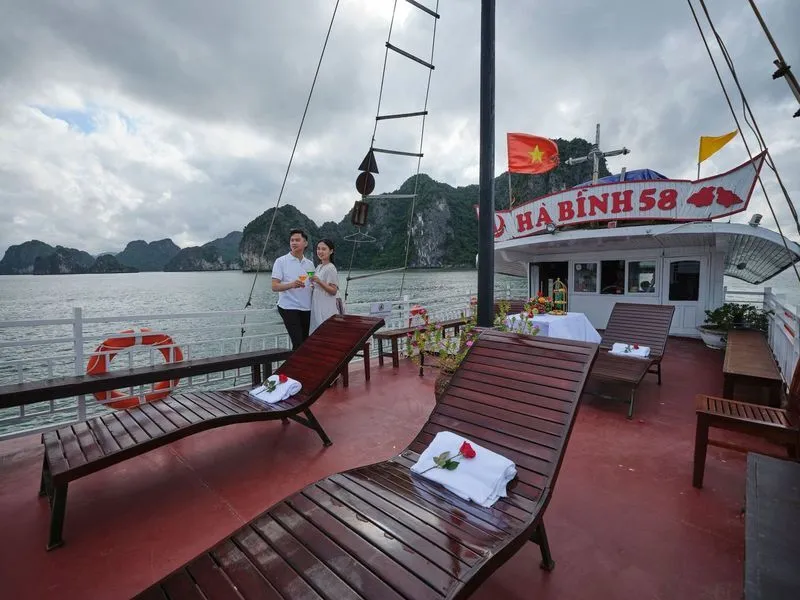
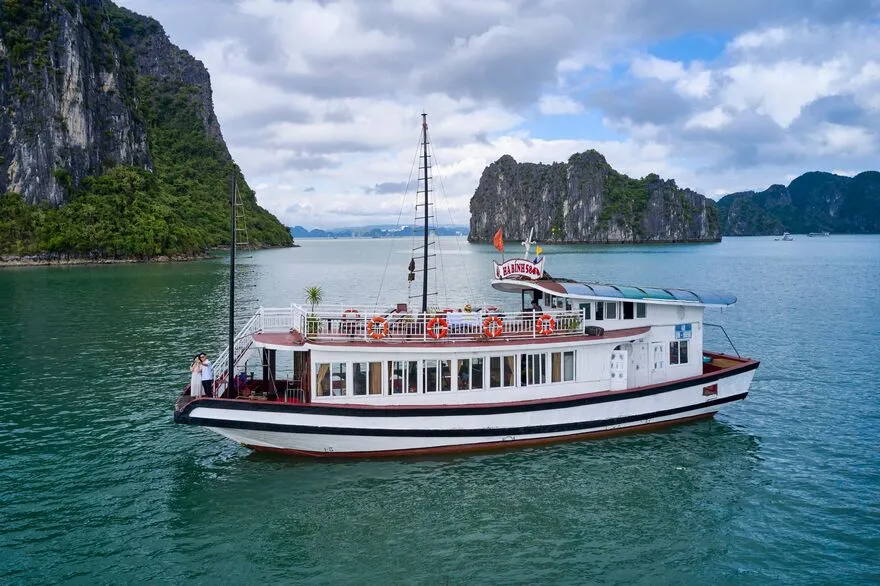
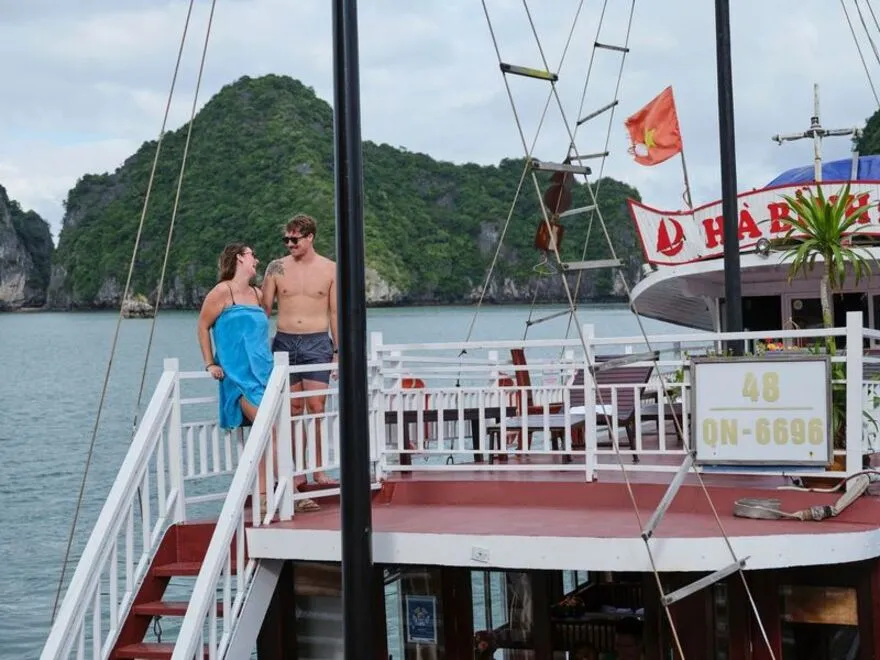
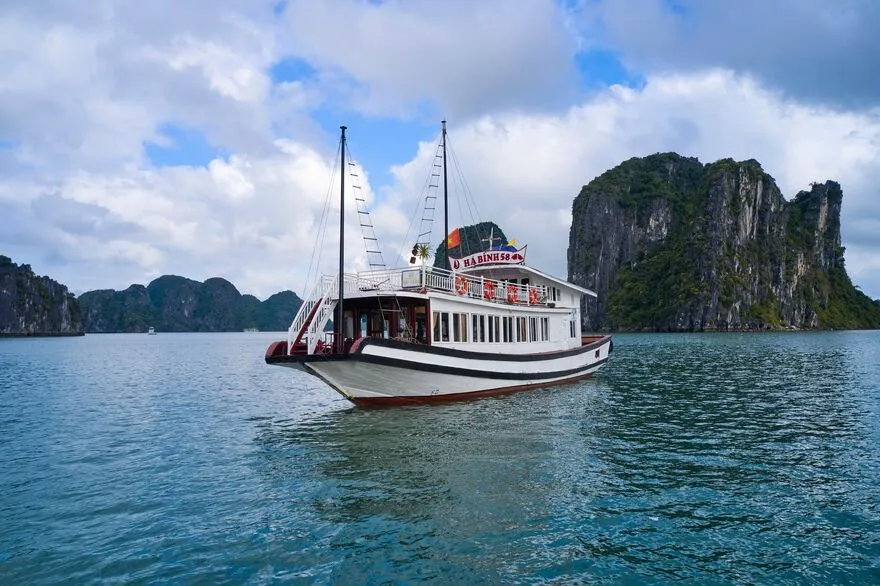
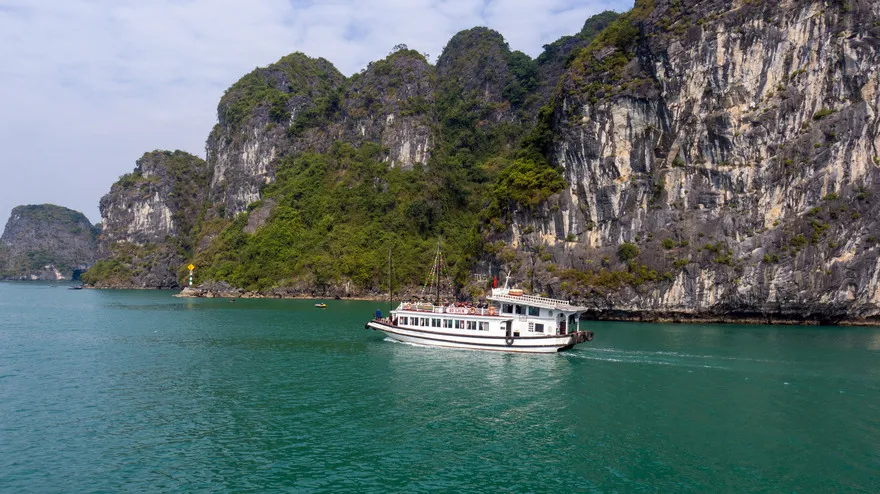
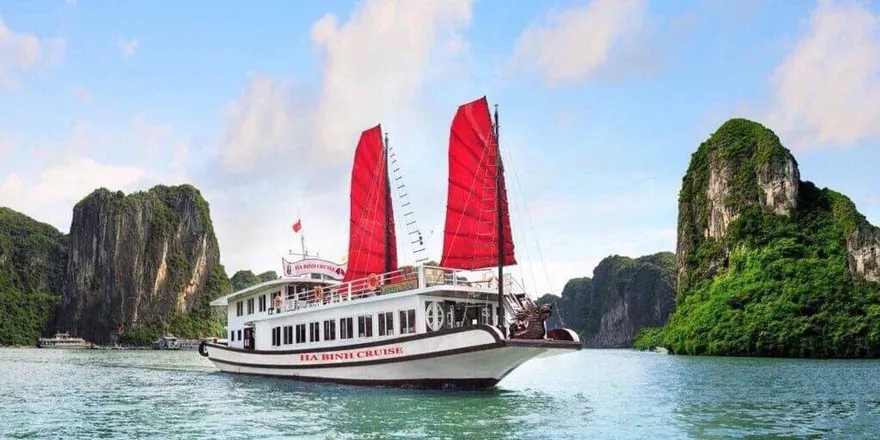
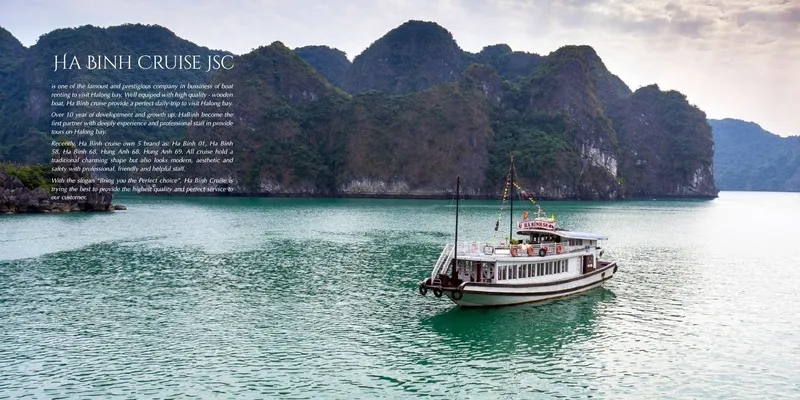
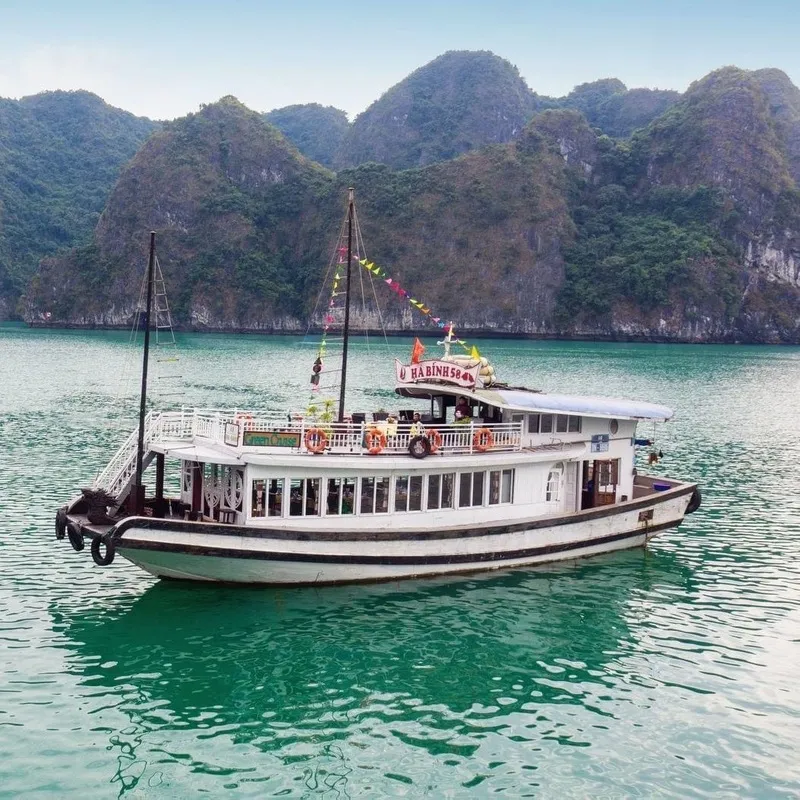
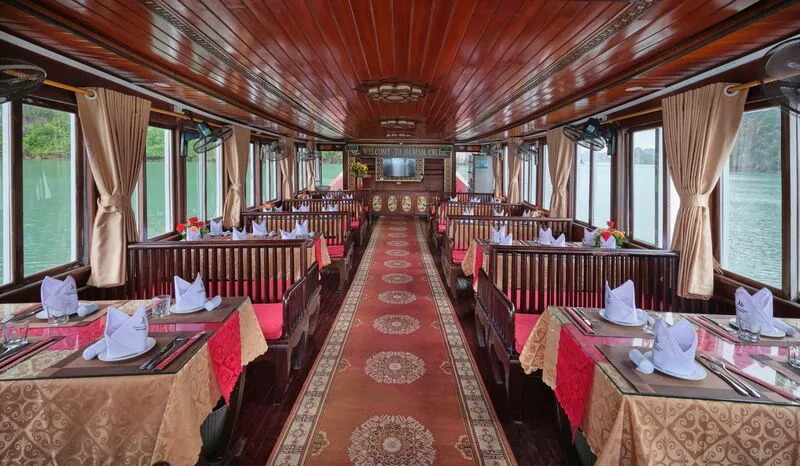
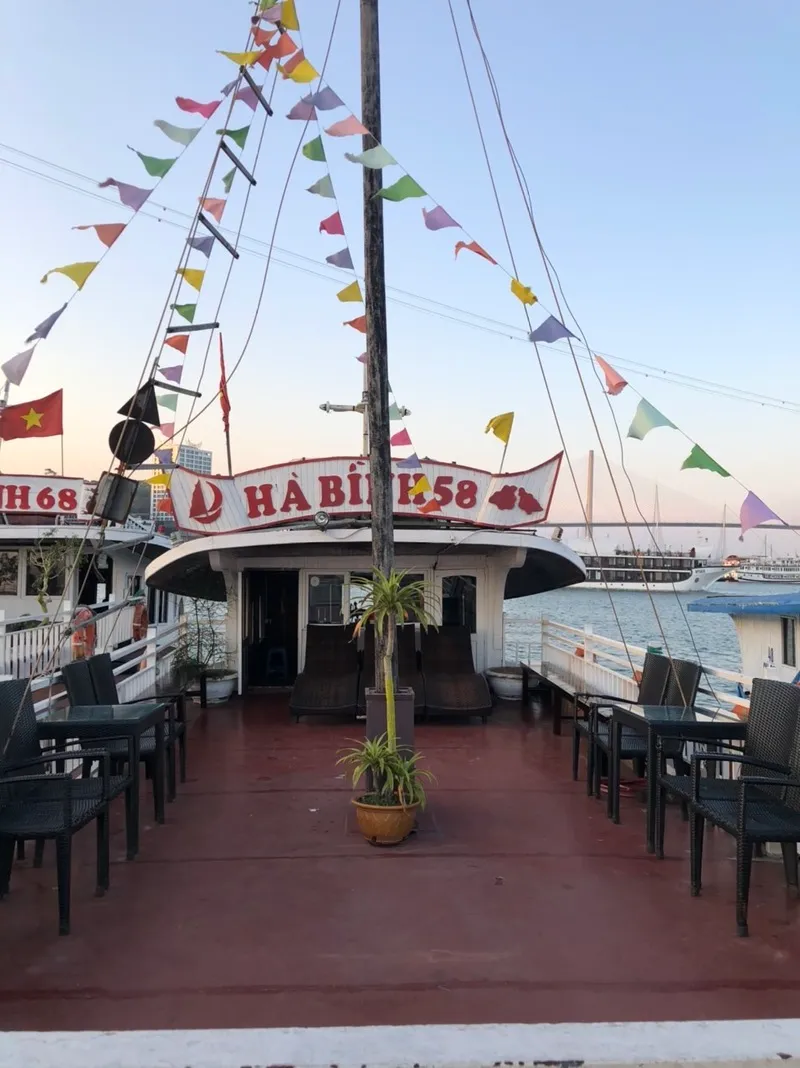
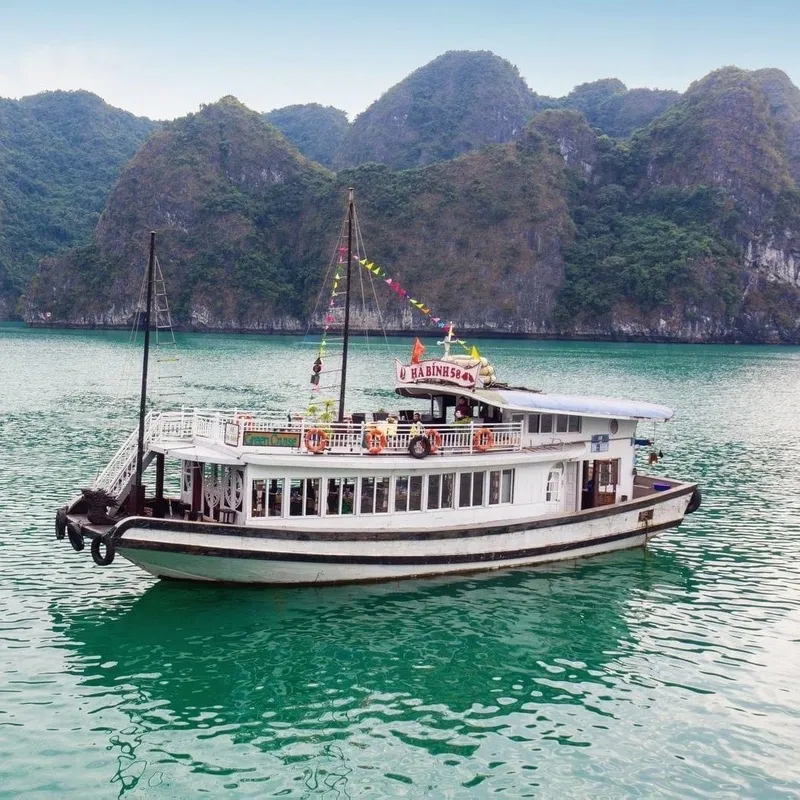
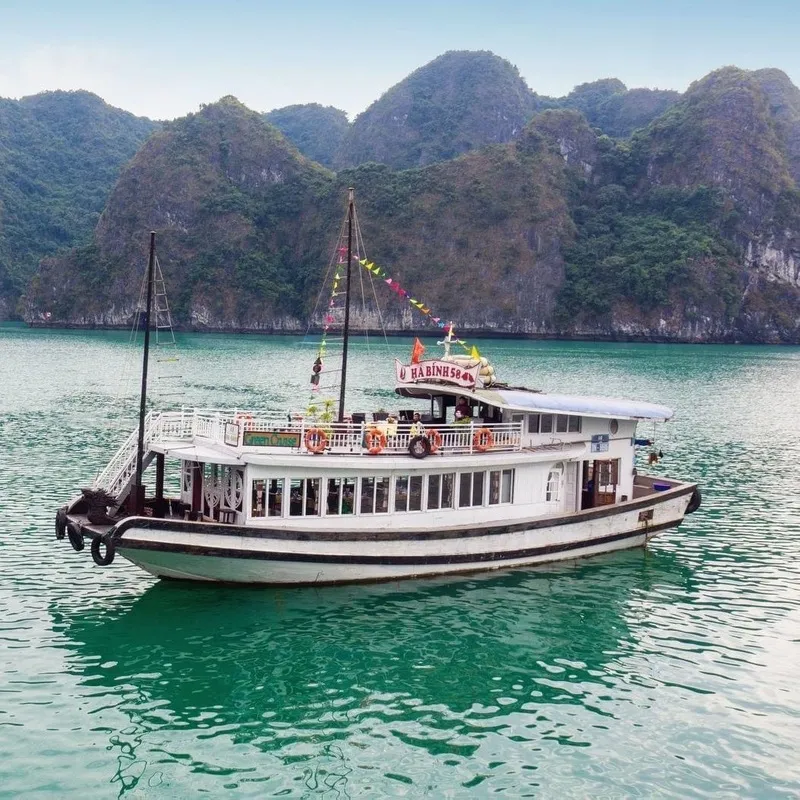
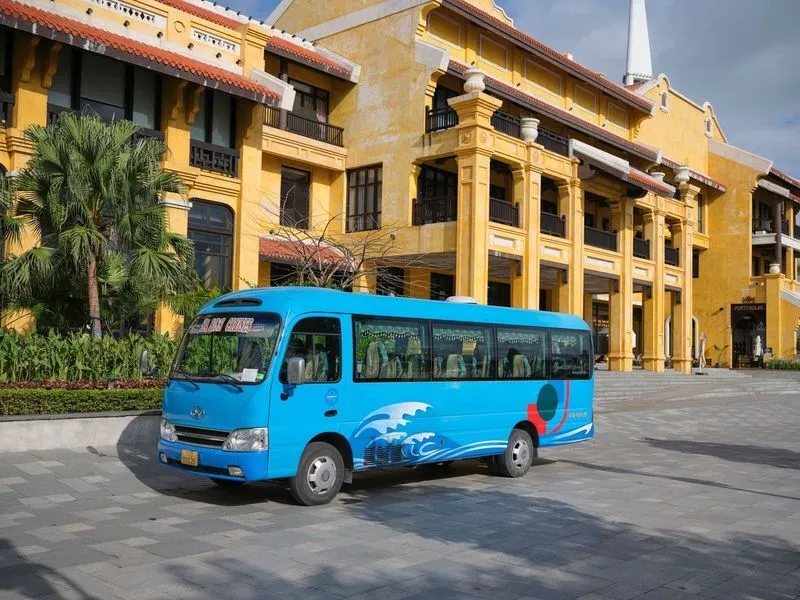
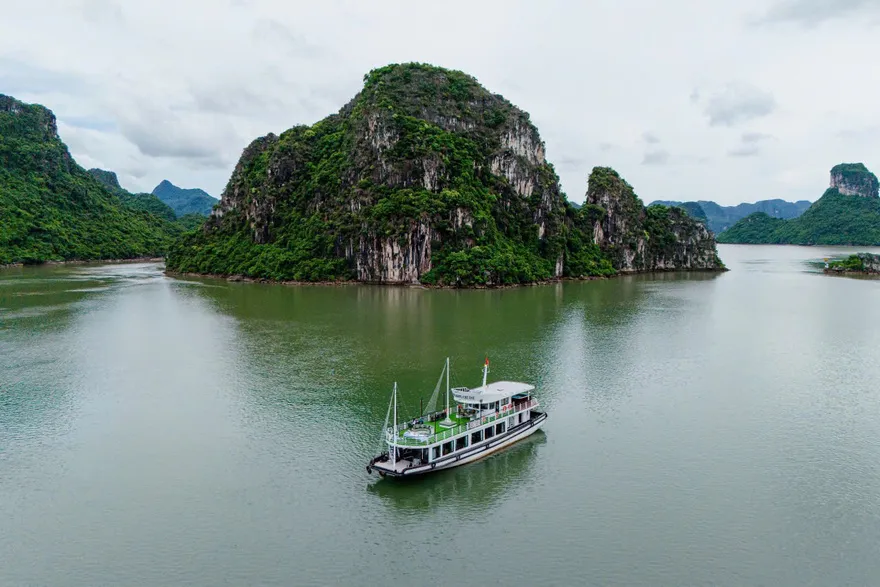
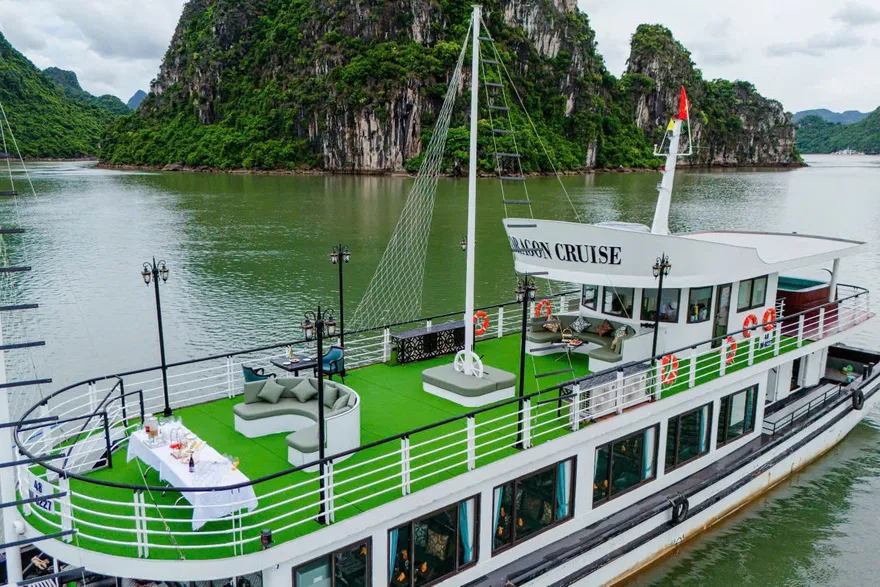
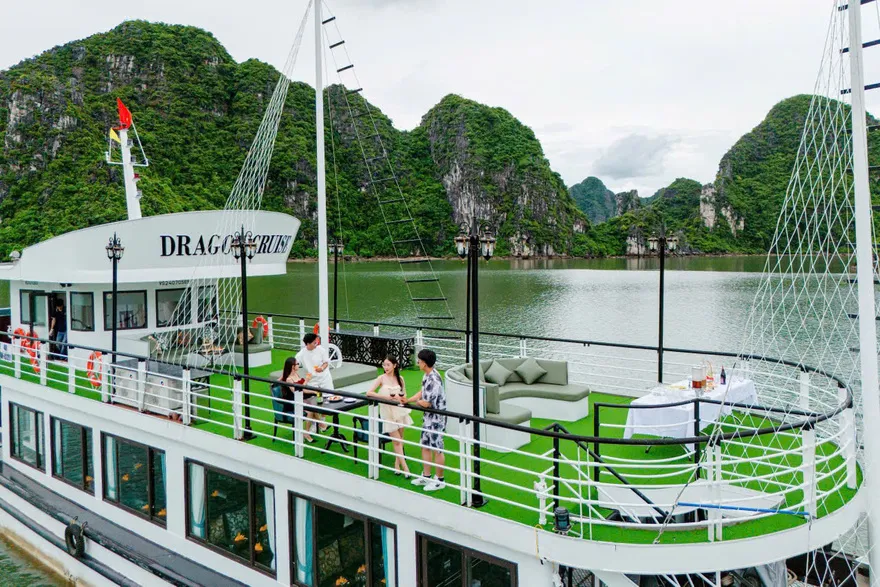
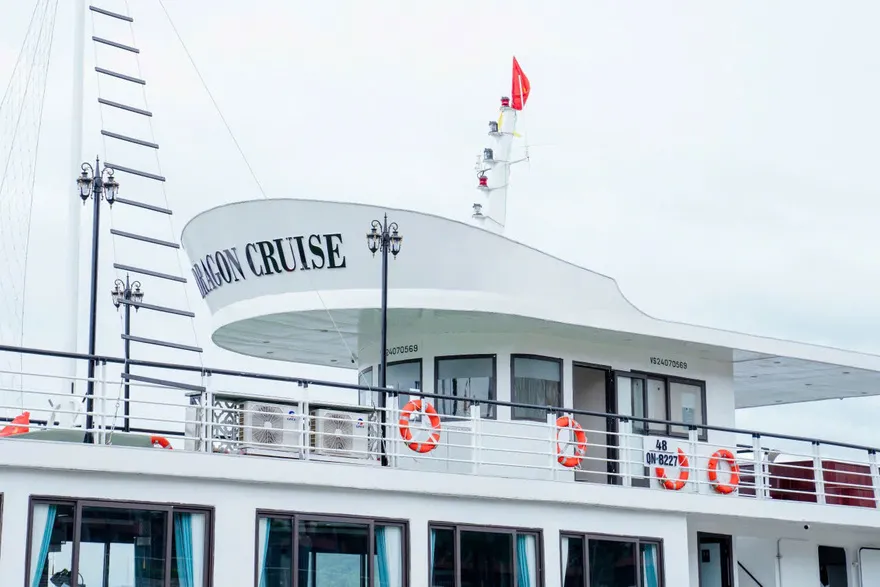
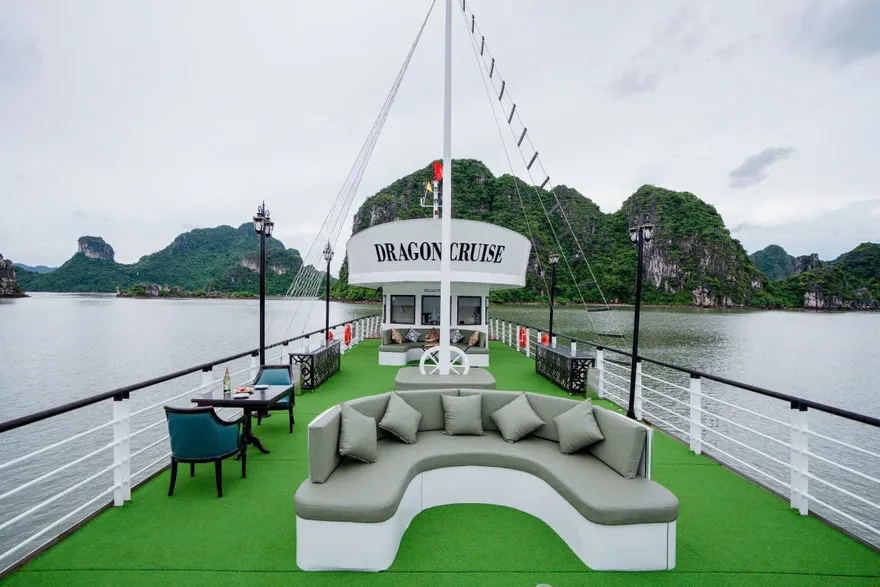
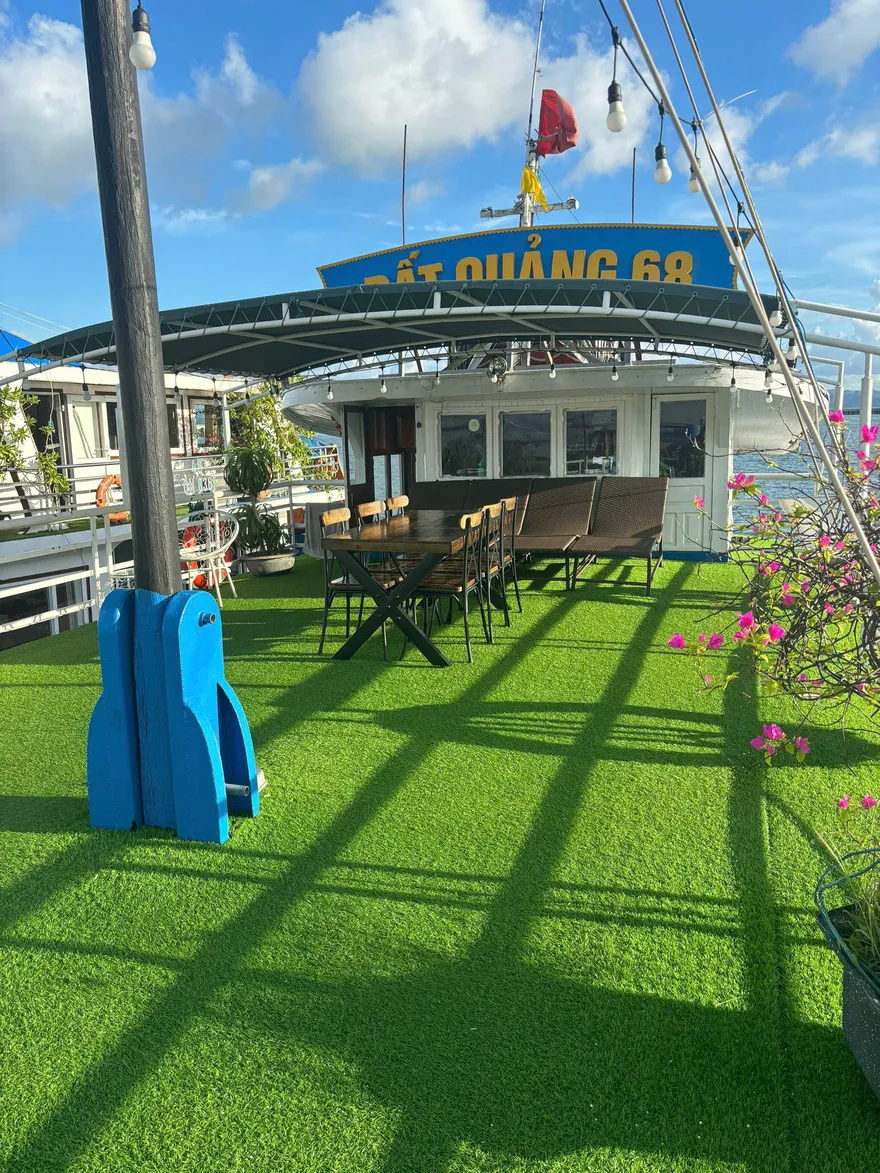
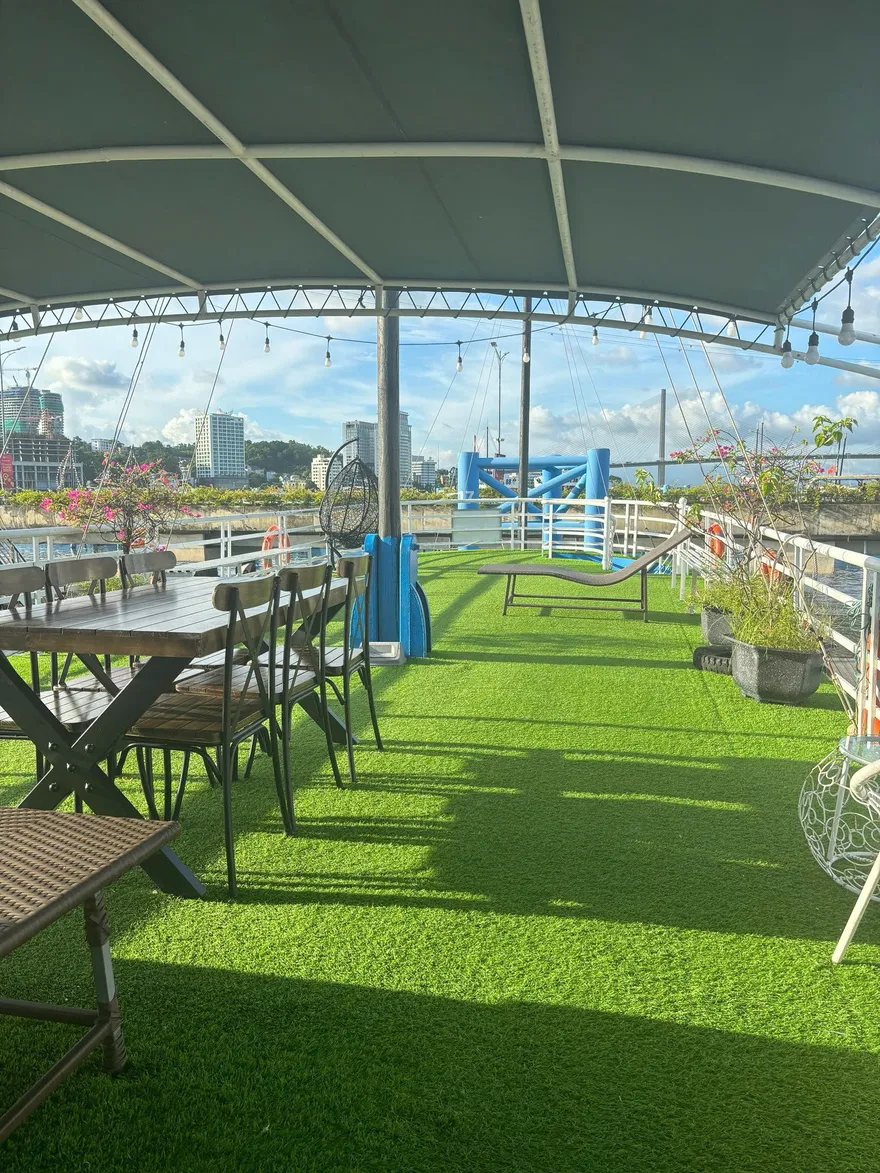
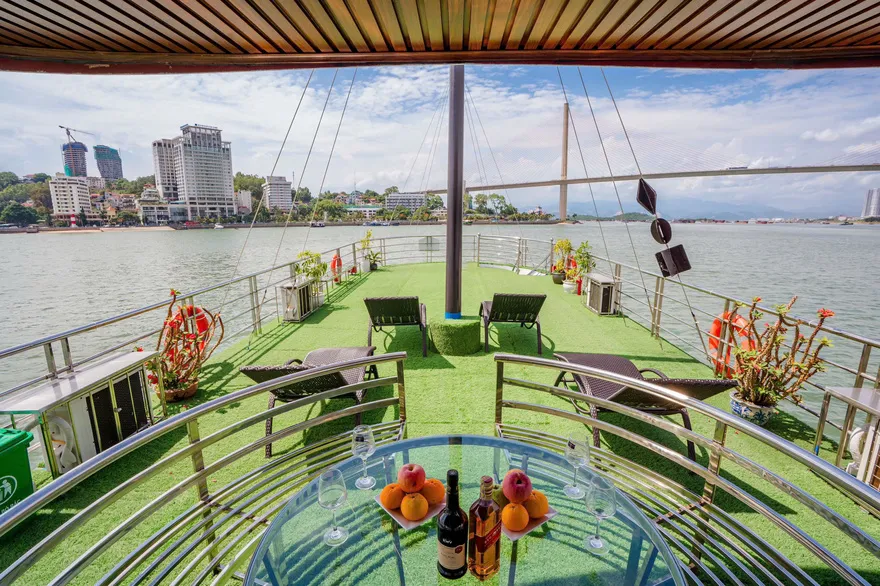
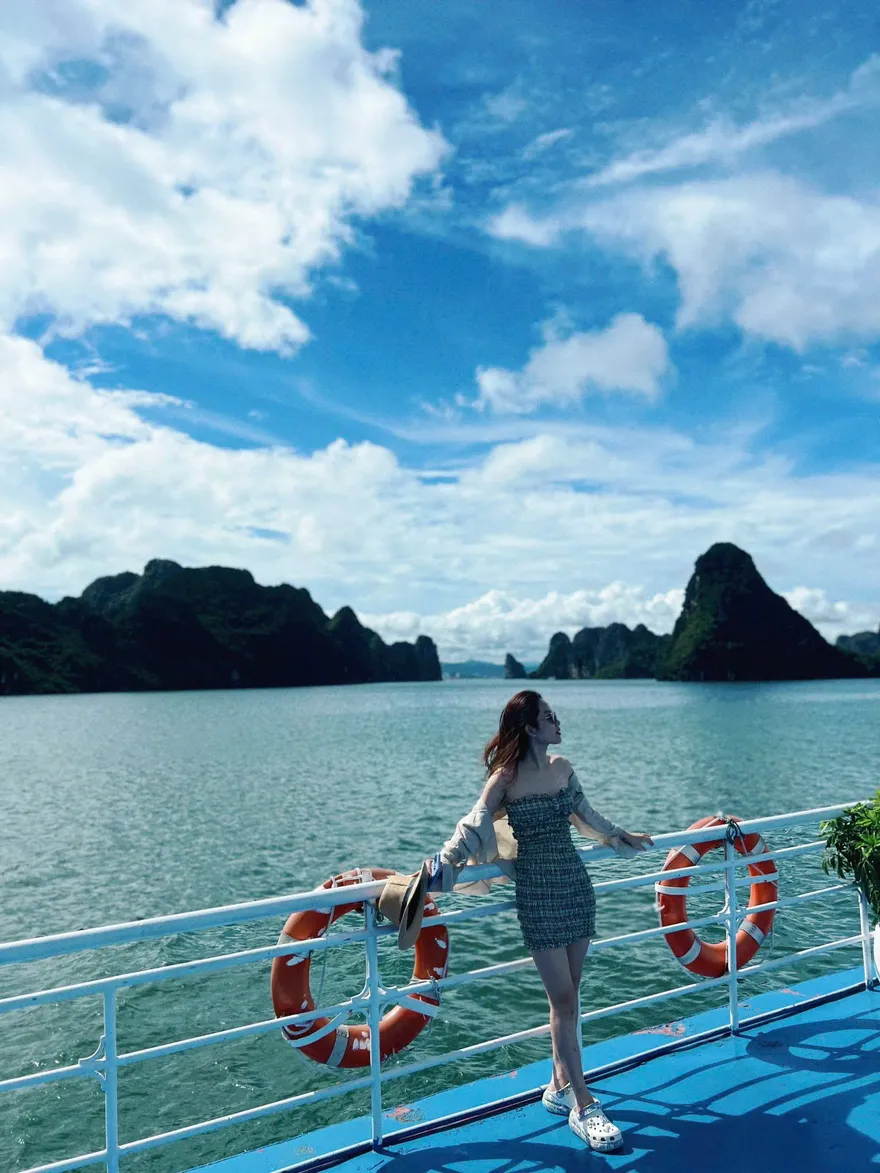
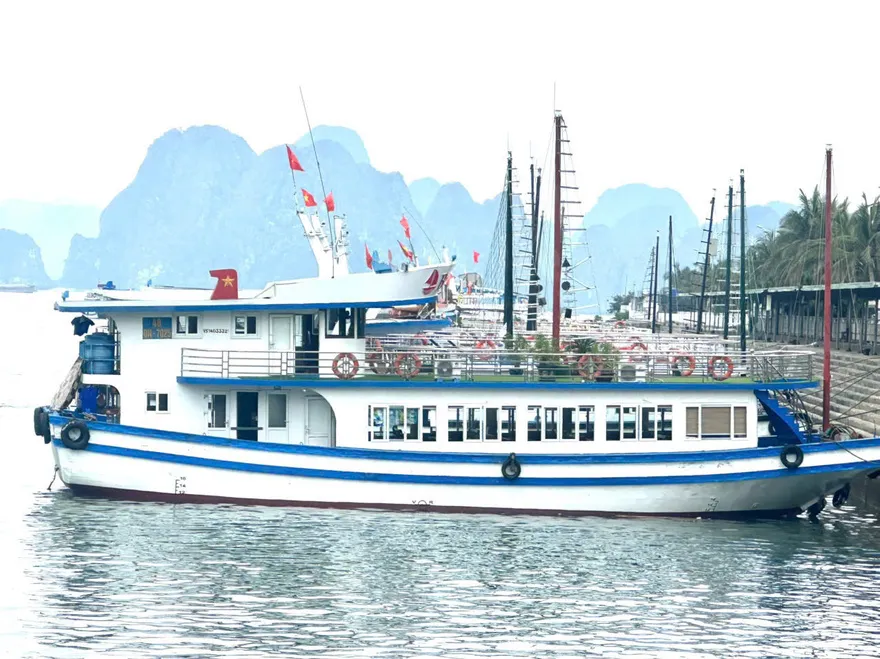
48-seat bay visit boat
The reason this type of vehicle is considered the “backbone” is because it possesses absolute flexibility that superyachts with hundreds of guests cannot have. The current period marks an important milestone when safety and environmental standards are raised to a new level. The application of the QR Code electronic ticket system and the expansion of tour routes is not just a story about administrative management, but an effort to digitize the heritage experience, helping visitors access natural wonders more transparently and professionally than ever. So, what makes the 48-seat ship the “national” choice in the hearts of tourists? The answer lies in an extremely subtle psychological touchpoint: The intersection between privacy and economic efficiency.
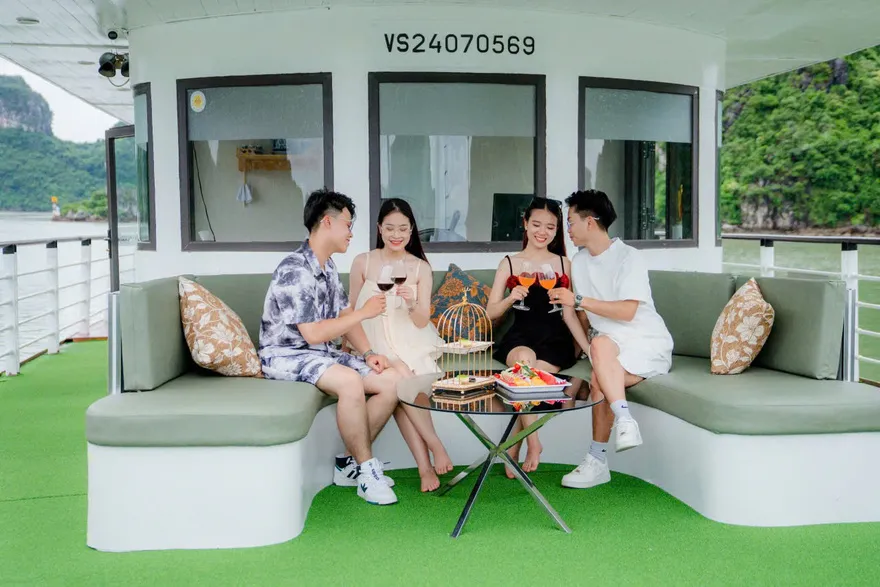
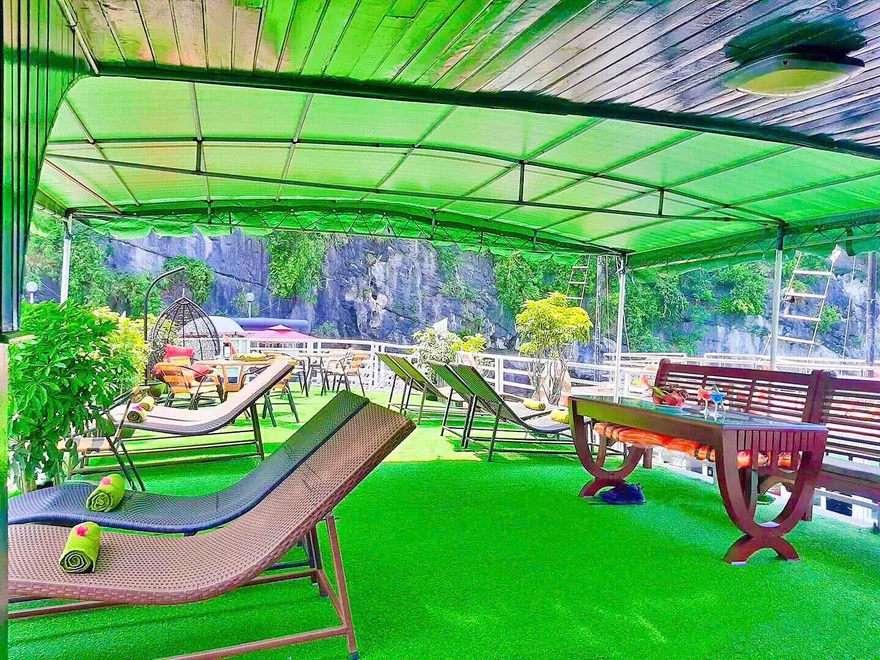
1. “Own the space” mentality: For a group of family or medium-sized companies (about 20-40 people), renting an entire 48-seat ship creates a feeling of complete “ownership”. They don’t have to share the deck with hundreds of strangers, and they don’t have to wait in line at the buffet counter. The ship now becomes a “mobile office” or a “large living room” in the middle of the sea, where all personalized requests are quickly met.
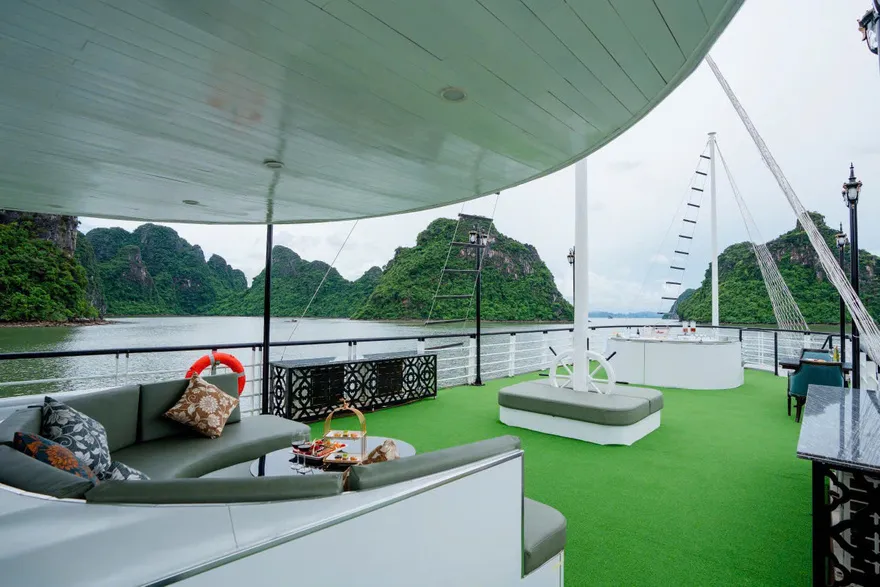
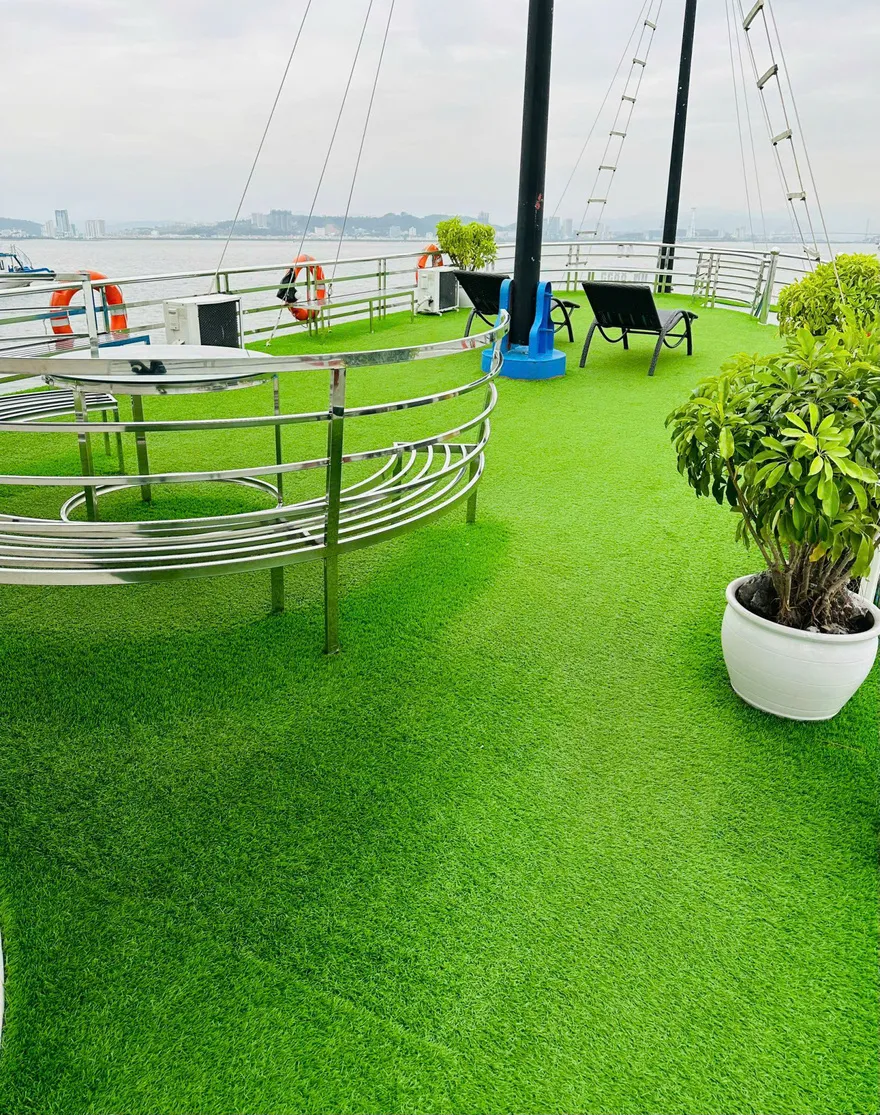
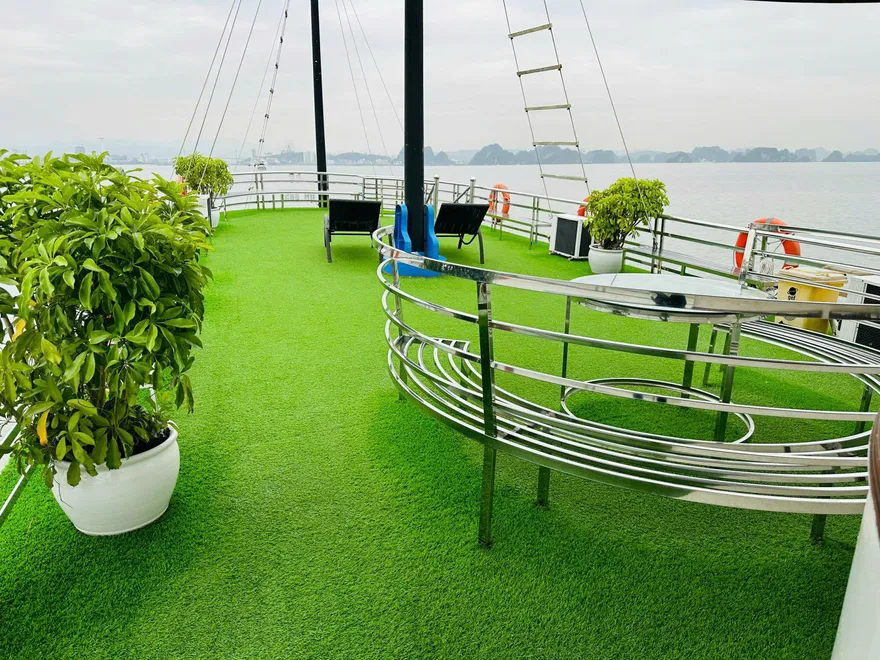
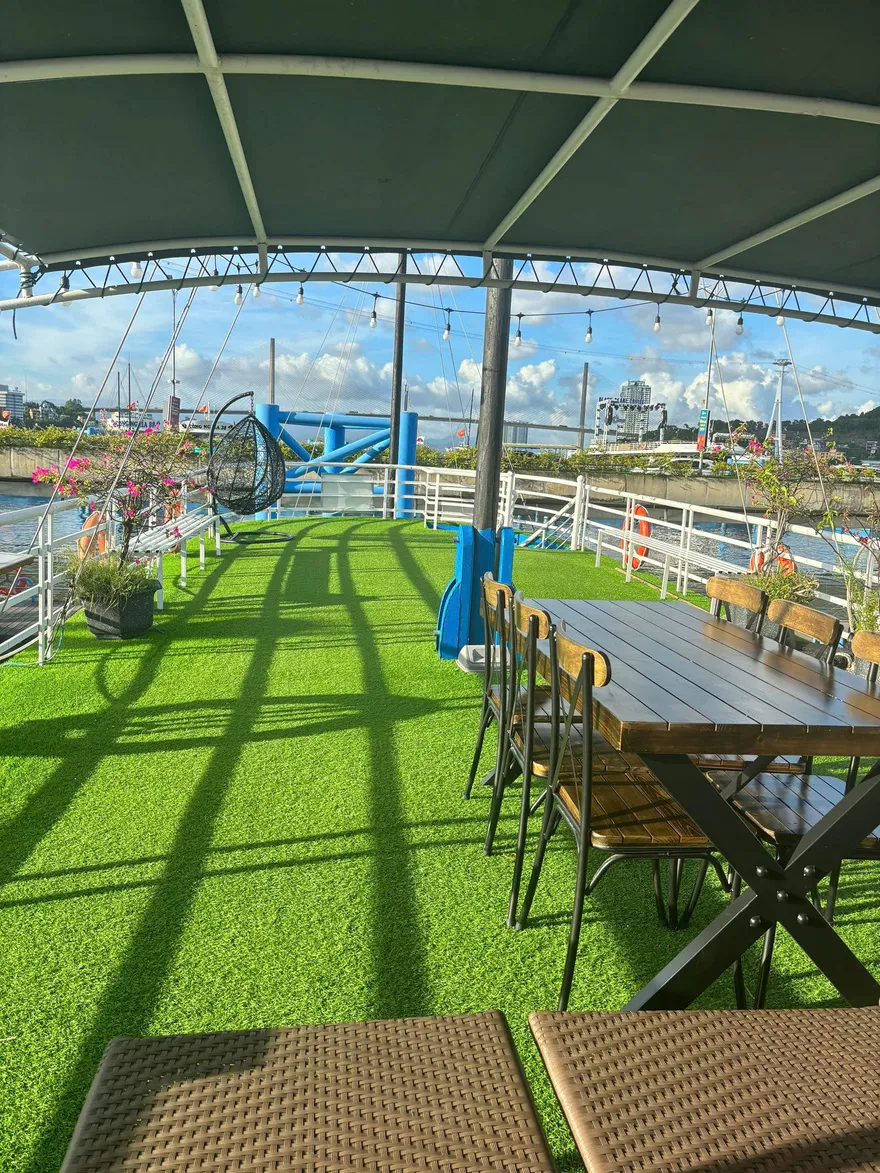
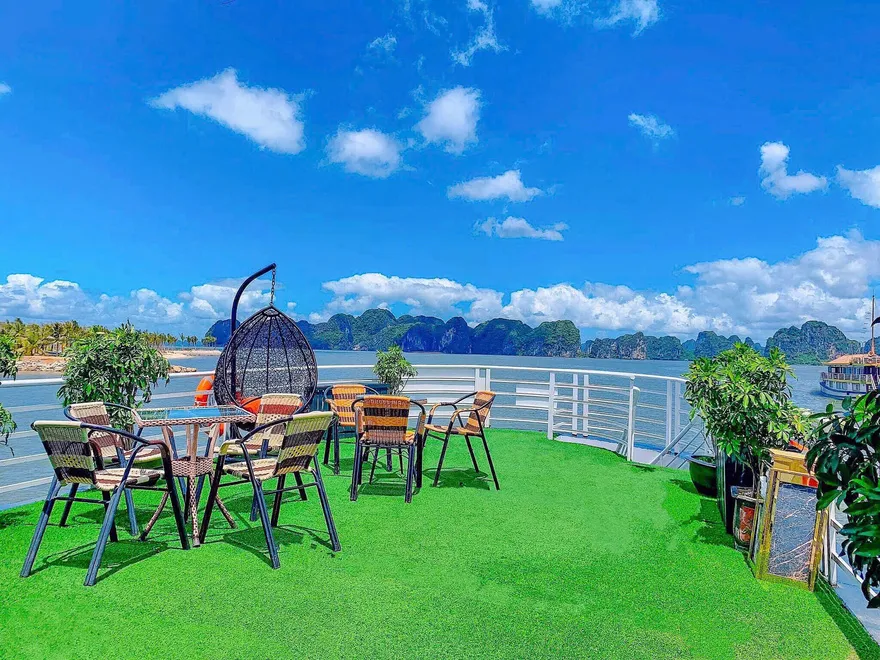
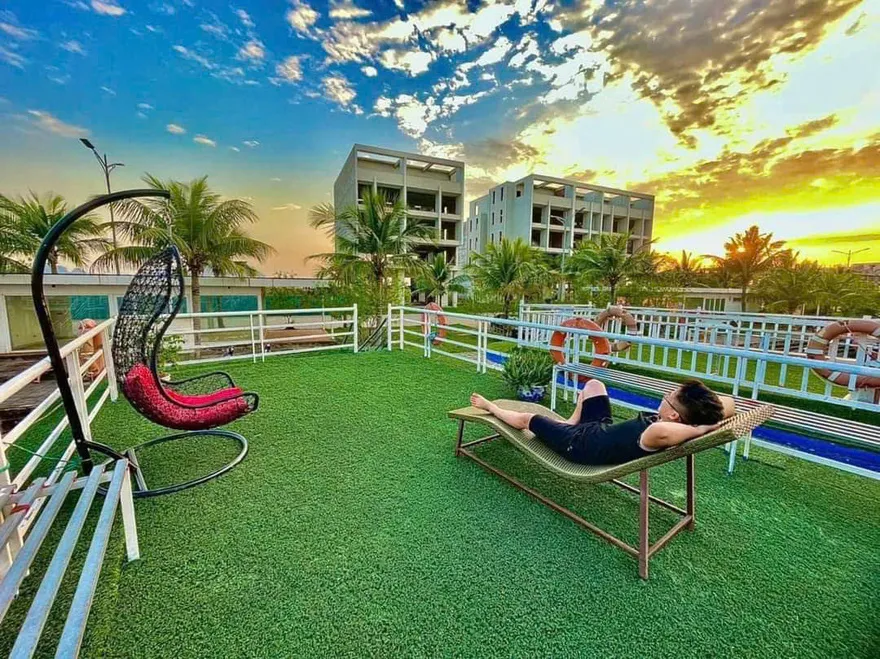
2. Budget balance: If speedboats (Cano) bring speed but lack living space, and super yachts bring luxury but are expensive, then 48-seat ships are the perfect “falling point”. Guests feel they are receiving outstanding service value for money (Value for money) – from hot seafood lunch to airy sundeck space to “check-in” without getting in the way.
3. Feeling of absolute safety: The strong shift from wooden-hulled ships to new-generation iron-hulled ships with modern fire protection equipment has rightly tapped into the “peace of mind travel” mentality of post-pandemic customers. They are willing to pay a little more in exchange for the stability of the iron ship and the professionalism of the operating team.
The transformation from wooden hulls to iron hulls in the 48-seat ship segment is not simply a change in shipbuilding materials, but is actually a big step forward in redefining the philosophy of serving tourists. In the past, wooden ships with brown sails were eternal symbols, carrying within them the rustic “soul” of heritage. However, as people’s needs gradually move from “durable food and clothing” to “enjoyment and safety”, the technical limitations of wooden ships such as poor insulation, cramped cabin space and barriers in installing modern comfort systems have gradually become apparent.
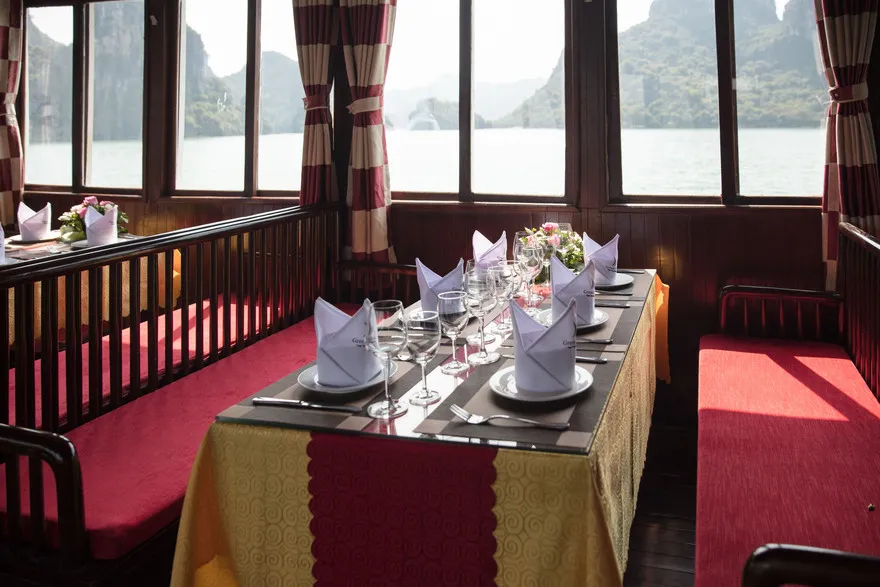
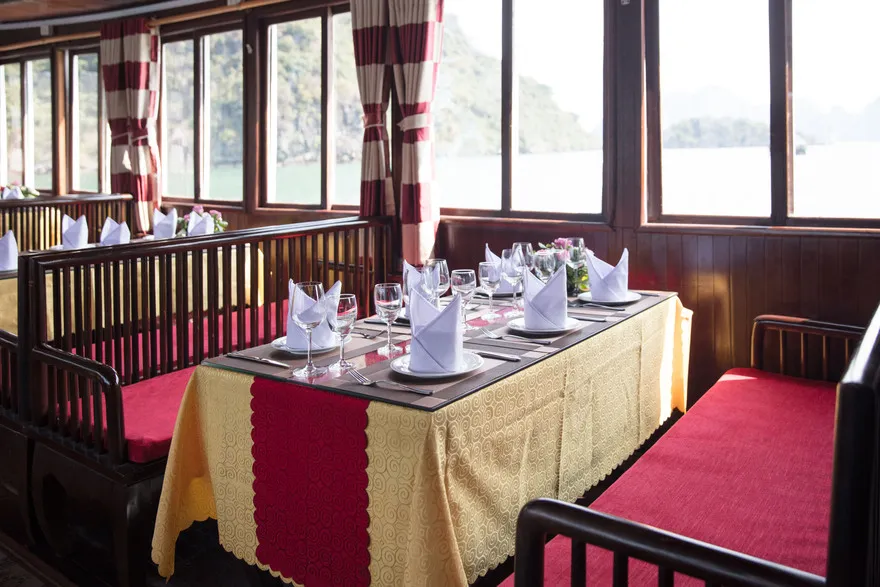
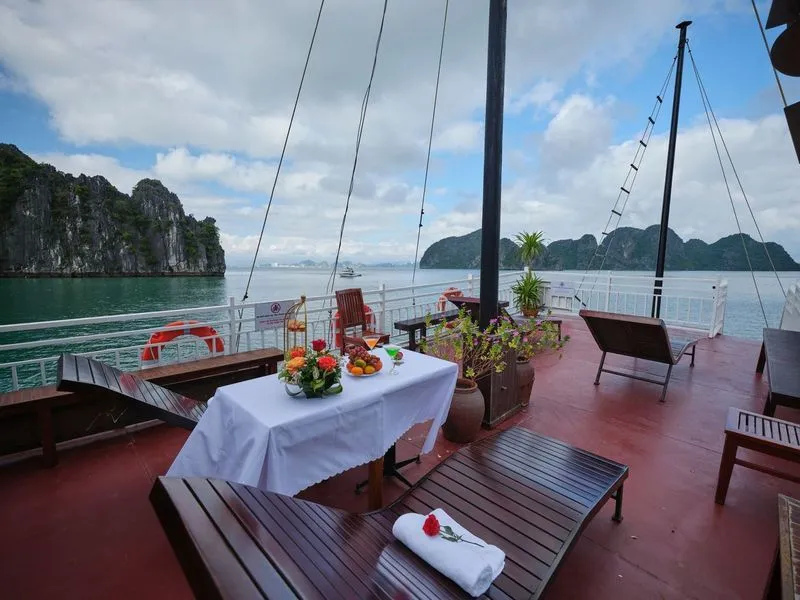
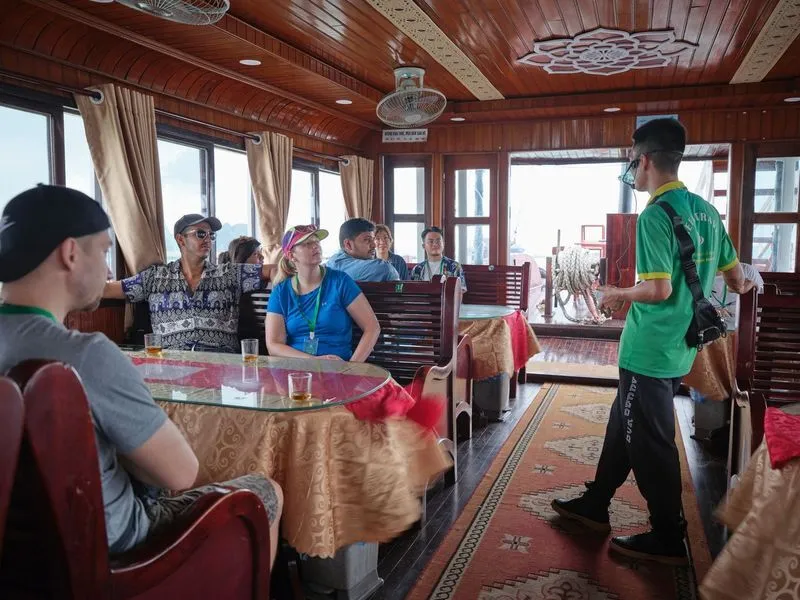
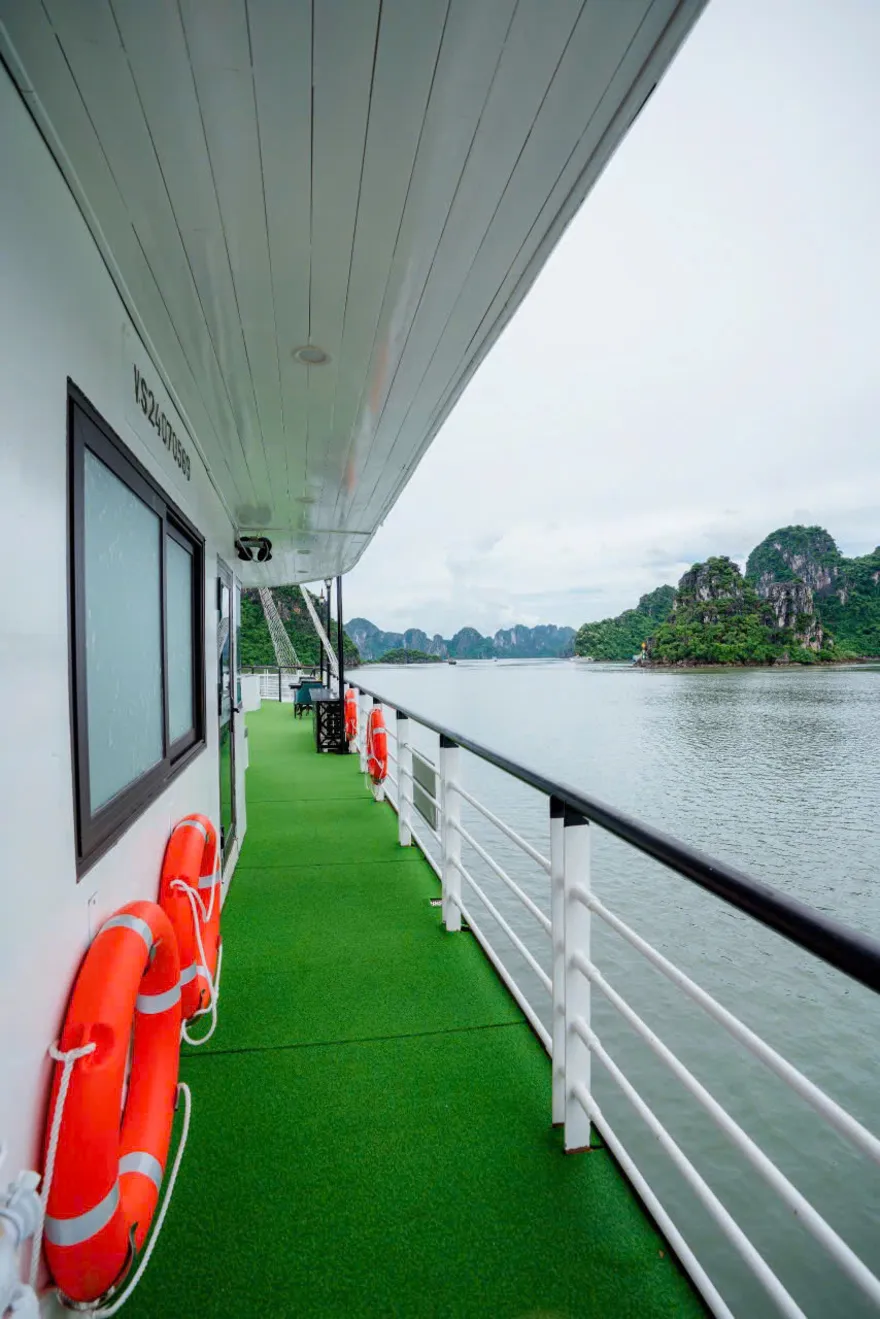
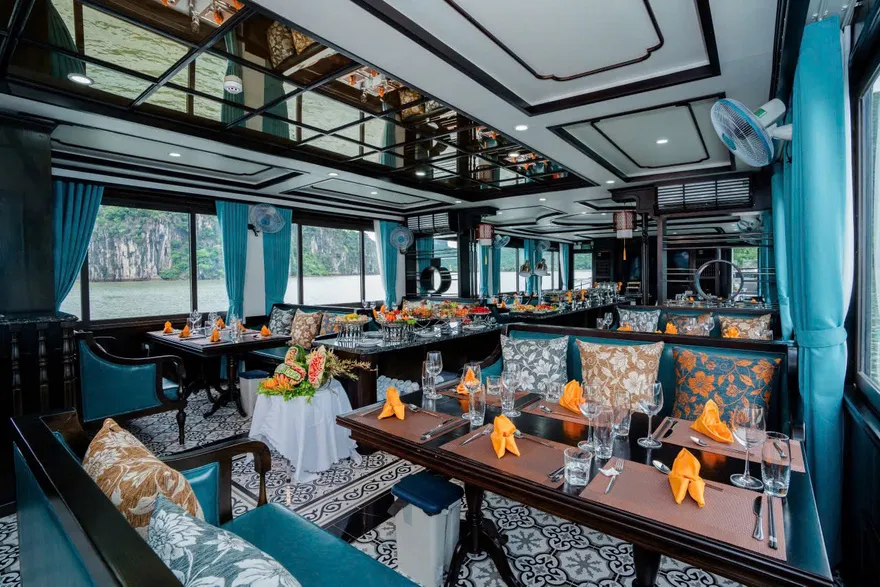
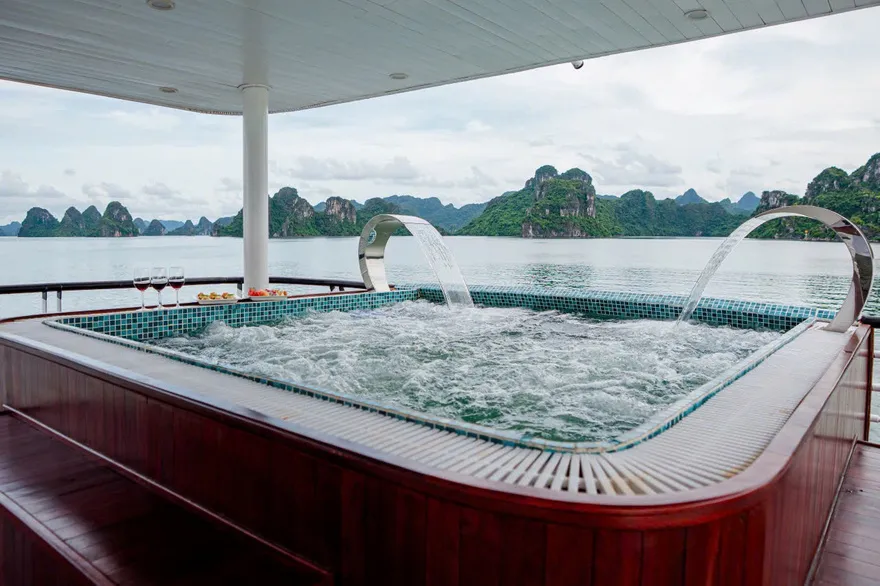
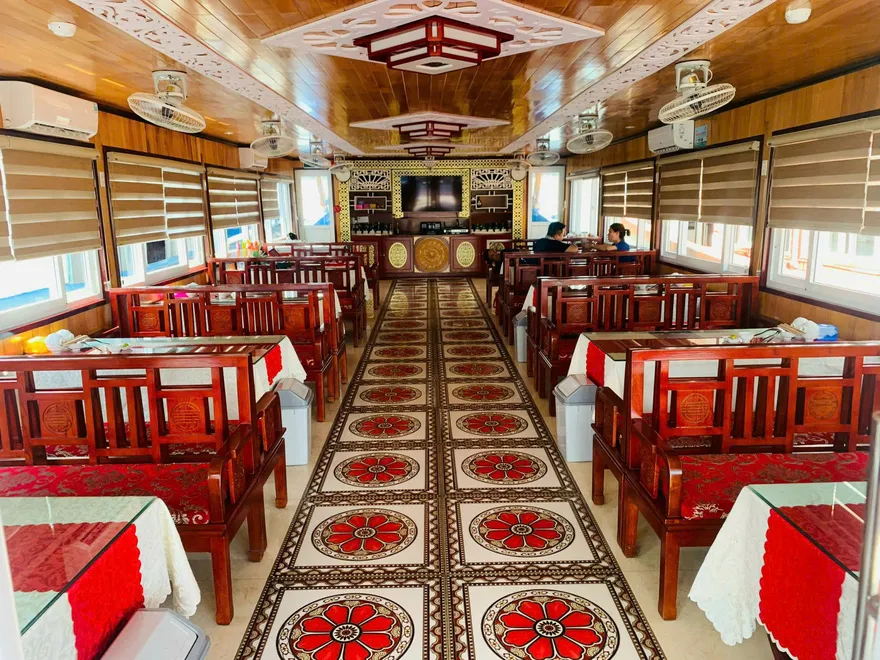
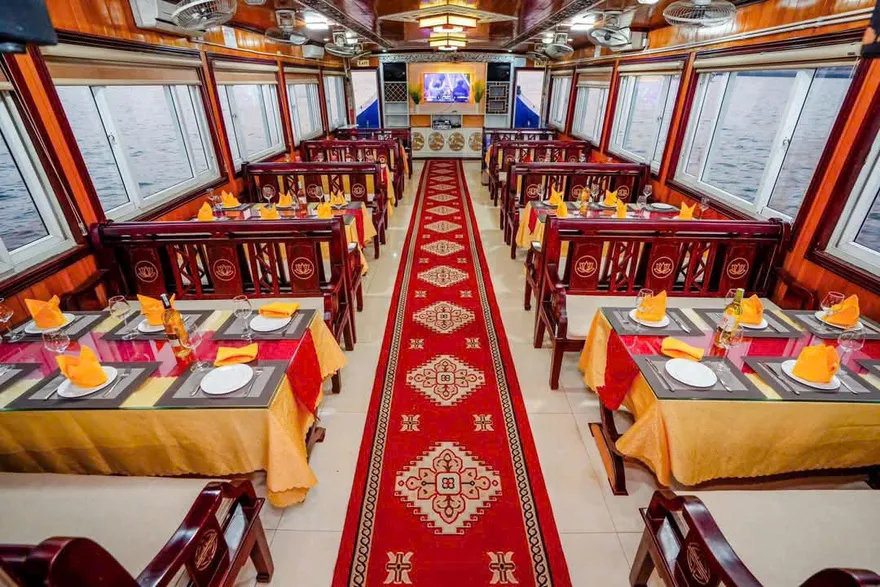
Currently, we are living in the era of new generation iron-hulled ships. Modern travelers’ preference for iron trains comes not only from their sleek appearance, but from the desire for a seamless experience. Imagine the feeling of stepping from the 38°C heat outside on the deck into a cool cabin thanks to a high-capacity central air conditioning system – that’s something that traditional wooden ship structures find it very difficult to optimize. In addition, the stability of the specialized steel shell helps minimize the feeling of seasickness, turning lunch in the middle of the bay into a truly upscale party.
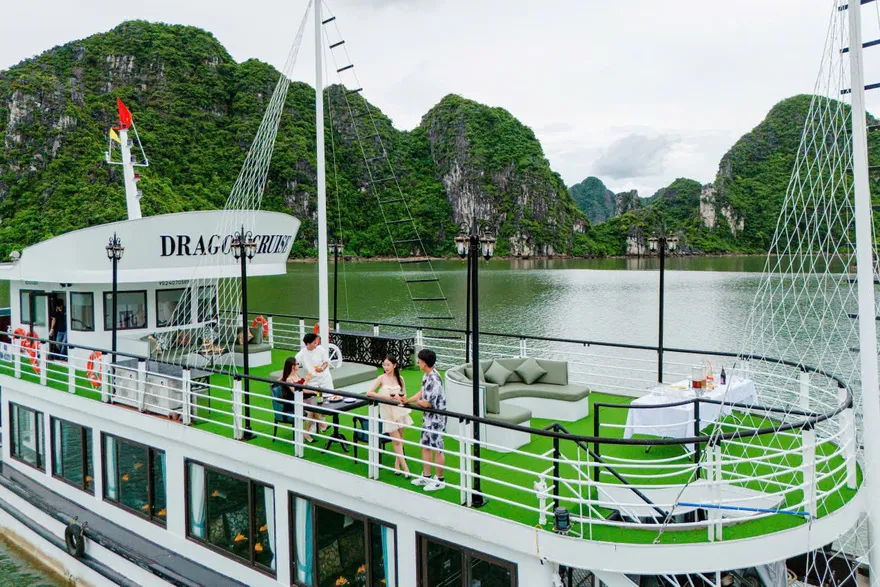
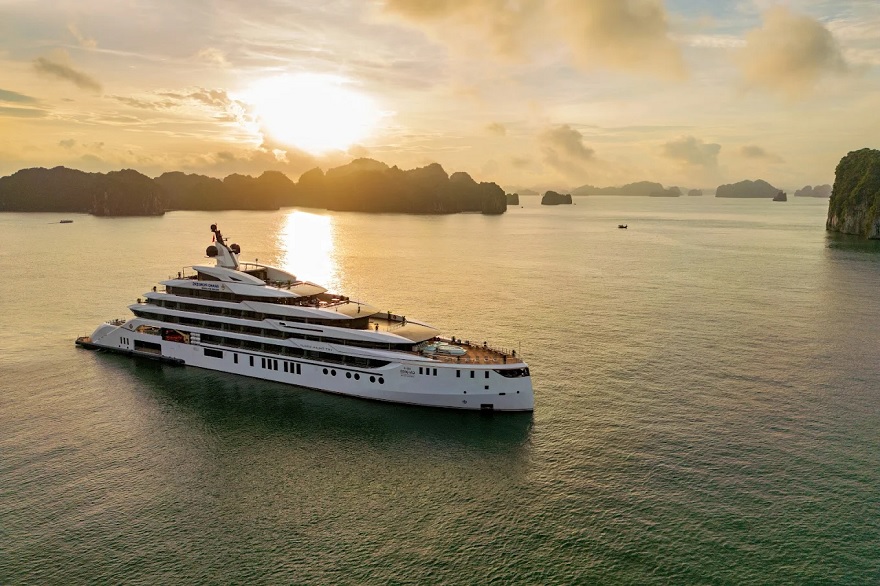
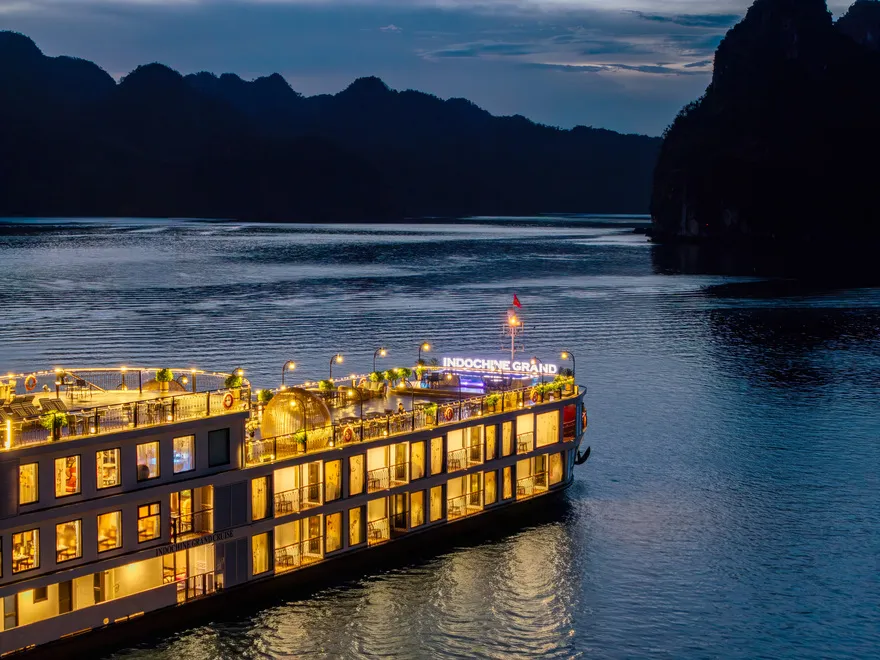
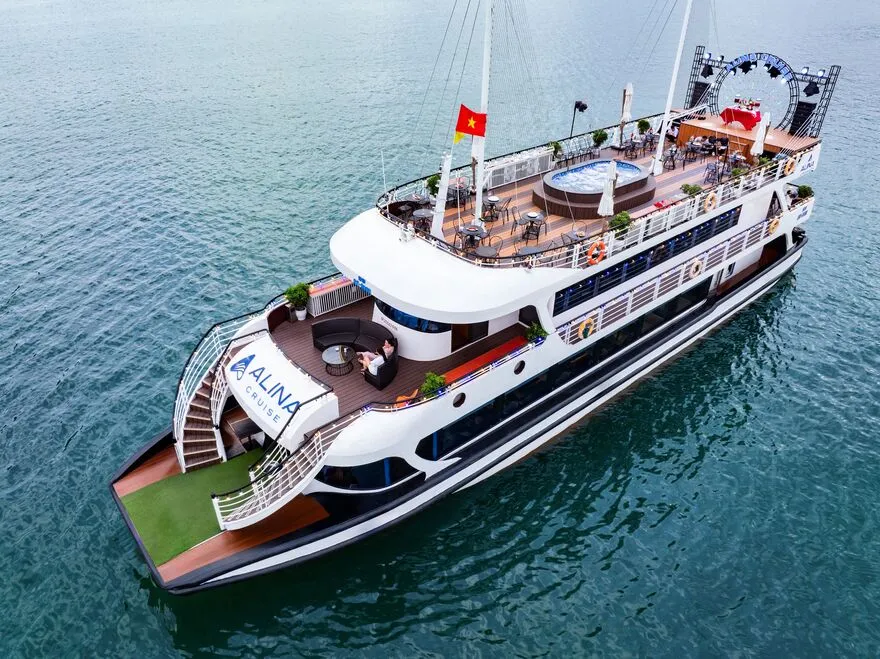
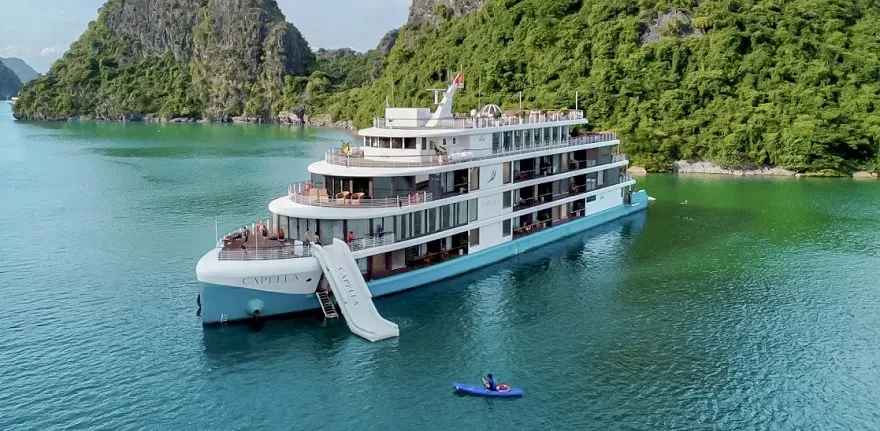
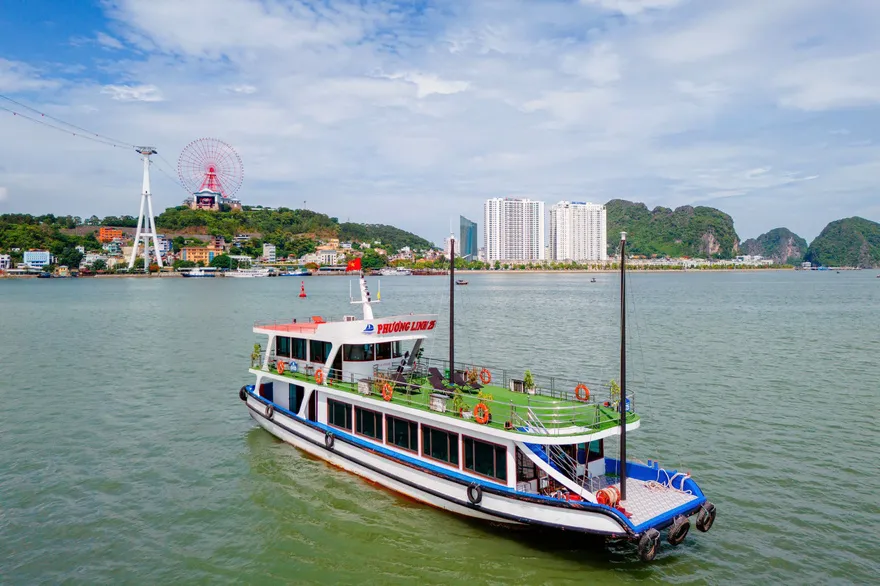
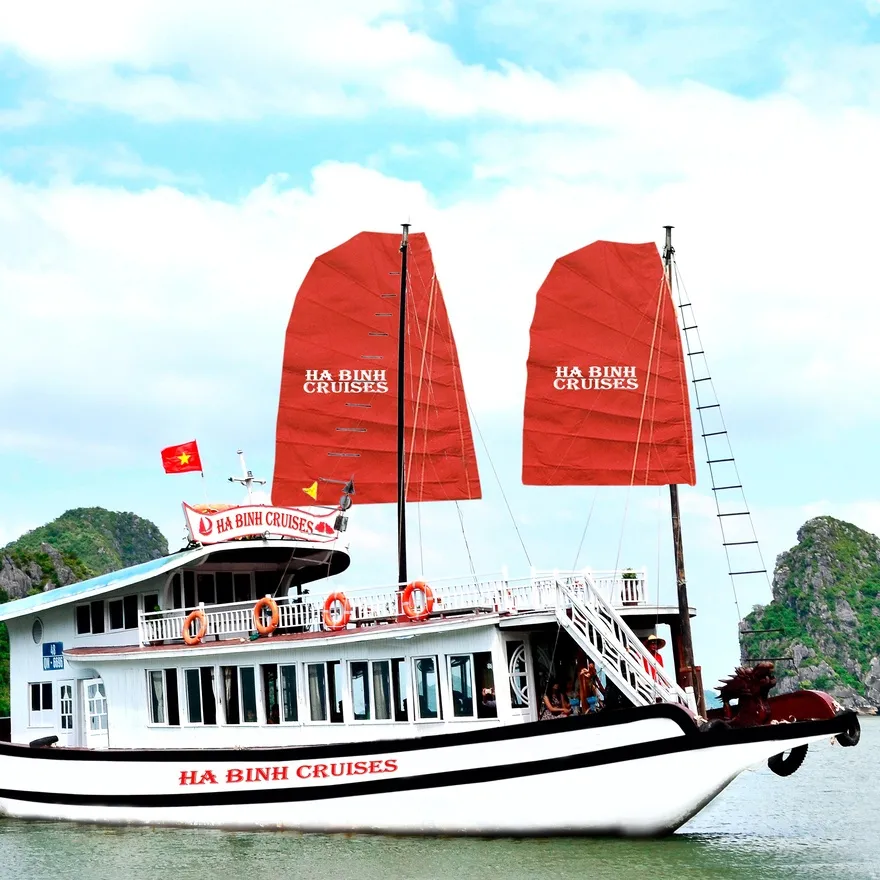
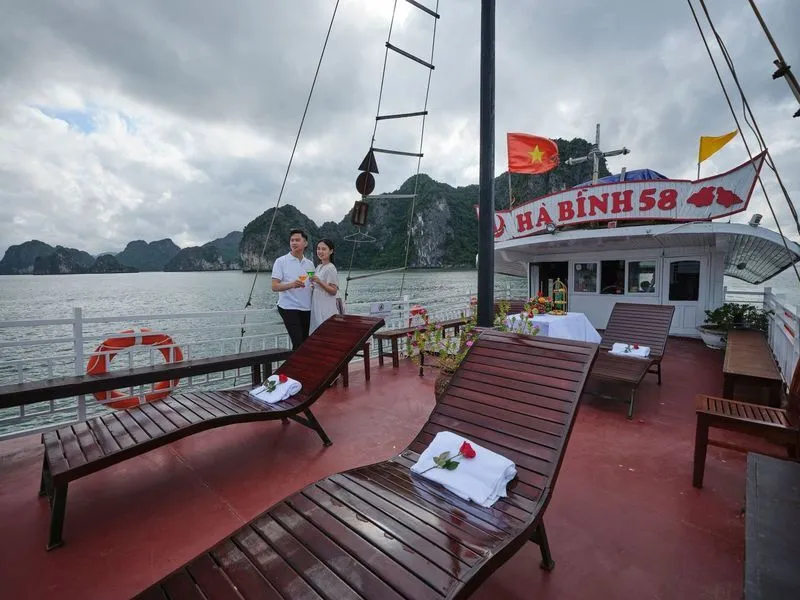
New generation 48-seat iron train
In particular, this shift is also strongly promoted by fire safety standards 2025. While wooden ships always have potential concerns about fire and explosion due to flammable materials, new iron ship lines are equipped with automatic fire alarm and extinguishing systems and standard fireproof interior materials. This creates a solid psychological “shield”, helping visitors completely relax to enjoy the beauty of the wonder instead of having to worry about potential risks.
For those who first set foot in the heritage bay, Route 1 and Route 2 are not just ordinary cruises, but are “passport tickets” to touch the soul of Ha Long. These are the routes that have created the brand of the world’s natural wonders, where the most magically shaped limestone islands and the most magnificent caves are concentrated. In the operating structure of the 48-seat ship, these two routes account for more than 70% of passenger traffic, creating a bustling but extremely regulated pace of life on the sea in the period 2025 – 2026.
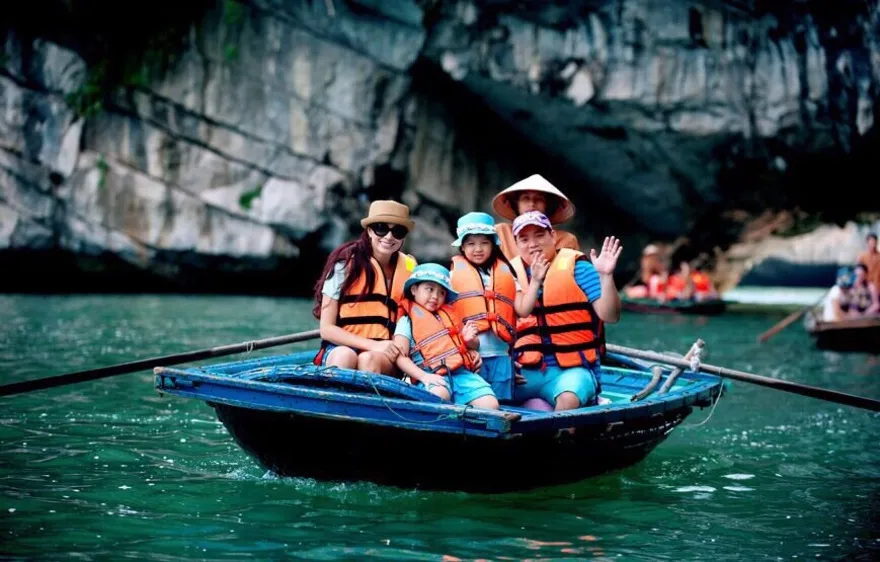
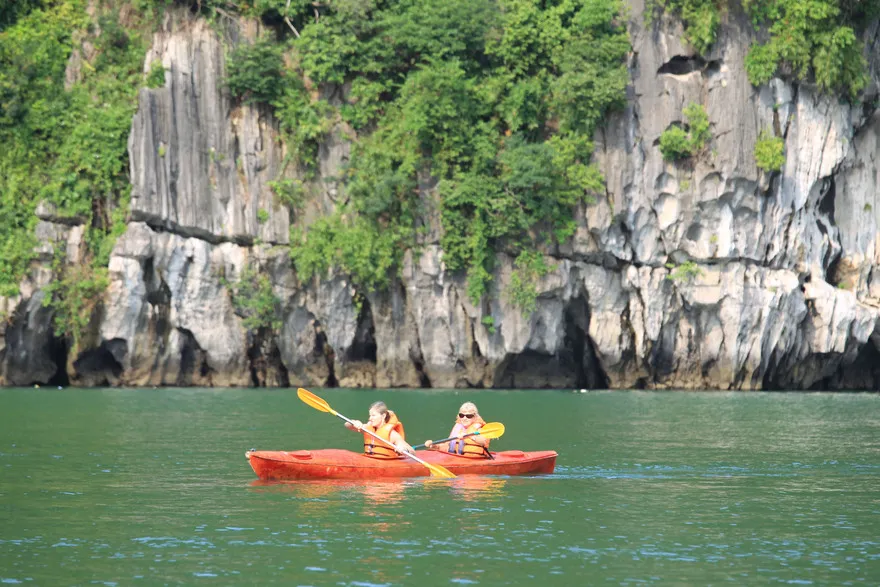
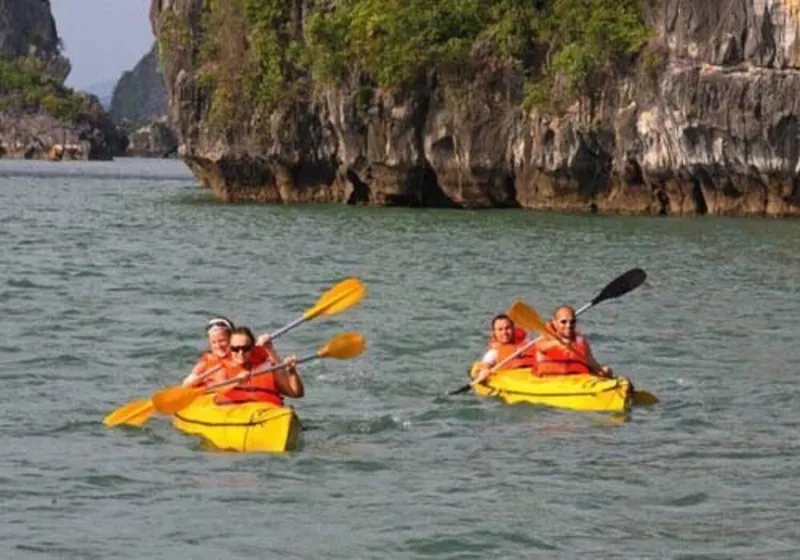
Route 1 (Van Canh Park Route) is often compared to a short but concise symphony. With a journey time of 3 to 4 hours, this is the “golden” choice for tourists with busy schedules or who want to spend the afternoon experiencing the onshore service areas at Bai Chay. The highlight not to be missed is Thien Cung Cave – a place known as the “heavenly palace” underground with a shimmering stalactite system. Right after that, the 48-seat boat will take you past Hon Trong Mai – the eternal symbol of Quang Ninh tourism. In the Ba Hang area, visitors can experience kayaking or bamboo boating to feel the majesty of the limestone cliffs at close range, an experience that deeply connects with nature.
In contrast, Route 2 (Cave Park Route) is a longer and more “rich” journey, lasting from 5 to 6 hours. This is truly a complete exploration of the geology and landscape. The focal point of this route is Sung Sot Cave – the largest cave in the bay with thousands of square meters of chambers, and Ti Top Island – the only place with a white sand beach and mountain top that allows you to take in the 360-degree panoramic view of the bay.
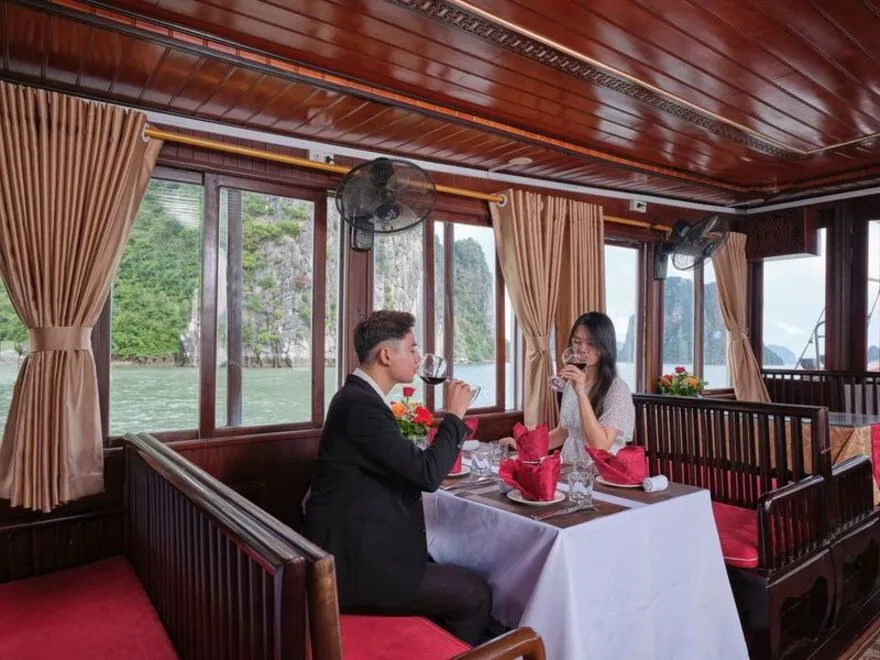
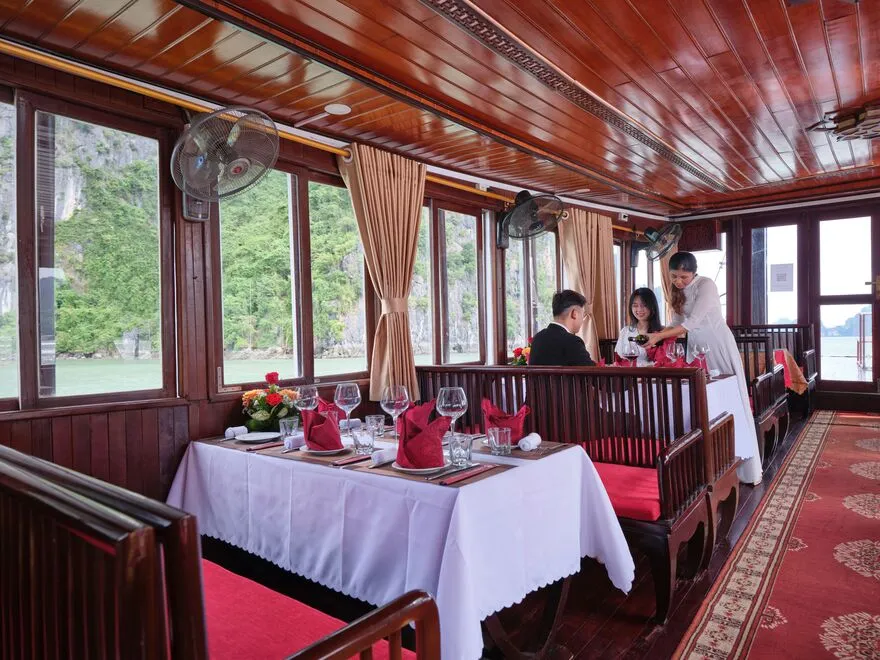
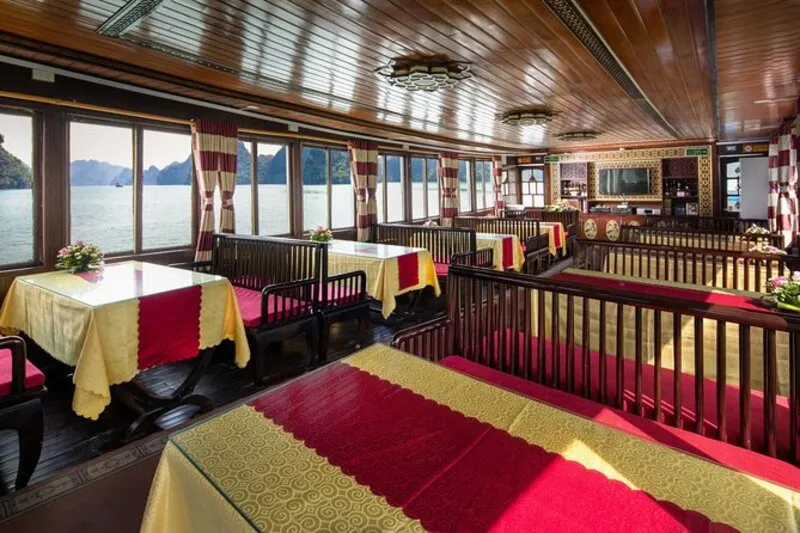
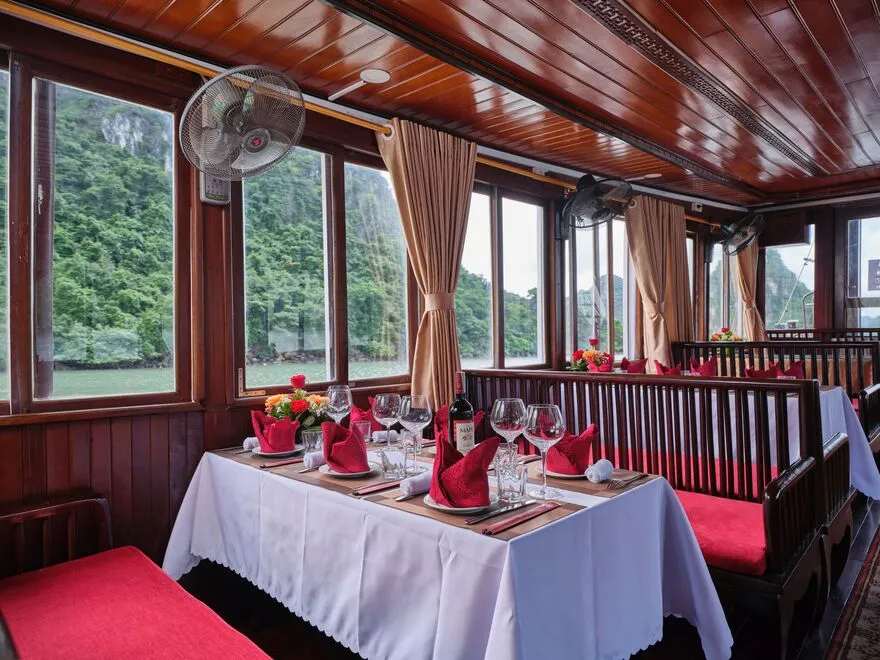
The special feature of the 48-seat train running on Line 2 is the optimization of culinary logistics. While the ship moves between attractions, visitors will enjoy a seafood lunch right at the table. The feeling of having a meal and looking at the limestone islands passing through the open glass windows of the new iron trains is an extremely relaxing psychological experience, helping to dispel all fatigue after the mountain climbing trip at Ti Top.
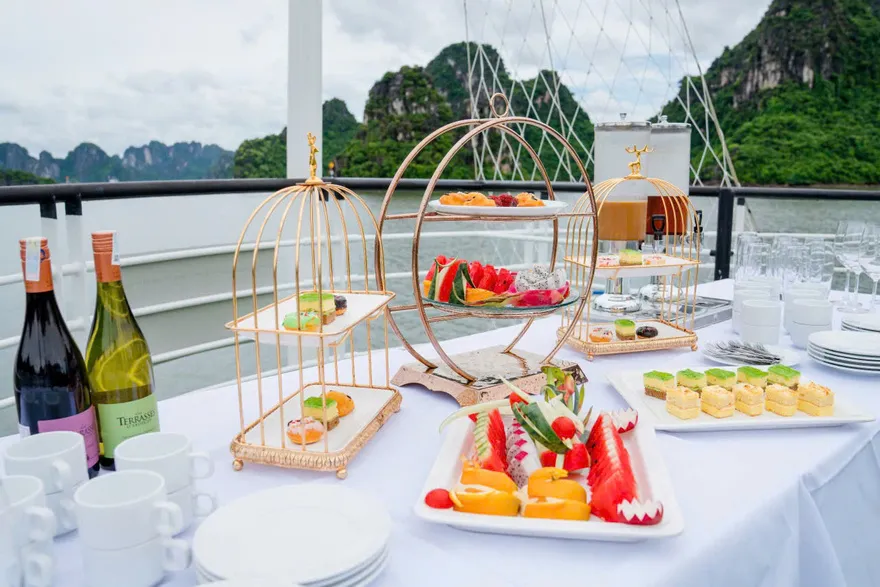
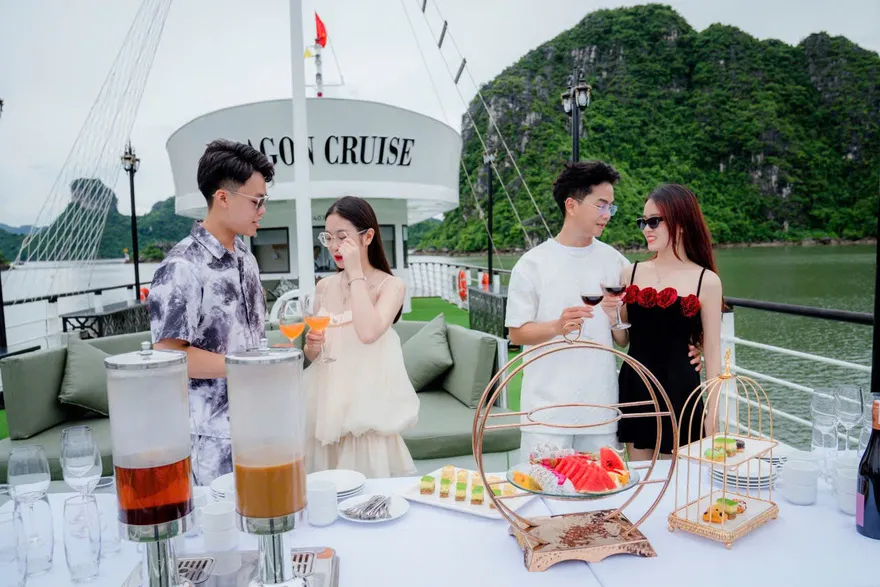
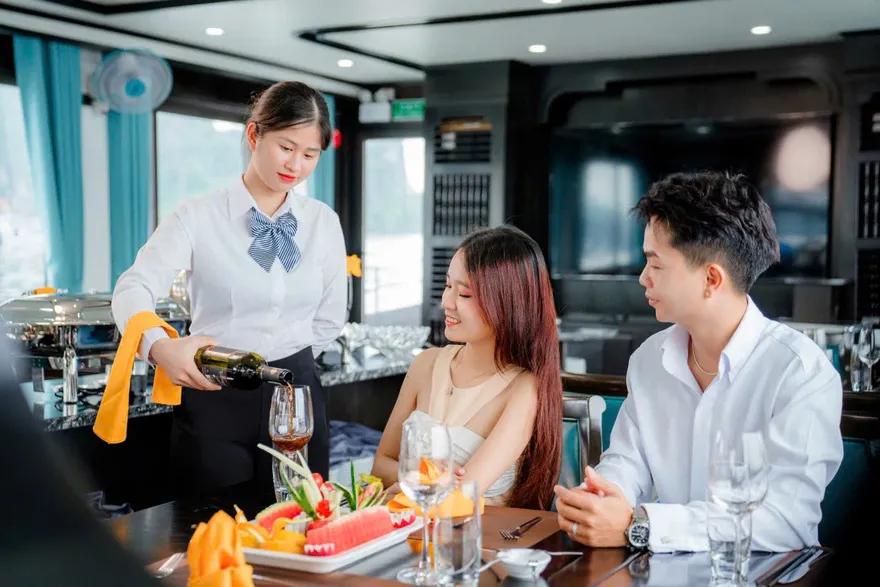
If the scenery of Ha Long Bay is the “eye-catching” part, then the cuisine on the ship is the deepest “touch” of the local culture. In the unique space of 48-seat ships in the period 2025 – 2026, the dining experience no longer stops at “eating until you are full” but has become a ritual of enjoyment. Whether it’s a cozy family meal or a modern buffet, each dish carries with it the breath of the sea and the hospitality of the people of the mining area.
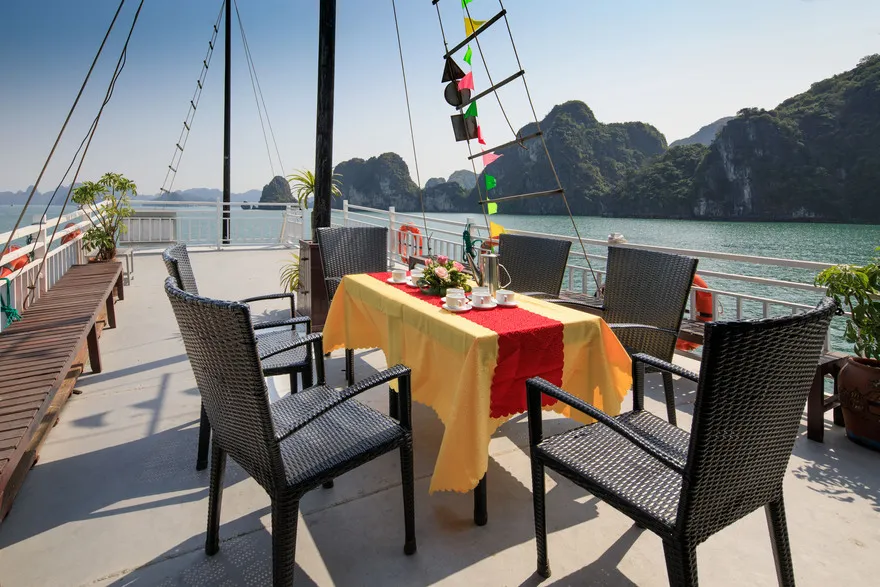
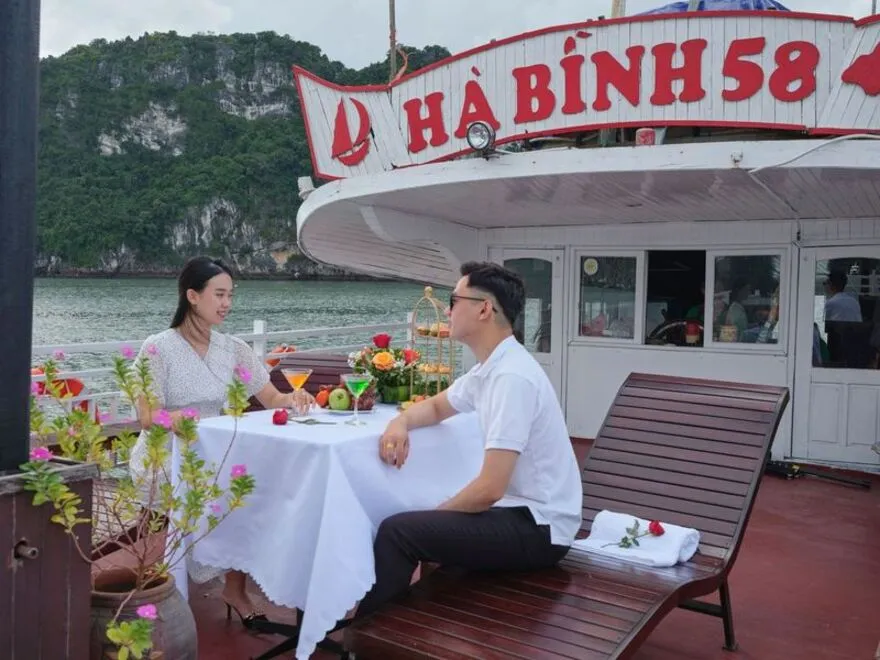
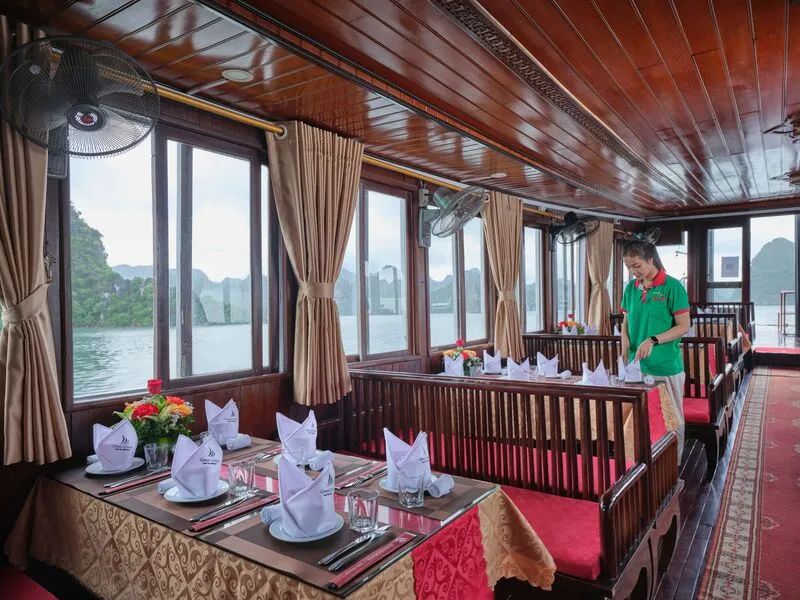
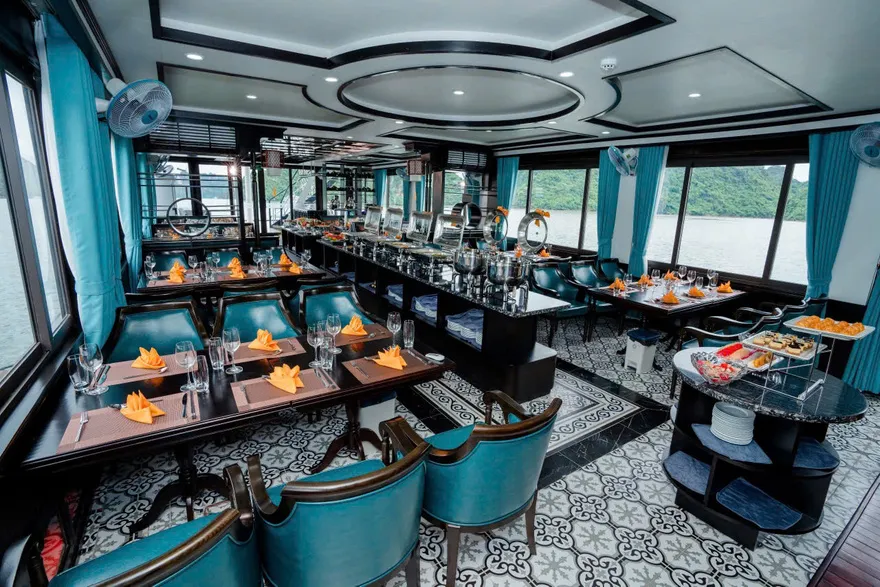
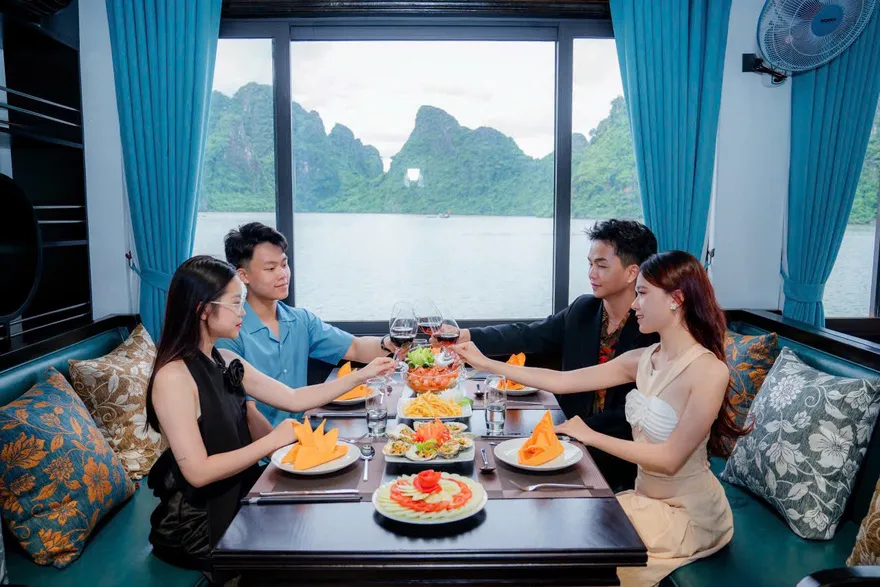
The traditional Set Menu line still maintains its throne thanks to its ability to evoke emotions through typical local flavors. On tables of 6 to 10 people, plates of golden, crunchy hand-pounded Ha Long Squid Grilled Pork or rich salt-roasted Scallops are the “soul” of the party. When going to the beach, tourists often crave freshness, and cruise ship operators are extremely smart when designing menus around ingredients caught during the day such as steamed shrimp, stir-fried squid with garlic, or steamed grouper with soy sauce. Sharing plates of hot food amidst the vast space of water and waves creates an invisible connection, turning strangers in the same group closer after a “standard” meal in Ha Long.
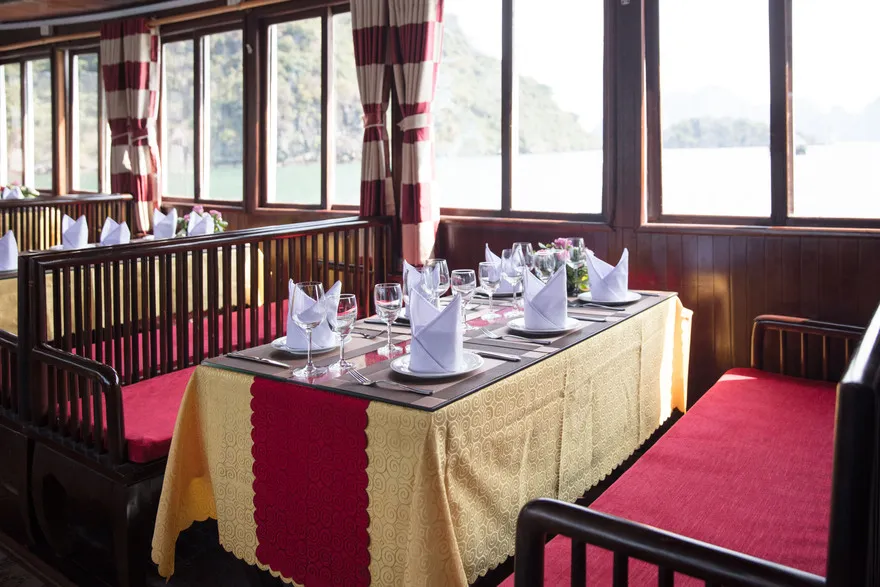
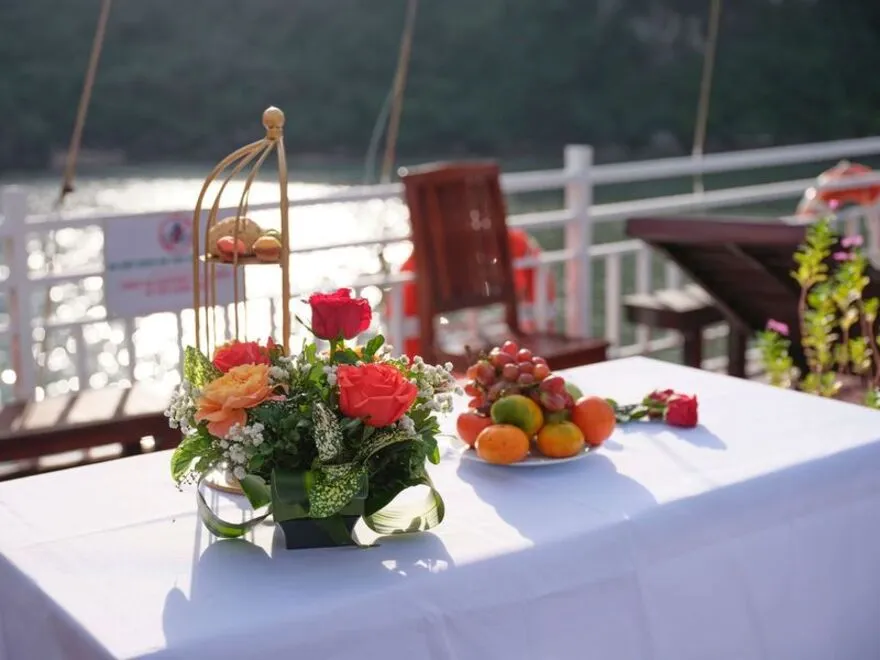
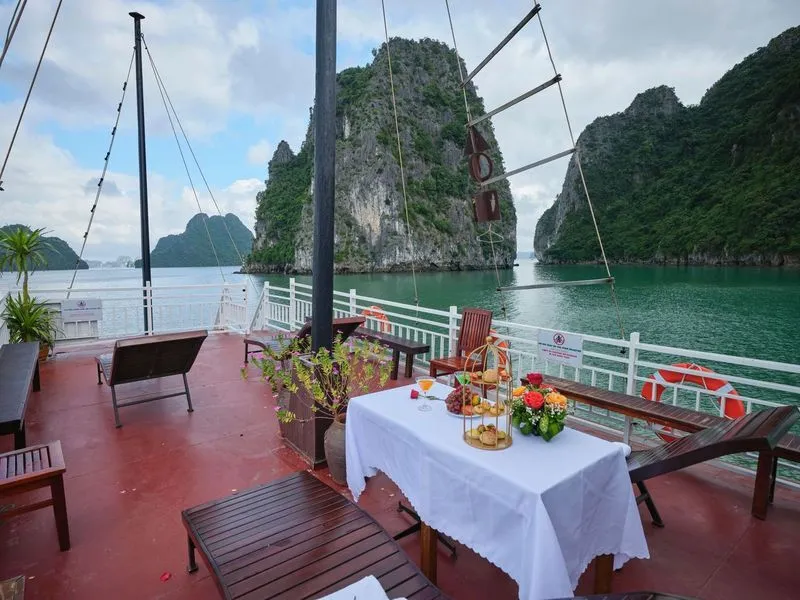
Eat at the table
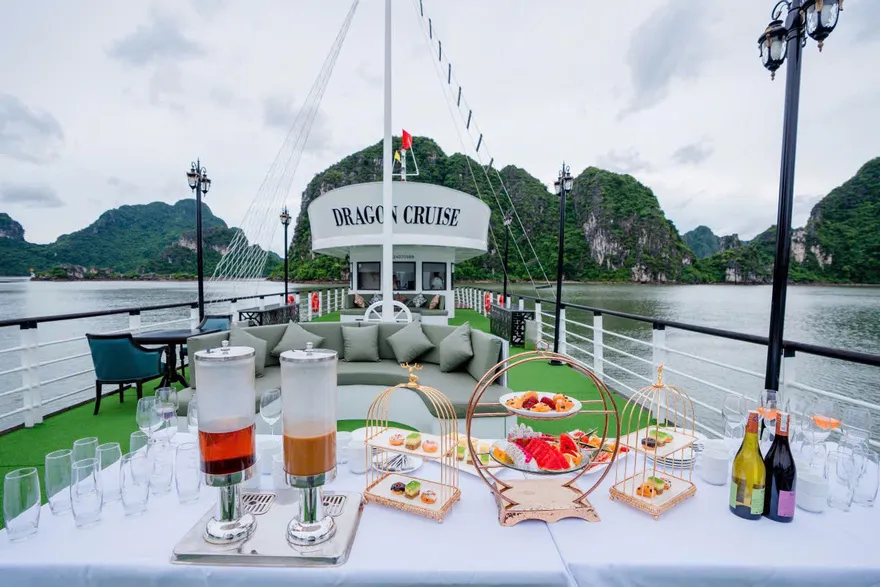
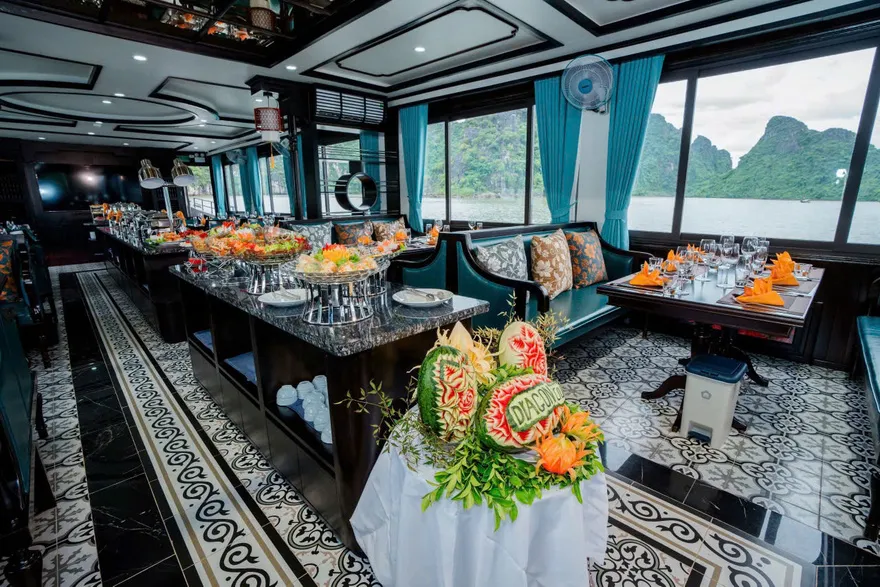
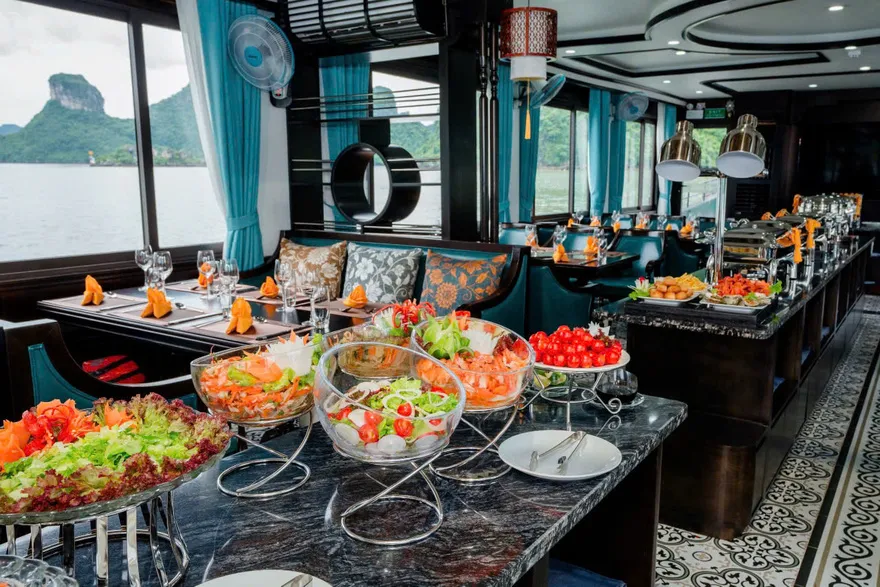
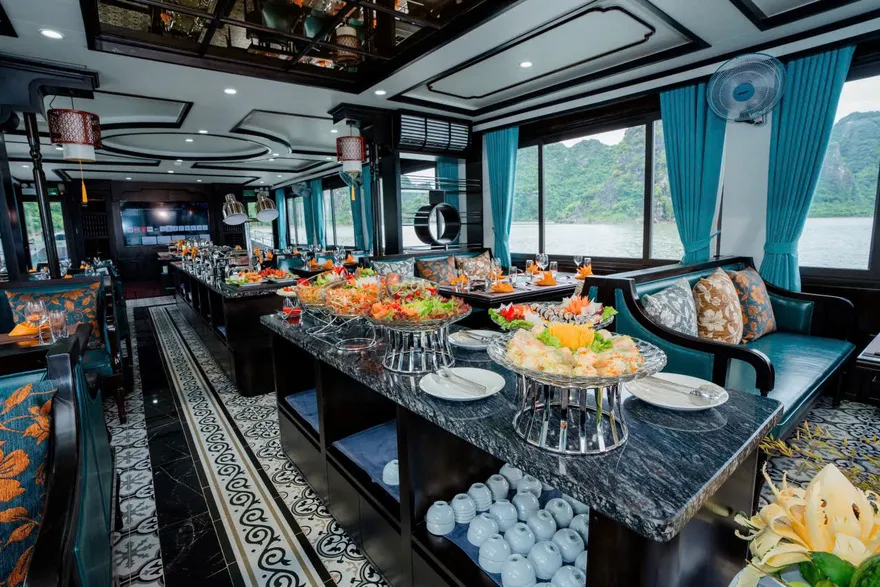
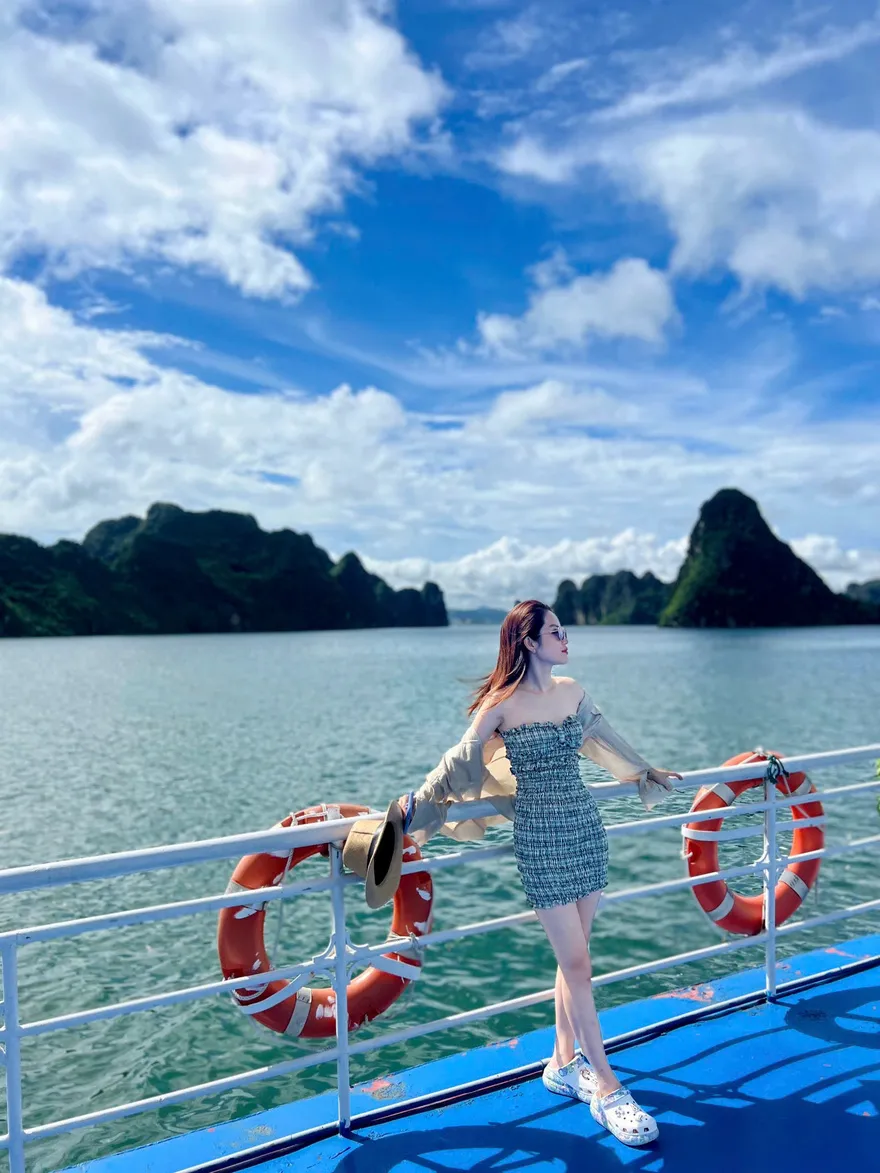
Entering the period 2025 – 2026, the rise of modern iron-hulled ships has paved the way for the trend of Day Cruise. This is considered a “lifesaver solution” for multinational tourist groups or groups of guests with different tastes. With a diverse menu of more than 30 dishes, from fresh Salad counters, Sushi, Sashimi to hot European and Asian dishes and international desserts, the Buffet completely relieves the anxiety of “not knowing whether you can eat seafood or not” of visitors. This professionalization not only raises the level of class for the 48-seat segment but also helps optimize service time, allowing visitors to have more time to go on the deck to admire the scenery and take photos.
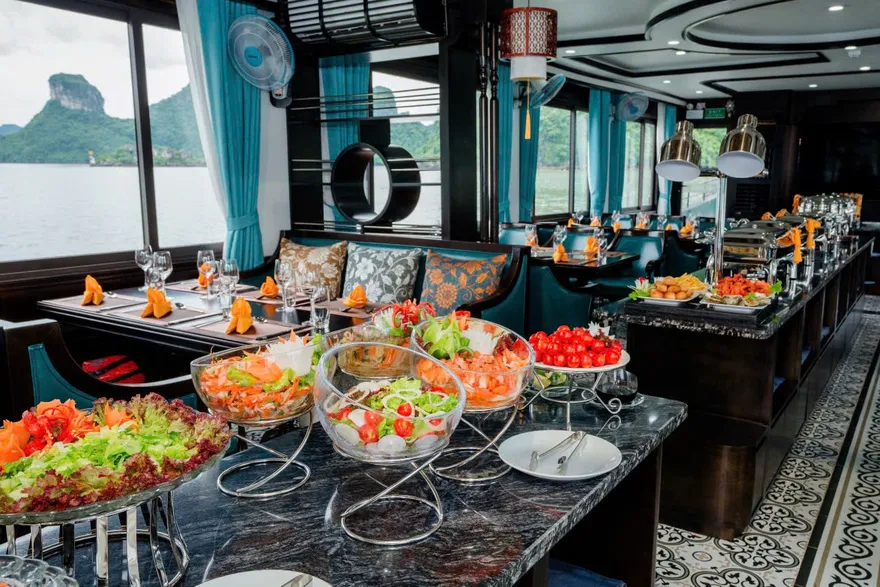
Buffet party on the yacht
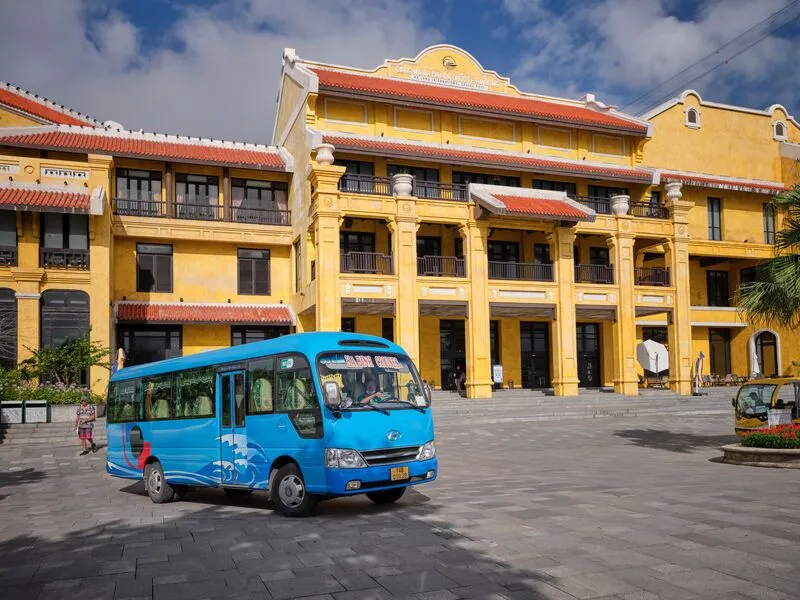
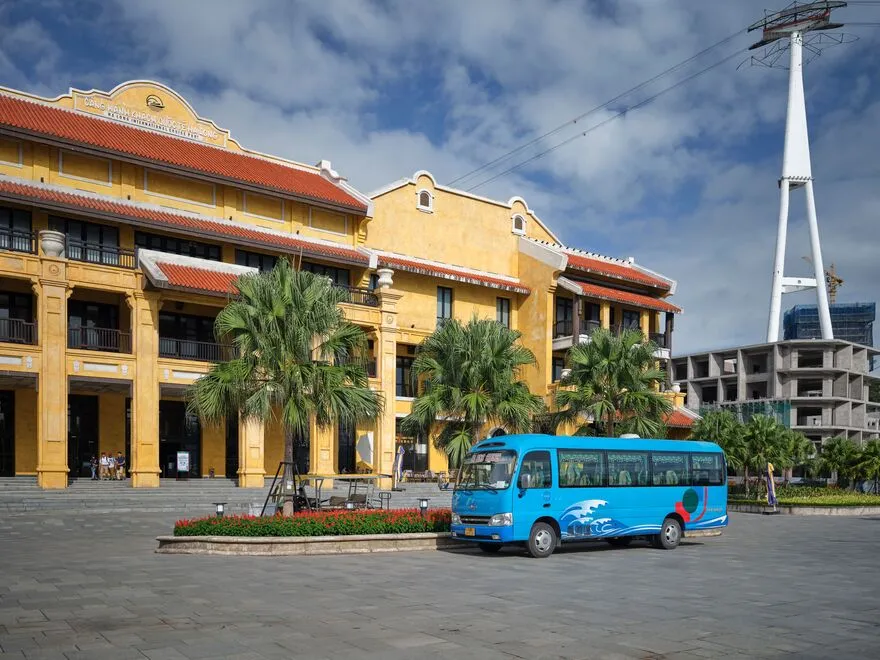
To begin a journey to conquer wonders, the first “touching point” is not the bay water but the ship port system – which acts as time gates taking visitors away from urban life to majestic nature. In Ha Long in the period 2025 – 2026, the differentiation between the two largest ports, Ha Long International Cruise Port and Tuan Chau International Cruise Port, has created strategic infrastructure choices, clearly reflecting the needs and styles of each customer group.
Sign in to unlock exclusive member discounts up to 15% on this luxury voyage.
Planning a corporate getaway or private charter? Contact our VIP specialists for tailored group rates and bespoke itineraries.
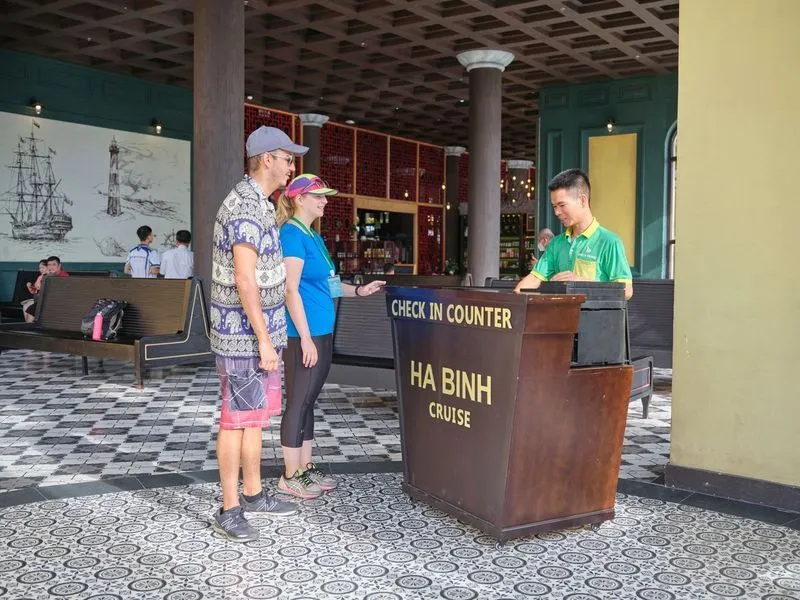
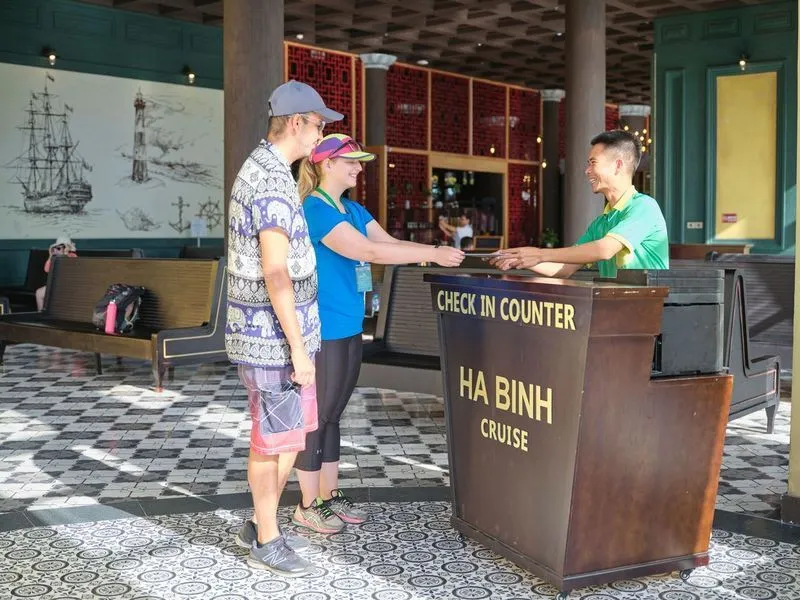
Contact VIP Specialist1. Regulations on Administrative Procedures & Check-in
2. Incentives & Discounts Policy
This policy applies to scenic tickets to visit Halong Bay according to the regulations of the Bay Management Board:
3. Cancellation/Delay & Weather Policy
3.1 Cancellation due to natural disasters/Storms/Sea ban: If the Port Authority does not issue a departure order due to bad weather, guests will receive a 100% refund of the deposit or assistance in rescheduling the departure date without charge.
3.2 Cancellation due to customer’s side:
4. Safety & Environmental Regulations
Strictly comply with QCVN 10:2025/BCA on fire safety and heritage conservation:
5. Food & Beverage Policy
5.1 Allergies & Special Diets: Guests need to notify about vegetarian requirements and seafood allergies at least 24 hours before departure time.
5.2 Surcharge for drinks (Surcharge): Bringing drinks from outside on board will incur service fees (fees for cups, ice, cleaning and handling of bottles).
5.3 Fee for not ordering meals (Applicable for private boat charter): From 500,000 – 1,000,000 VND/trip depending on boat quality.
6. Liability & Passenger insurance
Normally, large multiplex trains often concentrate on departing around 8:00 a.m. or 12:00 noon, unintentionally creating "bottlenecks" at locations such as Sung Sot (Surprise) Cave or Ti Top Island. To optimize your private experience, I find that choosing to depart much earlier (around 7:00 a.m. - 7:30 a.m.) or a little later (after 1:00 p.m.) will help you go against the flow of the crowd. At this time, the sunlight is also softer and the space on the bay is quieter, helping you take "thousand-liked" photos without having to wait tirelessly at the wharf or cave passages.
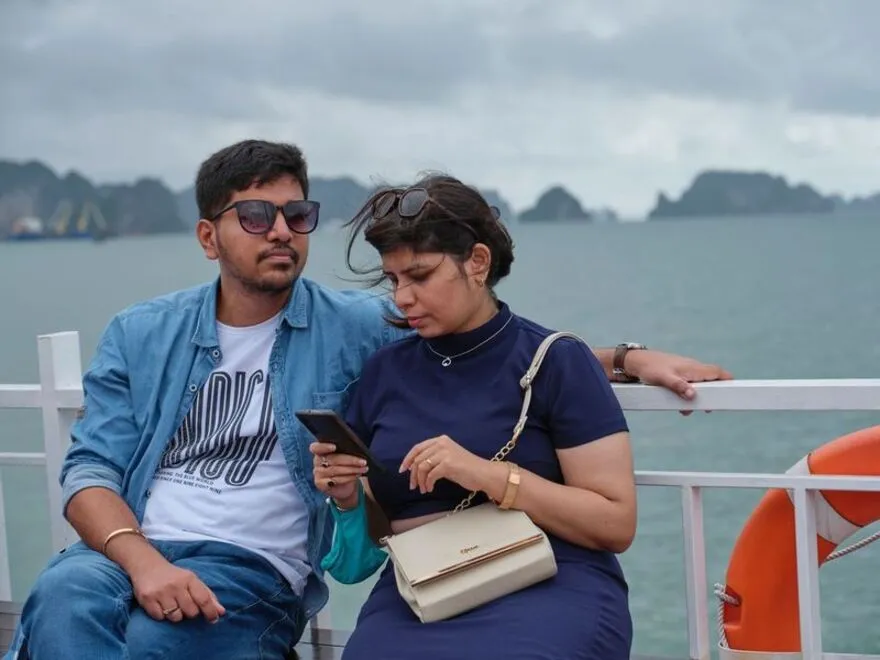
You know, the terrain of Halong Bay with thousands of steep limestone islands is a natural "enemy" of telecommunications waves, but new iron ships today are often equipped with wave boosters or mini Starlinks to help maintain quite good connections in main channel areas. However, when the train goes deep into caves or core areas like Luon Cave or Ba Hang, the signal will weaken significantly, so I recommend that you take advantage of the time to do your work while the train moves on the main channel and spend all your time at the stops to really connect with nature instead of depending entirely on social networks.
The 48-seat iron ship has a low center of gravity and a sturdy flat bottom design, so it is able to suppress small fluctuations from the water surface much better than old wooden ships that often feel "floating" and shake easily. Furthermore, traveling at a steady speed on the sheltered channels of the bay makes it much easier for your body to adapt than standing on super yachts with too high a deck, which easily causes a wide amplitude swaying effect, so if you are a guest who is sensitive to water waves, a seat in the midship area on the lowest deck will be the most secure choice to enjoy the journey without the need for anti-sickness medication.
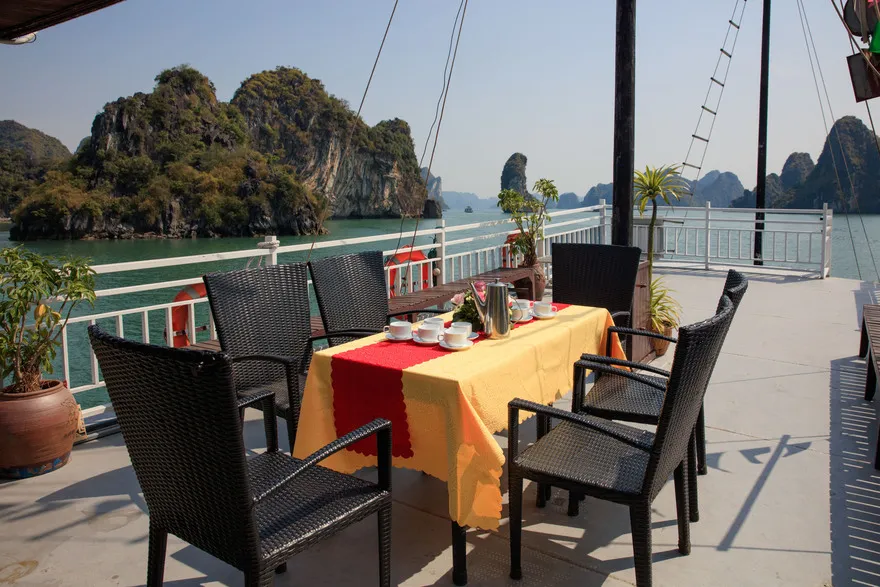
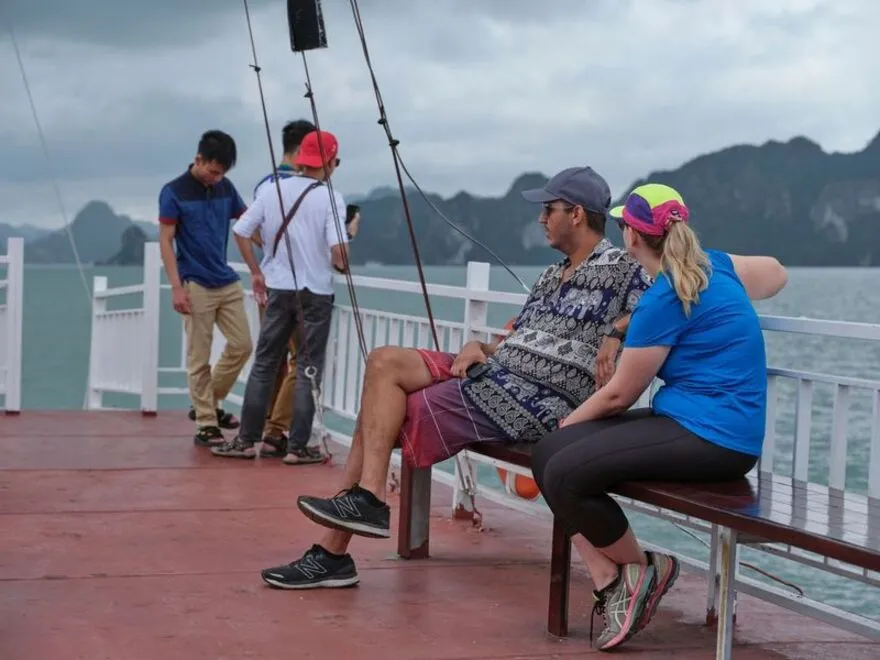
Halong is a heritage for all guests, and the sophistication of 48-seat cruise ships lies in the fact that they always have light alternatives so that no one feels lost in the group. Instead of exhausting kayaking, you can absolutely choose to take a bamboo boat rowed by local guests to comfortably weave through the caves, or simply choose a windy sundeck corner to sip a cup of tea and admire the majesty of the bay from afar while waiting for all guests - sometimes the "stillness" in the space of wonder brings a much deeper and more peaceful feeling than conquering the soaring stone steps.
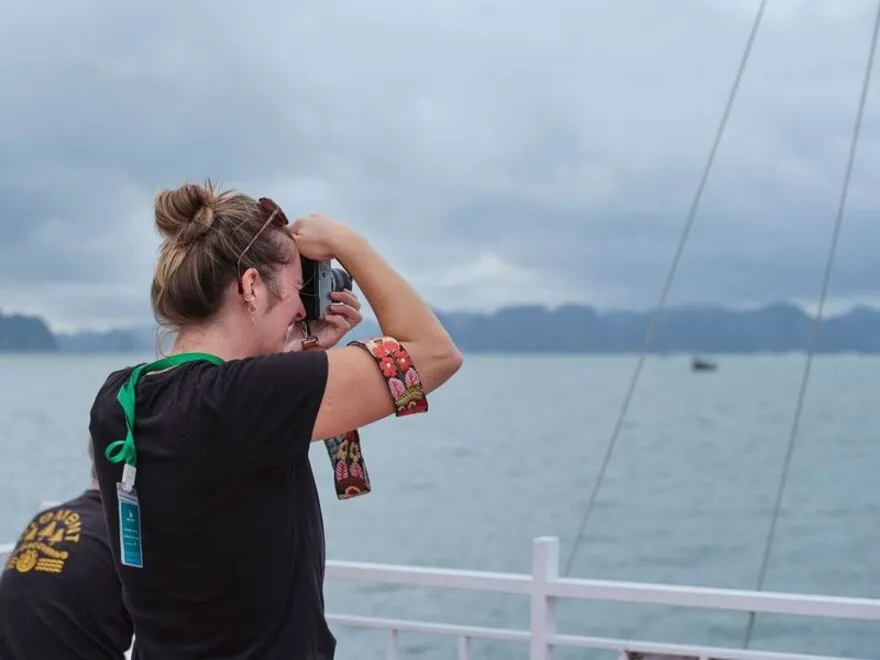
There are actually no regulations prohibiting the use of professional cameras, but the space on the 48-seat train is limited compared to the ground, so the use of bulky tripods will sometimes cause inconvenience to the group's common path. In particular, if you intend to use Drones (aircraft devices not piloted by guests), you need to be very careful because the Halong heritage area is a strict flight control area, flying without permission can lead to unnecessary legal problems, so always discuss with the tour guide or captain in advance to get advice on the safest location and time to record while still capturing the spectacular views from above.
No reviews yet for this service.
Feedback from real journeys will appear here soon.