Ancient tales echo from the Dragon Cave pagoda
A sacred mountain shaped like a kylin
Lotus blossoms bloom where the monarch takes his seat
Radiant light illuminates the misty Bach Yen cloud
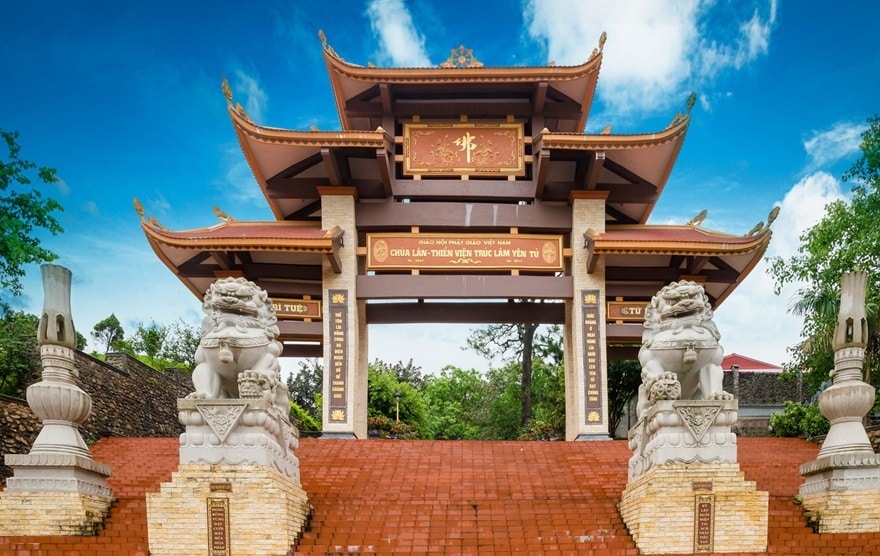
Perched atop a hill shaped like a crouching kylin (unicorn), Lan Pagoda—historically known as Lan Zen Monastery (Thiền Viện Trúc Lâm)—was once among the most prestigious sanctuaries within the architectural network of the Truc Lam Yen Tu Zen sect. Its renowned splendor and magnificence were immortalized in local folklore through the traditional saying: “The gate of Lan Pagoda, the courtyard of Muong Pagoda, the fields of Quynh Pagoda,” signifying an estate graced with grand entryways, expansive courtyards, and vast fertile lands.
Read more: Top 9 Most Sacred Temples and Pagodas in Quang Ninh
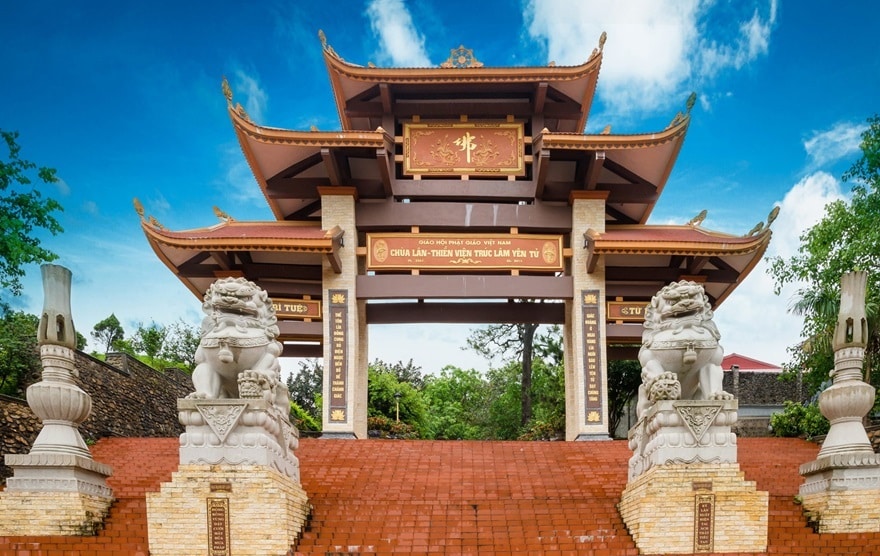
Truc Lam Yen Tu Zen Monastery
Introduction to the History and Origins of Truc Lam Zen Monastery
Originally known as Lan Pagoda and presently as Truc Lam Yen Tu Zen Monastery—with its formal Sino-Vietnamese name being Long Dong Tu—the sanctuary is situated in Nam Mau Village, Thuong Yen Cong Commune, Uong Bi City. The origins of these three distinct names are deeply rooted in history:
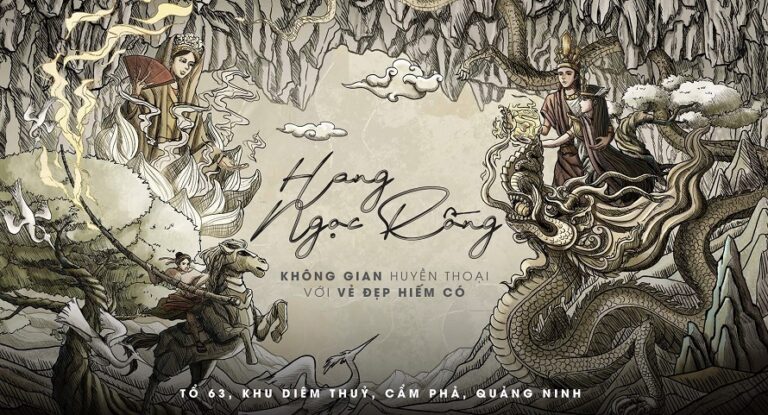
First, “Long Dong Tu” translates to “Dragon Cave Temple.” This designation stems from the legend that during his pilgrimage to Yen Tu Mountain, King Tran Nhan Tong paused to rest here and envisioned himself riding a magnificent dragon soaring into a cavern. Inside the cave lay a crystal-clear lake blossoming with golden lotuses that released an intoxicating fragrance. The dragon guided him around the lotus pools, their petals radiating a divine glow accompanied by ethereal music echoing from every leaf. As he was gently placed upon a lotus throne, the monarch awakened from his dream. Faint fragrances and melodious notes still lingered in the air, accompanied by a sudden, mysterious gathering of earthly dragons. Consequently, this site was revered as a dwelling place of dragons, and the temple subsequently established upon these sacred grounds was named Long Dong Tu – Dragon Cave Pagoda.
Golden sunlight bathes the Dragon Cave
The Tiger Ravine remains profound
The second name, Kylin Zen Monastery, arose from the locals’ familiarity with calling the sanctuary Kylin Pagoda (or Lan Pagoda for short), inspired by the undulating profile of the Yen Tu mountain range, which, when viewed from afar, resembles a crouching kylin. Finally, the name Truc Lam Yen Tu Zen Monastery reflects its lineage as part of Vietnam’s indigenous Zen tradition founded by King Tran Nhan Tong.
Lan Pagoda was commissioned by Truc Lam Dieu Ngu (King Tran Nhan Tong) shortly after he took monastic vows in the Year of the Boar (1293). It evolved into the Kylin Institute—a prominent center for Buddhist discourse and the ordination of monks within the sacred network of Yen Tu. Standing second only to Hoa Yen Pagoda in religious importance, Lan Pagoda welcomed numerous esteemed patriarchs who resided and preached here, notably King Tran Nhan Tong himself.
According to the Tam To Thuc Luc—the historical chronicle documenting the journeys of the three Truc Lam patriarchs—there is a meticulous account of a dharma discourse delivered by Tran Nhan Tong at the Kylin Institute on the ninth day of the first lunar month in the Year of the Fire Horse (1306). During this gathering, he expounded upon Buddhist teachings and directly addressed inquiries from the monastic community. Within Buddhist literature, only two formal discourses by Tran Nhan Tong have been preserved: the first delivered in Hai Duong, and the second at Kylin Pagoda, where the Second Patriarch Phap Loa and Third Patriarch Huyen Quang also frequently frequented to lecture on the sutras.
Architecture of Truc Lam Yen Tu Zen Monastery
Following the Tran Dynasty, Lan Pagoda continued to flourish as a revered sanctuary under the stewardship of successive enlightened Zen masters passing down the lamp of wisdom. During the Later Le Dynasty, Zen Master Chan Nguyen—celebrated for his pivotal role in reviving Buddhism—authored seminal works such as Thien Tong Ban Hanh, Kien Thanh Phat, and Tue Nguyen In Truuc Lam Tam Tổ Tue Trung Thuong Si Ngu Luc right within the Kylin main hall. During the French colonial resistance, the temple suffered near-total devastation, leaving behind only a cluster of 23 stupas and tombs. Among these are three ancient structures, including the two primary main-hall stupas—Vien Minh and Vien Quang—and the illustrious Tịnh Quang Kim Tháp (Tinh Quang Golden Stupa), erected by royal decree of the Le Dynasty in 1726. Positioned behind the Patriarch House rests the sacred reliquary of Tue Dang Hoa Thuong (Patriarch Chan Nguyen), a supremely enlightened master honored by the Le court with the title of Supreme Patriarch of Pure Enlightenment. Furthermore, standing to the left of the Tinh Quang Stupa is a venerable 700-year-old banyan tree, its sprawling canopy and massive roots spanning wider than the embrace of a dozen people. Its roots have so intricately enfolded an ancient persimmon tree that visitors often mistake the persimmon branches for extensions of the banyan itself. Alongside the ancient stupas and preserved artifacts, this ancient banyan tree stands as a living historical witness and a rare natural treasure.
With the aspiration to restore ancestral legacies and preserve the Truc Lam Zen heritage, a solemn foundation-laying ceremony for the reconstruction of Lan Pagoda – Truc Lam Yen Tu Zen Monastery was held on January 19, 2002. The monumental project was initiated by Most Venerable Thich Thanh Tu, abbot of the Truc Lam Zen Monastery in Da Lat, and realized through the devout contributions of monks, nuns, and Buddhists both domestic and international.
In celebration of the birth anniversary of Dieu Ngu Giac Hoang Tran Nhan Tong, Lan Pagoda – Truc Lam Yen Tu Zen Monastery was officially inaugurated on November 11, 2002, spanning an estate of nearly five acres. While constructed using modern engineering techniques, the monastery meticulously preserves the timeless aesthetics of traditional Vietnamese architecture. The complex encompasses key structures including the main sanctuary, ancestral worship hall, drum tower, bell tower, monastic quarters, meditation hall, scriptural hall, and the Arhat gallery. The spatial layout is exceptionally open and uncluttered, featuring horizontal boards and parallel couplets inscribed elegantly in the national script (Quoc Ngu).
“The profound teachings of the Buddha clearly illuminate the pathways beyond the wheel of reincarnation to ultimate liberation
The path of Zen leads directly without worldly stages straight to suchness”
Today, Lan Pagoda houses several exceptionally rare and precious artifacts. The main sanctuary enshrines a majestic bronze statue of Shakyamuni Buddha weighing nearly 4 tons, currently the largest bronze Buddha image in Yen Tu. Another remarkable masterpiece is the statue of Bodhidharma carved from exquisite South American rosewood. Standing 3.2 meters tall upon a 0.65-meter pedestal measuring 0.95 meters in width, this magnificent sculpture weighs approximately 3.2 tons and features remarkably intricate craftsmanship. Positioned behind the main hall and in front of the Truc Lam Triple Patriarch ancestral altar, it stands as a testament to the heartfelt devotion of local Buddhists. At the center of the monastery’s courtyard rests the “As-You-Wish” (Nhu Y) gratitude sphere fashioned from striking red granite. Measuring 1.595 meters in diameter and weighing 6.5 tons, the sphere was quarried from An Nhon in Quy Nhon. It rests upon a four-ton square granite pedestal enclosed by an octagonal reflecting pool, featuring eight lotus-petal basins symbolizing the Noble Eightfold Path. This monumental sphere has been officially recognized by the Vietnam Guinness Book of Records as the largest As-You-Wish granite sphere in Vietnam.
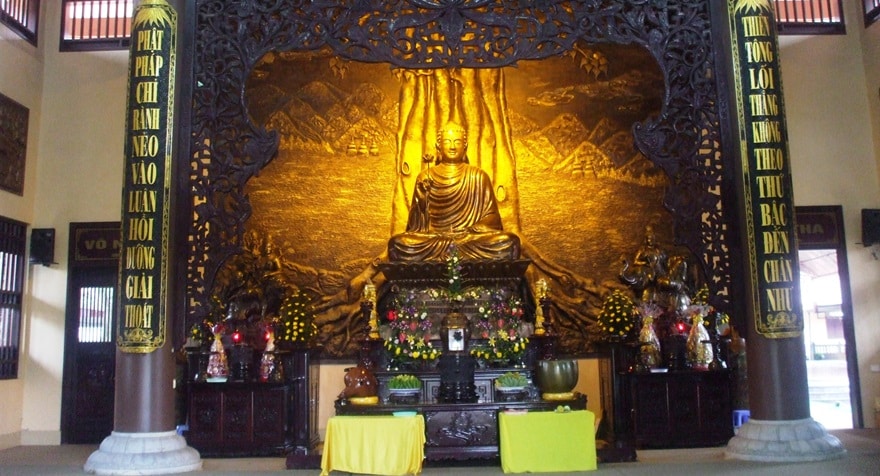
The nearly 4-ton bronze Shakyamuni Buddha statue at Lan Pagoda
Inside the Arhat Gallery stands a collection of 18 meticulously carved wooden Arhat statues, each capturing distinct postures and vividly expressive, life-like facial features. This remarkable collection evokes memories of Tay Phuong Pagoda and the celebrated poetry of Huy Can: “The Arhat statues of Tay Phuong Pagoda, today stepping forth into the world, I gaze upon their faces seemingly brought to life, banishing the evening shadows and dispersing the misty mists.”
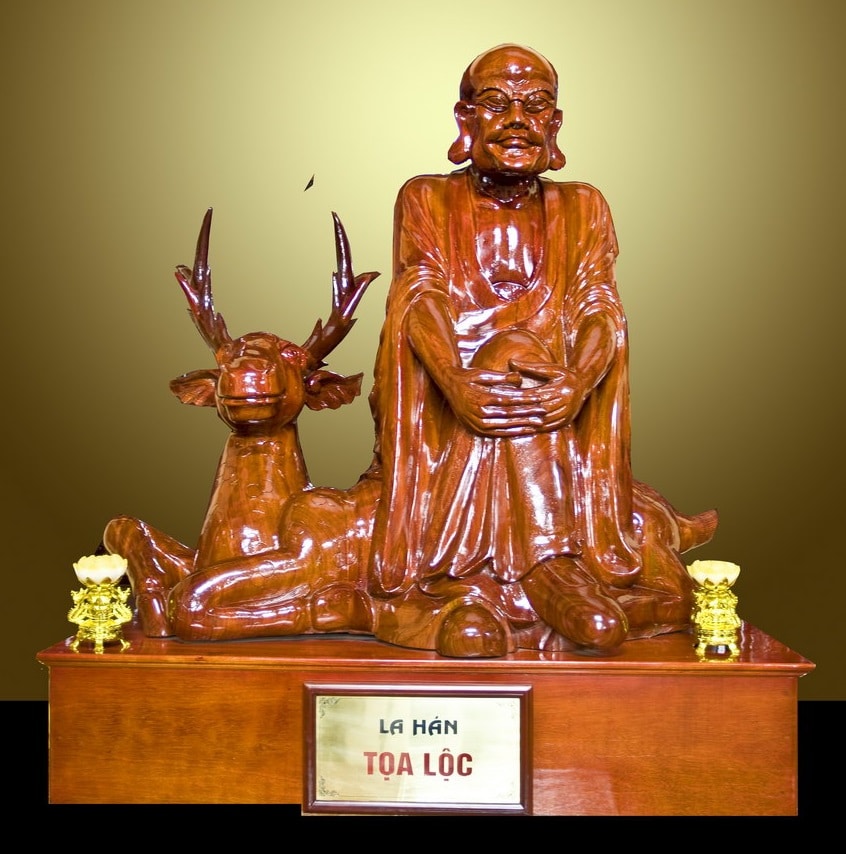
Arhat Statues
Most notably, the monastery features the grand and airy Trang Phap Hall. Spanning a total area of 4,000 square meters across two expansive levels, it was inaugurated in 2012. Standing majestically before the Trang Phap Hall is a towering 14-meter-tall granite statue of Guanyin (Quan Thế Âm), proudly holding the record for the largest granite Bodhisattva statue in Vietnam. Before the compassionate Guanyin stands the Tranquil Reflection Lake within a spacious, verdant landscape. Upon visiting the monastery, absorbing the serene vistas, and gazing across the reflective waters, travelers are instantly enveloped in a profound sense of inner peace and tranquility.
Read more: Yen Tu Day Tour