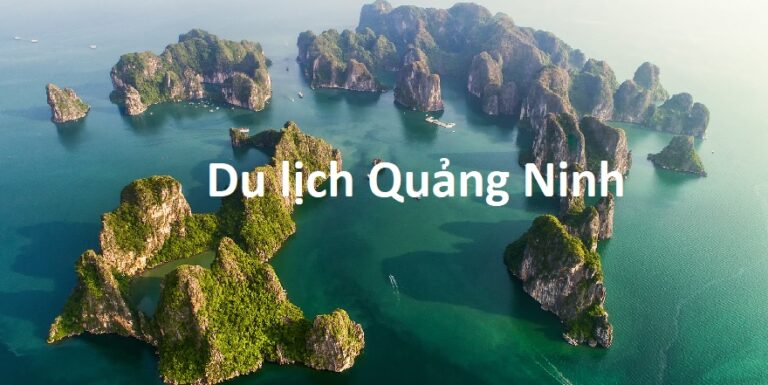
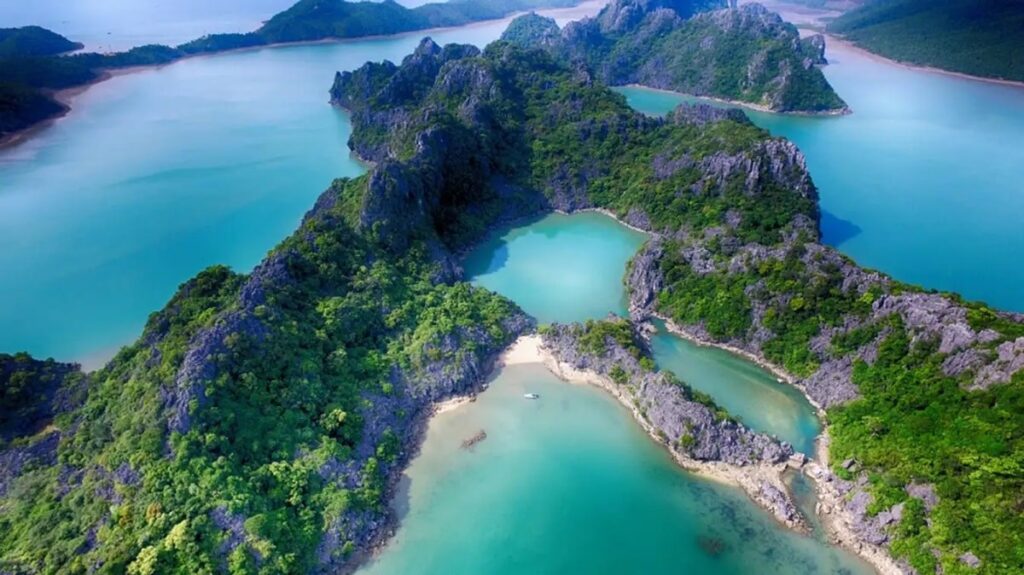
While Ha Long Bay is renowned for its bustling, vibrant atmosphere, Bai Tu Long Bay lies nestled quietly beside it, preserving its original pristine and tranquil beauty. Like a living watercolor painting, this bay features hundreds of islands of all shapes and sizes, scattered across emerald waters to create a majestic, poetic natural landscape that remains largely untouched by the noise and crowds of modern life.
When experiencing Bai Tu Long Bay, travelers can immerse themselves in the pristine nature, explore mysterious caves, kayak through narrow mountain crevices, swim off smooth white sandy beaches, and discover the idyllic lives of local fishing village inhabitants. Join us at Halong Lan Ha Bay Cruise Tours to explore Bai Tu Long Bay – an ideal destination for those who cherish peace and long to reconnect with raw, magnificent nature.
Location and Characteristics of Bai Tu Long Bay
Bai Tu Long is a sea bay located in the Gulf of Tonkin in Northeast Vietnam. Its administrative area encompasses a portion of Ha Long City, Cam Pha City, and the entirety of Van Don District. Covering an area of approximately 160 km2, the bay shares the same geological composition as Ha Long Bay, characterized by limestone and schist formations dating back 570 million years. However, Bai Tu Long Bay also features a unique blend of mainland islands, totaling around 600 large and small islets. Many of these contain intricate cave systems formed by weathering, such as the Cap Ky Nhay, Cap Ky Gia, The Vang, Hon Chong cluster, and Hon Van Don. Furthermore, many islands are inhabited, including Quan Lan, Minh Chau, and Ngoc Vung, where locals make their living through farming and aquaculture. This has led to the development of historic fishing villages, most notably Cong Dam and Vung Vieng.
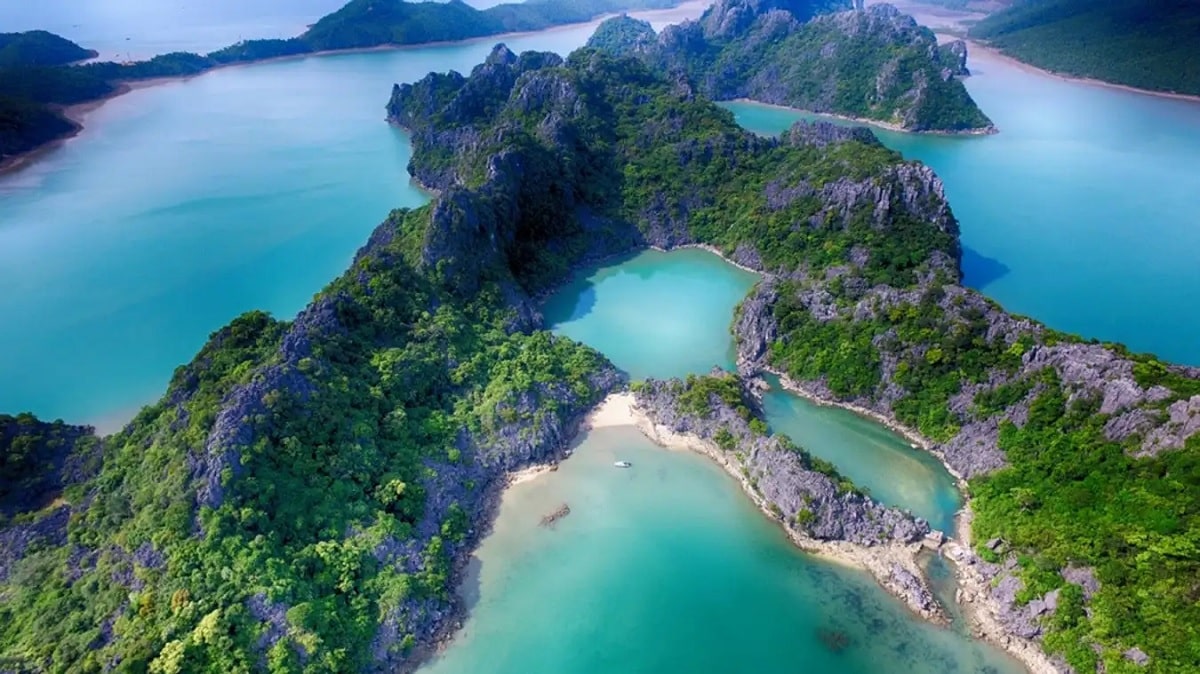
Bai Tu Long Bay
Furthermore, Bai Tu Long Bay boasts long, pristine white sand beaches and unique karst sinkhole systems of significant aesthetic value. Beyond its breathtaking natural scenery, the bay is a hub of high biodiversity, home to diverse ecosystems including mangroves, coral reefs, lagoons, and tropical forests. The Bai Tu Long National Park serves as the epicenter of this regional biodiversity. Designated as an ASEAN Heritage Park, it holds immense ecological value, playing a crucial role in shaping the distinct character of tourism in Bai Tu Long Bay.
Legends and History of Bai Tu Long Bay
In an article published in the Sai Gon Giai Phong newspaper on June 21, 2006, regarding the etymology of “Bai Tu Long,” author Le Trung Hoa cited the “Handbook of Vietnamese Place Names” (Education Publishing House, 2005). In this work, authors Nguyen Duoc and Trung Hai referenced an opinion suggesting that “Bai Tu Long” originated from a French name for the bay, “Baie Tulon.” Mr. Hoa corrected this, noting that there is no place called “Tulon” in France, but rather “Toulon,” the capital of the Var department near the Mediterranean. Thus, it is possible that “Baie” was adapted to “Bai,” and “Toulon” was transformed into “Tu Long.”
According to geographical records and ancient French maps from the late 19th and early 20th centuries, the bay was labeled “Baie du Fai Tsi Long,” distinguishing it from “Baie D’Along” (Ha Long Bay). Could “Fai Tsi Long” be a French phonetic transcription of the Chinese-Vietnamese pronunciation, which eventually evolved into the Vietnamese “Bai Tu Long”?
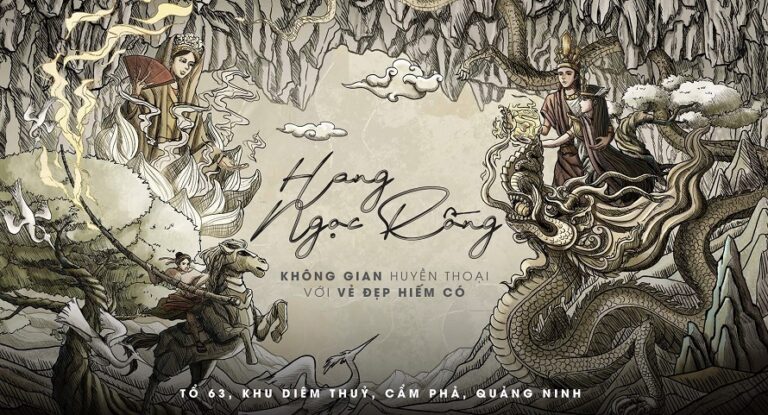
Legend tells that from the early days of the nation’s founding, the Vietnamese people were constantly attacked by foreign invaders from the sea. Seeing this, the Jade Emperor sent the Mother Dragon and her brood of children to help the Vietnamese defend their land. As enemy ships aggressively advanced from the sea toward the coast, the Dragons descended from the heavens. They immediately exhaled flames to incinerate the enemy fleet and unleashed pearls and jade, creating a massive, impenetrable stone wall that rose from the sea, causing the enemy vessels to collide and shatter.
After defeating the invaders, the Dragons paused to admire the landscape. Finding the land peaceful, the vegetation lush, and the people diligent and hard-working, the Mother Dragon decided to remain with her children at the site of the battle to protect the people of Dai Viet for all eternity. Today, the place where the Mother Dragon descended is known as Ha Long Bay, and the area where the young Dragons landed is Bai Tu Long Bay.
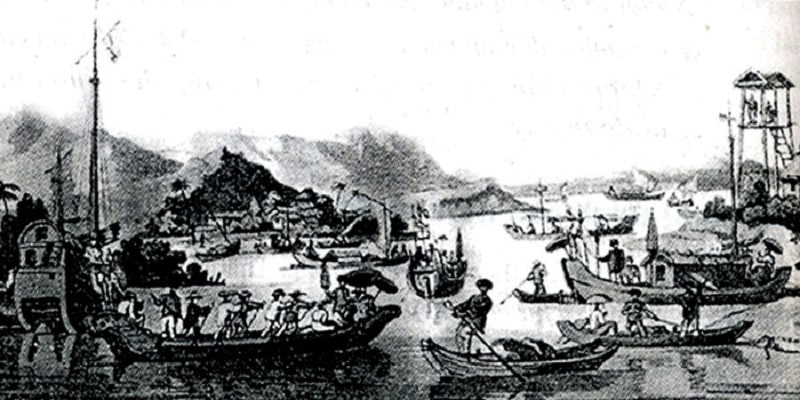
Trade activities at the ancient Van Don commercial port
The history of Bai Tu Long Bay is deeply intertwined with the history of the Vietnamese people. It is home to the Van Don commercial port—the first international trading port in Vietnam. Established in 1149 during the reign of King Ly Anh Tong, it featured numerous docks across the islands within the Bai Tu Long bay area. This port cluster spanned approximately 200 square kilometers, including docks such as Cong Dong and Cong Tay (Thang Loi commune); Cai Lang and Cong Cai (Quan Lan commune); Cai Cong and Con Quy (Minh Chau commune); and Cong Yen and Cong Hep (Ngoc Vung commune) in what is now Van Don district. The Van Don commercial port operated for seven centuries, serving as a bustling hub for merchant ships from China, Japan, Mongolia, the Philippines, and Europe to trade goods.
Bai Tu Long also witnessed the heroic feats of Tran Khanh Du and the three Pham brothers (from Quan Lan commune), who decimated the Yuan-Mongol fleet led by General Truong Van Ho in 1288. Furthermore, Bai Tu Long Bay features famous temples such as Cửa Ông Temple (also known as Suot Temple), located near Cam Pha, which honors Hung Nhuong Vuong Tran Quoc Tang—the third son of the legendary General Hung Dao Vuong Tran Quoc Tuan—who made immense contributions to the victories against the Mongol invaders.
How to visit Bai Tu Long Bay
Over the years, Quang Ninh province has actively promoted the development of Bai Tu Long Bay to create new maritime tourism products. The construction and launch of the high-end Ao Tien cruise port in 2023 and the establishment of 10 new sightseeing routes for Bai Tu Long Bay have provided a significant boost to local tourism. Below are some of the most attractive destinations to explore in Bai Tu Long.
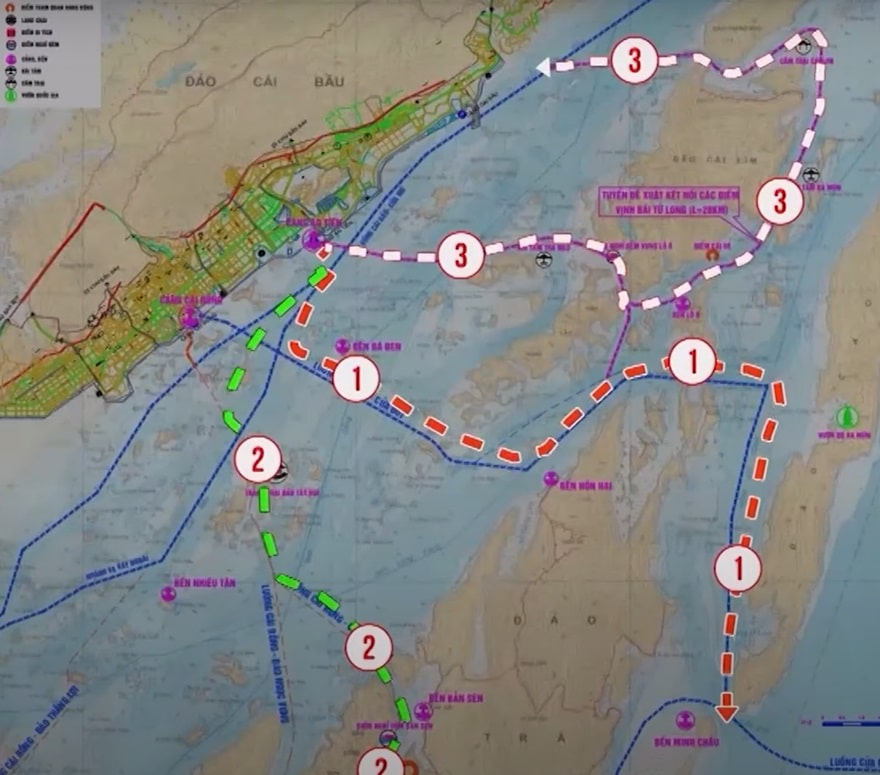
Sightseeing routes in Bai Tu Long Bay
| Cruise Name | Price From | Key Highlights |
|---|---|---|
| Signature Royal | From 3,500,000 VND/guest | – Sophisticated, modern design.
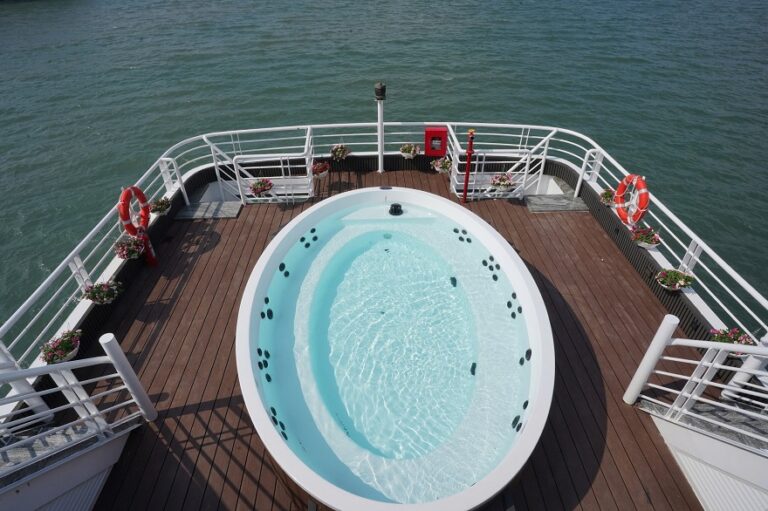
– Infinity pool, fine-dining restaurant, and bar. – Diverse activities: kayaking, squid fishing, cooking classes, and more. |
| La Regina Royal | From 4,200,000 VND/guest | – Classic royal elegance.
– Spacious suites with private balconies. – Premium spa and massage services. |
| Athenaspa | From 3,800,000 VND/guest | – Dedicated to wellness and relaxation.
– Spa treatment rooms, gym, and yoga facilities. – Healthy menus and organic beverages. |
| Huong Hai Sealife | From 2,900,000 VND/guest | – Modern, newly built vessel with a nature-inspired aesthetic.
– Cave exploration and fishing village visits. – Live music and traditional cultural performances. |
| Renea | From 3,200,000 VND/guest | – Intimate boutique design.
– Guest rooms with stunning views and private balconies. – Kayaking, fishing, and Tai Chi sessions. |
Note: Prices above are for reference only and may vary depending on booking dates, room categories, and current promotional offers.
See also: Bai Tu Long Bay Day Cruise & Ticket Price List
Must-Visit Destinations in Bai Tu Long Bay
Bai Tu Long Bay is not only celebrated for its majestic scenery but is also home to fascinating hidden gems that offer visitors truly unforgettable experiences. Below are the must-visit destinations in Bai Tu Long Bay that you should explore at least once.
1. Bai Tu Long National Park
The core zone of Bai Tu Long National Park spans the administrative boundaries of three island communes within Van Don District: Minh Chau, Van Yen, and Ha Long, home to a population of approximately 24,000 residents. Established on June 1, 2001, pursuant to Decision No. 85/2001/QD-TTg by the Prime Minister, the park was formed upon the foundation of the former Ba Mun Nature Reserve. It covers a total natural area of 157.83 km² (extending to 260 km² when including the buffer zone). This encompasses 61.25 km² of terrestrial islands, featuring over 80 large and small islands and islets, alongside 96.58 km² of marine and aquatic territory. The geology of this region is characterized by a mix of soil islands and limestone karst formations, such as Ba Mun, Tra Ngo Lon, Tra Ngo Nho, Sau Nam, Sau Dong, Dong Ma, Hon Chinh, Lo Ho, Mang Ha Nam, Mang Ha Bac, Di To, Chay Chay, and Da Ay. Notably, Soi Nhu Cave contains archaeological relics providing evidence of ancient Vietnamese inhabitants dating back approximately 14,000 years. Furthermore, the park features limestone mountain ranges encircling vast valleys, creating lagoons and hidden coves that serve as rich habitats for diverse flora and fauna.
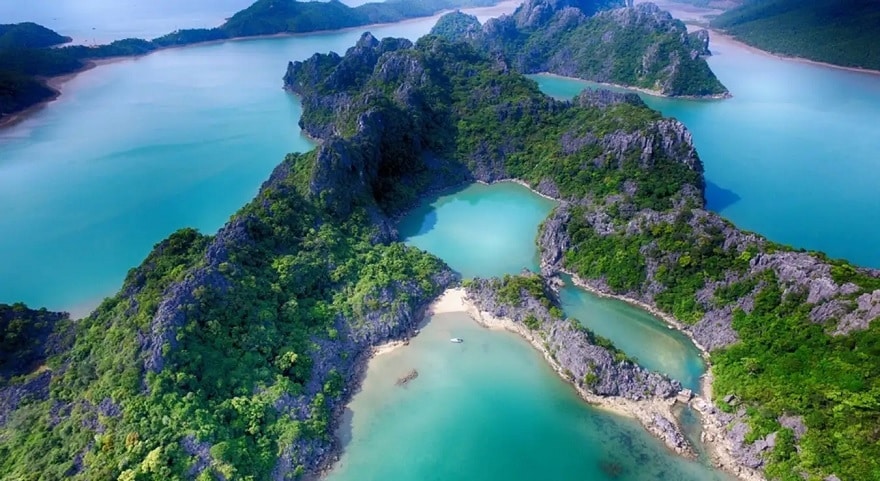
Bai Tu Long National Park
Amidst the vast, shimmering waters of Bai Tu Long Bay, Cong Do Island emerges like a mysterious green gem, harboring within it Thien Canh Son Cave—a masterpiece generously bestowed by nature. The cave possesses an ethereal, magnificent beauty, adorned with countless sparkling stalactites that drape down like soft, iridescent silk curtains.

Thien Canh Son Cave
Stepping into Thien Canh Son Cave, travelers feel as though they have wandered into a dreamscape where time stands still, leaving one awestruck by the phantasmagorical artistry of nature. The soaring vaulted ceilings are punctuated by countless stalactites of bizarre shapes, sparking the human imagination. Glimmers of light filtering in from the cave entrance reflect off glistening water droplets, creating a shimmering, magical atmosphere.
3. Vung Vieng Fishing Village
Set against the majestic natural backdrop of Bai Tu Long Bay, Vung Vieng fishing village emerges as a serene and rustic highlight. As one of the few remaining floating villages that has retained its pristine character, it offers travelers an authentic glimpse into the lives of coastal fishermen. Vung Vieng is tucked away between towering limestone peaks in the Vung Ha archipelago, approximately 25km from the mainland. To reach the village, visitors must travel by boat through a unique “village gate”—a massive, naturally occurring stone arch carved by time.
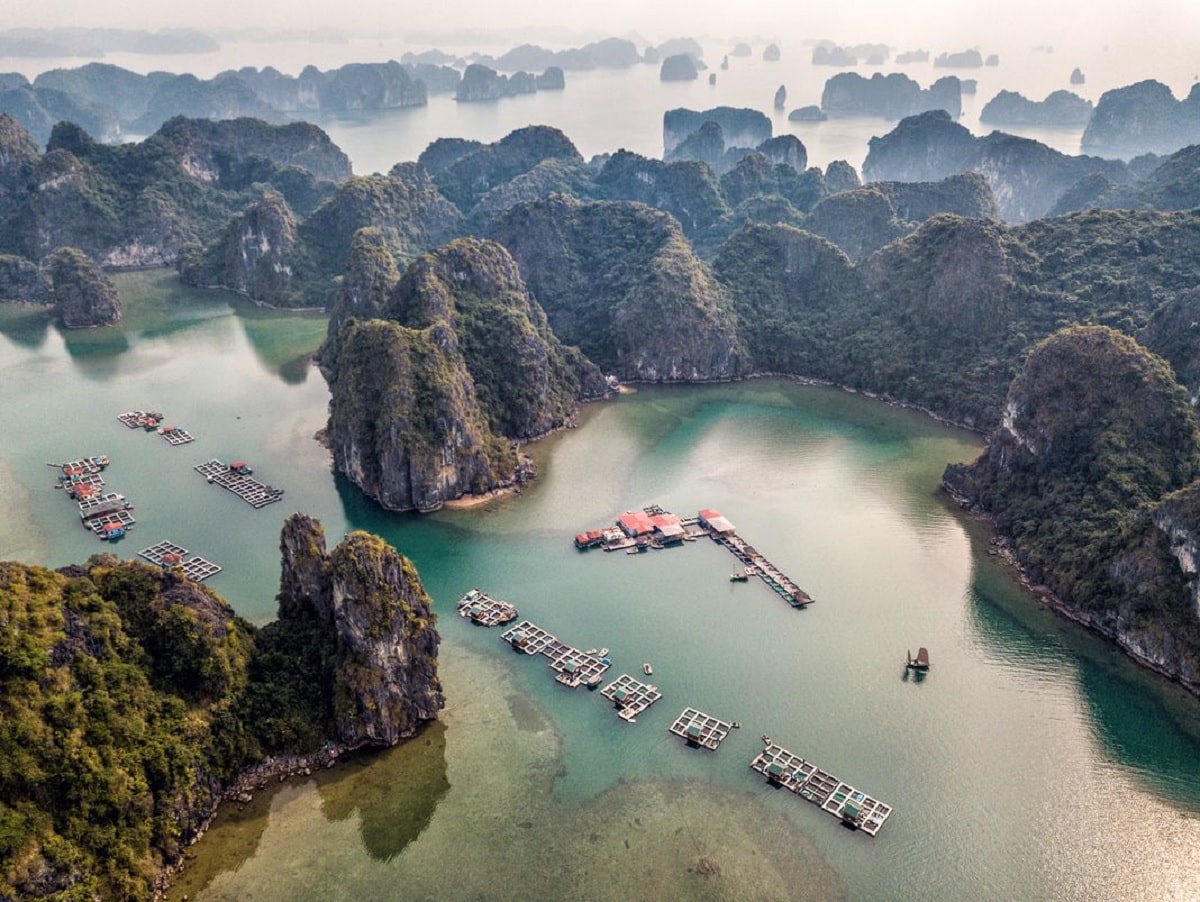
A corner of Vung Vieng
Approximately 50 households with nearly 300 residents live in Vung Vieng, sustaining their livelihoods through fishing and aquaculture. Colorful floating houses, traditional bamboo boats gliding gently across the water, and the warm smiles of the local people create a peaceful and welcoming environment. In addition, Bai Tu Long Bay is home to many other notable fishing villages, such as Cong Dam and Cua Van.
4. Quan Lan Island
If you are seeking a tranquil, pristine island retreat with beaches that mirror paradise, Quan Lan Island is your ideal destination. Nestled within the Bai Tu Long Bay archipelago, Quan Lan captivates visitors with its unspoiled beauty—featuring azure waters, ivory sands, golden sunshine, and the unique maritime culture of the local fishing community.
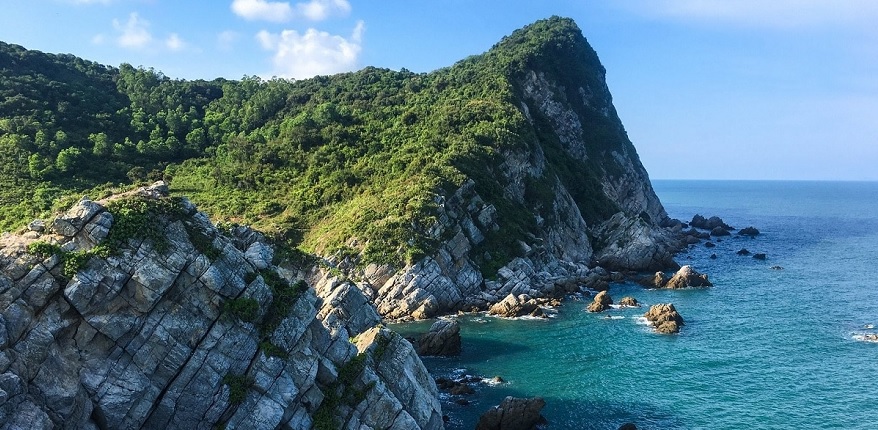
Quan Lan Island
Quan Lan Island is blessed by nature with stunning beaches, where silky white sands meet crystalline, turquoise waters. Highlights include Quan Lan Beach, Minh Chau Beach, and Son Hao Beach—each offering a distinct charm and promising moments of pure relaxation. Beyond its shores, Quan Lan boasts lush primeval forests that serve as a sanctuary for diverse rare flora and fauna. These verdant landscapes are perfect for discovery through trekking, hiking, or cycling.
5. Ngoc Vung Island
We hope this comprehensive guide to Bai Tu Long Bay provides you with valuable insights. If you are interested in chartering a cruise to Ha Long Bay to explore these magnificent destinations, please contact us for further details.