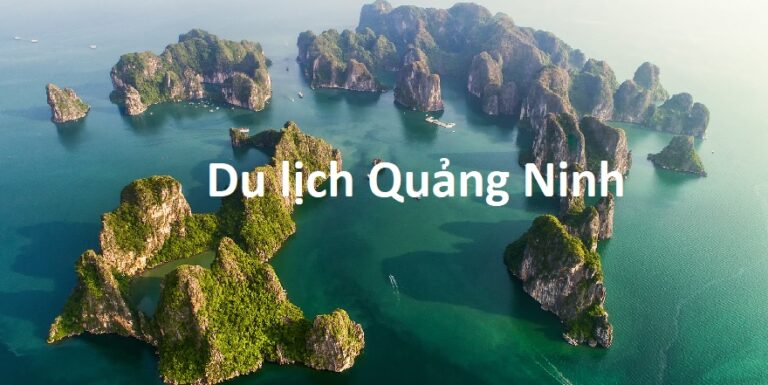
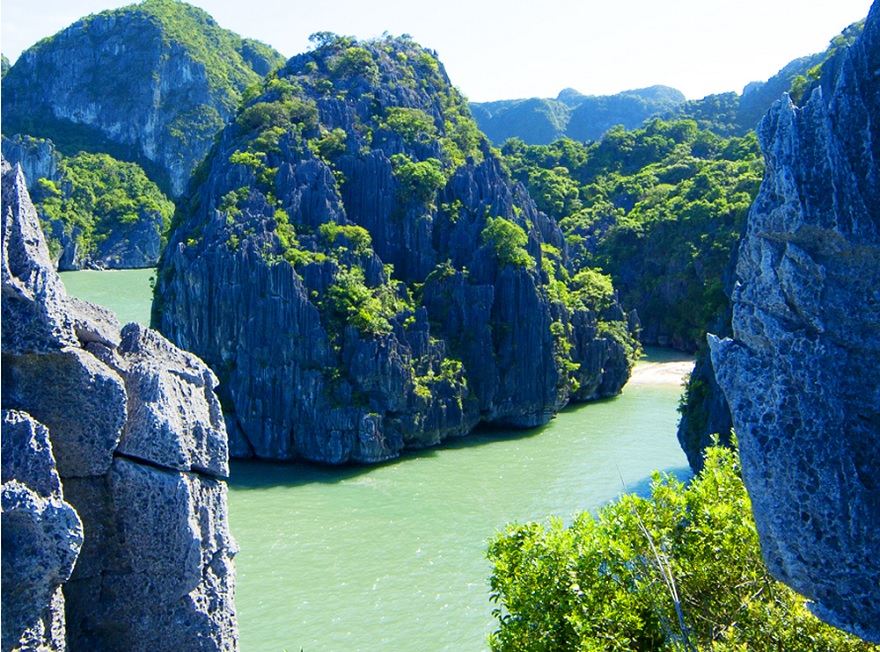
Halong Bay is one of the world’s premier natural wonders, twice recognized by UNESCO as a World Natural Heritage Site. Boasting over 1,900 limestone islands and magnificent caves formed millions of years ago, it presents a breathtaking and majestic landscape. Halong Bay is also home to a diverse array of rare flora and fauna, deeply intertwined with the legends and history of the Vietnamese people.

Experience visiting Halong Bay

To ensure travelers can fully explore the most exceptional destinations of Halong Bay, tourism organizers and the Halong Bay Management Board have curated various bay sightseeing routes tailored to the diverse preferences and desires of every guest. Among these, Route 3 stands out as a fascinating and exclusive itinerary, offering visitors unforgettable experiences of the natural splendor and cultural heritage of Halong Bay.

General Introduction to Halong Bay Sightseeing Route 3

Route 3 is officially designated as the Cruise Port – Marine Culture Conservation Center route. It grants travelers access to iconic Halong Bay destinations such as the Cửa Vạn Floating Cultural Center (Cửa Vạn Fishing Village), Tiên Ông Cave, Ba Hầm Lake, and Bà Men Temple. At the same time, it offers guests a closer glimpse into the daily lives and livelihoods of local residents, from fish farming and net mending to savoring freshly caught seafood.

Among the five Halong Bay sightseeing routes, Route 1 and Route 2 are designed for general tourism and remain the most popular choices for mainstream travelers. Consequently, these routes frequently feature shared day-boat excursions with a wide variety of vessels ranging from 48 to 500 seats. In contrast, Route 3 and Route 4 are classified as high-end, premium itineraries tailored for mid-to-high-end clientele and international travelers from markets such as Japan, South Korea, and Europe. These routes are ideally suited for guests wishing to spend a night on the bay while delving into the floating fishing villages and the traditional lifestyles of the local community. This is because Routes 3 and 4 focus more deeply on exploring the culture and history of Halong Bay rather than purely scenic sightseeing like Routes 1 and 2.

Therefore, if you wish to explore Route 3, we highly recommend choosing an overnight luxury cruise in Halong Bay. In cases where time is limited and you prefer a brief day excursion, chartering a private vessel is the ideal alternative. When chartering a private boat, you will encounter the following costs and itinerary details:

  • Route 3 Attractions: Cửa Vạn Floating Cultural Center, Bamboo Forest area, Tiên Ông Cave, Áng Dù, Ba Hầm Lake, Bà Men Temple.
  • Duration: 6 – 8 hours
  • Private Boat Charter Cost: 4,000,000 – 5,000,000 VND/boat (for a 48-seat vessel, the smallest available option; sightseeing tickets of 240,000 VND/person are not included)
  • Halong Overnight Cruise Rates: 2,000,000 – 3,000,000 VND/person (for 3 – 5 star cruises)

Introduction to Attractions Along Halong Bay Route 3
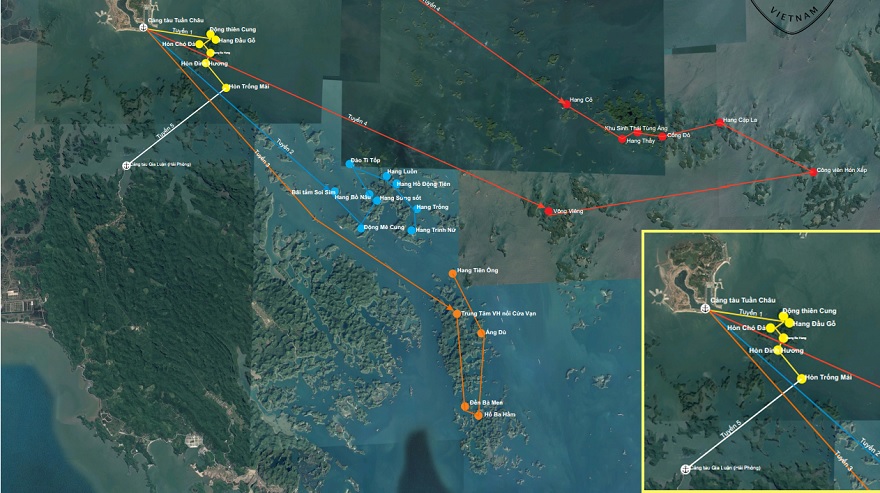
Map of Halong Bay Route 3

Map of Halong Bay Route 3

The departure points for this itinerary are the premier tourist ports in Halong City, namely: Tuan Chau International Passenger Port and Halong International Cruise Port. Because these two ports are located in different areas, day-boat excursions departing from each will approach the attractions in somewhat reverse sequences. For instance, departing from Tuan Chau International Port, visitors typically visit Tiên Ông Cave as the final stop, whereas departing from Halong International Cruise Port often places this site at the very beginning of the journey, as it is the closest landmark to the harbor. Below, Halong & Lan Ha Bay Cruise Tours presents an overview of the itinerary highlights for your reference:

1. Cửa Vạn Floating Cultural Center (Cửa Vạn Fishing Village)

Cửa Vạn Fishing Village is ranked among the 16 most picturesque fishing villages in the world, nestled within a tranquil cove and embraced by majestic limestone mountains. Home to approximately 176 households living and practicing traditional fishing on the bay, this destination allows travelers to observe local routines such as aquaculture, net repairs, and the preparation of fresh local seafood. Guests can also embark on kayaking adventures or traditional bamboo boat rides to explore nearby caves and bamboo groves.
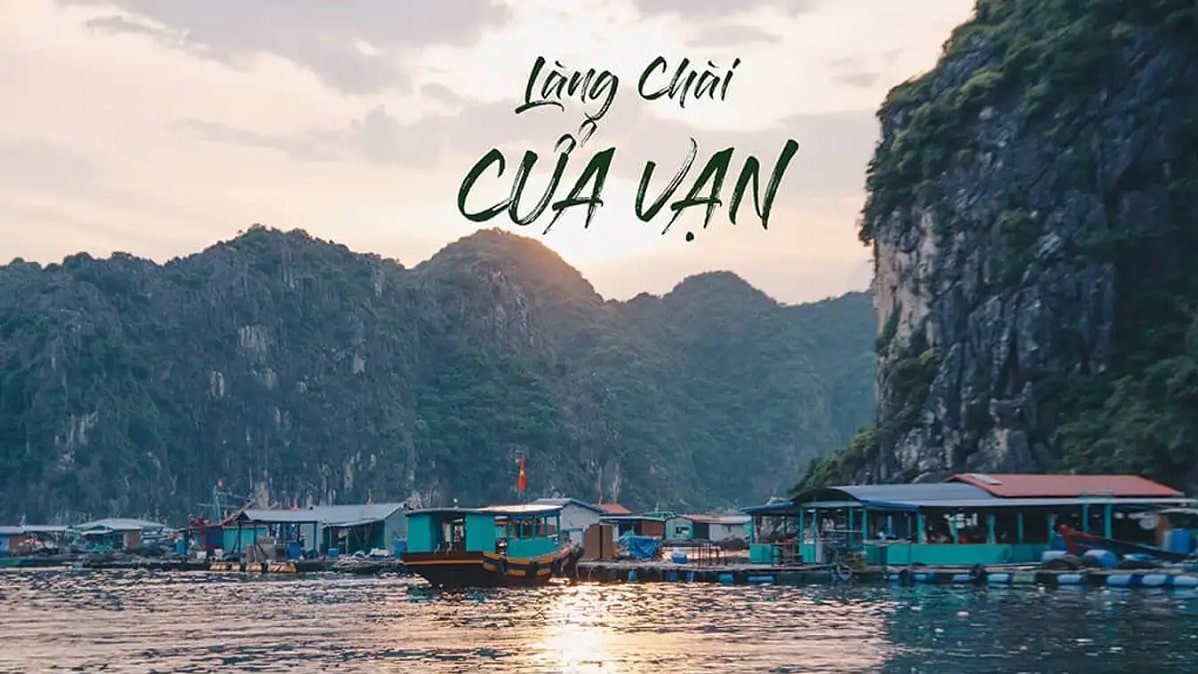
Cửa Vạn Fishing Village

Cửa Vạn Fishing Village

The Cửa Vạn Floating Cultural Center was established in May 2006 with the mission of preserving and promoting the cultural heritage of the Cửa Vạn community. This initiative forms an integral part of the Halong Ecomuseum project—the first ecomuseum in Vietnam and Southeast Asia—generously funded by the Norwegian Agency for Development Cooperation (Norad).
2. Tiên Ông Cave

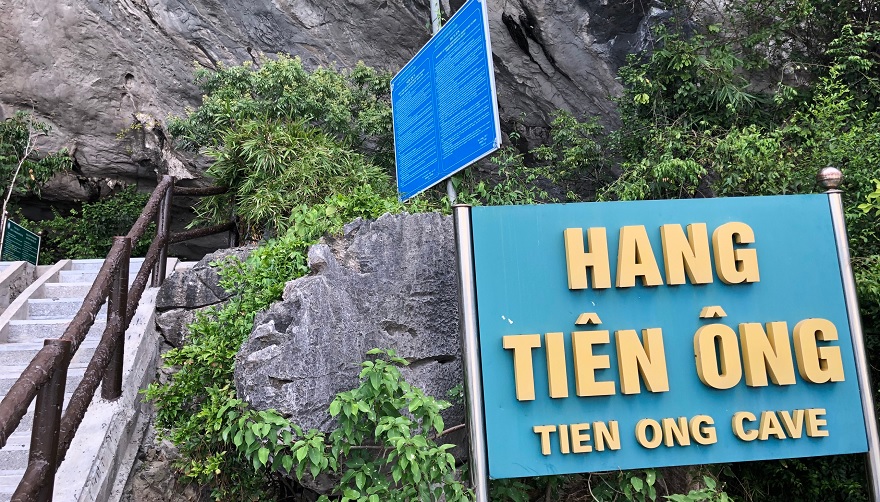
Tiên Ông Cave is a spacious and deep cavern extending approximately 156 meters in length, situated 5 meters above sea level. Located on Cái Tai limestone island, about 18 kilometers from Tuan Chau Marina, the cave is naturally divided into two chambers by a massive stalactite partition. The interior is adorned with wondrous stalactite formations of whimsical shapes, making visitors feel as though they have stepped into an enchanted realm.

Entrance to Tiên Ông Cave

Entrance to Tiên Ông Cave

Tiên Ông Cave captivates travelers not only through its natural grandeur but also through its profound historical and cultural significance. It served as a dwelling place for ancient Vietnamese people belonging to the Soi Nhụ culture dating back 8,000 to 10,000 years. Numerous ancient artifacts, including stone implements, bone tools, and pottery shards, have been unearthed here, bearing testament to human habitation far out at sea millennia ago. An archaeological exhibition space within the cave offers visitors deeper insights into the ancient civilization of early Halong inhabitants.

3. Ba Hầm Lake

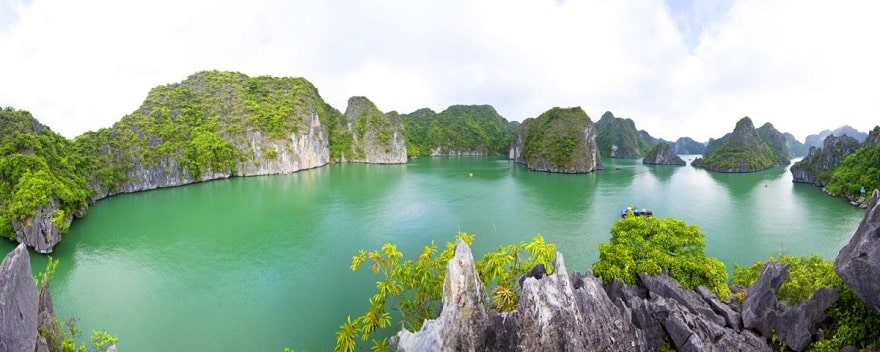
Ba Hầm Lake comprises a system of three pristine saltwater lagoons interconnected by three narrow, elongated water tunnels, nestled within a secluded marine alcove at the northwestern corner of Đầu Bê Island—the southernmost island cluster of Halong Bay. Ba Hầm Lake lies strictly within the preservation zone of the Halong Bay World Natural Heritage site, located over 25 kilometers from the tourist boat harbor.

Ba Hầm Lake

Ba Hầm Lake

Ba Hầm Lake preserves a pristine and tranquil natural landscape, framed by towering vertical limestone cliffs and adorned with eccentric stalactite clusters overhead. The lake waters are crystal clear and teeming with diverse marine flora and fauna. During high tide, the tunnels become submerged, creating an exclusive, secluded sanctuary within Ba Hầm Lake. To explore the interior lagoons, visitors must time their visit with low tide, boarding a bamboo rowboat or kayak to glide through the low-hanging caverns. Each round-trip passage takes approximately 45 minutes, with local boat rental services available at an agreed rate of around 50,000 VND per person.

4. Bà Men Temple

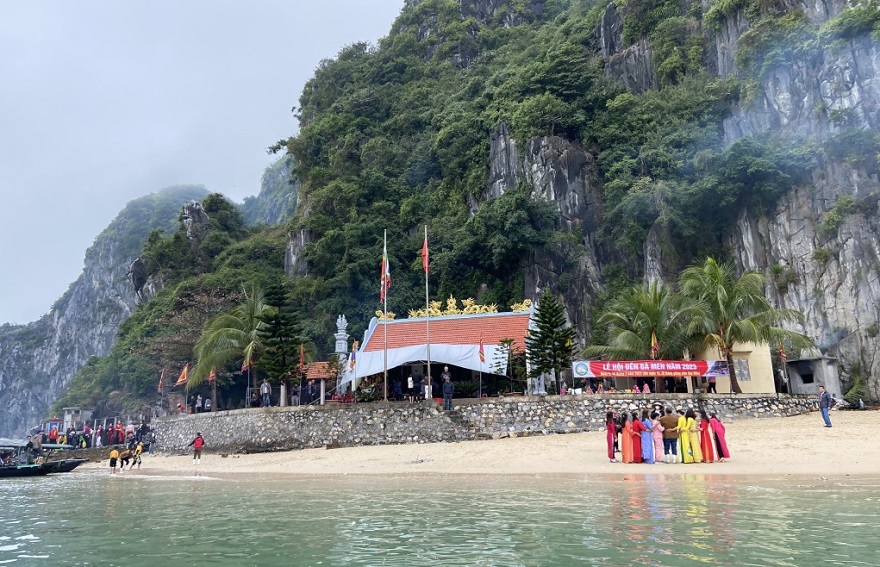
Bà Men Temple is a venerable and sacred sanctuary situated on Đầu Bê Island within the core zone of Halong Bay. Also known by its classical designation as Đức Chúa Bà Temple, it was erected to honor Bà Men, one of six women who tragically drowned while out at sea during a late winter storm in ancient times. According to local fishing folklore, Bà Men was the eldest among the group, renowned for her wisdom and benevolence. Her remains drifted into the sheltered waters of Đầu Bê Island, where local fishermen respectfully buried her, established a shrine, and revered her as the guardian goddess of seafarers.

Bà Men Temple

Bà Men Temple

Built over two centuries ago, Bà Men Temple features traditional “Đinh”-shaped Chinese character architecture (resembling the letter J), perched upon a sandy terrace elevated 3 meters above the island base. The temple façade overlooks a sheltered cove where numerous fishing boats moor peacefully. Inside rests a revered statue of a woman approximately 40 centimeters in height, adorned with a pale yellow headscarf, complemented by a porcelain incense burner placed respectfully before it.

5. Bamboo Forest Area

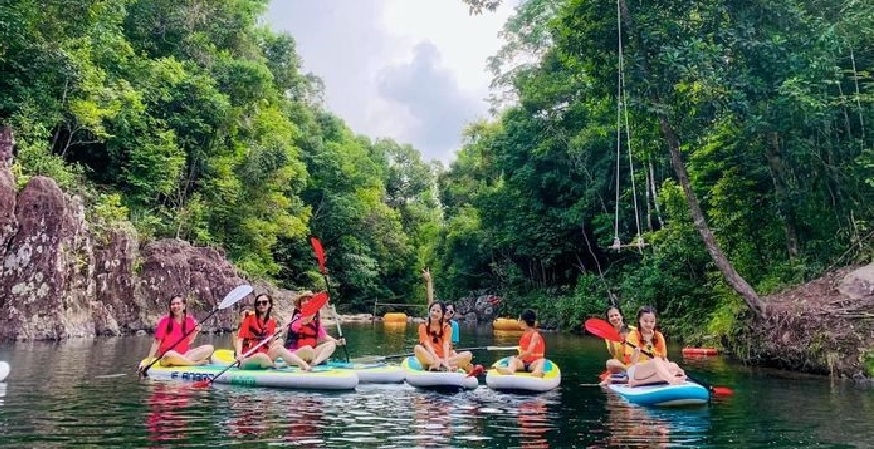
The Bamboo Forest is an enchanting valley where bamboo reigns supreme. Gracefully arching bamboo stalks form verdant, cooling corridors. Expansive and airy, this lush haven serves as an ideal habitat for golden monkeys. While currently not open to general tourism, this picturesque enclave, alongside the Cửa Vạn Floating Cultural Center, is envisioned to become a premier eco-tourism highlight on Halong Bay in the near future.

kayaking and walking to explore the bamboo forest in Halong Bay

kayaking and walking to explore the bamboo forest in Halong Bay

6. Áng Dù

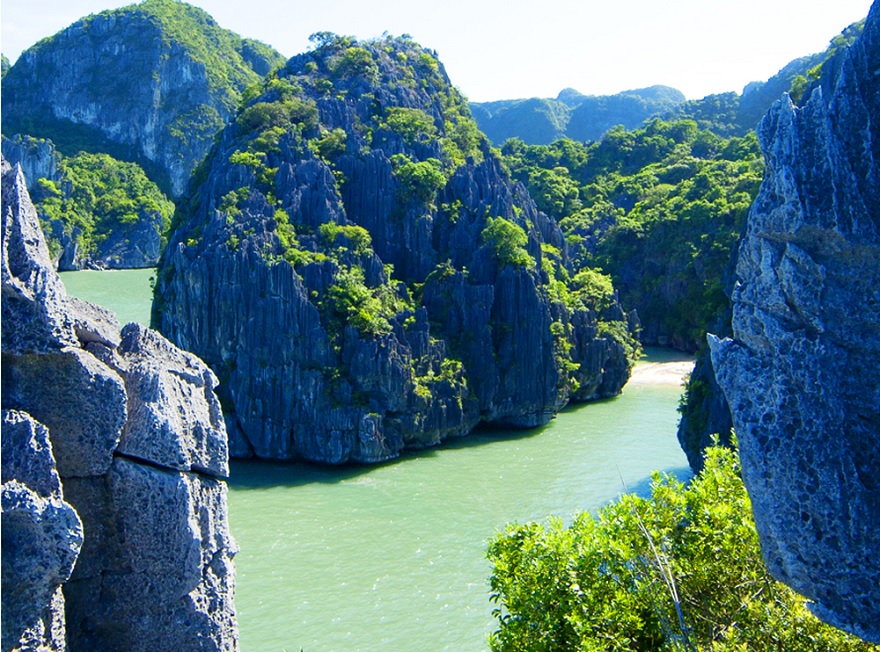
Tucked away amidst majestic limestone karsts, Áng Dù is a secluded and mystical lagoon within Halong Bay. Functioning as an independent ecosystem spanning nearly 2 hectares, it is completely encircled by towering monolithic cliffs. Áng Dù preserves its pristine biodiversity and untouched allure, providing a sanctuary for numerous rare species of flora and fauna. The location evokes an exquisite sense of peace and serenity as travelers contemplate the glassy, mirror-like waters. This promising destination is currently being evaluated for future tourism development.

Áng Dù area in Halong Bay

Áng Dù area in Halong Bay

Halong Bay Sightseeing Route 3 is a fascinating and exclusive itinerary that delivers unforgettable experiences of the natural beauty and cultural heritage of Halong Bay. This route is the ultimate choice for travelers seeking to uncover the authentic culture and historical roots of Halong Bay.