Tucked away amidst the majestic natural landscape of Cat Ba Island (Hai Phong), the Army Hospital Cave (Hang Quan Y) emerges as a profoundly mysterious and captivating historical witness. Beyond its pristine beauty adorned with mesmerizing stalactites, this cavern preserves heroic tales of the nation’s fierce and glorious resistance era.
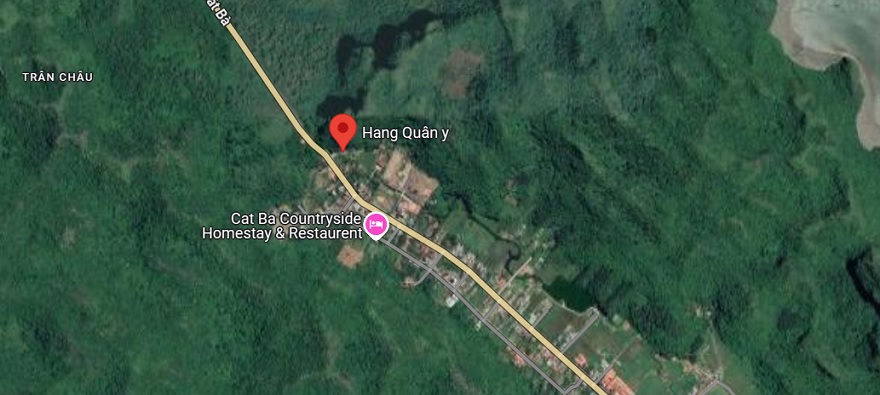
Location of Army Hospital Cave on Google Maps
The journey to discover the Cat Ba Army Hospital Cave will transport you back in time to the intense years of the American resistance war, while allowing you to admire the breathtaking grandeur bestowed upon this destination by nature. Join us as we embark on this fascinating exploratory voyage!
Army Hospital Cave: From a Military Medical Facility to a Landmark Attraction
Nestled halfway up the mountain along the cross-island route toward Cat Ba National Park, approximately 7km from Cat Ba town, the Army Hospital Cave (also historically known as Hung Son Cave) is located in Hai Son village, Tran Chau commune. It earned the name Hung Son because, during the resistance against the invading Mongol-Yuan army in the Tran Dynasty, a general named Hung Son established a base here alongside the troops and local people to fight the enemy.
During the resistance war against the US to save the country, our Party and State anticipated that the enemy would heavily bombard the North to sever reinforcement lines to the South. Cat Ba was chosen as a strategic base because, at that time, it served as the gateway port of Hai Phong and the stationing grounds for Naval Brigade 126—the force reinforcing the Southern battlefield aboard the legendary “ships without numbers.”
To counter the US destructive war, the military and people of the Cat Ba archipelago leveraged the natural advantages of existing caves to construct a field hospital deep within the limestone mountain, serving as a bomb shelter for residents of surrounding communes and towns. Due to its advantageous location and spacious interior, Hung Son Cave was selected and underwent construction and renovation over a two-year period (1963 – 1965). In August 1964, when the US intentionally provoked Vietnam following the Gulf of Tonkin incident, Hung Son Cave officially commenced operations and was renamed the Army Hospital Cave. It was utilized to care for wounded and sick soldiers, remaining operational for a decade from 1965 until the end of the American resistance war in 1975.
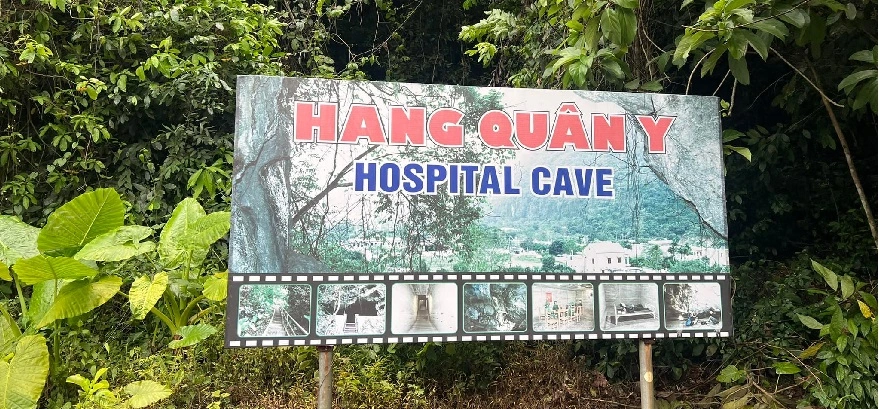
Army Hospital Cave Direction Sign
The Army Hospital Cave was built entirely of reinforced concrete, transported and constructed through the sheer manual labor of local troops and residents. Despite being housed inside a natural cavern, it fully met the rigorous requirements of a field hospital. Spanning a length of approximately 200 meters, the cave is divided into 3 distinct tiers, comprising 17 to 20 rooms of varying sizes with a total area of about 2,000m² and a standard wartime capacity of 200 people. During peak periods, however, its capacity could expand to accommodate 1,000 to 2,000 individuals. Remarkably, even as a temporary medical facility, it was fully equipped with specialized functional rooms such as surgical theaters, treatment wards, and convalescence rooms, capable of handling multiple medical procedures simultaneously.
- Tier 1: The main sector consisting of 14 functional rooms.
- Tier 2: The screening cinema and physical fitness training area.
- Tier 3: The reception lobby, guard post, and officers’ quarters.
During the resistance period, neither the Army Hospital Cave nor the entire residential area of Cat Ba had access to the national power grid; consequently, lighting and daily operations relied entirely on oil lamps. Situated deep within the mountain, the cave was perpetually dark, humid, and heavily infested with mosquitoes. Living conditions only began to improve between 1970 and 1972, when generators were provided by the Soviet Union to supply electricity.
Following the conclusion of the American resistance war, this extraordinary field hospital fulfilled its historic mission, and all specialized equipment was relocated. However, the entire interior structure of the Army Hospital Cave remains remarkably intact to this day. Owing to its exceptionally secure and robust terrain, locals frequently used it as a safe shelter during typhoons and floods. Today, to accommodate growing tourism demands, local authorities have upgraded and renovated the site with historical exhibits and installed an electricity grid inside the cave, ensuring a seamless and comfortable exploratory experience for visitors.
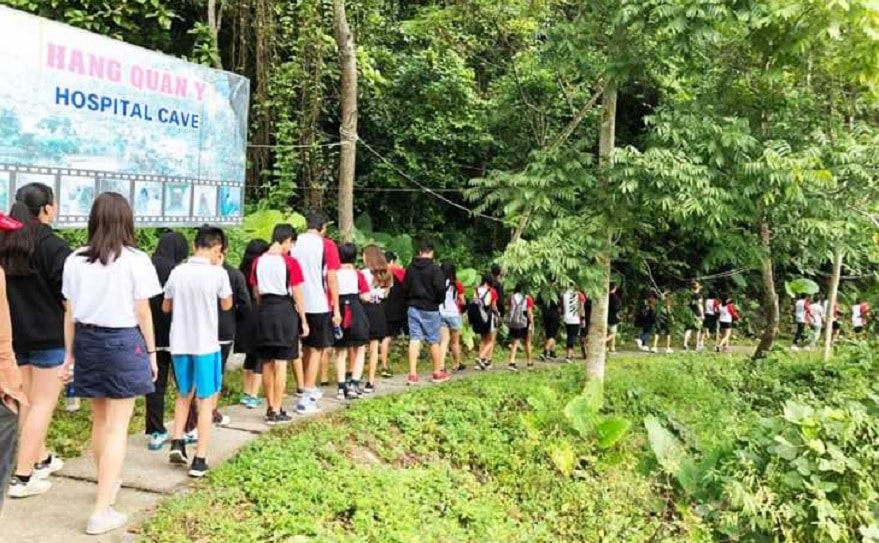
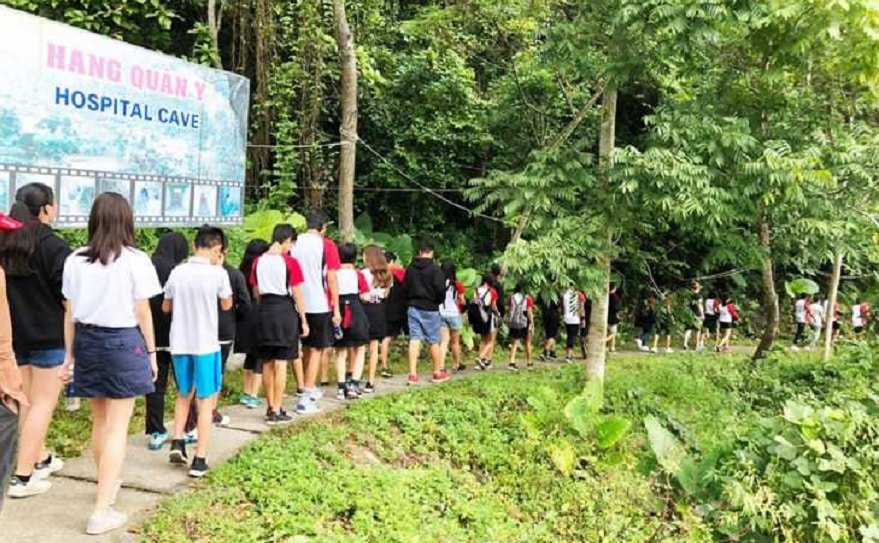
Path leading to the Army Hospital Cave
To explore the Army Hospital Cave, visitors are required to purchase an entrance ticket priced at 80,000 VND per adult and 40,000 VND per child (under 1.2m in height). This ticket fee covers admission to both Cat Ba National Park and the Army Hospital Cave. Tickets can be purchased at the ticket counter located at the Cat Ba National Park entrance or directly at the gates of the Army Hospital Cave.
The Army Hospital Cave welcomes visitors from 8:00 AM to 5:00 PM daily, operating throughout the week. Each day, the cave admits a maximum of 500 visitors, with a time limit of 30 minutes per tour group. Guests are advised to arrive early to avoid extended waiting times.
Ticket Prices and Opening Hours of Army Hospital Cave
To ensure a seamless excursion to this historic field hospital cave, understanding the ticketing options and visiting procedures is an essential preliminary step. Below is detailed information regarding two popular methods to help you plan your visit to the Army Hospital Cave:
Option 1: Independent Exploration
With this choice, you will independently travel to Cat Ba National Park, where the Army Hospital Cave is situated. You can then purchase tickets directly at the counter for entry. The standard sightseeing route encompasses the Army Hospital Cave and adjacent attractions within the National Park, with specific fees regulated by Resolution No. 06/2024/NQ-HĐND of the Hai Phong City People’s Council, effective from August 1, 2024. Details are as follows:
- Direct counter ticket purchase: Applies to the sightseeing route featuring the Army Hospital Cave (typically including Kim Giao Forest and Ngu Lam Peak).
- Adults: 80,000 VND/person
- Children: 40,000 VND/person
- Note: The Army Hospital Cave is open to visitors daily from 7:00 AM to 5:00 PM.
Option 2: Joining a Tour (Particularly an Overnight Lan Ha Bay – Cat Ba Cruise Tour)
Many Cat Ba exploration itineraries, especially overnight luxury cruises in Lan Ha Bay, frequently incorporate visits to prominent landmarks within the National Park, including the Army Hospital Cave. Choosing this option means cave admission fees are typically bundled into the overall tour package, offering supreme convenience as travelers need not worry about purchasing individual tickets. This approach is ideal for those seeking a meticulously curated journey with a comprehensive, all-inclusive schedule and premium services. For tailored consultations regarding cruise tours that include a visit to the Army Hospital Cave, please contact Halong & Lan Ha Bay Cruise Tours for expert assistance.
Read more: Lan Ha Bay Cruise Tours
Exploring the Army Hospital Cave
The cave features two main entrances on the eastern and western sides. The original approach path was constructed using a mobile wooden staircase that could be easily dismantled or destroyed upon receiving an alert of enemy landing forces, thereby safeguarding the cave’s exact location and ensuring the safety of those inside. While the staircase has undergone numerous repairs, it continues to be crafted from wood to preserve its profound historical authenticity.
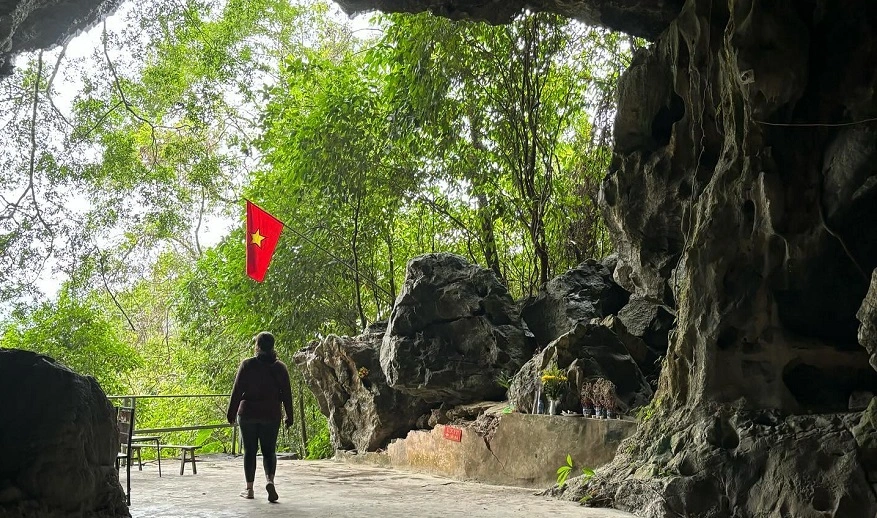
The entrance to the Army Hospital Cave retains its pristine appearance amidst wild mountain forests and stalactite formations
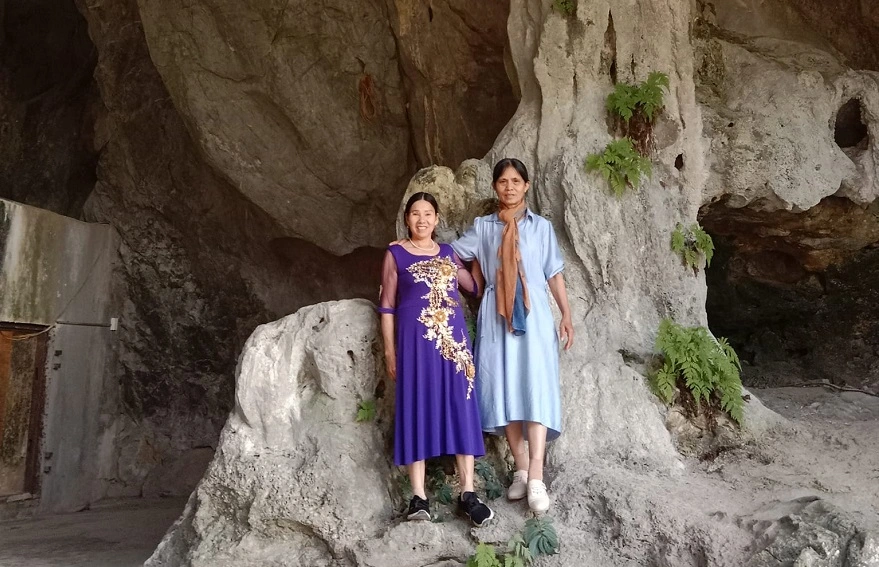
Giant stalagmites and stalactites at the Army Hospital Cave
Ascending the steps, visitors encounter a heavy-duty iron door approximately 15 cm thick, secured by 4 secondary bolts and 1 primary locking mechanism, operable exclusively from the inside. Notably, this door is forged from ultra-thick, exceptionally durable steel designed to withstand enemy bullets and B40 rockets. Sponsored by the Soviet Union, this remarkable door features a convex outer surface specifically engineered to deflect incoming projectiles harmlessly to either side.
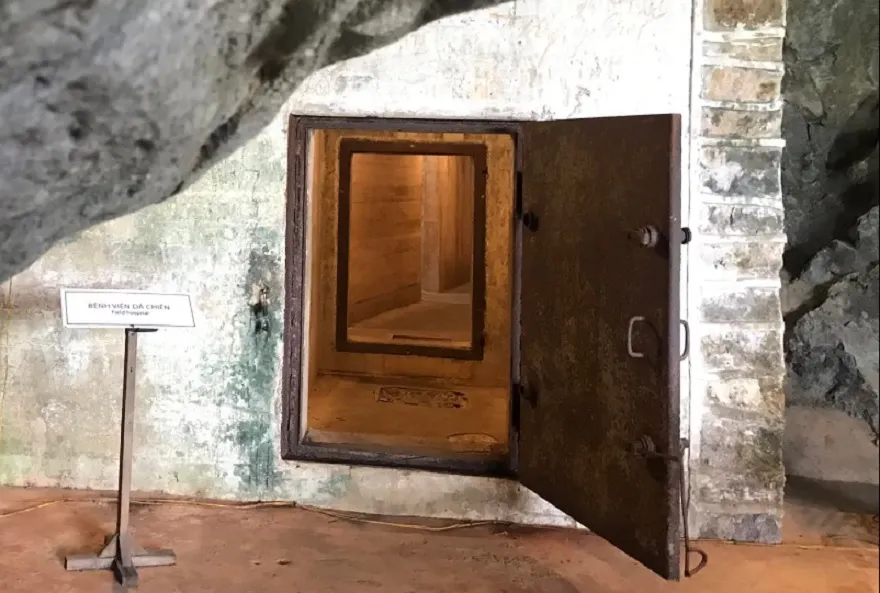
The steel door sponsored by the Soviet Union
Spanning approximately 200 meters in length, the Army Hospital Cave takes roughly 30 minutes to explore thoroughly. Despite undergoing numerous renovations over six decades to accommodate tourism, the cave largely preserves its intrinsic pristine character. Currently, while the cave features three tiers, only Tiers 1 and 2 are open to the public. Tier 3 remains closed to visitors due to rugged terrain that poses safety risks.
Immediately upon passing the formidable security door, guests are welcomed by a deeply recessed corridor belonging to an impressive field hospital. Because the cave has been adapted for tourism, a carefully installed lighting system illuminates pathways for comfortable walking. The first room visitors encounter is the duty officer station, responsible for surveillance and maintaining communications between the interior and exterior of the cave.
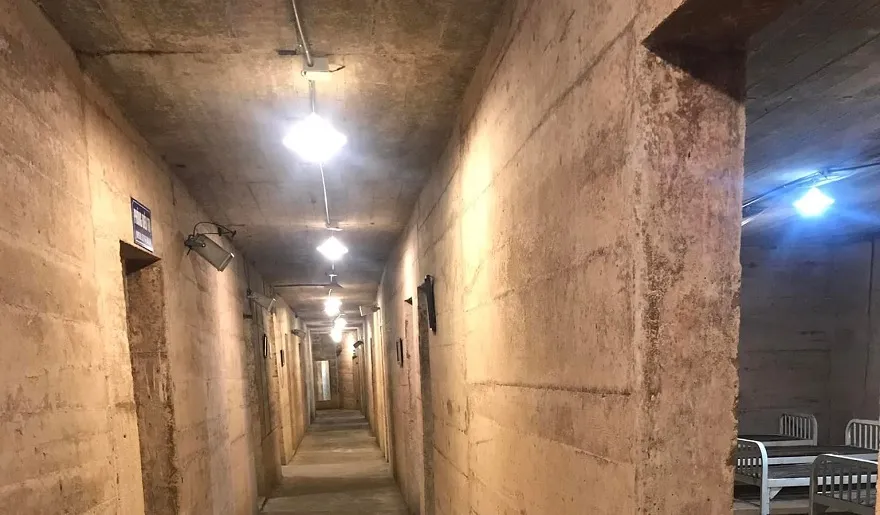
The corridor area has been electrified to accommodate sightseeing needs for tourists
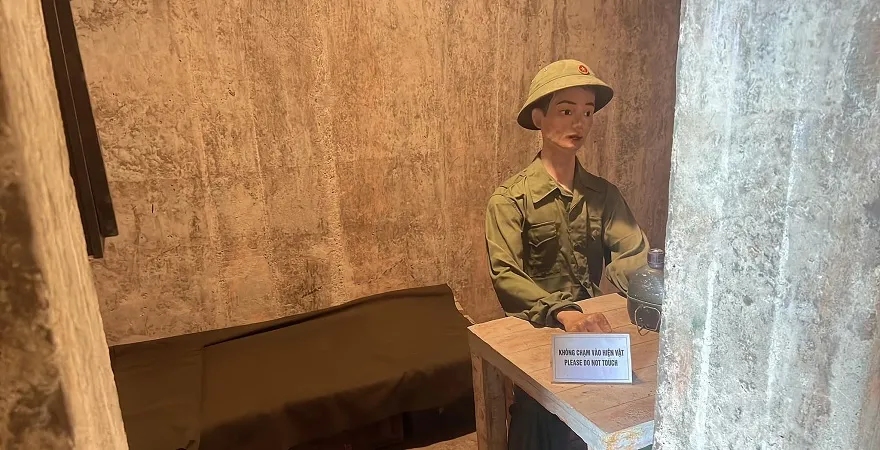
Duty officer room
Next is the logistics area, once home to the Hoang Cam kitchen featuring an ingenious subterranean smoke-ventilation system. This design allowed cooking to be conducted covertly, preventing enemy detection via smoke plumes. However, following the war, the Hoang Cam kitchen was dismantled and has not yet been restored.
Because Tier 1 was designed for medical treatment, it houses a dedicated medical dispensary used to store pharmaceuticals and surgical supplies for caring for wounded soldiers. Adjacent to this are treatment wards categorized into two types: minor injury wards and severe injury wards, accommodating various levels of trauma. Currently, the Army Hospital Cave contains a total of 6 treatment rooms.
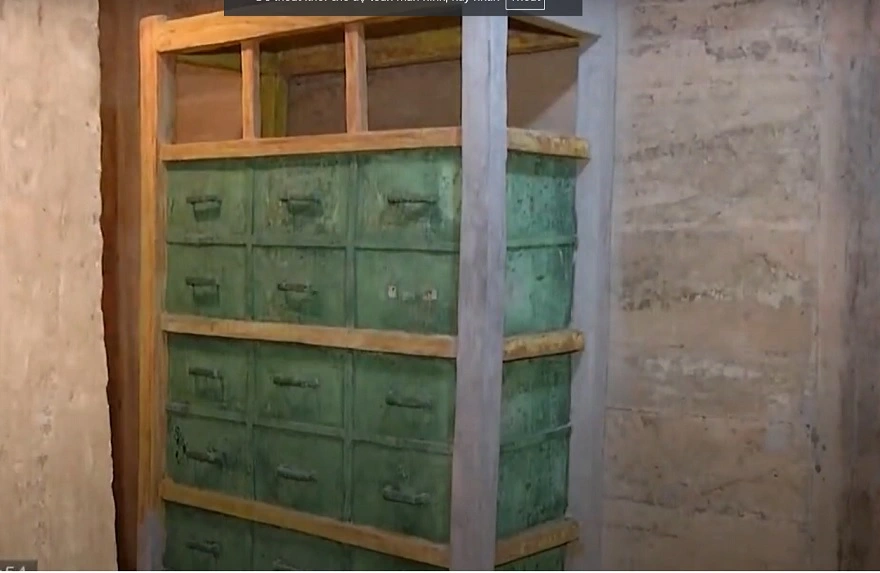
Pharmacy warehouse
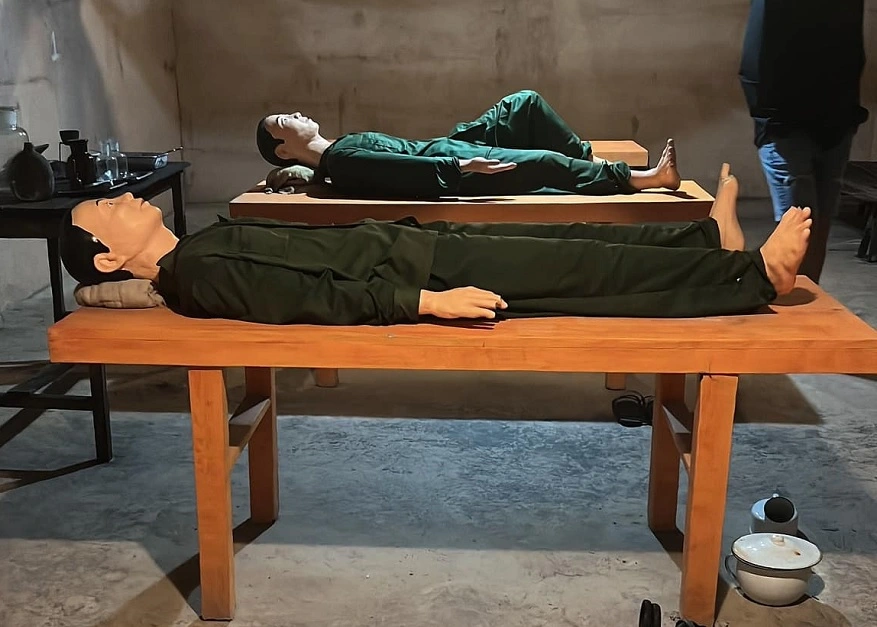
Treatment ward
Venturing further inside, visitors arrive at the largest room on Tier 1. This space formerly served as a briefing room, operational meeting hall, and consultation space for hospital physicians. Whenever enemy aircraft were detected, communications were transmitted outward using a Soviet-sponsored 2W radio transceiver capable of reaching distances between 500 and 1,000 meters.
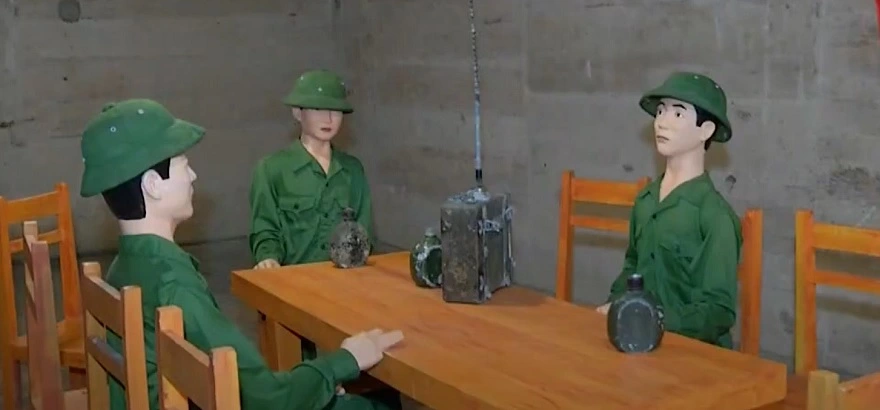
The 2W radio has a communication range of 500 to 1,000 meters, a Soviet-sponsored communication device utilized by our troops for reconnaissance communications
Notably, this hall also hosted cultural performances, singing, and artistic exchanges between medical staff and island residents during festive occasions, with a capacity of approximately 40 people. Along the corridors of the Army Hospital Cave, visitors will find historic photographs adorning the walls, portraying daily life and combat activities of our troops and citizens during the resistance, offering a vivid glimpse into the atmosphere of that era.
Right at the staircase leading to Tier 2 lies the water reservoir room, the penultimate chamber of Tier 1. This room features a specialized upward passage connecting to Tier 2, designed both to repel enemy breaches and provide an emergency escape route, while serving as a strategic position for launching surprise counterattacks if conditions permitted.
Rooms on Tier 1
| No. | Room Name on Tier 1 |
|---|---|
| 1 | Surgeon Rest Room |
| 2 | Patient Ward |
| 3 | Emergency Surgical Theater |
| 4 | Rehabilitation Room |
| 5 | Assembly Hall |
| 6 | Medicine Dispensary |
| 7 | Pharmaceutical Storage Room |
| 8 | Doctor Rest Room |
| 9 | Domestic Water Reservoir |
| 10 | Restroom |
| 11 | Bathroom |
| 12 | Reception Room |
| 13 | Kitchen |
| 14 | Guard Post |
Tier 2 of the Army Hospital Cave is the most expansive space, capable of accommodating 200 to 300 people, and served multiple functions. During wartime, Tier 2 acted both as a rehabilitation zone for wounded soldiers following medical treatment and as a daily physical training ground. Thanks to its generous proportions, performance troupes from the city occasionally visited to stage cultural shows and screen films to boost the morale of patients, medical personnel, and locals alike.
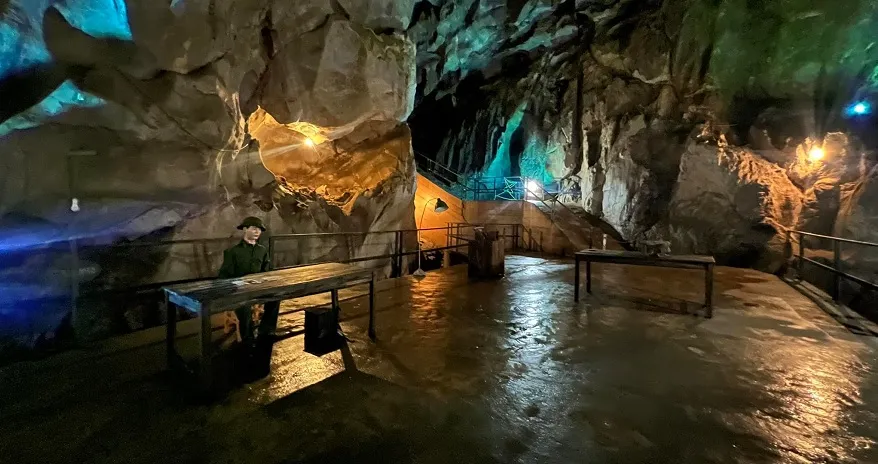
The assembly hall is also the largest room in the Army Hospital Cave
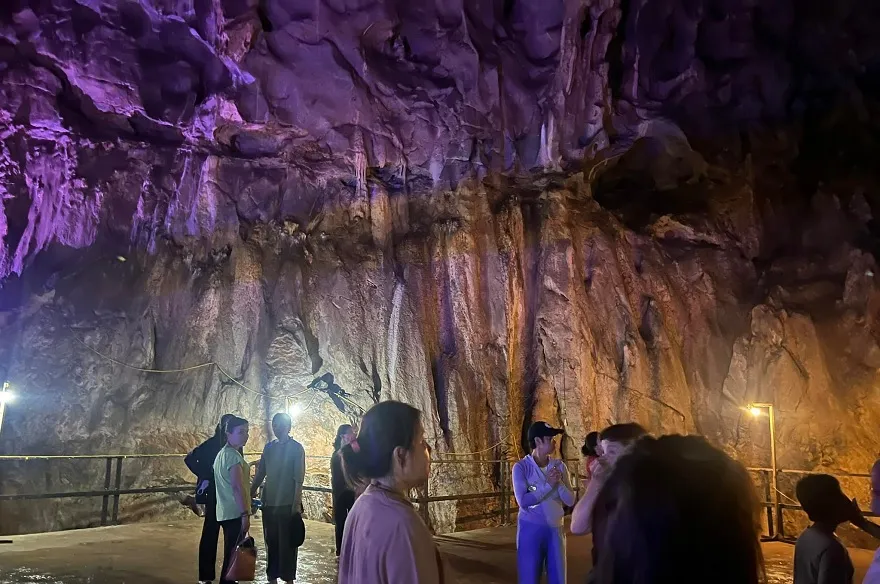
At the Army Hospital Cave, the magical stalactite system is also an impressive highlight for visitors
Featuring a somewhat undulating terrain, Tier 2 was utilized for military training and physical assessments. Notably, Tier 2 also contains a low-ceilinged section where troops historically practiced crawling and low-profile maneuvers.
To guarantee security, Tier 2 was engineered with a secret escape route for patients and medical staff, enabling evacuation should the cave come under enemy attack. Furthermore, an additional covert pathway links Tier 2 to Tier 3, where high-level military briefings were held. Today, several of these emergency exits have been sealed off to ensure visitor safety.
Meanwhile, Tier 3 was designed with an emergency exit leading out to the adjacent mountainside alongside a confidential briefing room for military commanders. However, immediately after the war concluded, this chamber entrance was permanently sealed for military secrecy reasons, and Tier 3 is currently not open to tourism.