Tucked away amidst majestic limestone mountain ranges on Cat Ba Island, Trung Trang Cave emerges like a precious gem, encapsulating the mystical and splendid beauty of nature. Formed millions of years ago, this karst cavern is a masterpiece featuring a diverse and multifaceted system of stalactites that leaves visitors utterly spellbound by the wonders of creation. More than just a natural masterpiece, Trung Trang Cave is also a repository of profound historical milestones and home to numerous unique endemic species. Join us on an immersive journey to discover Trung Trang Cave, where you will admire its ethereal beauty and the fascinating tales it harbors.
Introduction to Trung Trang Cave
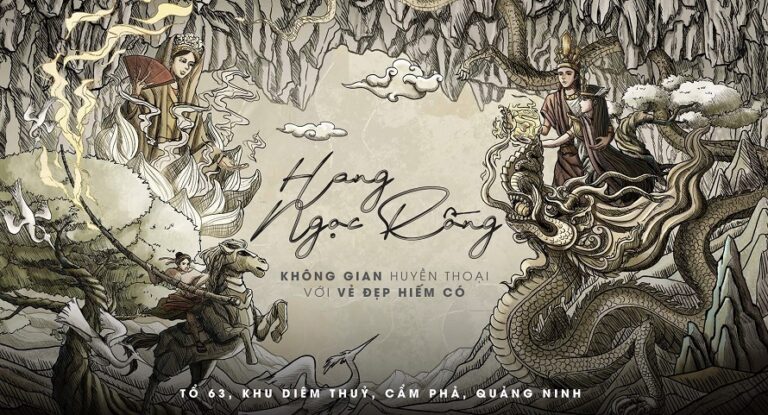
Trung Trang Cave is nestled deep within the rocky mountain range of the Trung Trang Valley, conveniently located alongside the cross-island road connecting the northern and southern parts of Cat Ba Island (Hai Phong). Thanks to this favorable accessibility, Trung Trang Cave has in recent years been seamlessly integrated into the Cat Ba National Park sightseeing itinerary. The name “Trung Trang“ originates from the legend of Queen Trung Trang, who valiantly protected the island’s inhabitants from foreign invaders and later practiced asceticism within this very cavern. Legend has it that the cave served as the queen’s treasury, concealing dazzling pillars of gold and silver.
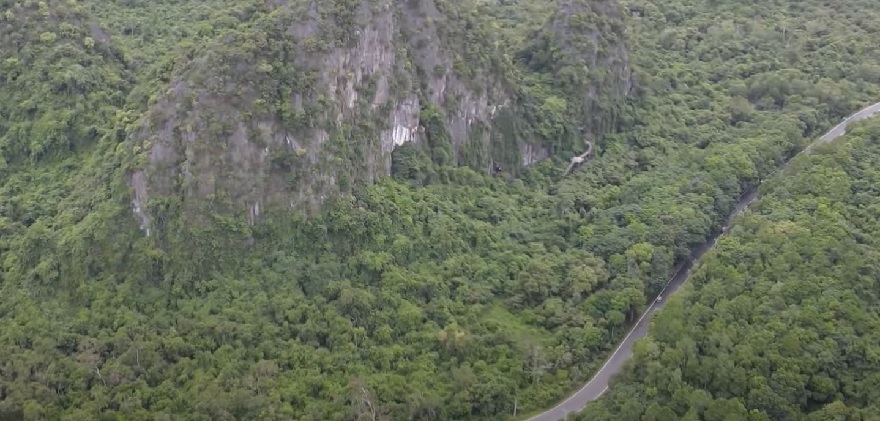
Trung Trang Cave is situated along the cross-forest road connecting the northern and southern regions of Cat Ba Island
Trung Trang Cave is among the more than 20 caves on Cat Ba Island under official management and conservation. As a karst cave formed within limestone mountains through millions of years of rainwater dissolution and erosion, Trung Trang Cave was first discovered in 1938 by a French archaeologist. Spanning approximately 300 meters in length and piercing straight through the heart of the mountain, it creates a majestic and awe-inspiring ambiance. Inside the cave, the temperature maintains a steady year-round average of around 20 degrees Celsius, offering visitors a delightfully refreshing retreat, especially during sweltering summer days.
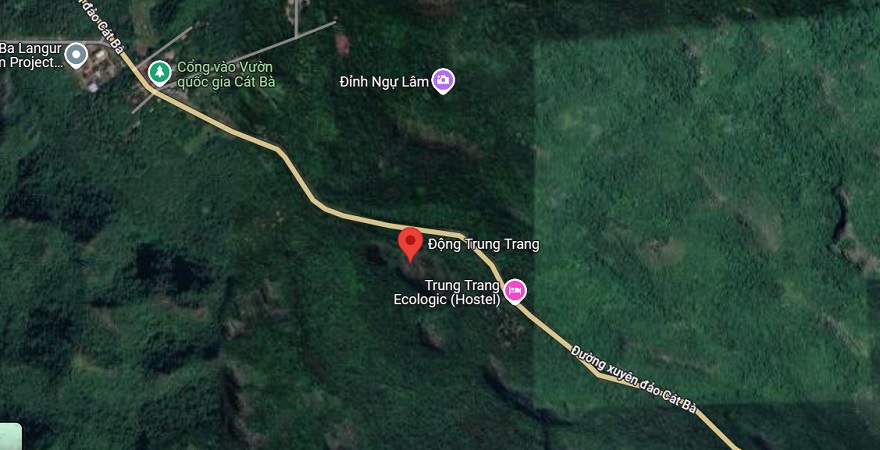
Location of Trung Trang Cave on Google Maps
To reach Trung Trang Cave, you can travel by motorbike or bus from downtown Cat Ba, followed by a leisurely 15-minute walk along a shaded forest trail. Upon stepping into the cavern, you will immediately be embraced by a refreshing and airy atmosphere, ready to admire nature’s masterworks sculpted over millions of years.
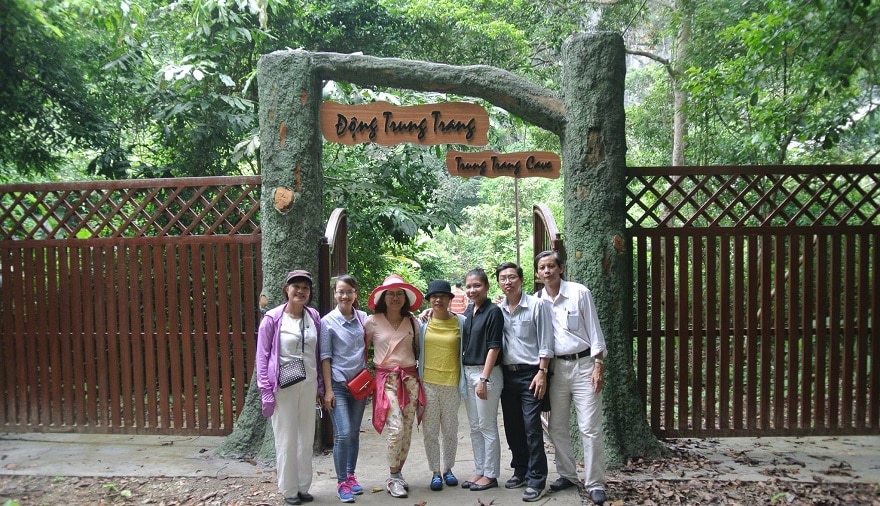
Entrance Fees and Opening Hours of Trung Trang Cave
To ensure your journey to explore this “hidden gem”—filled with bizarre rock formations that stir the imagination—is seamless and well-planned, understanding access methods and updated ticket prices is an essential step. Below is detailed information regarding two popular options to help you plan your Trung Trang Cave experience:
Option 1: Independent Exploration
With this choice, you will travel independently to Cat Ba National Park, where Trung Trang Cave is located, and purchase tickets directly at the counter. The standard sightseeing route encompassing Trung Trang Cave and nearby attractions within the National Park follows the fee schedule stipulated in Resolution No. 06/2024/NQ-HĐND by the People’s Council of Hai Phong City, effective from August 1, 2024. Details are as follows:
- Direct ticket purchase at the counter: applicable ticket price for the sightseeing route including Trung Trang Cave (typically also covering Kim Giao forest and Ngu Lam Peak)
- Adults: 120,000 VND/person
- Children: 60,000 VND/person
- Note: Trung Trang Cave is open daily from 7:00 AM to 5:00 PM.
- Additionally, if you require a professional guided tour to explore Trung Trang Cave and Cat Ba, you can refer to our service: #dream-cruise-cat-ba-cruise
Option 2: Joining a Tour (Particularly an Overnight Lan Ha Bay – Cat Ba Cruise Tour)
Many Cat Ba exploration itineraries, especially overnight luxury cruises in Lan Ha Bay, frequently combine visits to prominent highlights within the National Park, including Trung Trang Cave. Choosing this option means cave entrance fees are typically bundled into the overall tour package, offering supreme convenience so you do not need to worry about purchasing individual tickets. This is the ideal choice for travelers seeking a meticulously curated trip with all-inclusive schedules and services. To receive detailed consultations regarding cruises featuring Trung Trang Cave, please contact Halong & Lan Ha Bay Cruise Tours for expert assistance.
Read more: Lan Ha Bay Cruise Tours
Historical Significance Associated with Trung Trang Cave
Trung Trang Cave is also locally known as Bat Cave due to the thriving population of bats residing inside. These bats play a vital ecological role in maintaining the area’s balance by pollinating flowering plants and decomposing organic matter. Furthermore, the resident bat species hold significant scientific and medical value, as they are capable of producing effective antibiotic and anti-inflammatory compounds. Visitors can often hear the high-pitched squeaks of bats echoing deep within the cavern or witness them fluttering outward at dusk.
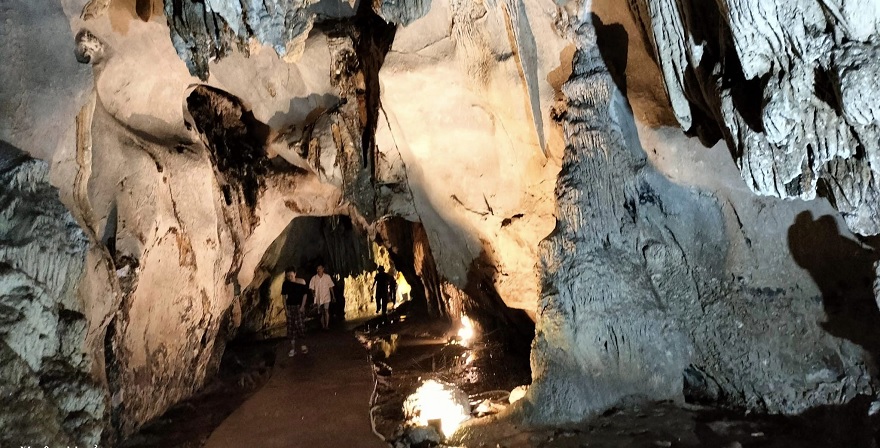
Trung Trang Cave features distinctive geology representative of the cluster of over 150 large and small caves across the Cat Ba archipelago. Here, scientists have uncovered fossilized bones and prehistoric stone tools crafted by ancient Vietnamese people.
Trung Trang Cave also serves as a poignant archaeological site bearing evidence of ancient Vietnamese presence dating back thousands of years. According to archaeological research, ancient Vietnamese belonged to the Austroasiatic lineage, inhabiting regions stretching from the lower Yangtze River to Northern Vietnam, collectively known as the Baiyue (Bách Việt). They shared genetic links with contemporary indigenous Australian populations. Sustaining themselves through forest foraging and hunting, they cultivated a highly developed civilization known as the Hoa Binh culture. Inside Trung Trang Cave, archaeologists have unearthed numerous stone implements, human skeletal remains, and animal bones left behind by prehistoric inhabitants. These stone tools indicate that ancient Vietnamese knew how to utilize fire, forge knives, axes, arrowheads, and other implements for hunting and food preparation. The skeletal remains reveal that they practiced early agriculture and animal husbandry alongside a diverse diet.
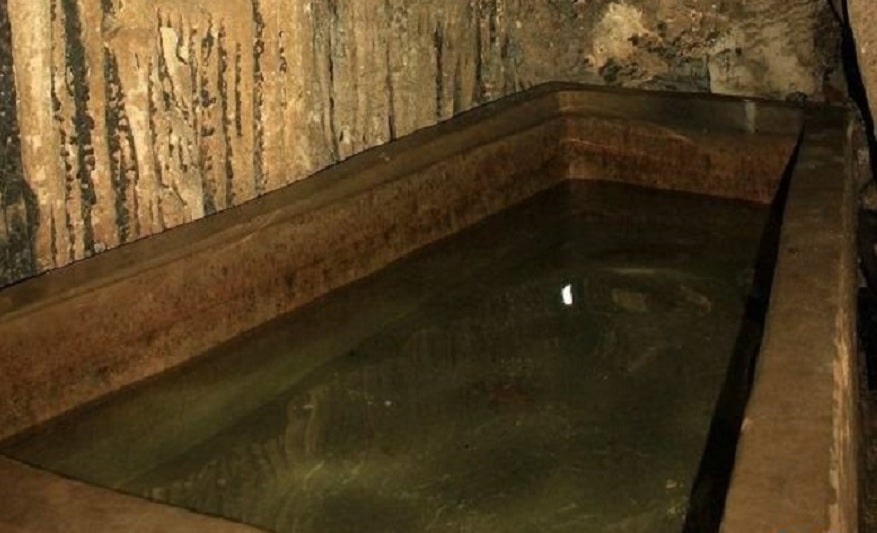
Relics of the Vietnamese military stationed here
Additionally, during the resistance wars, Trung Trang Cave was known as Navy Cave (Động Hải Quân) as it was utilized by the Naval Command as a garrison base, preserving many glorious historical traces of the Vietnamese military and people. Inside the cave, a stone wall inscribed with verses extols the heroic sacrifices of fallen soldiers. Furthermore, the cavern still houses artifacts such as water tanks, living quarters, and meeting rooms used by troops during daily operations. These historical items have been carefully preserved and displayed for visitors to explore.
Exploring Trung Trang Cave
To reach the cave entrance, visitors must ascend 140 steep stone steps winding along the mountainside. Climbing over 140 stone steps under the glaring sun can leave many feeling fatigued and overheated. However, upon arriving at the portal, travelers are instantly greeted by a refreshing breeze billowing out from the cavern’s core. Amidst the vast, ancient forest outside and the crisp chill of the cave entrance, just a few deep, reviving breaths will restore your energy and vitality, making you feel as refreshed as waking up to a pristine morning.
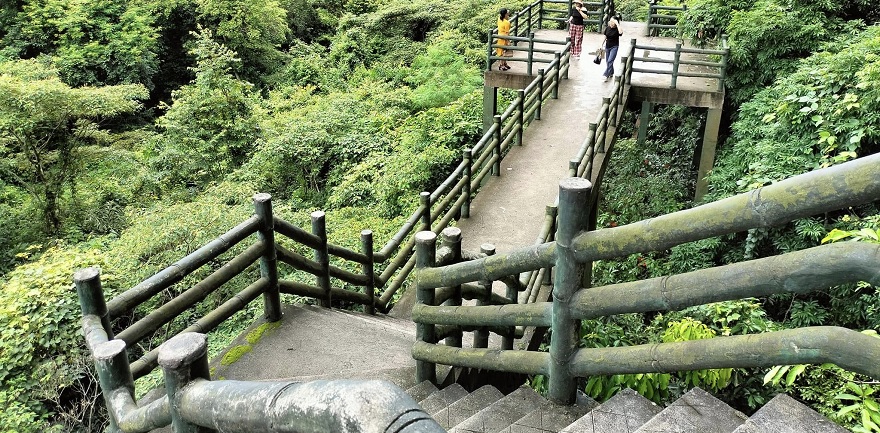
To reach the cave, visitors must traverse a journey of approximately 140 stone steps
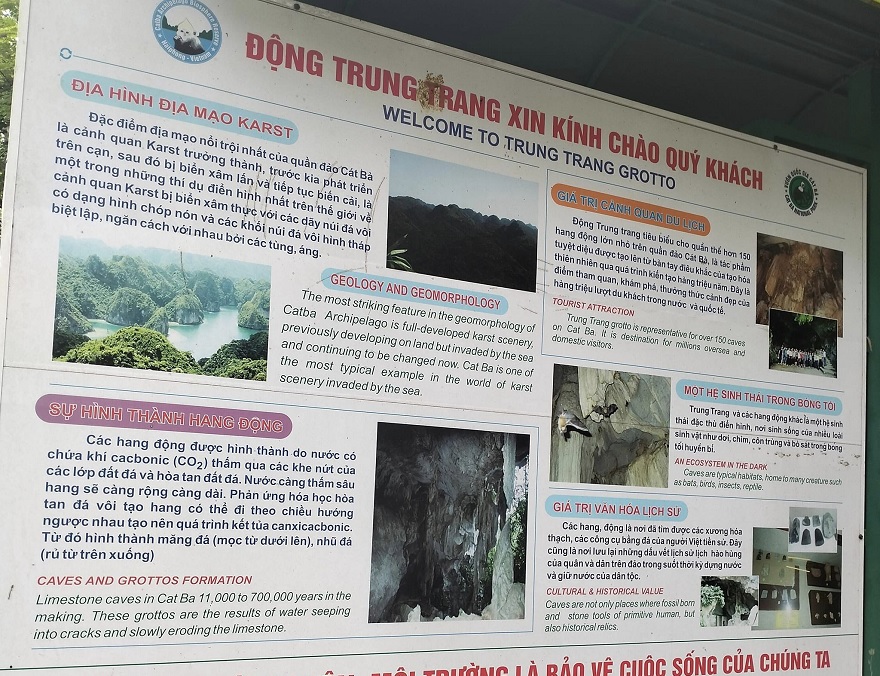
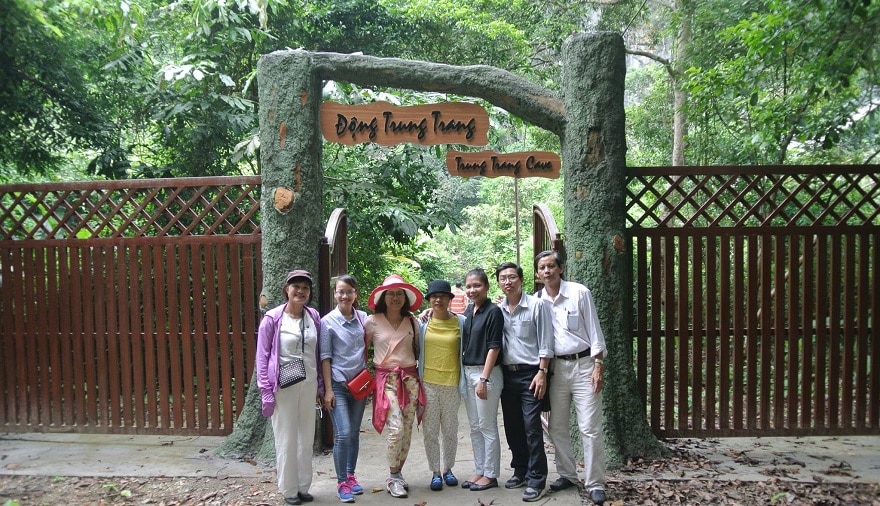
An introductory sign about Trung Trang Cave positioned at the entrance
Right at the cave entrance, visitors are greeted by magnificent stalactite and stalagmite formations, most notably a massive pillar standing proudly at the gateway. Sculpted over 6 to 7 million years, these formations initially began on the cave ceiling. Through recurring rains, water seeps through the overlying rock strata, dissolving limestone fractions and carrying calcium carbonate minerals into the cavern. Upon contacting the cave air, the water gradually evaporates, leaving behind microscopic calcium carbonate crystals. Over millions of years, these crystals accumulate to form shimmering stalactites cascading from the ceiling like frozen waterfalls. On the cave floor, dripping water droplets build upward into stalagmites resembling towering spires. Eventually, meeting stalactites and stalagmites merge to form the massive stone pillars standing triumphantly at the entrance today.
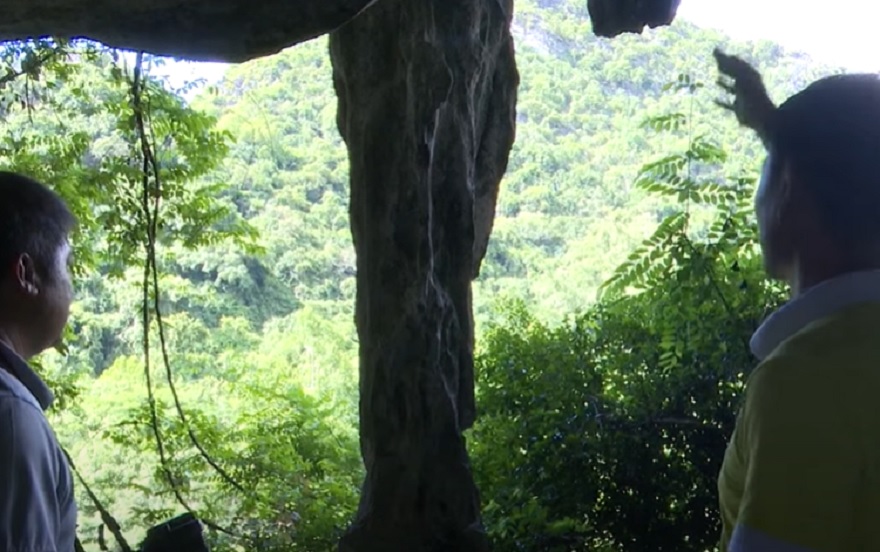
Massive stalagmite and stalactite pillars located right at the cave entrance
Caves within the Cat Ba region serve as sanctuaries for various darkness-loving species. Today, the Trung Trang ecosystem supports two distinct creatures: the Halong leaf-nosed bat and the Cat Ba bent-toed gecko, adding to Trung Trang Cave’s unique charm. Beyond surface-level flora and fauna, the true hallmark of limestone caverns lies in their interior mineral formations. Stalactites form through rainwater percolating downward from the mountain surface above. Through this filtration process, mineral-rich water capable of dissolving stone trickles drop by drop into the cavern, creating dangling stalactites above and rising stalagmites below. Through millions of years of accumulation, these droplets have sculpted natural masterpieces within the cave today.
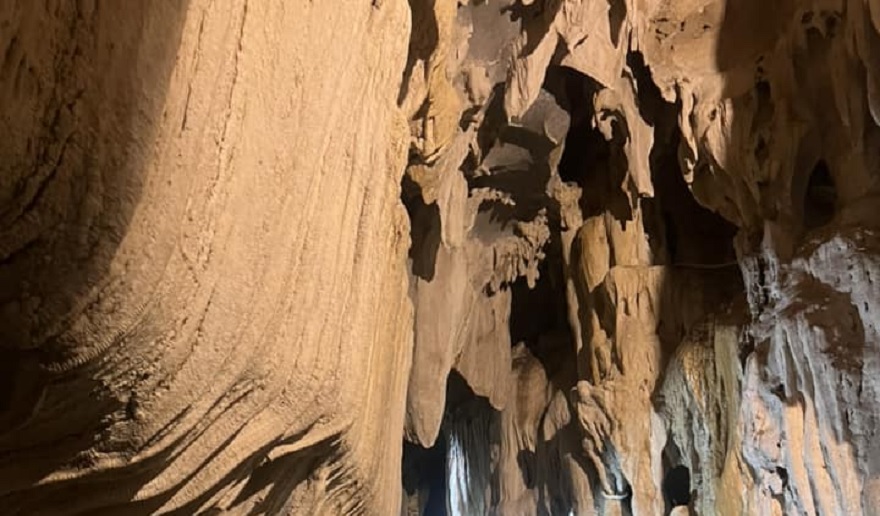
Massive stalactite systems inside Trung Trang Cave
The geological composition of Trung Trang Cave also evolves across different sections along its length. Spanning over 300 meters straight through the mountain, each chamber exhibits distinct shapes and natural hues of stalactites and stalagmites. While the entrance features pristine white stalactites tinged with iridescent pink and blue hues, the formations transition toward grays and more subdued earth tones deeper inside. This gradual shift in shapes and colors creates diverse chambers near the rear that provide shelter for endemic species unique to Cat Ba National Park.
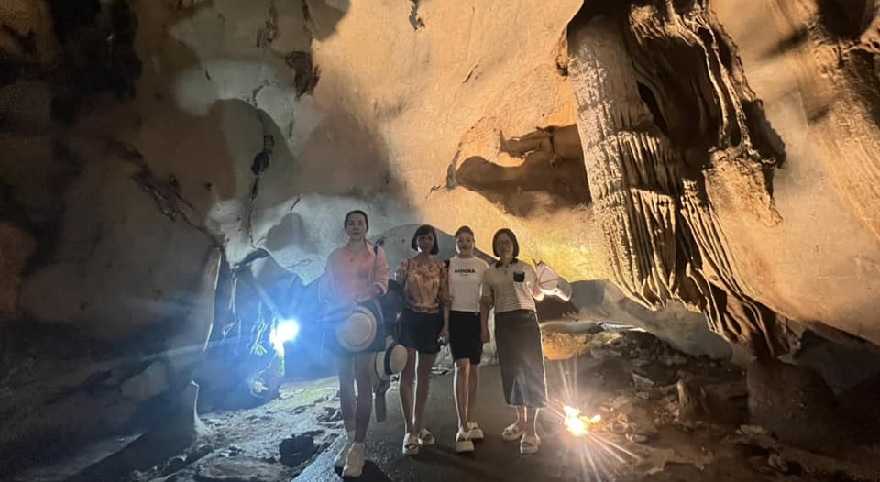
Stalactite and stalagmite formations change along the length of the cave
Similar to many other limestone caves across the Halong Bay – Cat Ba archipelago, Trung Trang Cave’s stalactite and stalagmite structures concentrate heavily near the entrance, boasting wondrous shapes, diverse dimensions, and iridescent, mystical colors. Some stalactites are crystal-white like pure glass, others are coral-red stalagmites, alongside colossal pillars tinged with unique jade-green shades. However, penetrating deeper into the cavern, the scenery shifts: colors and forms become more subdued, dominated primarily by grays and deeper earth tones.
This phenomenon can be explained by several factors. First, rainwater percolation within the mountain is uneven. The entrance zone frequently receives calcium-rich rainwater seeping through rock fissures, fostering optimal conditions for stalactite growth. Deeper inside, rainwater volume decreases, and mineral concentrations drop due to precipitation upstream, resulting in less active mineral deposition.
Second, the geological characteristics of the limestone vary across different zones. Variations in structure and mineral composition affect the dissolution and precipitation rates of calcium carbonate, thereby influencing mineral formation.
Additionally, water flow volume and velocity play a critical role. Near the entrance, water flows more rapidly, carrying abundant minerals and exerting strong erosive forces that foster rich varieties of shapes and colors. Conversely, toward the rear, water flow is weaker, making precipitation slower and formations less developed.
Finally, environmental conditions within the cave—such as temperature, humidity, and air circulation—contribute to structural differences across zones. This delicate interplay of elements crafts Trung Trang Cave’s captivating, ever-changing beauty, establishing it as an irresistible destination for travelers seeking exploration and wonder.
Upon traversing the entire 300-meter length of Trung Trang Cave, visitors arrive at a final chamber of remarkable height and width. This expansive hall serves as the natural habitat of the Halong leaf-nosed bat, an endemic species recently discovered across the Halong (Quang Ninh) and Cat Ba (Hai Phong) regions.
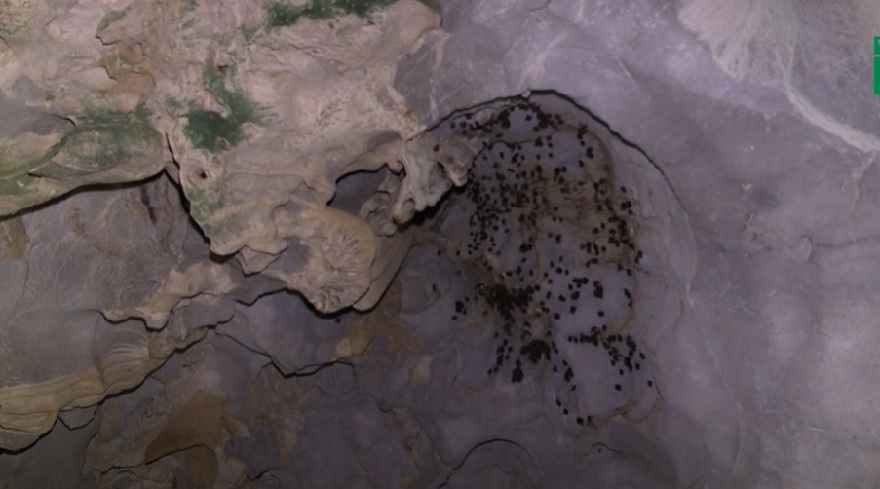
The innermost chamber of Trung Trang Cave is a spacious cavern serving as a sanctuary for the Halong leaf-nosed bat
With its refreshing ambiance, unique landscapes, and captivating legends, Trung Trang Cave promises to deliver unforgettable travel experiences. Why hesitate? Plan your journey to explore Trung Trang Cave today and immerse yourself in the wonders of nature!