Luc Na Communal House
An Overview of Luc Na Communal House
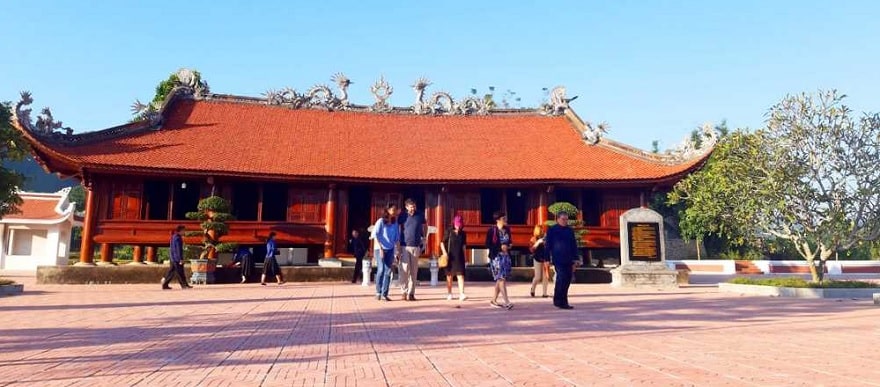
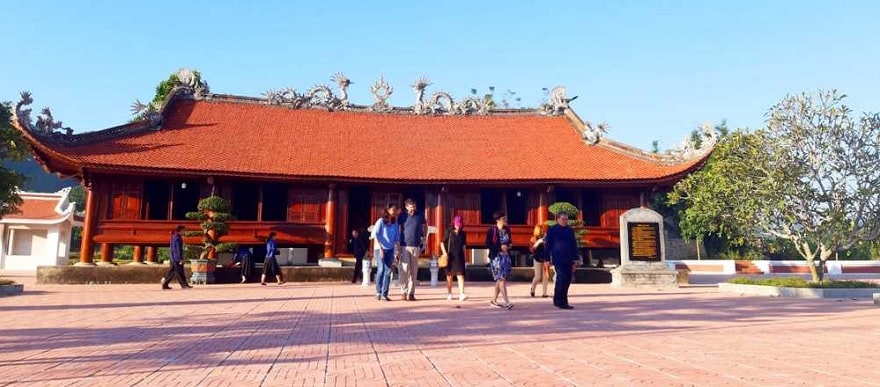
Luc Na Communal House is an ancient sanctuary nestled in Ban Cau village, Luc Hon commune, Binh Lieu district, Quang Ninh province. As the sole remaining communal house in Binh Lieu district, it was officially designated as a provincial-level historical and cultural heritage site by the People’s Committee of Quang Ninh Province in 2005. Dating back to the Late Le dynasty, Luc Na boasts a rich history, grand scale, and distinctive architecture. The structure features five compartments supported by rounded wooden pillars with diameters ranging from 40 to 50 cm, walls constructed from local bricks, and a traditional yin-yang tiled roof. Inside, the sanctuary houses numerous exquisite decorative and worship artifacts of high cultural and artistic value, including sacred altars, statues of the village guardian deity, traditional folk paintings, parallel sentences, and lacquered boards.
Luc Na Communal House is dedicated to Hoang Can, a revered village guardian deity, a valiant Tay ethnic military commander, and a national hero who played a pivotal role in repelling northern invaders in the 17th century. According to legend, Hoang Can was a brilliant, exceptionally strong young man born into a Tay family in the Northeastern region of Tan Yen (modern-day Binh Lieu). When foreign invaders swept through the region, bringing immense sorrow and devastation to the locals, Hoang Can refused to bow to brutal tyranny. He secretly gathered able-bodied villagers, relentlessly training them in martial arts day and night. Awaiting the opportune moment, Hoang Can led an uprising against the enemy stronghold. Armed simply with a bamboo staff, he charged into battle with unmatched ferocity, striking terror into the hearts of the enemy forces. Following his triumphant victory, the grateful locals revered and worshipped him as their protective guardian spirit.

Every year, the Luc Na Communal House Festival commences on the 16th day of the first lunar month and spans three days. This is one of the most quintessential traditional festivals in both Binh Lieu district and Quang Ninh province. The festival serves not only as an occasion for locals and travelers from afar to pay homage to the heroic merits of Lord Hoang Can, but also as a wonderful opportunity to immerse oneself in the unique culture and customs of the Tay people in Binh Lieu. The festivities feature an array of captivating cultural, athletic, and recreational activities, including solemn ancestral rituals, palanquin processions, Then singing, traditional swing rides, tug-of-war, crossbow shooting, shuttlecock kicking, and chess matches. Luc Na Communal House is an idyllic destination for discerning travelers eager to uncover the profound culture and history of Binh Lieu district.
The Architecture of Luc Na Communal House
Luc Na Communal House showcases a unique and deeply traditional architectural style. The sanctuary comprises five compartments, featuring rounded wooden pillars 40 – 50 cm in diameter, local brick walls, and a classic yin-yang tiled roof. The central compartment is dedicated to the village guardian deity Hoang Can, while the flanking spaces serve as sanctuaries for other revered deities. The interior is adorned with priceless ritualistic and decorative treasures, such as ceremonial altars, statues of the guardian deity, folk paintings, horizontal lacquered boards, and antithetical couplets.
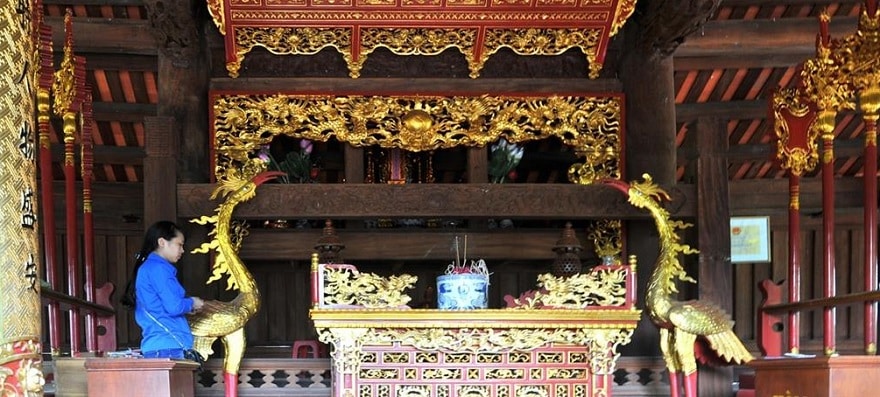
Shrine of Hoang Can – the national hero who defended the nation against foreign invaders
The central compartment measures 6 meters in width, 8 meters in length, and 7 meters in height. This central hall is supported by four large rounded wooden pillars running along its length, each measuring 50 cm in diameter. It features a sophisticated double-layered yin-yang tiled roof: the lower tier is lined with iron-backed tiles, while the upper tier features classic ceramic tiles. The main entrance faces east, complemented by a secondary door facing west. Above the main entrance hangs a lacquered board bearing the inscription “Luc Na Communal House,” while the side door features a board reading “Village Guardian Deity.” Inside, a wooden altar holds a 1.5-meter-tall statue of Hoang Can. The altar is meticulously decorated with intricate floral motifs and couplets. Hanging on the wall behind the altar is a traditional folk painting depicting Hoang Can leading his troops into battle.
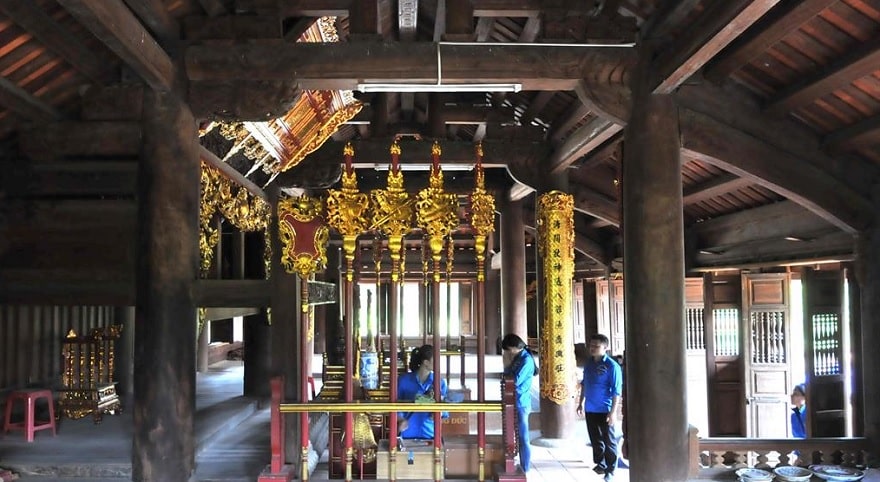
Three wooden pillars
The two flanking compartments measure 4 meters in width, 8 meters in length, and 6 meters in height. Each of these rooms is structured with three rounded wooden pillars (40 cm in diameter) running along the length. Each features a single-layer iron yin-yang tiled roof with doors opening to both the east and west. Inside each room stands an altar holding a 1-meter-tall wooden statue of a revered deity, decorated with graceful patterns and couplets. The rear wall displays a folk artwork illustrating themes associated with these deities.
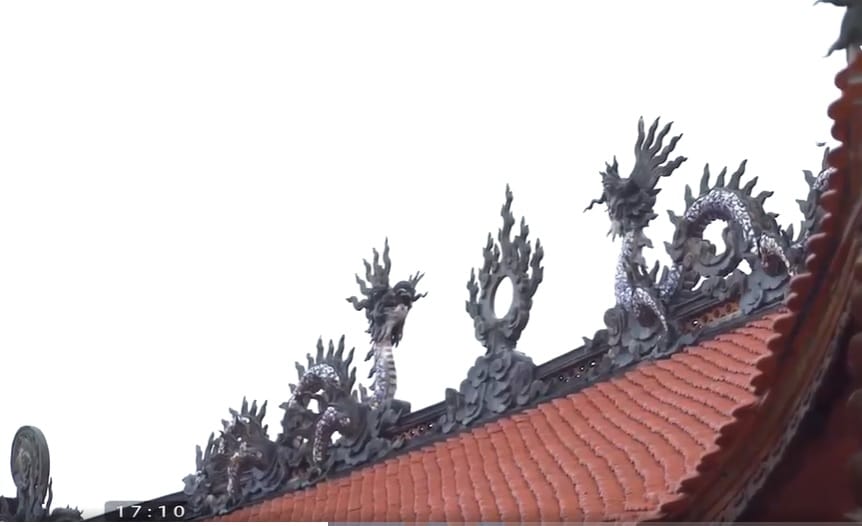
Traditional Northern yin-yang tiled roof adorned with dragon reliefs
The two outermost compartments measure 3 meters in width, 8 meters in length, and 5 meters in height. Each space contains two rounded wooden pillars of 40 cm in diameter and a single-layer iron yin-yang tiled roof. Instead of doors, these rooms feature square ventilation openings facing east and west. Rather than altars, these rooms house sacred ritual items such as ceremonial lamps, candles, incense sticks, fans, and ceremonial swords.
Constructed in the distinctive architectural style of the Tay minority, Luc Na Communal House achieves a harmonious balance of spatial layout and color. It is widely considered one of the most magnificent ancient communal houses in Quang Ninh.
Cultural Traditions and the Luc Na Festival
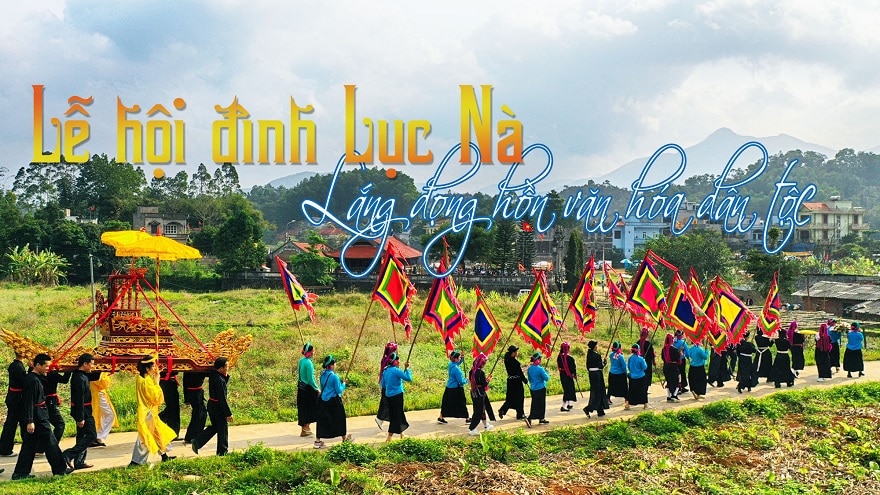
Luc Na Communal House Festival
Essential Guidelines for Visiting Luc Na Communal House
As a provincial historical and cultural landmark dedicated to the revered Tay national hero Hoang Can, Luc Na Communal House offers visitors a chance to admire exquisite heritage architecture and partake in one of Binh Lieu’s most distinctive traditional festivals. To ensure a safe, delightful, and meaningful journey, travelers are kindly requested to observe the following etiquette:
- Upon entering the sanctuary, visitors must adhere to the management board’s regulations: pets, smoking, consuming food or beverages, making loud noises, and touching ritual items, sacred paintings, or wooden statues are strictly prohibited.
- When joining the festival activities, guests should follow the instructions of the organizing committee, register for events in advance, obey game rules, and maintain a courteous, fair-play attitude toward fellow participants.
- When engaging with the local community, travelers should respect Tay customs and traditions—avoid speaking loudly or laughing excessively inside local homes, graciously accept offers of food or token gifts, and refrain from inquiring about private or sensitive personal matters.
- While exploring and photographing the surrounding grounds, visitors are expected to protect the environment and preserve cultural heritage by disposing of trash properly, refraining from writing or carving on walls and wooden pillars, and avoiding picking flowers or damaging foliage.
We hope these insights ensure your excursion to Luc Na Communal House is both enriching and memorable. May you enjoy exceptional experiences and carry fond memories of this sacred landmark. Should you wish to plan a Binh Lieu tour, please reach out to Halong & Lan Ha Bay Cruise Tours to discover our exclusive and luxurious offers.