
Discoveries of Ha Long Culture Archaeological Sites
Ha Long Culture is a late Neolithic archaeological culture that flourished across the Ha Long Bay region and its surrounding areas approximately 5,000 to 3,000 years ago. This culture is named after Ha Long Bay, the primary location where significant archaeological sites belonging to this civilization were first discovered.Ha Long Culture evolved on the foundation of inheriting and developing from the Cai Beo culture, a prehistoric culture dating from 7,000 to 5,000 BC. The ancient inhabitants of Cai Beo made crucial advancements in maritime resource exploitation, laying the groundwork for the subsequent development of Ha Long Culture.The formation of Ha Long Culture was also closely linked to environmental changes, particularly fluctuations in sea levels . Around 9,000 years ago, rising sea levels inundated parts of the Gulf of Tonkin and the Gulf of Thailand, compelling the inhabitants of Soi Nhu to adapt to a marine and island environment . This adaptive process led to transformations in labor tools, manufacturing techniques, and economic subsistence strategies, ultimately contributing to the emergence of Ha Long Culture
Ha Long Culture evolved through two distinct developmental phases:
- The Early Phase (approximately 6,000 – 5,000 years ago): Influenced by the Holocene marine transgression which disrupted the living environment of the Cai Beo people. Many residents migrated to the northeast or higher elevated terrain, sustaining themselves through hunting, gathering, plant cultivation, farming, marine harvesting, and advancing stone tool craftsmanship.
- The Late Phase (approximately 4,000 – 3,000 years ago): Marked by the period of maximum sea level rise; as the waters gradually receded, the early Ha Long inhabitants migrated back and distributed abundantly across various locations such as caves in Ha Long Bay, sand dunes, ancient plains, coastal strips, and mountain foothills. Representative sites include Soi Nhu cave, Ngoc Vung island, and Trong cave, with livelihoods closely tied to the marine environment and the creation of sophisticated labor tools.
The earliest Ha Long cultural relics were discovered between 1937 and 1938 by two archaeologists, M. Colani (France) and G.J. Anderson (Sweden). They initially termed this the “Danh Do La Culture” – named after the French-era designation of Ngoc Vung Island – to collectively describe the characteristics of these archaeological remains. The term “Ha Long Culture” was later coined by Vietnamese archaeologists upon conducting comprehensive surveys of these sites. To date, over 40 sites belonging to the Ha Long culture have been archaeologically uncovered. Right within the core zone of the Ha Long Bay global natural heritage site, archaeologists have discovered numerous vestiges left by prehistoric inhabitants, including:
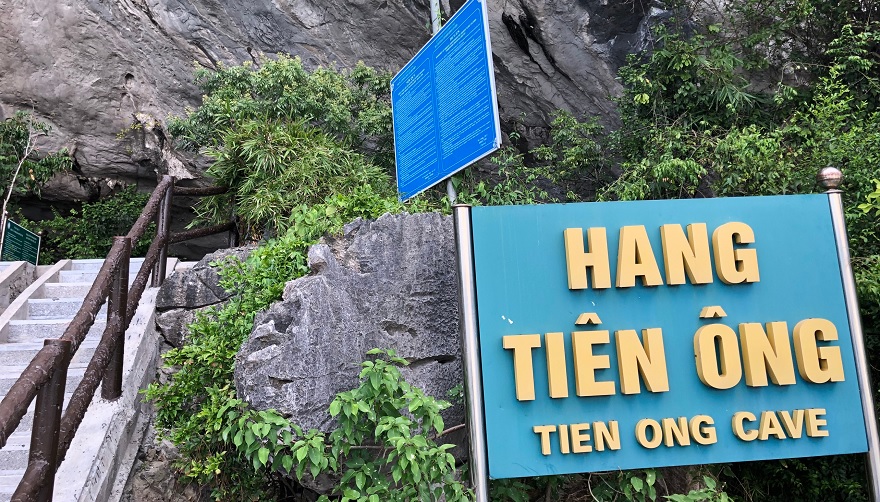
Entrance to Tien Ong Cave
Tien Ong Cave, also known as Cai Duc Cave, is located on Cai Tai Island within the Hang Trai cluster, situated just behind Cua Van floating fishing village in Ha Long Bay. In 1938, Swedish archaeologist Andersen embarked on an expedition to survey traces of ancient Vietnamese people along the shores and islands of Ha Long Bay and Bai Tu Long Bay, including Tien Ong Cave. Here, he discovered massive sediment layers filled with freshwater stream snail shells and rather primitive pebble tools. In 2007, following multiple surveys, archaeologists recovered various stone implements—including stone axes, stone knives, pottery shards, and terrestrial animal bones. Subsequent scientific reports confirmed that Tien Ong Cave served as one of the habitation sites of ancient Vietnamese peoples tens of thousands of years ago.
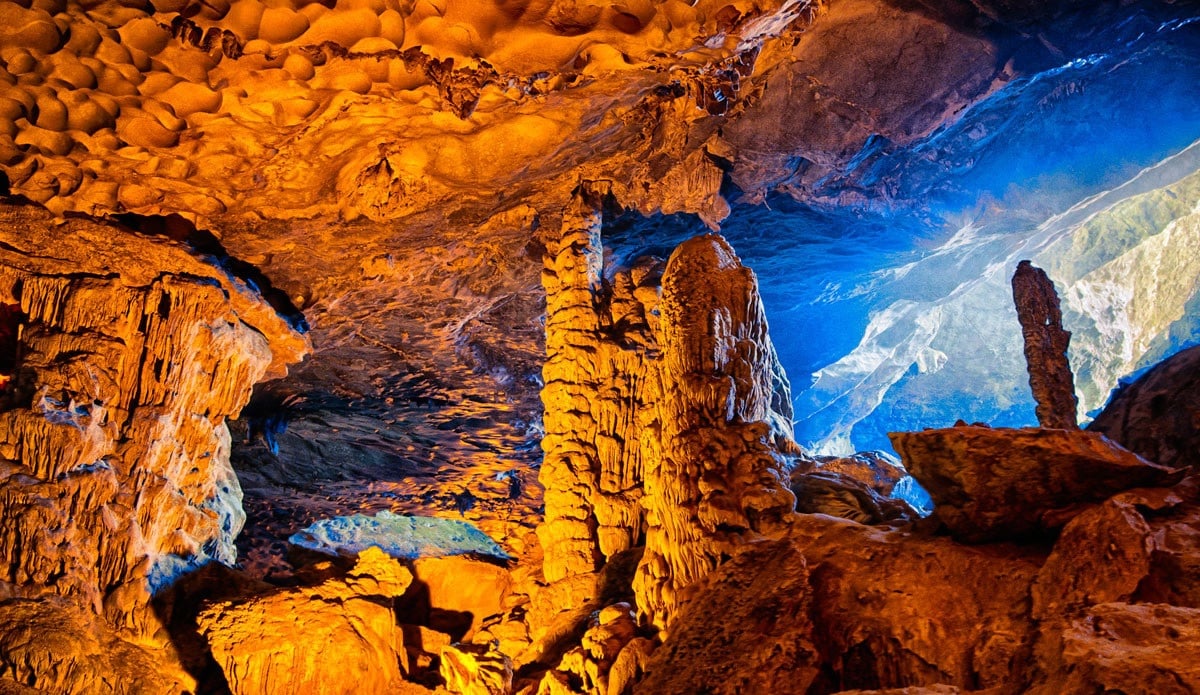
Me Cung Cave – A journey to discover the mysterious underground world
Me Cung Cave is situated 2 kilometers southwest of Titop Island, nestled on Lom Bo Island at an altitude of 25 meters above sea level. The cave entrance still preserves a dense stratum of Melania stream snails. Historically, this shell layer reached up to 1.2 meters in thickness, forming semi-fossilized deposits on the outer side. Archaeologists have identified the cave as an archaeological site belonging to the early pre-Ha Long Neolithic culture dating from 10,000 to 7,000 years ago.
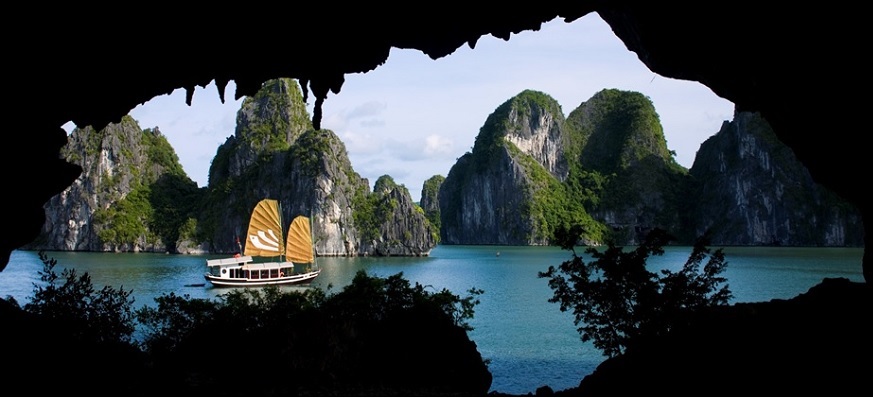
Trong Cave and Virgin Cave
Alongside Tien Ong Cave and Me Cung Cave, archaeological sites have been discovered across almost every corner of Ha Long Bay, reflecting a widespread scale that demonstrates the vibrant and continuous development of a culture deeply imbued with the characteristics of island and coastal dwellers. Numerous ancient artifacts have been unearthed here, primarily consisting of labor tools and ornaments. Notably, at Virgin Cave (Hang Trinh Nu), besides prehistoric habitation traces from the Ha Long culture dating back approximately 4,000 years, archaeologists in 2010 also uncovered remains of an ancient pottery-trading wharf in front of the cave entrance, featuring numerous fragments of various ceramics and earthenware dating from the Tran and Le dynasties.
Artifacts excavated from these archaeological sites are preserved at the Quang Ninh Museum. In 2006, a portion of this artifact collection was transferred to the Ha Long Bay Management Board for exhibition and educational purposes regarding Ha Long culture and heritage values. Subsequently, the Cua Van Floating Cultural Center was inaugurated and opened to the public, allowing Ha Long culture archaeological items to be displayed across all three locations.
Archaeological Relics of the Ha Long Culture
The Ha Long people were masters of a distinctive prehistoric maritime culture, demonstrating a high degree of adaptation to the island and marine environment. They were ancient fishermen, living primarily on fishing and marine harvesting. Additionally, they engaged in traditional economic activities such as hunting, gathering, and later, agricultural cultivation. Ha Long Culture is regarded as one of the four most significant prehistoric maritime cultures in Vietnam, alongside the Hoa Loc culture (Thanh Hoa), Bau Cho culture (Quang Binh), and Xom Con culture (Khanh Hoa).
The Quang Ninh Museum currently preserves numerous artifacts of the Ha Long culture. Within its prehistoric exhibition space recreating the formation and brilliant evolution of a northeastern indigenous culture, collections such as stepped-shoulder axes (riu bon co vai co nấc), Ha Long jewelry, and porous pottery – an endemic product of Ha Long culture – are proudly showcased.
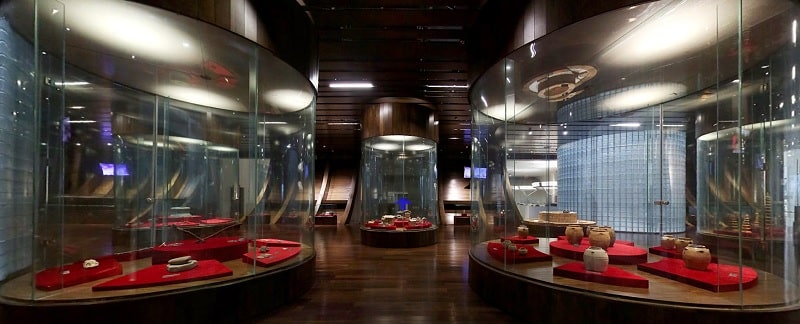
Boat-hull exhibition area on the 2nd floor of Quang Ninh Museum
According to Ms. Do Thanh Mai, Head of the Public Relations Department at Quang Ninh Museum, the fundamental characteristic of Ha Long culture lies in its stone tool manufacturing and production techniques. The invention of these tools marked a pinnacle of craftsmanship, epitomized by the stepped-shoulder axe, which demonstrates extraordinary developmental refinement. This is visibly manifested through the practical labor and production activities of the Ha Long culture residents, who skillfully harnessed nature while shaping other core values of their civilization. Previously, stone axes were ground very roughly and simply; however, by the era of Ha Long culture, grinding and polishing techniques achieved monumental breakthroughs, yielding axes with vastly superior functionality compared to earlier cultures. Furthermore, the most prominent tool types of this period include stepped-shoulder axes, asymmetric and symmetrical adzes (bon co vai lệch va can), and particularly stepped-shoulder axes as seen in the exhibits here. The museum also houses representative collections of stone points and knives. Upon close observation, these sharp stone points and knives reveal an exquisite, meticulous grinding and sharpening process closely intertwined with their daily lives.
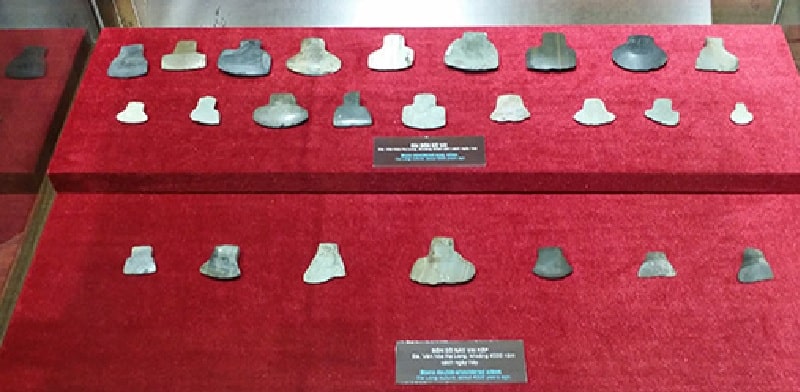
Stepped-shoulder and double-shouldered axes and adzes
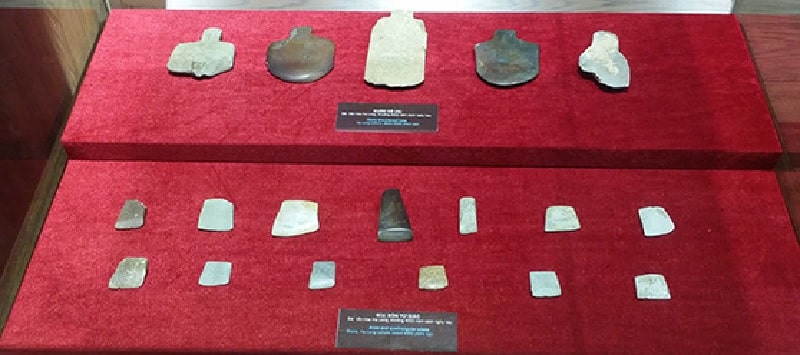
Shouldered hoes
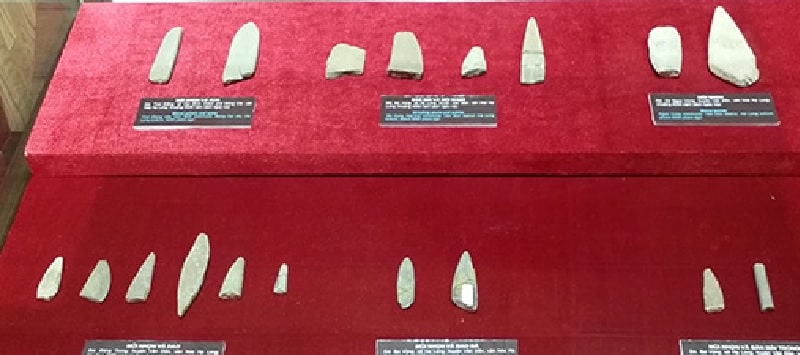
Stone points and saws
The maritime nature of this culture is also manifested in the practice of mixing crushed mollusk shells with sand and soil to craft household pottery—creating the characteristic porous pottery unique to the Ha Long coastal region. Among the decorative patterns on the pottery, alongside wave motifs heavily influenced by the sea, there are designs indicating that ancient Vietnamese people during this period knew how to cultivate fiber-producing plants, spin thread, and weave fishing nets or lines.
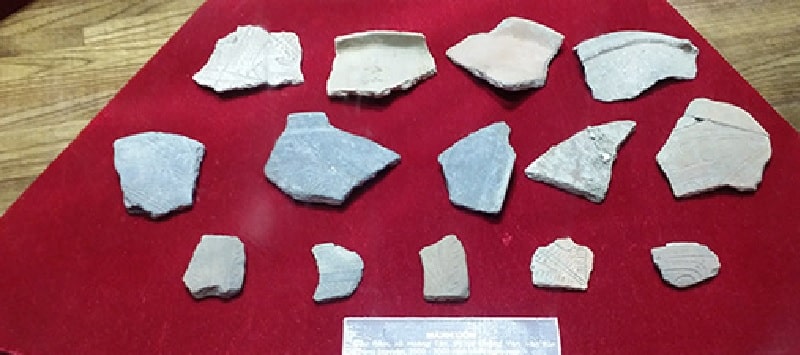
Pottery shards dating back 3,500 years
Furthermore, prehistoric people crafted ornaments from stone, fish bones, or mollusk shells to trade with communities outside the Ha Long culture. Jewelry from this era is regarded as an invention showcasing the artistic brilliance of the Ha Long people during Quang Ninh’s maritime cultural epoch. Archaeological excavations of this culture have yielded distinct jewelry items, serving as proof that people of this period appreciated bodily adornment and widely used such accessories. In addition, many scientists researching the period suggest that these ornaments carried fascinating spiritual connotations. In ancient times, women wearing jewelry made from seashells or mollusks believed it would bring good luck in gathering, whereas men wearing ornaments crafted from stone or animal horns believed it brought fortune in hunting. This explains why jewelry of this era flourished in such rich and diverse forms.
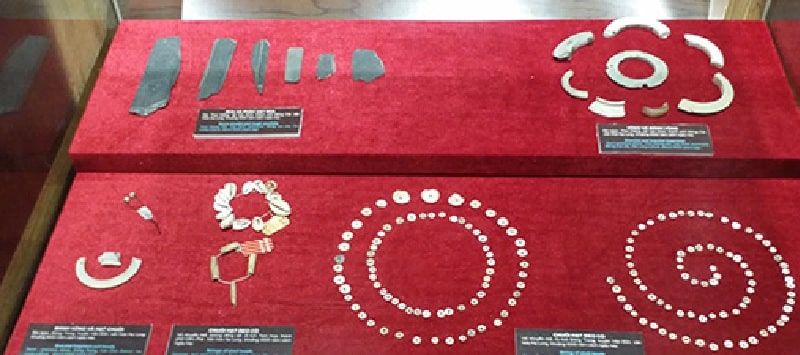
Jewelry made from seashells, animal horns…
Entering the late phase of Ha Long Culture dating back 3,500 to 3,000 years, local artifact collections continued to inherit productive labor tools such as stepped-shoulder axes, stone drilling points, and whetstones. However, there was a higher evolution and progression in manufacturing technique, resulting in tools with exceptional sharpness and meticulous finishing. Building directly upon the early phases of Ha Long culture into its later stage, these artifacts reaffirmed the superior functionality of stepped-shoulder axes. Particularly noteworthy is the collection of whetstones, displaying remarkable diversity in size, shape, and material, with each sharpening stone serving a specialized function tailored to specific production tools. This variety of sharpening implements indicates that stone tool utilization during this period had advanced profoundly into highly specialized categories.
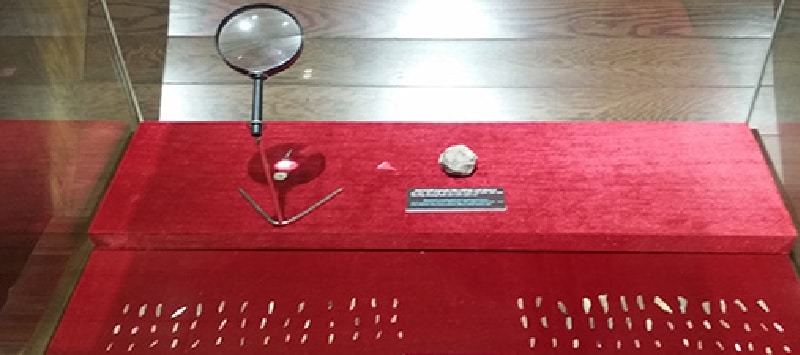
Drill bits and stone cores (raw materials for drill manufacturing)
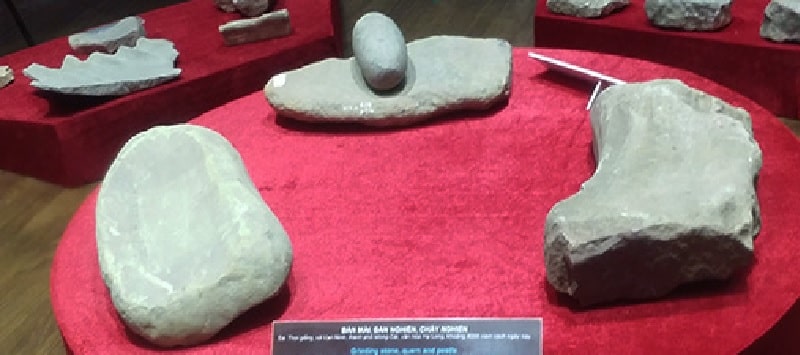
Whetstones, grinding slabs, and pestles
As one of the earliest known prehistoric maritime cultures in Vietnam and Southeast Asia, Ha Long Culture holds a paramount position in ancient Vietnamese civilization and exerts a profound influence on other cultures. Even when outlined in its most foundational strokes, Ha Long Culture remains a perpetual source of pride for the people of the northeast region. Thoroughly researching Ha Long Culture within a broader context—preserving known cultural relics while discovering new ones—is the key to truly understanding a vital chapter of Vietnam’s prehistoric maritime civilization.
Destinations Where Travelers Can Explore the Values of Ha Long Culture
| Routes | Pricing | Sightseeing Destinations |
|---|---|---|
| VHL1 | 310,000 VND/person | Thien Cung Cave – Dau Go Cave – Stone Dog Islet – Ba Hang Cave – Incense Burner Islet – Fighting Cocks Islet |
| VHL2 | 310,000 VND/person | Soi Sim Beach – Titop Island – Sung Sot Cave – Tung Sau Lagoon – Me Cung Cave – Bo Nau Cave – Luon Cave – Trong Cave – Virgin Cave – Fairy Cave Lake |
| VHL3 | 260,000 VND/person | Cua Van Floating Cultural Center – Tien Ong Cave – Ba Ham Lake – Ba Men Temple – Ang Du – Bamboo Forest |
| VHL4 | 260,000 VND/person | Co Cave (Thien Canh Son) – Thay Cave – Cap La Cave – Vung Vieng – Tung Ang Eco-area – Cong Do Island – Hon Xep Park |
| VHL5 | 310,000 VND/person | Thien Cung Cave – Dau Go Cave – Stone Dog Islet – Ba Hang – Incense Burner Islet – Fighting Cocks Islet – Gia Luan Pier (Cat Ba – Hai Phong) |
| VHL6 | 150,000 VND/person/trip | Elephant Foot Islet – Ba Cua Lagoon – Tung Lam Island – Cap Bai Islet (terminal point of the itinerary bordering Gia Luan, Lan Ha Bay – Hai Phong) |
| VHL7 | 600,000 VND/person | Ha Long Bay sightseeing via itineraries VHL1-2-3-4 (applicable exclusively to overnight discovery cruises) |
| VHL8 | 70,000 VND/person/trip | Tuan Chau International Passenger Port – Ha Long International Cruise Port – Nam Cau Trang Port |
Highlight Destinations to Observe Ha Long Culture:
-
Cua Van Floating Cultural Center (VHL3, VHL7): The most vivid window into the daily lifestyle of Ha Long inhabitants, from floating raft houses and boats to traditional routines.
-
Sung Sot Cave, Thien Cung Cave (VHL1, VHL2, VHL5, VHL7): Sites that convey enchanting dragon legends and the geological formation history of Ha Long Bay.
-
Ba Men Temple (VHL3, VHL7): A reflection of the spiritual beliefs and indigenous culture of local residents.
-
Vong Vieng Fishing Village (VHL4, VHL7): Another stellar example of resilient coastal community culture.
Above is comprehensive information regarding Ha Long Culture; we hope this article provides you with valuable insights. If you wish to charter a cruise tour to explore Ha Long Bay and visit these historical landmarks, please contact us for further details.