Stand-up paddleboarding (SUP) is an increasingly popular and beloved water sport in Vietnam, offering both thrilling excitement and remarkable health benefits. In this comprehensive guide, we will introduce you to what SUP is, the various types of paddleboards available, proper paddling techniques, and top SUP rental locations across Vietnam. Let’s dive in!
Read more: SUP Paddling in Halong Bay
Introduction to SUP
A SUP board is an inflatable stand-up paddleboard that is exceptionally easy to transport and store. Crafted from durable polymer materials, it can be effortlessly inflated and deflated using a hand pump. SUP boards feature fins on the underside to ensure smooth gliding and effortless tracking through the water. Some models also boast specialized features such as attachment points, deck pads, kick pads, and retractable fins.
SUP stands for Stand-up Paddleboarding, a dynamic water sport that involves standing upright on a board and using a paddle to navigate across the water. SUP can be enjoyed across diverse aquatic landscapes, including tranquil lakes, winding rivers, and coastal seas. Modern stand-up paddleboarding traces its roots back to the 1940s in Waikiki, Hawaii, pioneered by local resident John Ah Choy, who had a passion for surfing. Initially considered an offshoot of surfing, it gained widespread international popularity around 2001.
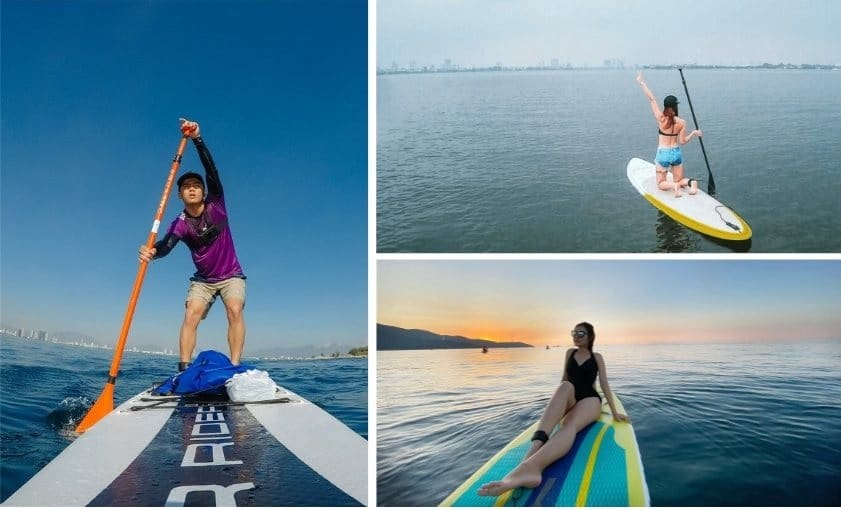
SUP boards are wonderfully versatile and provide endless enjoyment for enthusiasts of all ages and genders. They can be used for leisure cruising, recreational fishing, paddleboard yoga, wave surfing, and even whitewater river running. It is a fantastic sport for exploring and immersing yourself in nature. You can experience SUP at premier destinations throughout Vietnam, such as Halong Bay, Nha Trang, and Phu Quoc.
Essential Attire and Gear for SUP Paddling
When embarking on a SUP excursion, having the proper equipment and gear is essential to ensure both safety and optimal performance. Below is a checklist of must-have items for stand-up paddleboarding:
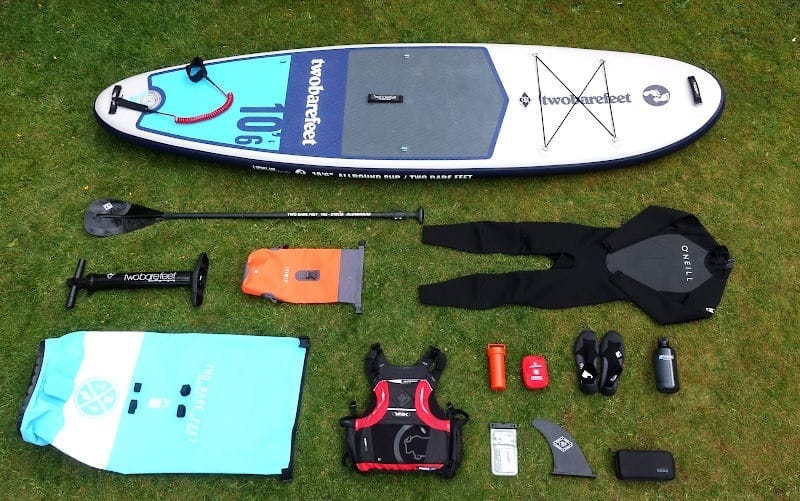
Essential items for SUP paddling
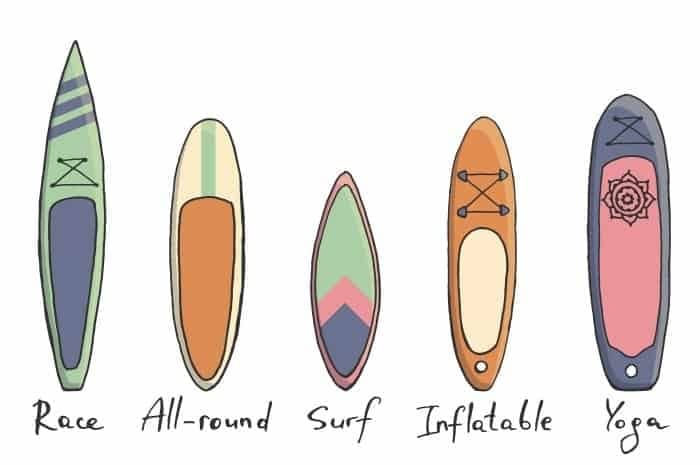
- SUP Board: This is the most crucial piece of equipment. You should choose a board that aligns with your intended use, size, material preferences, and aesthetic taste. There are various types of boards available, including inflatable SUPs, yoga SUPs, surfing SUPs, and racing SUPs. You can either rent or purchase a board depending on your needs.
- Paddle: This is your primary tool for propulsion across the water. Select a paddle with a shaft length suited to your height. Typically, a paddle measures over 2 meters in length, or roughly 20-25 cm taller than your height. Hold the paddle so that the teardrop-shaped blade angles forward and the power face points backward.
- Life Jacket: An indispensable safety device when paddleboarding. A personal flotation device (PFD) helps you maintain balance and keeps you secure should you fall into the water. Choose a life jacket that fits your body comfortably. There are belt-style and vest-style PFDs; belt styles offer greater freedom of movement, while vest styles provide superior safety and reliability.
- Safety Whistle and Light: These accessories allow you to signal for assistance during emergencies or communicate with fellow paddlers on the water. Always carry a safety whistle. If you plan on evening or night paddling, equip yourself with a headlamp or a board-mounted light for illumination and visibility.
- Attire: You can wear virtually any clothing that feels comfortable and suits the prevailing weather conditions. During the summer months, swimwear, board shorts, and short- or long-sleeved UV-protection rash guards are ideal to shield your skin. In colder waters, a wetsuit or drysuit is recommended to retain body heat and prevent rapid chilling.
- Dry Bag: A waterproof bag designed to keep your smartphone, camera, wallet, and other personal belongings safe and dry while you paddle. Dry bags come in various capacities. It is best to secure your dry bag directly to the board or wear it for convenient access.
These are the essential items and gear needed for SUP paddling. Preparing thoroughly before hitting the water ensures you enjoy the finest possible experience.
How to Paddle a SUP
Stand-up paddleboarding is an exhilarating and rewarding water sport. To get started, you will need a SUP board, a paddle, a life jacket, and appropriate clothing. Find a calm body of water to begin your adventure. Here are the fundamental SUP paddling techniques:
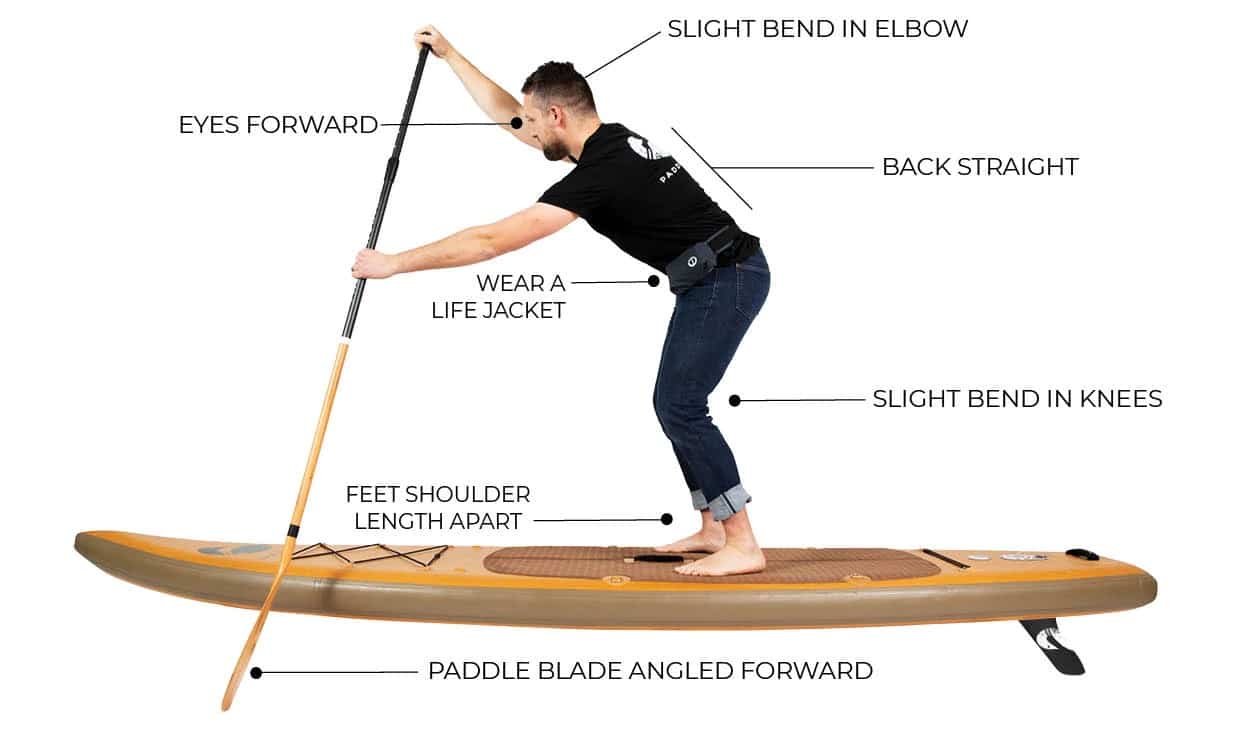
SUP Paddling Posture
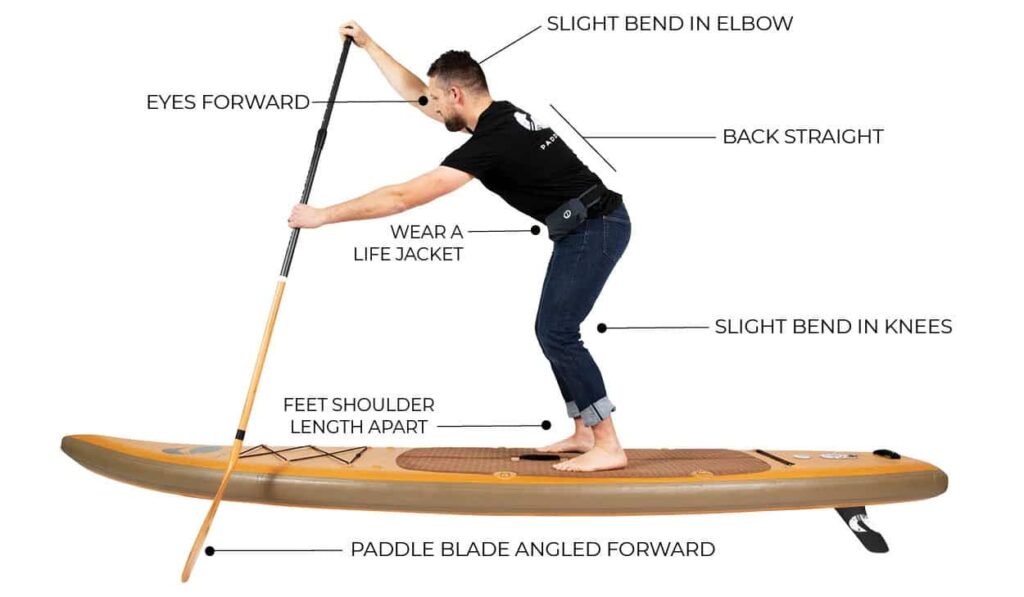
- Mounting the Board: Begin by kneeling on the center of the board near the carrying handle. Use your hands to push away from the shoreline while keeping your balance with the paddle. Once stable, slowly rise to your feet, keeping your back straight and your knees slightly bent. Keep your gaze directed forward rather than looking down at the water or your feet.
- Forward Stroke: Hold the paddle with the teardrop blade facing forward and the power face angled backward. When paddling on the right side of the board, your left hand should grip the shaft roughly 10 cm above your right hand. To switch sides, simply reverse your hand positions. To execute a forward stroke, submerge the paddle blade near the front of the board close to your feet, then pull it backward parallel to the board until it reaches near the tail. Engage your core and shoulder muscles for maximum efficiency.
- Turning: To turn left, place the paddle in the water on the right side while shifting your torso to the left. Maintain a low center of gravity and sweep the paddle backward toward the tail. To turn right, reverse the motion. You can also execute sharp turns by sweeping the paddle in wide arcs around the nose or tail of the board.
- Falling and Recovering: Falling off your SUP is completely normal and entirely safe if you fall correctly. Always aim to fall away from the board to avoid impact, and keep a firm grip on your paddle. Fall toward the rear or sides of the board rather than the front to prevent the board from striking you. Once in the water, remain calm, use your leash to pull the board back within reach, and climb back on from the tail or sides to resume paddling.