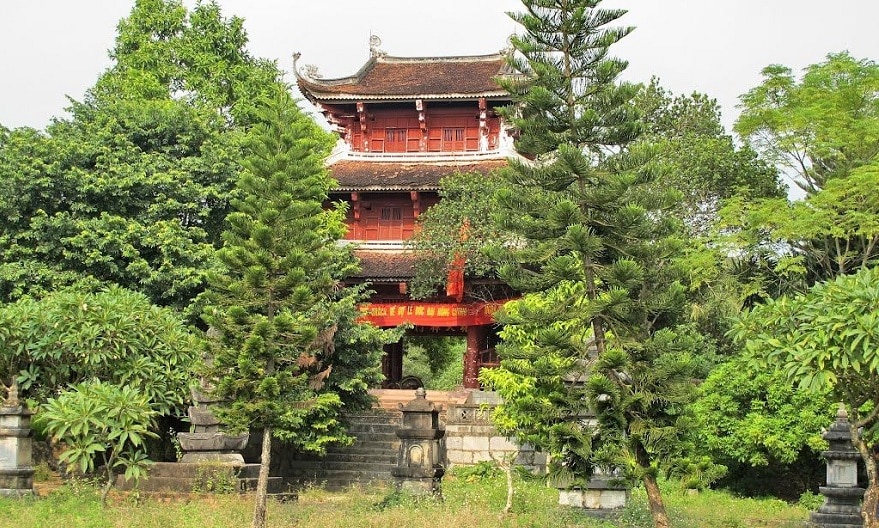
If you are seeking a destination that seamlessly blends historical, cultural, and religious significance with serene and breathtaking natural landscapes, then Quynh Lam Pagoda in Quang Ninh is an exquisite choice. Quynh Lam Pagoda is a famous ancient temple in Quang Ninh, situated within the Tran Dynasty relic complex in Dong Trieu. The pagoda occupies a prime location, often described as possessing the “throne” or “dragon coiling, tiger crouching” geomantic position. Established during the reign of King Ly Than Tong by Zen Master Nguyen Minh Khong, it served as a pivotal center for the Truc Lam Zen school of Buddhism. In 2013, it was recognized as a Special National Historical and Artistic Relic.
Quynh Lam Pagoda – The premier ancient landmark
The History of Quynh Lam Pagoda
With over 900 years of history, Quynh Lam Pagoda has weathered numerous historical tides. Shortly after the temple’s construction, Zen Master Nguyen Minh Khong commissioned the casting of a copper Maitreya Buddha statue standing six “truong” tall (approximately 20 meters), which was once regarded as one of the “Four Great Treasures of An Nam.” This statue represented a pinnacle of copper-casting artistry, belonging to the national treasures of the Dai Viet era during the Ly and Tran dynasties. The other three treasures included the Bao Thien Tower (Sung Khanh Pagoda, Hanoi), the Quy Dien Bell (One Pillar Pagoda, Hanoi), and the Pho Minh Cauldron (Pho Minh Pagoda, Nam Dinh). To house this colossal statue, a grand hall reaching seven “truong” (about 23.5 meters) in height was constructed. Legend has it that while casting the statue, Master Minh Khong used a massive bag to collect copper from China to bring back to the country. The Maitreya Buddha stood as a symbol of peace and prosperity, drawing countless devotees and visitors.
Later, Zen Master Phap Loa—the second patriarch of the Truc Lam Zen sect—oversaw the expansion and established the Quynh Lam Institute, featuring massive, sophisticated architecture. Quynh Lam Pagoda evolved into the first Buddhist university in our country and served as the venue for many historical assemblies. In 1314, Phap Loa commissioned the construction of 33 Buddhist shrines and scripture libraries. By 1316, he founded the Quynh Lam Institute, the largest Buddhist university of the Tran Dynasty. In 1329, he inscribed on the temple stele that “Quynh Lam is the premier ancient landmark of the Southern land.” It functioned as a center for teaching scriptures and training monks. Renowned historical events, such as the “Seven-Day, Seven-Night Buddha Assembly” (1325), were held here. Tradition states the institute could accommodate up to three thousand people at once. There was also the Bich Dong hermitage for meditation, a natural cave nestled in the mountains featuring three chambers for practitioners. Ancient records describe Bich Dong as possessing a “nine-story stone palace,” reflecting its mystical atmosphere. This site was considered one of the four scenic highlights of Quynh Lam, alongside the Maitreya statue, the temple stele, and the Tich Quang Tower.
In the 15th century, during the Ming occupation, the invaders attempted to destroy the statue to forge ammunition. Folklore recounts that the invaders brought 24 bellows to melt the copper but were unsuccessful, and the temple stele records that the “statue sank deep into the earth.” The temple stele is a magnificent stone monolith 2.5 meters high and 1.5 meters wide, adorned with graceful, winding dragon carvings. Commissioned by Phap Loa in 1329 to commemorate the achievements of Zen Master Minh Khong and other masters in building Quynh Lam, it reinforces the status of the temple as a premier landmark. The stele remains one of the most precious artifacts of the site. Following centuries of damage from various wars, the pagoda underwent an extensive renovation in 2008 with an investment of nearly 200 billion VND. It was reconstructed in the architectural style of the Tran Dynasty, comprising the Three-Gate Entrance (Tam Quan), Tam The Hall, Thai Bao Hall, Ancestor Hall, Bodhisattva Avalokiteshvara Hall, and other auxiliary buildings. The Tam Quan gate features three entrances with fish-scale tiled roofs. The halls are dedicated to the Buddhas, Zen patriarchs, and Bodhisattvas, meticulously constructed from ironwood and green ceramic tiles, creating an aura of both majesty and aesthetic beauty.
Temple Architecture
The architecture of Quynh Lam Pagoda comprises a series of monumental and cohesive structures, reflecting the sophisticated artistic and technical mastery of the Vietnamese people during the Tran Dynasty. The pagoda is situated at the heart of the three zones: Thuong (Upper), Ha (Lower), and Sinh. A vast lake lies before its entrance, while the remaining three sides are sheltered by rolling hills. This unique topography is considered a “throne” position, or a landscape known as “The Dragon Crouching and the Tiger Reclining.” The roof design follows the classic Tran Dynasty architectural style, featuring sweeping, upturned red-tiled eaves, with pavilions connected by graceful corridors.
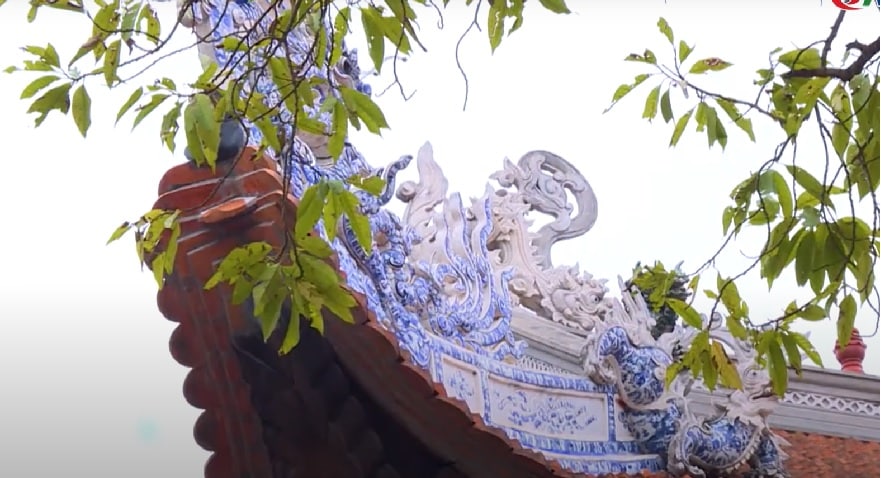
Architecture of the curved red-tiled roof with dragon head carvings
The pagoda complex encompasses a triple gate (tam quan), a main Buddha hall, a Bodhisattva hall, an ancestral hall, a scripture library, and various ancillary structures. The triple gate features three grand entrances, flanked by two 4-meter stone pillars inscribed with the names “Quynh Lam Tu” and “Dai Bi Tu.” The Buddha hall enshrines Gautama Buddha alongside the Bodhisattvas Ksitigarbha and Avalokiteshvara. The Bodhisattva hall is dedicated to Bodhisattva Manjusri. The ancestral hall honors the patriarchs of the Truc Lam Zen sect, such as Nguyen Minh Khong, Phap Loa, and Huyen Quang. The scripture library serves as a repository for precious Buddhist texts. Furthermore, the pagoda features the Bich Dong hermitage, a small sanctuary built within a natural cave, ideal for meditation.
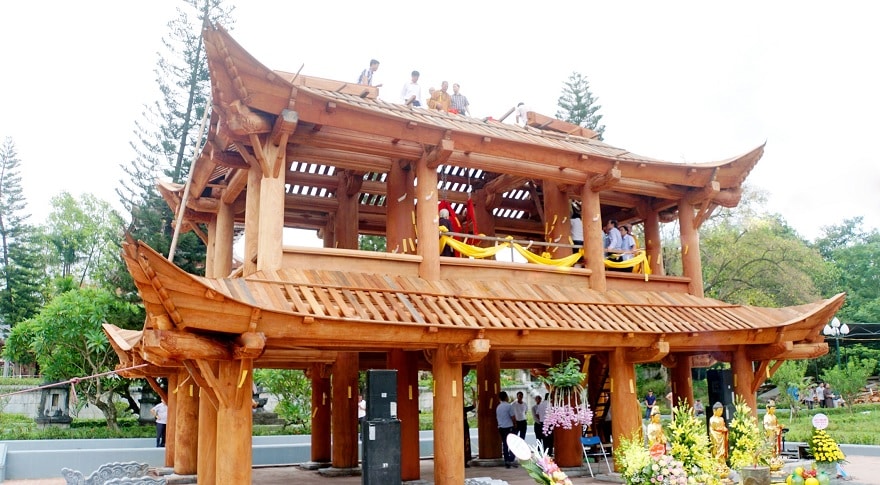
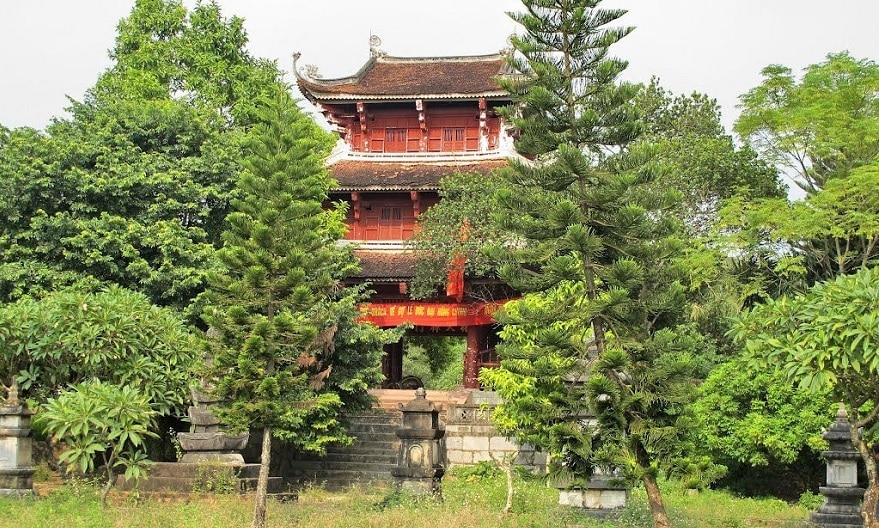
The triple gate and bell tower represent the fourth architectural component of the complex
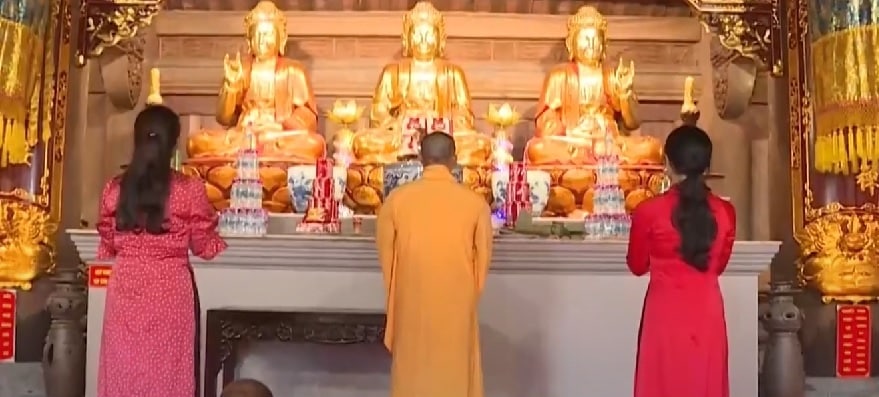
The Tam The Hall is where Amitabha Buddha is worshipped, flanked by Avalokiteshvara and Mahasthamaprapta Bodhisattvas
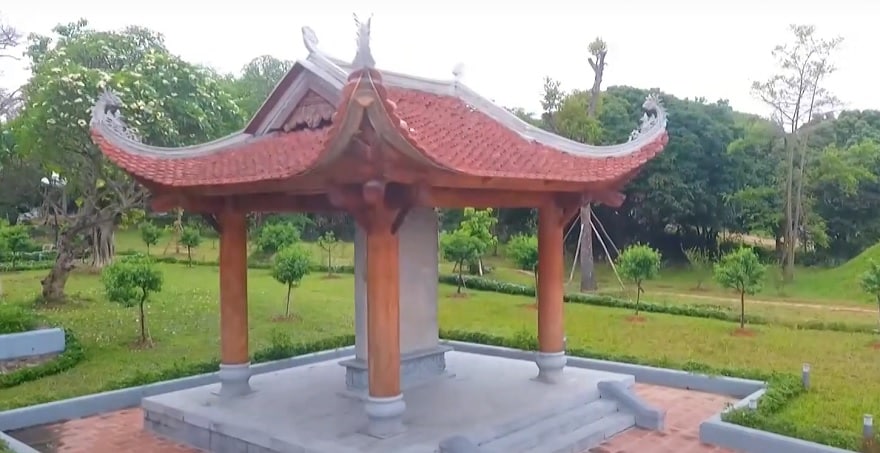
Pagoda stele carved by Phap Loa in 1329
One of the highlights of Quynh Lam Pagoda’s history was the presence of two colossal bronze Maitreya Buddha statues, cast in two different eras. The first, cast during the Ly Dynasty under the direction of Monk Nguyen Minh Khong, stood 6 truong (approximately 20 meters) tall and was once celebrated as one of the “Four Great Treasures of An Nam.” This statue was housed in a hall 7 truong (approximately 23.5 meters) high, visible from a great distance. The second, cast during the Tran Dynasty by Zen Master Phap Loa, stood 5 truong (approximately 16 meters) tall and was adorned with gold leaf. This statue was ceremoniously raised to its throne in 1328, during a royal visit by King Tran Minh Tong. Tragically, both statues were lost during the Ming invasion of Dai Viet, as the invaders melted them down to forge weapons.
Essential tips for your visit
To reach Quynh Lam Pagoda, you may travel from either Hanoi or Halong. From Hanoi, you can take a coach or motorcycle via National Highway 18A through Uong Bi, then turn onto National Highway 18B toward Dong Trieu. From Halong, take a coach or motorcycle along National Highway 18B, passing through Uong Bi before arriving in Dong Trieu. Quynh Lam Pagoda is located approximately 3.5 km southwest of Dong Trieu town center.
Quynh Lam Pagoda is open daily from 6:00 AM to 6:00 PM. Admission is 10,000 VND per person. Visitors are invited to explore the architectural wonders, pay respects to ancient stone steles, admire the tranquil lotus ponds and fish tanks, and delve into the rich history and culture of the pagoda and the Dong Trieu region. You may also participate in spiritual activities such as chanting, meditation, and prayer. Should you wish to stay overnight at the pagoda, please contact the management board to arrange accommodations.
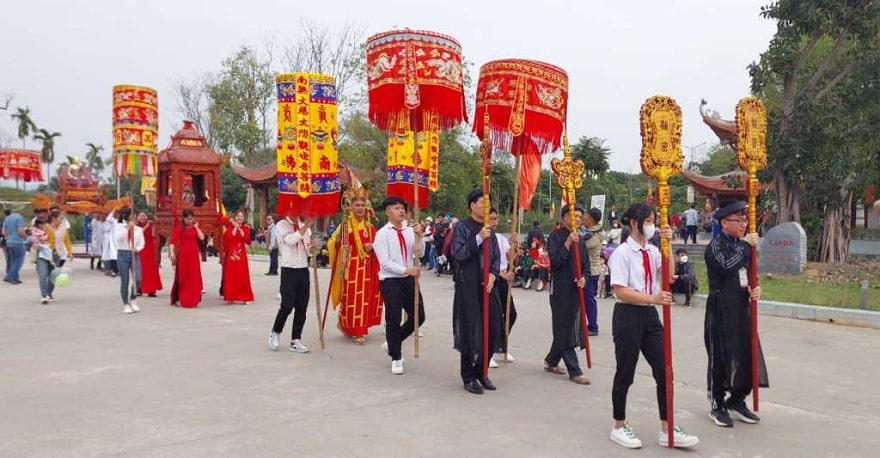
The water procession ritual
We recommend visiting during major Buddhist festivals—such as the full moons of the first, seventh, ninth, and eleventh lunar months—to join pilgrims from across the region in collective chanting, prayer, and worship. You can also experience vibrant cultural activities, including Quan Ho singing, lion dances, and lantern lighting, immersing yourself in the sacred and festive atmosphere that defines Quynh Lam Pagoda on these auspicious days.
- The full moon of the first lunar month marks the Parinirvana of Gautama Buddha. As one of the most significant days in the Buddhist calendar, visitors can pay homage to the statue of the reclining Buddha and the statues of the Three Ancestors of Truc Lam beneath the bamboo groves. Guests may also listen to Dharma talks exploring the significance of this holy day and teachings on following the Buddha’s path.
- The full moon of the seventh lunar month is the Vu Lan Festival (Filial Piety Day). This is a time for Buddhists to express gratitude to their parents and ancestors for their life and upbringing. You may participate in offerings for your ancestors and pin a white or red rose to your clothing, signifying whether your parents are living or have passed away. Dharma lectures on filial piety in accordance with Buddhist teachings are also available.
- The full moon of the ninth lunar month commemorates the monastic ordination of Avalokiteshvara Bodhisattva (Guan Yin). It is a day to honor the compassion of the Bodhisattva in saving sentient beings from suffering. Visitors are welcome to pay respects to the statues of Guan Yin and other deities while attending teachings on her life and the path of compassion.
- The full moon of the eleventh lunar month celebrates the birth of Amitabha Buddha. It is a day to honor Amitabha’s establishment of the Western Pure Land, offering peace to all beings. You may visit to worship the Amitabha statue and attend talks on the practice of Buddha-remembrance (Nianfo) to attain rebirth in the Pure Land.
Additionally, you may visit from the 1st to the 4th day of the second lunar month to attend the Quynh Lam Pagoda Festival. This traditional celebration honors the patriarchs of the Truc Lam Zen sect and the Tran Dynasty kings who contributed to the construction and protection of the pagoda. Attendees may participate in incense offerings and the solemn procession of the Jade Buddha statue.