
Bao Hai Linh Thong Tu Pagoda
Location of Bao Hai Linh Thong Tu Pagoda
Bao Hai Linh Thong Tu Pagoda is a magnificent cultural and spiritual sanctuary situated atop Ba Deo Hill, nestled within the enchanting Mystic Hills complex of the Sun World Ha Long Park. Crafted in the exquisite traditional architectural style of the Late Le Dynasty, the pagoda exudes an aura of classical elegance and majestic solemnity. Offering panoramic, breathtaking vistas of the world-renowned Ha Long Bay, it serves as a serene haven for spiritual enrichment and Buddhist devotion for both international travelers and the people of Quang Ninh.
Officially inaugurated and opened to the public on April 3, 2021, Bao Hai Linh Thong Tu was conceived as a spiritual landmark to cater to the devout aspirations of visitors and locals alike. Its auspicious name translates poetically to “a sacred sanctuary nestled amidst verdant pine hills, serving as a divine talisman to ensure the coastal city of Ha Long perpetual peace and flourishing prosperity.” This destination represents a harmonious fusion of culture and pristine nature, tradition and modernity, spirituality and world-class leisure.
Inaugurated on April 3, 2021, Bao Hai Linh Thong Tu welcomes discerning travelers from near and far to explore and admire its splendor. The temple’s name signifies “the sacred pagoda embraced by lush pine forests, standing as a guardian treasure that blesses the coastal city of Ha Long with eternal peace and prosperity.” It is an absolute must-visit milestone for any connoisseur of travel journeying through the heritage city of Ha Long.
Read more: Top 9 Most Sacred Pagodas in Quang Ninh
How to Get to Bao Hai Linh Thong Tu
To reach Bao Hai Linh Thong Tu, guests must purchase Queen Cable Car tickets at the Ocean Station counter within Sun World Ha Long Park. Cable car fares are 350,000 VND per adult and 250,000 VND per child (height between 1m and 1.4m). The cable car will transport you seamlessly to the Mystic Hills complex, home to the exquisite Japanese Garden.

Ocean Station at Sun World Ha Long
From the Japanese Garden, guests will discover Cau May (Cloud Bridge), a graceful suspension bridge approximately 100 meters long that connects two majestic peaks. Cau May is a magical place where visitors can entrust their deepest wishes and prayers for themselves and their families. Guests can write their heartfelt blessings on paper lotus leaves and hang them along the bridge, hoping that their aspirations will be blessed by the heavens. After crossing Cau May, travelers can enjoy a leisurely stroll or take an electric buggy up to Bao Hai Linh Thong Tu. The pagoda is open daily from 8:00 AM to 5:00 PM with complimentary admission. Visitors are welcome to explore, admire the architecture, offer incense, and pray. Embodying ancient and sacred architectural traditions, the pagoda serves as a spiritual sanctuary for all who visit.

Cau May connecting the Japanese Garden to Bao Hai Linh Thong Tu
The pagoda is meticulously constructed in the traditional architecture of the Late Le Dynasty, drawing deep inspiration from the lotus – the quintessential symbol of Buddhism. The lotus motif gracefully graces every carved detail of the wooden window frames, while lotus leaf symbols adorn the structural beams. From the decorative accents flanking the stone staircases to the stylized cloud motifs on the roof corners, the complex showcases a remarkable diversity of sculptural and decorative arts. Notably, the stacked-roof architectural technique creates the ethereal impression of a lotus blossoming within a lotus, lending a distinctive character to the entire structure and fostering a tranquil, peaceful meditative atmosphere atop Ba Deo Hill.
The Architecture of Bao Hai Linh Thong Tu
Spanning an area of approximately 4,000 square meters, the complex comprises key sanctums including the Main Hall (Tam Bao), Ancestor House (Nha Tho To), Mother Goddess House (Nha Tho Mau), Triple Gate (Tam Quan), Five-Direction Stupa (Ngu Phuong Bao Thap), Bell and Drum Towers, and the Eastern and Western Corridors. All structures (excluding the Five-Direction Stupa) are crafted entirely from precious ironwood (lim), highlighted by traditional bracketed timber roof frames characteristic of 17th-century classical Vietnamese temple architecture. Ironwood is a rare, exceptionally durable timber renowned for its subtle, pleasant fragrance. The interlocking timber framing technique is an ingenious engineering feat of ancient Vietnamese artisans, utilizing precise wooden joints rather than metal nails to bind the structure together. This stands as one of the very few spiritual monuments in Vietnam built entirely from timber, imbuing the space with an atmosphere of profound warmth and timeless luxury.

Tam Quan Gate
Tam Quan (Triple Gate): Serving as the grand entrance to the complex, it is expansively designed with curved scale-tiled roofs and exquisitely stylized cloud carvings. The gate features three entryways: a central main door flanked by two smaller side doors. The central door is traditionally reserved for venerable monks and high priests, while the side doors welcome travelers and Buddhist devotees. Above the central entrance hangs a wooden plaque bearing the carved name of the pagoda: Bao Hai Linh Thong Tu.

Five-Direction Stupa
Five-Direction Stupa: Standing as the most prominent architectural masterpiece of the complex, this 18-meter-tall structure is crafted from pristine jade-green stone. The stupa is sculpted in the form of a blooming lotus blossom, symbolizing ultimate purity and inner peace. At the pinnacle rests a serene statue of Gautama Buddha in deep meditation. The Five-Direction Stupa serves as a sacred repository for Buddhist relics and artifacts, as well as an elevated observatory for visitors to behold the magnificent panorama of the complex and Ha Long Bay from above.

Bell Tower – Drum Tower
Bell and Drum Towers: Positioned symmetrically on either side of the Tam Quan gate, these structures feature striking red-tiled roofs and ironwood frames, creating a sense of perfect balance and harmony. Each tower houses a magnificent bronze bell or a large ceremonial drum adorned with intricate floral and geometric reliefs. The bell and drum are sounded to announce times of monastic practice, prayer sessions, and significant temple events.

Bronze Buddha Statues in the Main Hall of Hai Linh Tu
Main Hall (Tam Bao): The central sanctum of the complex, designed in the traditional “I”-shaped layout with dual-layered roofing. The timber framework follows the classic 17th-century bracketed style typical of ancient Vietnamese pagodas. The Main Hall honors the Three Venerable Buddhas: Amitabha Buddha, Gautama Buddha, and Maitreya Buddha. These figures represent the completeness of the Buddha Dharma. Amitabha symbolizes awakening and liberation; Gautama Buddha embodies boundless compassion and profound wisdom; and Maitreya represents enduring peace and auspicious fortune.
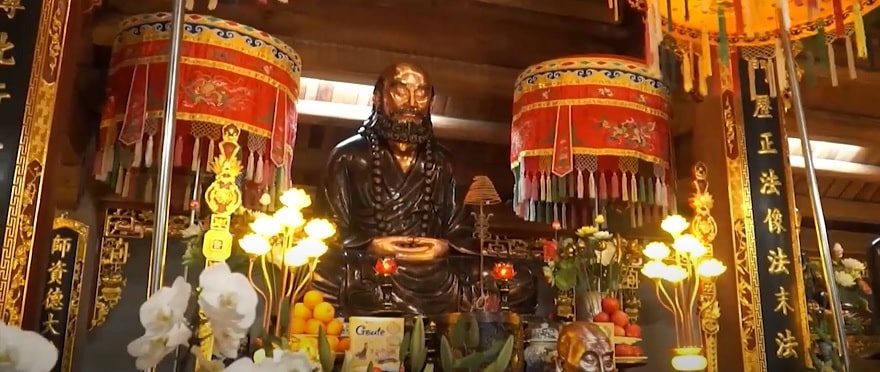
Stepping further inside is the Ancestor House
Ancestor House (Nha Tho To): Located directly behind the Main Hall, this structure mirrors its architectural style on a more intimate scale. The Ancestor House venerates Grand Patriarch Tran Nhan Tong – the visionary founder of the Truc Lam Yen Tu Zen lineage. King-Monarch Tran Nhan Tong was an enlightened ruler of the Tran Dynasty who famously relinquished his royal throne to pursue ascetic practice and disseminate Buddhist teachings to the populace. This sanctum serves as a place for visitors to pay heartfelt homage and express profound gratitude to the Patriarch.

Mother Goddess House
Mother Goddess House (Nha Tho Mau): Positioned opposite the Ancestor House, this building shares an identical architectural blueprint while offering a distinct visual palette. Inside, it venerates Avalokiteshvara Bodhisattva (Guanyin) – the embodiment of infinite compassion and divine protection. Avalokiteshvara is revered for boundless empathy, ever watchful and attentive to the prayers of all sentient beings, guiding them past hardships and spiritual afflictions. The Mother Goddess House offers a sanctuary for visitors to offer prayers and express gratitude to the Bodhisattva.
Arhat Corridor: Connecting the various structures within the complex, these covered corridors feature crimson tile roofs and sturdy ironwood frameworks. Suspended along the corridors are wooden plaques inscribed with sacred Buddhist sutras, such as the Vimalakirti Nirdesa Sutra, the Diamond Sutra, and the Lotus Sutra. These sacred verses encapsulate the Buddha’s timeless teachings on human morality, guiding travelers toward a deeper understanding of the Dharma and the path to enlightenment.
A crowning feature of Bao Hai Linh Thong Tu is its collection of over 100 meticulously crafted bronze Buddha statues. Among them, 66 statues were cast based on authentic Late Le Dynasty prototypes found in renowned temples across Hanoi and Bac Giang, such as Ba Da Pagoda, Ly Quoc Su Pagoda, Hoa Ma Pagoda, Tran Tien Pagoda, Vua Pagoda, Mia Pagoda, Tay Phuong Pagoda, and Vinh Nghiem Pagoda. Ranging from 0.5 to 1.5 meters in height, these bronze deities were fashioned using the traditional metallurgy techniques of the historic Dai Bai craft village (Bac Ninh), imbuing the meditative sanctuary with an atmosphere of profound solemnity and purity.
Scenic Vistas from Bao Linh Thong Tu
Beyond its exquisite architecture and sublime statuary, Bao Hai Linh Thong Tu boasts an unrivaled location atop Ba Deo Hill, embraced by emerald pine forests with the azure bay gleaming in the distance. From the temple grounds, visitors can gaze out over the magnificent expanse of Ha Long Bay from a unique perspective, soaking in the breathtaking, majestic natural scenery. It is an oasis of tranquility, calm, and inner peace, helping travelers rediscover spiritual serenity and experience the seamless harmony between humanity and nature.

View overlooking Ha Long Bay

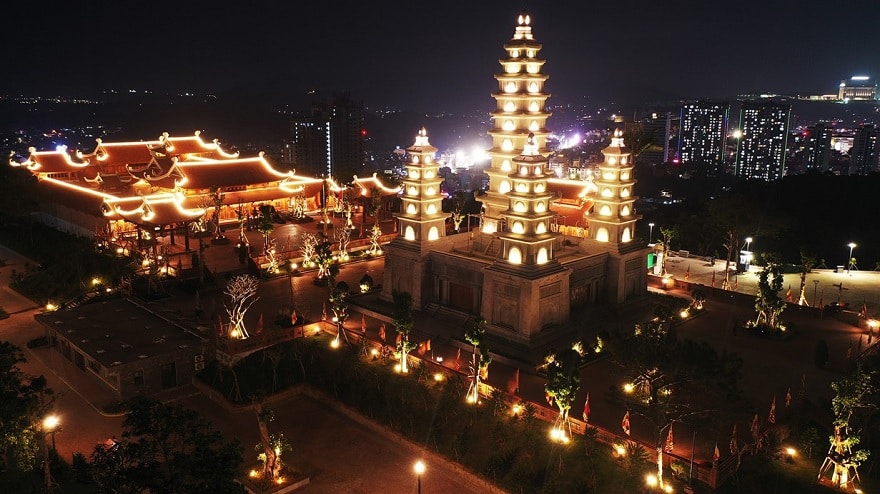
Bao Hai Linh Thong Tu at night
Bao Hai Linh Thong Tu is the premier cultural and spiritual landmark captivating travelers from near and far when embarking on a Ha Long travel journey. The pagoda offers an exceptionally distinctive and meaningful experience, weaving together architectural mastery, artistic heritage, and pristine nature. Whether you wish to explore the rich spiritual culture of Quang Ninh or simply seek a tranquil retreat amidst the vibrant energy of the coastal city, be sure to visit the magnificent Bao Hai Linh Thong Tu!
You May Also Be Interested In