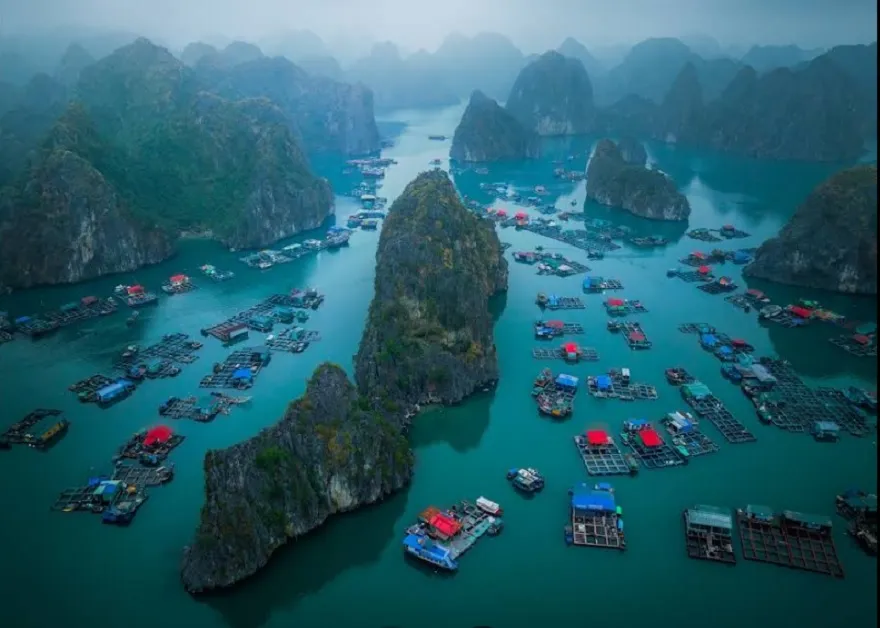
Vietnam’s S-shaped strip of land has been generously blessed by nature with a poetic, elongated coastline. For thousands of years, human life here has been intimately intertwined with the sea, giving rise to unique cultural values and a rich maritime heritage. Amidst this multi-colored symphony, coastal fishing villages emerge like profound musical notes—simultaneously possessing a rustic, humble charm while harboring deep historical and cultural narratives. Cai Beo Fishing Village, with a history spanning millennia, stands as one of these extraordinary notes—an ancient, luminous beacon inviting us to embark on a journey of discovery.
From North to South, Vietnam’s coastal fishing villages are much more than mere settlements for fishermen; they are truly “living museums” that faithfully preserve the finest essences of maritime culture, ancient fishing traditions, age-old beliefs, and a distinctive lifestyle that has played a crucial role in shaping the Vietnamese national identity. Each fishing village, while sharing the boundless sea as its anchor, carries its own nuance and story—from ancient sites concealing immense archaeological value to bustling, vibrant fish markets at dawn, or tranquil oases secluded from the outside world.
What is truly admirable and thought-provoking is the resilience with which these fishing communities sustain their traditional values, even as the country undergoes profound transformations. Many fishing villages have maintained their centuries-old ways of life and traditional labor methods despite rapid economic development and modernization. This enduring persistence is far from mere “obsolescence”; rather, it is a testament to an active and robust cultural continuity, serving as vital connection points to our national heritage amidst the tides of globalization.
Within the diverse and rich tapestry of Vietnam’s fishing villages, Cai Beo emerges as a particularly brilliant highlight, captivating visitors with its weathered antiquity and a rare, serene landscape. Nestled within Cat Ba Archipelago in the city of Hai Phong, and gracefully cradled by the magnificent Lan Ha Bay, Cai Beo—also known as Vung O village—is not only one of the oldest and largest fishing villages in Vietnam but is also esteemed as a genuine “Museum of Vietnamese Maritime Culture.” Here, past and present seamlessly intertwine, inviting each of us to step into a profound journey of discovery uncovering hidden values, where the echoes of a 7,000-year history still resound across every wave and every floating homestead.
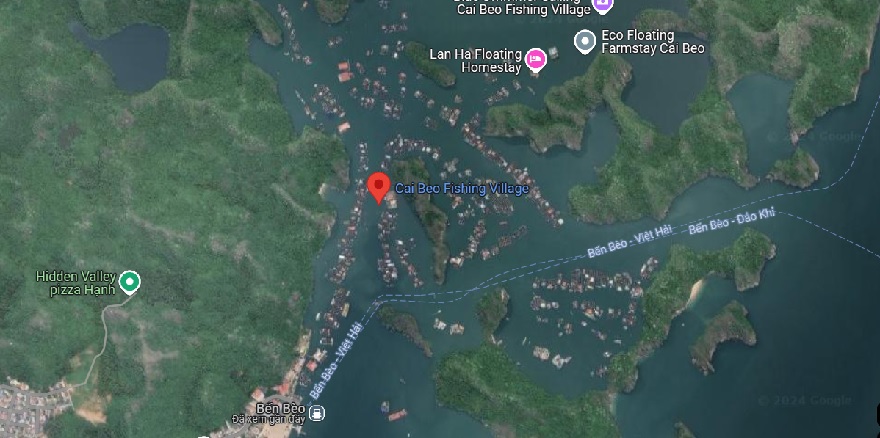
Location of Cai Beo Fishing Village on Google Map
The History of Cai Beo Fishing Village: A 7,000-Year Legacy of Maritime Culture
More than just a destination of picturesque scenery, Cai Beo Fishing Village is a priceless historical treasure trove, preserving profound imprints of a maritime culture spanning over 7,000 years. A journey back in time to explore Cai Beo will lead us to the very origins of ancient Vietnamese communities who conquered and harmonized with the open sea.
Dating back an astounding 7,000 years, Cai Beo Fishing Village is affirmed by researchers as one of the oldest fishing villages, and arguably the most enduring continuously inhabited fishing village in Vietnam. This is not merely an impressive statistic but a living testimony to humanity’s resilient adaptation and long-term settlement along the northeastern island waters. The name “Cai Beo” also carries deep cultural layers, recalling the primal era when our ancestors transitioned from a life of hunting and gathering in the mountain forests to gradually venturing out to sea, learning to harness oceanic resources and building communities anchored by the ocean.
The historical significance of Cai Beo is further powerfully affirmed through a series of significant archaeological discoveries, revealing a glorious and complex past.
Discovery Event: In 1938, French archaeologist Madeleine Colani first conducted excavations in the Lang Chai Bay area (another name for Cai Beo). Her initial findings led to a vital conclusion: Cai Beo is one of the cradles of ancient Vietnamese culture, serving as the dwelling place of a primitive seafaring community.
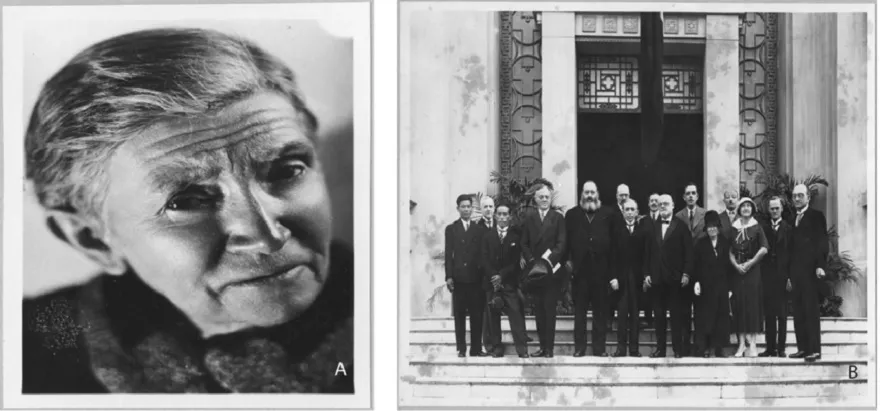
French archaeologist Madeleine Colani is credited with discovering the Cai Beo culture and several other cultures in Vietnam
Major Vietnamese Excavations
Building upon this discovery, Vietnamese archaeologists from the Institute of Archaeology and the Vietnam History Museum (now the National Museum of History) conducted larger-scale excavations during the 1970s, 1980s, and 2000s, yielding immensely valuable results:
- 1972 and 1973: The first reconnaissance and excavation efforts led by Vietnam identified 3 cultural layers at the site, recovering thousands of stone artifacts and pottery sherds.
- 1981: The Vietnam History Museum excavated an area of 78m², discovering numerous artifacts belonging to two successive developmental phases: the Early Ha Long culture and the Ha Long culture. Notably, this excavation also uncovered hearth traces and a burial site with human remains interred in a fetal position.
- 1986: Subsequent excavations yielded nearly 180 stone tools, including chipped and crudely ground implements. Additionally, a large quantity of pottery fragments with distinct characteristics was found: 9 porous pottery shards, 18 thin hard pottery shards, 93 thick coarse pottery shards, alongside 11 marine fish vertebrae, 88 fish heads, and 6 animal bone fragments.
- 2006–2007 Period: Archaeologists excavated 10 different pits, recovering a rich collection of artifacts consisting of 137 granite items, 1,424 prehistoric pottery sherds, and 568 animal bone and marine mollusk shell specimens.
Through the analysis of cultural strata and artifacts, scientists have established the continuous human development at Cai Beo across multiple successive cultural epochs: from the Middle Neolithic, through the Pre-Ha Long culture, Ha Long culture (Late Neolithic), up to the Early Bronze Age.
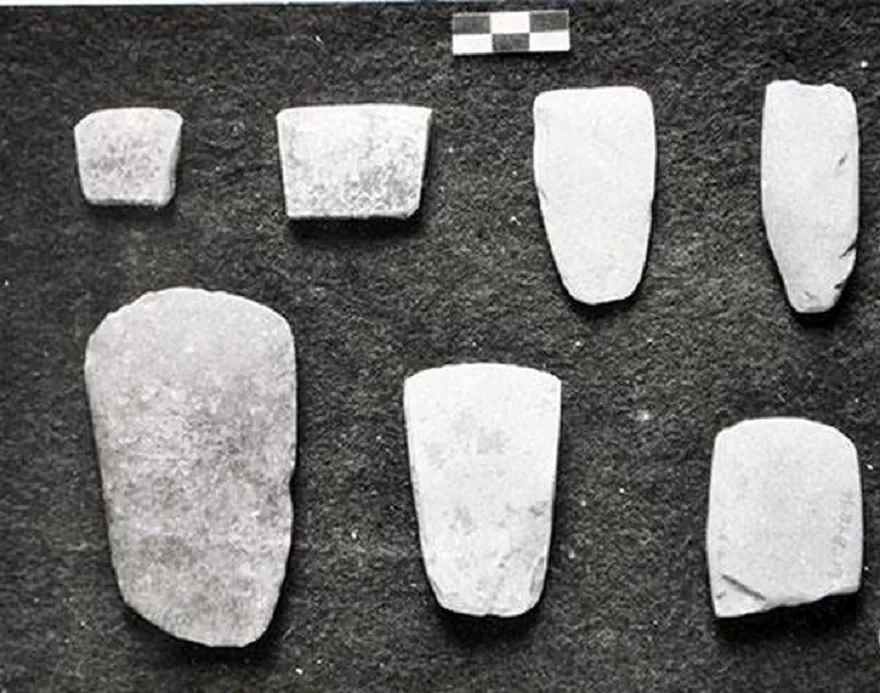
Stone labor tools discovered at Cai Beo
Armed with rich and compelling archaeological evidence, Cai Beo is regarded not merely as an ancient site, but is evaluated by scientists as one of the most vitally important archaeological sites in coastal and island regions of Northeastern Vietnam today. The unearthed artifacts help reconstruct a vivid picture of daily life, subsistence methods (hunting, gathering, marine fishing), tool-crafting techniques, and the spiritual life of ancient Cai Beo inhabitants.
In recognition of these immense historical and cultural values, the Cai Beo archaeological site was officially recognized as a National Heritage Site by the Prime Minister in 2009. This is a well-deserved affirmation of Cai Beo’s role and standing within Vietnam’s historical and cultural currents. The heritage of Cai Beo stands as proof of continuous settlement and complex cultural development among ancient fishing communities, while serving as the foundation for the unique cultural identity of modern-day Cai Beo, where past and present remain tangibly linked. Furthermore, Cai Beo’s historical and cultural significance is intimately intertwined with the breathtaking natural landscape of Lan Ha Bay, where majestic limestone karsts and tranquil waters have provided ideal conditions for the formation and preservation of the fishing village over millennia.
Distinctive Cultural and Economic Life at Cai Beo Fishing Village
Stepping beyond historical texts and archaeological vestiges, today’s Cai Beo Fishing Village remains an enchanting “living cultural space,” where the vibrant rhythms of the fishing community continue to unfold, harmonizing millennia-old traditions with the shifts of modern life. It is this unbroken continuity that creates a unique cultural and economic identity intrinsically bound to the vast ocean.
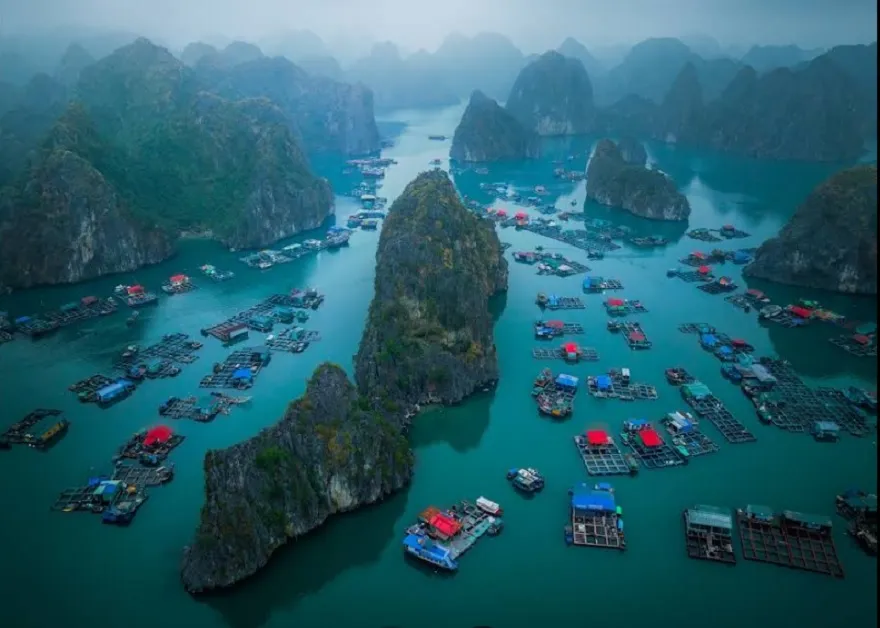
Panoramic view of Cai Beo Fishing Village from above
Floating Architecture: A Masterpiece of Adaptation to the Open Sea
The very first element to leave a striking impression on any visitor arriving at Cai Beo is its unique floating architectural complex—cluster upon cluster forming a buoyant “miniature city” upon the water. Traditionally constructed from familiar riverine materials such as wood, bamboo, and reeds, these homes typically span an area of 15 to 30 square meters. Despite their modest dimensions, each dwelling is ingeniously arranged by locals to optimize space for both domestic living and production activities.
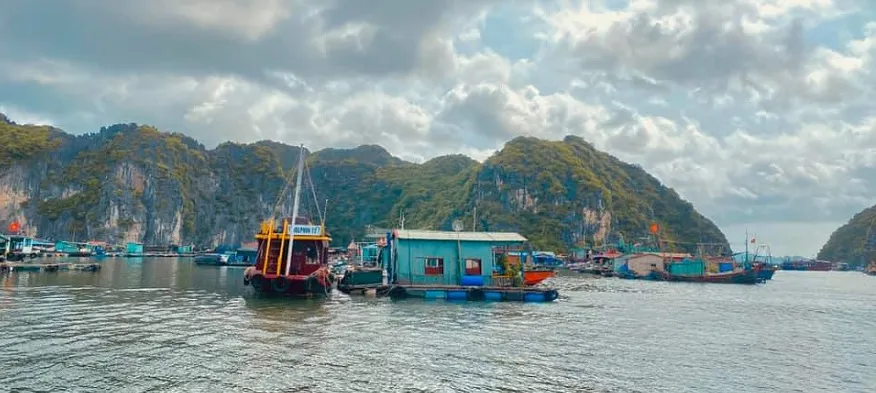
Small yet colorful wooden houses in Cai Beo
Built upon a sturdy system of floating pontoons, these houses are generally interconnected by small wooden footbridges or integrated directly with aquaculture cages. This setup serves not merely as shelter, but stands as a symbol of human creativity and exceptional adaptability to the specialized conditions of a marine environment. The daily life of Cai Beo residents is also inseparably linked to the image of the rustic coracle—the primary, flexible mode of transportation winding smoothly among the floating homes, serving daily routines and near-shore fishing tasks.
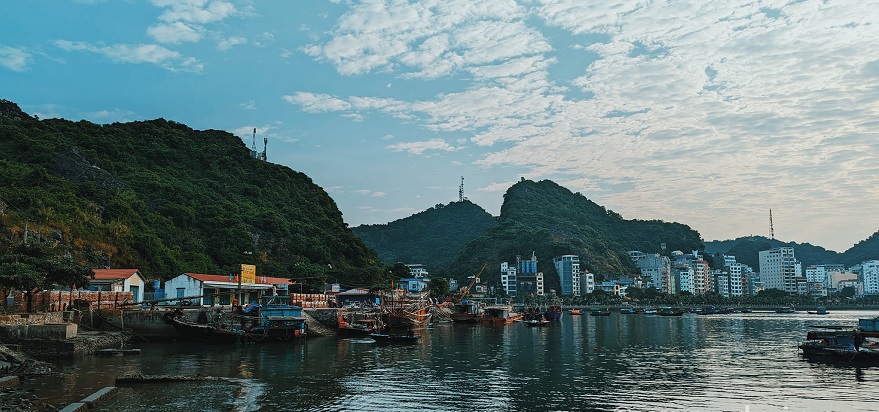
The peaceful, poetic scenery of Cai Beo Fishing Village
Economic Pulse: Symbiosis With the Sea
The heart and lifeline of Cai Beo has always been the boundless ocean. With a community of over 300 households, economic activities primarily revolve around the harvesting and aquaculture of marine resources.
Traditional Fishing
The sight of diligent sampans and small motorboats cutting through the waves before dawn, returning with hulls brimming with fish and shrimp, has become an inseparable part of the local rhythm. Traditional fishing methods using nets and lines are meticulously maintained by the locals, demonstrating a profound understanding of and intimate connection with the marine ecosystem.
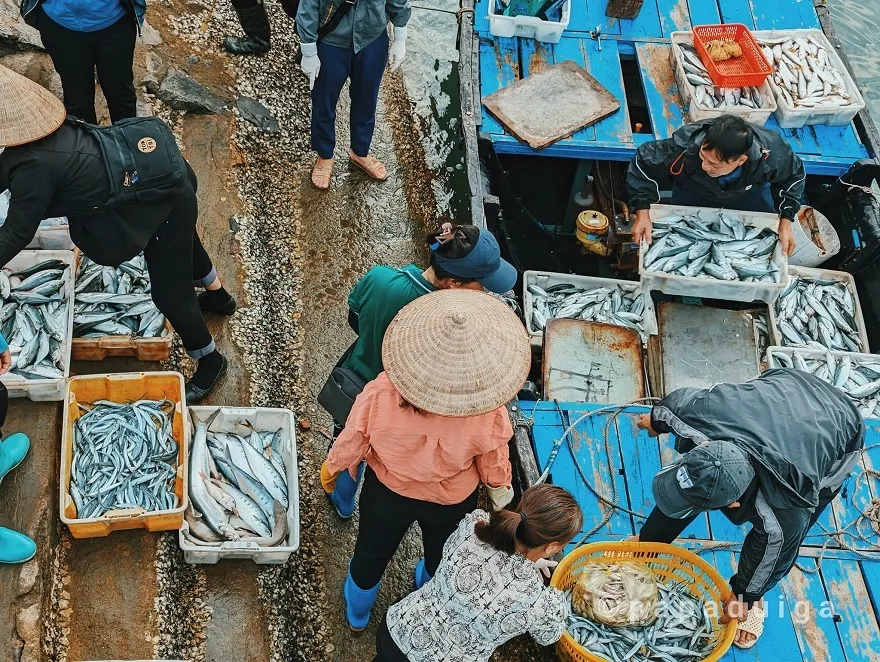
Residents in Cai Beo primarily make a living through seafood harvesting
Specialty Cage Aquaculture – The Economic Heart
Alongside wild capture fishing, cage aquaculture (or raft-based fish farming) plays an exceptionally vital role in the village’s economic structure. Renowned specialty fish such as orange-spotted grouper, red snapper, cobia, barramundi, and Asian redtail catfish are raised in floating cages positioned right beside the homes. What establishes the superior reputation and quality of Cai Beo’s cage-raised fish is the completely natural farming method based on “generational wisdom.” Locals avoid industrial feed, instead applying the technique of “feeding fish with fish” (larger fish naturally consuming smaller ones within the cages) and typically cultivating the fish over extended periods—from 2 to 3 years—to ensure the flesh achieves maximum firmness, exquisite flavor, and the highest nutritional value.
Tourism – A New Horizon
In recent years, coupled with the overall development of Cat Ba tourism, Cai Beo has gradually blossomed into an enticing destination, generating substantial supplementary income for locals through services such as sightseeing boat rentals, floating-house dining experiences, and interactive fishing-culture tours.
Community Lifestyle and Traditional Festivals
Living a floating life upon tightly clustered marine dwellings has forged a Cai Beo community characterized by profound solidarity, mutual assistance, and deep-rooted neighborhood bonds. Seafaring secrets, survival instincts amidst gales, and aquaculture techniques are passed down from generation to generation, creating a continuous and sustainable cultural stream. The sight of young children independently paddling wooden sampans to school each morning, or lively early-morning markets hosted right upon the water, provides unique brushstrokes vividly portraying the daily life of the fishing village. Traditional festivals continue to hold a significant role in the spiritual life of the Cai Beo fishing community:
- Cau Ngu Festival (Whale Worship Festival): This stands as one of the grandest and most meaningful festivals, annually organized to pray for favorable weather, calm seas, a bountiful fishing season with holds overflowing with seafood, and a prosperous, peaceful life for the fishing families. The festival includes solemn ritual ceremonies expressing reverence and gratitude toward the deities of the open sea.
- Boat Racing Festival: Typically held during major local festive occasions, the boat race is not merely a vibrant sporting event but an opportunity to showcase community solidarity, strength, agility, and the maritime prowess of the village’s young men and women. The festival atmosphere is consistently exhilarating and lively, accompanied by resounding drumbeats and roaring cheers echoing across the bay.
These festivals are far more than mere recreational cultural events; they serve as vital mechanisms that reinforce community identity, transmit knowledge and experience, and crucially, empower the community to confront and adapt to the inherent uncertainties of a livelihood earned upon the sea.
Travel Guide to Cai Beo Fishing Village: Transportation and Experiences
To ensure a complete and memorable journey exploring Cai Beo Fishing Village, thorough preparation regarding timing, transportation options, and experiential activities is essential.
The Ideal Time to Visit Cai Beo
The most ideal weather to visit Cai Beo Fishing Village and Cat Ba Archipelago in general is during Northern Vietnam’s dry season, which typically extends from April to October each year. Among these months, the periods from April to June and September to October boast the finest weather—featuring gentle sunshine, calm seas, and minimal rainfall—making it highly favorable for sightseeing and marine exploration. It is advisable to avoid the storm season (roughly July and August) to ensure safety and secure the best possible experience.
Directions to Cai Beo Fishing Village
To reach Cai Beo Fishing Village, you will need to travel across two main legs: getting to Cat Ba Island, and then traveling from Cat Ba to the fishing village.
Step 1: Traveling to Cat Ba Island
- From Hanoi: You can take a high-quality coach or limousine directly to the center of Cat Ba town (via the Tan Vu – Lach Huyen sea-crossing bridge and Got ferry). Alternatively, take a train to Hai Phong followed by a high-speed hydrofoil to Cat Ba.
- From Hai Phong: There are multiple choices, such as taking a high-speed boat from Ben Binh Pier, or taking the Got – Cai Vien ferry if you wish to bring a personal vehicle.
- From Ha Long City (Quang Ninh): You can take the Tuan Chau – Gia Luan ferry. The distance from Ha Long to Cai Beo is approximately 25 km.
Step 2: From Cat Ba Town Center to Ben Beo Pier Ben Beo Pier is situated roughly 2 to 3.5 km from the center of Cat Ba town. You can easily commute by taxi, motorbike taxi (xe om), or rented motorbike.
Step 3: From Ben Beo Pier to Cai Beo Fishing Village At Ben Beo Pier, you will purchase a Lan Ha Bay sightseeing ticket (which includes Cai Beo Fishing Village), with a reference ticket price of approximately 30,000 VND per person. Afterward, you have the following options to reach the village:
1. Chartering a Private Boat: Ideal for large groups or families seeking privacy. Rental prices vary depending on the boat type and duration.
| Boat Rental Type | Passenger Capacity | Rental Price (VND) |
|---|---|---|
| Half-Day | 10 – 20 persons | 2,500,000 – 3,500,000 / session |
| 25 – 50 persons | 3,800,000 – 5,500,000 / session | |
| Full-Day | 10 – 20 persons | 5,000,000 – 5,500,000 / day |
| 25 – 50 persons | 6,000,000 – 7,000,000 / day |
Read More: Ticket Prices and Sightseeing Boats in Lan Ha Bay – Cat Ba
2. Joining a Shared Group Boat Tour
To make your journey of discovering Cai Beo Fishing Village more convenient and comprehensive, travelers can opt for shared Lan Ha Bay tour boats, featuring itineraries cleverly designed to include a stop at this ancient fishing village. This is a popular and cost-effective choice, particularly suited for individuals, couples, or small groups desiring a well-organized excursion at a reasonable cost.
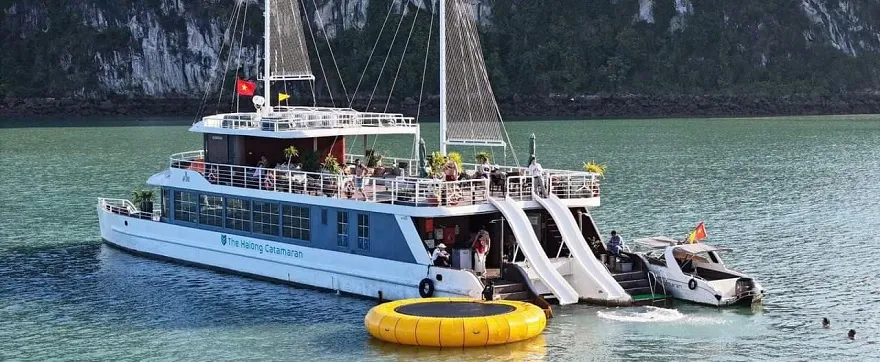
5-Star Catamaran Cat Ba
These shared group tours typically depart from Ben Beo Pier (Cat Ba), guiding you not only to Cai Beo but also opening up a magnificent cruise route through the prominent scenic landmarks of Lan Ha Bay. Travelers will have the opportunity to admire majestic limestone mountain ranges, crystal-clear azure waters, and pristine secluded beaches before anchoring at Cai Beo to delve into the fishermen’s unique lifestyle and culture.
| Tour/Cruise Name | Operating Hours | <span s |
|---|