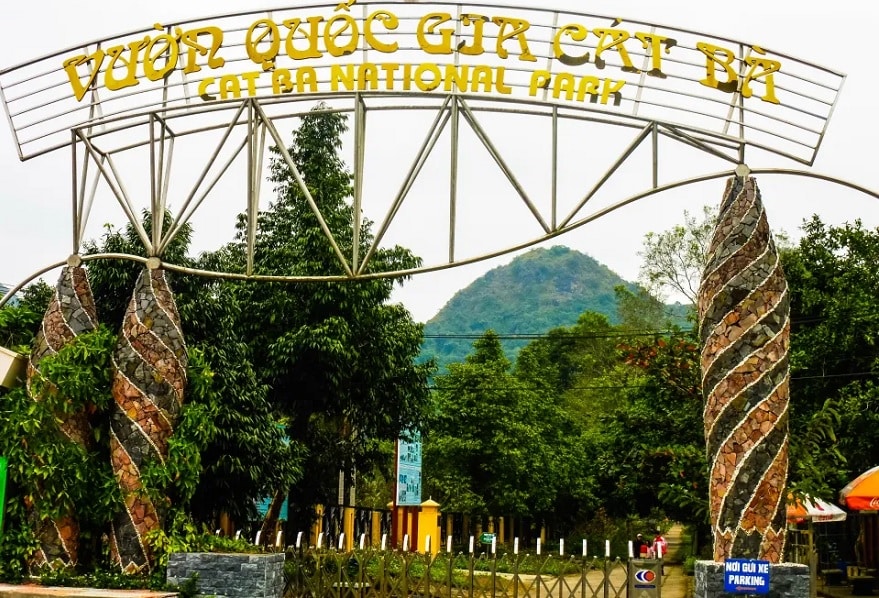
Nestled on the enchanting Cat Ba Island within the vibrant city of Hai Phong, Cat Ba National Park stands as a crown jewel of Vietnam’s natural heritage. Recognized by UNESCO as a World Biosphere Reserve, the park proudly boasts an exceptionally diverse ecosystem where ancient limestone mountain forests, coastal mangrove forests, and vibrant underwater coral reefs seamlessly converge.
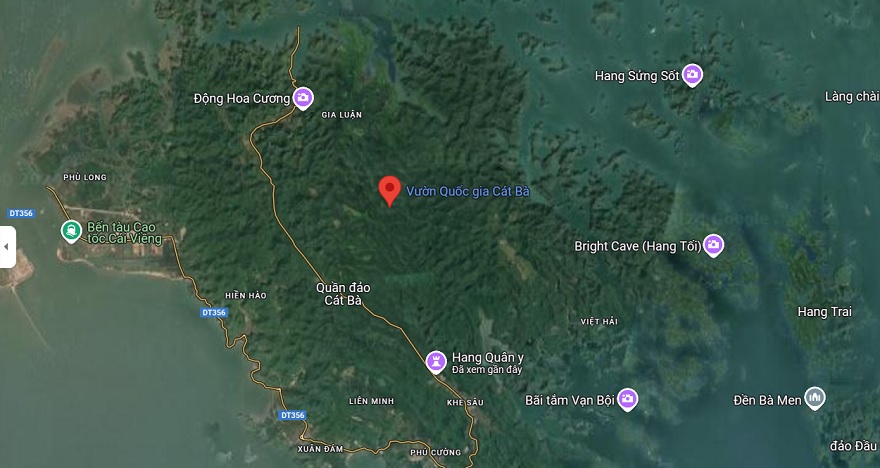
Geographical location map of Cat Ba National Park, showcasing its close proximity to famous Halong Bay tourist destinations as displayed on Google Maps
Cat Ba National Park is not only a sanctuary for thousands of rare flora and fauna species, but also an idyllic destination for connoisseurs of nature and those seeking refined tranquility. Strategically situated near Halong Bay, discerning travelers can effortlessly combine the exploration of these two renowned natural wonders into a single, seamless itinerary. Join Halong & Lan Ha Bay Cruise Tours on an extraordinary journey to discover Cat Ba National Park, uncovering the breathtaking wonders bestowed upon this majestic land by Mother Nature.
An Overview of Cat Ba National Park
1. Geographical Location and Historical Development
Cat Ba National Park is located on Cat Ba Island, within Cat Hai District, Hai Phong City. Situated approximately 14 kilometers northeast of Cat Ba town center, it lies directly along the cross-island road stretching from Gia Luan Pier to the town center. With an average elevation of about 150 meters above sea level and spanning a vast area of 26,240 hectares—comprising 17,040 hectares of island terrain and 9,200 hectares of marine waters (according to the Ministry of Natural Resources and Environment)—the national park covers a significant portion of the island, creating a sprawling sanctuary of verdant greenery amidst the open sea. This unique geographical setting endows Cat Ba with exceptional landscape and ecological characteristics.

The Cat Ba Cross-Island Highway
Cat Ba National Park was established under Decision No. 79/CP on March 31, 1986, by the Chairman of the Council of Ministers, encompassing a natural area of 15,200 hectares across the following administrative communes: Gia Luan, Phu Long, Hien Hao, Xuan Dam, Tran Chau, Viet Hai, and Cat Ba town, with rivers and the sea encircling these communes and the park. This zoning was designed to protect and nurture the region’s diverse ecosystem. Beyond its designation as a national park, Cat Ba was formally recognized by UNESCO as a World Biosphere Reserve in 2004, honoring ongoing commitments to preserving the area’s rich biodiversity.
Over the years, the national park has maintained an unwavering dedication to environmental conservation, scientific research, and sustainable ecotourism development. Most notably, in 2023, the Halong Bay – Cat Ba Archipelago complex—inclusive of Cat Ba National Park—was officially inscribed as a UNESCO World Heritage Natural Site. This marks Vietnam’s first inter-provincial and municipal heritage site to receive this prestigious honor, representing a monumental milestone in safeguarding and promoting the nation’s exceptional natural treasures.
2. Ecosystems
- Tropical Rainforest: Characterized by a humid tropical monsoon climate, Cat Ba is home to over 700 plant species, including numerous rare timber trees, intertwined lianas, and lush green vegetation. This rich habitat provides an ideal sanctuary for countless wildlife species, most notably the Cat Ba langur – an exceptionally rare endemic primate.
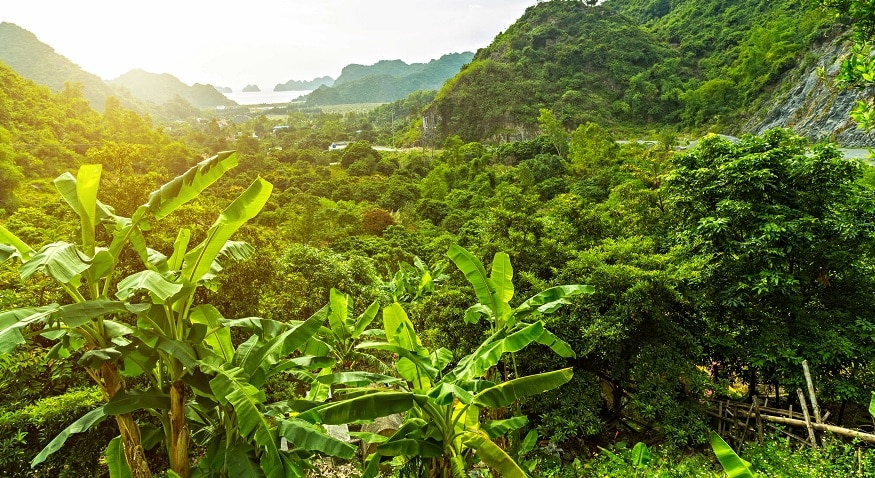
Tropical rainforest ecosystem
Furthermore, Cat Ba National Park features diverse tidal flat habitats, saltwater lagoons, secluded bays, and enclosed sea lakes ("tùng áng"). Together, these form a rich, multifaceted ecological complex of immense conservation value. The harmonious integration of these diverse habitats creates a breathtaking and distinct natural panorama, captivating discerning travelers from across the globe.
A Paradise of Biodiversity
1. Fauna
Cat Ba National Park is a thriving sanctuary for an exceptionally rich and varied fauna, featuring numerous rare species found nowhere else on Earth. To date, the park records 2,320 flora and fauna species, comprising 282 forest-dwelling animal species, 538 benthic marine species, 196 marine fish species, 771 terrestrial plant species, 23 mangrove plant species, 75 seaweed species, and 177 coral species.
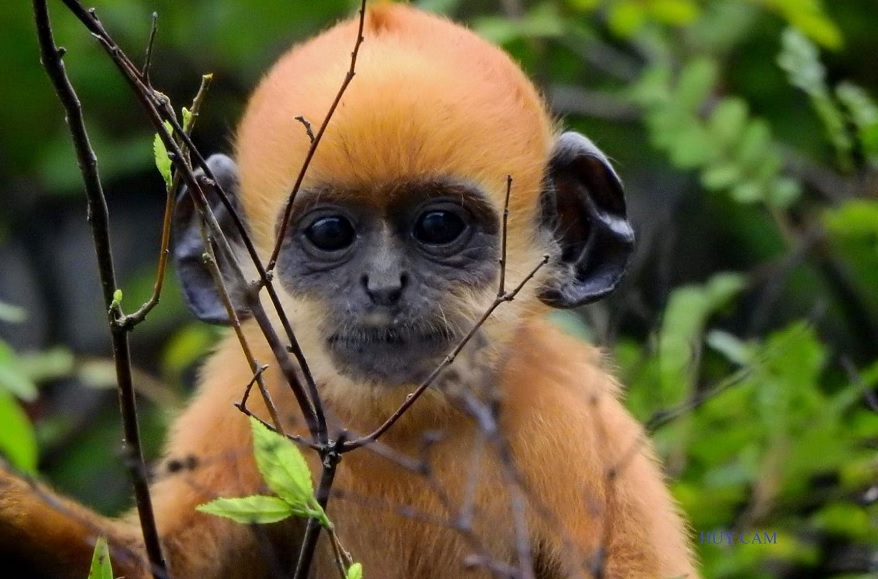
Cat Ba Langur (Trachypithecus poliocephalus), with a current population estimated at around 70 individuals
Most notably, Cat Ba is the exclusive global habitat of the Cat Ba Langur (Trachypithecus poliocephalus). This critically endangered endemic primate faces severe threats from poaching and habitat fragmentation, with a remaining population of approximately 70 individuals. The Cat Ba langur is distinguished by its golden-gray crown, dark face framed by white rings around the eyes, and arboreal lifestyle within limestone forests. Alongside this flagship species, the park shelters numerous other rare and precious animals, including:
- Cat Ba Black Squirrel (Callosciurus inornatus): An endemic squirrel species of Cat Ba Island, easily recognized by its glossy black coat. Arborically inclined, they feed primarily on fruits, nuts, and insects. Their numbers are in steep decline due to habitat reduction and poaching.
- Serow (Capricornis sumatraensis): This remarkable mammal features dark brown fur and long, curved horns. Inhabiting rugged limestone cliffs, they graze on grass, leaves, and fruits. Possessing exceptional climbing agility, they typically travel in small herds and represent a precious species requiring strict protection.
- Rhesus Macaque (Macaca mulatta): While widespread throughout Vietnam, the Cat Ba population possesses distinct genetic traits. Sporting golden-brown fur and long tails, these social primates live in troops and frequently forage along the coastline.
- Cat Ba Cave Gecko (Goniurosaurus catbaensis): Found exclusively in Cat Ba, this petite, brilliantly colored reptile features striking yellow and orange markings along its back. Inhabiting caves and rock crevices where they feed on insects, this rare reptile holds exceptional scientific research value.
Additionally, Cat Ba provides a haven for numerous avian species such as emerald doves, woodpeckers, and oriental magpie-robins, alongside reptiles like geckos, lizards, and rat snakes. The extraordinary biodiversity of Cat Ba National Park is a priceless legacy for both Vietnam and the global community, demanding rigorous preservation for generations to come.
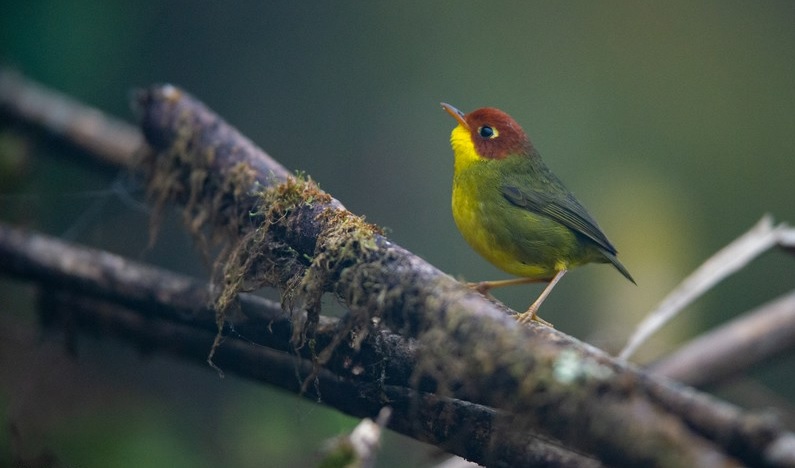
Chestnut-headed Tesia (Cettia castaneocoronata)
2. Flora
Cat Ba National Park is not merely a zoological paradise; it is also home to an extraordinarily rich and unique botanical realm. Featuring a diverse topography spanning limestone mountains, tropical rainforests, and mangroves, Cat Ba provides an optimal habitat encompassing 1,585 forest plant species—including timber species elsewhere found only in the Himalayas—along with 30 mangrove species, 102 seaweed species, and 400 phytoplankton species, featuring many rare endemics. Notable botanical specimens include precious timber varieties such as Trai ly (Garcinia fagraeoides), Lat hoa (Chukrasia tabularis), Lim xet (Peltophorum tonkinense), De hoa (Lithocarpus spp.), Go trang (Sindora tonkinensis), and Cho dai (Annamocarya sinensis). Most fascinating is the Kim giao (Nageia fleuryi), a rare timber species listed in the Vietnam Red Data Book. This extraordinary tree is renowned for its toxic-detection properties; ancient royalty utilized Kim giao wood to craft chopsticks capable of detecting poisons. Thriving within evergreen forests on limestone mountains, Kim giao trees feature slender trunks, rarely exceeding 30 centimeters in diameter. The pale yellow wood naturally darkens to brown, black, or reddish-brown upon contact with toxins.
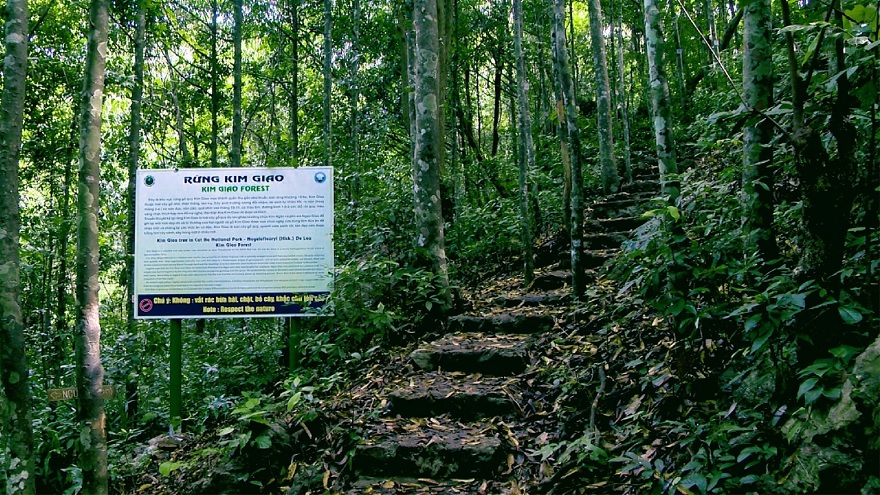
Cat Ba Kim Giao Forest
The diverse flora of Cat Ba National Park transcends aesthetic and tourism value, playing an indispensable role in environmental preservation, climate regulation, and safeguarding invaluable genetic reservoirs for scientific research.
How to Get to Cat Ba National Park
Step 1: Take a high-speed ferry or boat from Hai Phong or Halong to Cat Ba town. You can choose between two main ferry terminals:
Currently, there are two primary ferry routes available: the Dong Bai (Hai Phong) – Cai Vieng ferry and the Tuan Chau (Halong) – Gia Luan ferry. While the Dong Bai route offers a faster crossing to Cat Ba, the Tuan Chau route traverses Halong Bay, allowing travelers to admire both Halong Bay and Lan Ha Bay within a single journey.
Ferry Fare and Travel Duration Schedule to Cat Ba
| Ferry Route | Vehicle Type | Ticket Price (VND/trip) | Travel Duration |
|---|---|---|---|
| Dong Bai – Cai Vieng | Pedestrian/bicycle/manual cart | 10,000 – 12,000 | 30 minutes |
| Motorbike | 45,000 | 30 minutes | |
| Car | 350,000 – 450,000 | 30 minutes | |
| Tuan Chau – Gia Luan | Passenger | 60,000 (adult) | 60 minutes |
| Motorbike | 80,000 | 60 minutes | |
| Car under 9 seats | 300,000 | 60 minutes |
Step 2: Travel by motorbike or taxi from Cat Ba town to Cat Ba National Park.
From Cat Ba town, you can rent a motorbike or hire a taxi to reach Cat Ba National Park. Motorbikes offer the most flexible and economical option; rentals are readily available at guesthouses or rental shops in Cat Ba town for approximately 150,000 VND per day. Taxis provide the safest and most comfortable alternative, with reputable companies such as Mai Linh, Taxi Group, and Cat Ba Taxi operating in the area at a rate of around 15,000 VND per kilometer. Located roughly 15 kilometers from Cat Ba town via well-paved asphalt roads, the journey takes approximately 30 minutes.
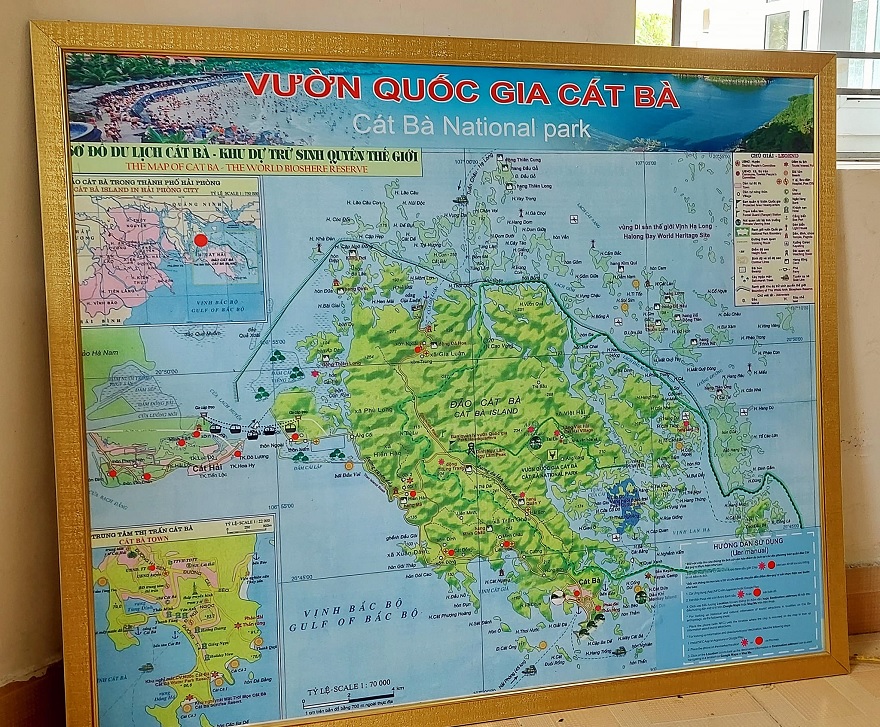
Cat Ba Tourism Map – World Biosphere Reserve
Captivating Experiences at Cat Ba National Park
Cat Ba National Park is not only a stellar conservation sanctuary but also an ultimate destination for outdoor enthusiasts and explorers. Boasting a varied topography ranging from rugged mountains and dense forests to the open sea, Cat Ba presents visitors with an array of fascinating pursuits:
1. Hiking and Trekking
The national park features numerous trails of varying difficulty, guiding travelers deep through pristine rainforests, mysterious caves, and majestic mountain peaks. Popular trekking routes include the trails to Kim Giao Peak, Ngu Lam Peak, the cross-forest route to Lan Ha Bay, and the expedition to the historic Hospital Cave.
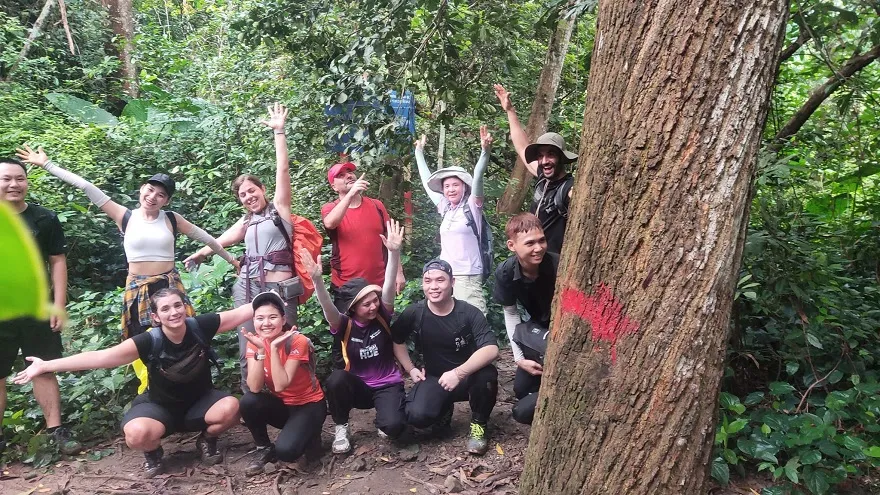
Trekking is one of the most exciting activities when visiting Cat Ba National Park
Please Note: Prior to commencing your trek, kindly purchase admission tickets corresponding to your chosen route. Currently, full-route admission is priced at 160,000 VND per adult and 80,000 VND per child, while the central park route encompassing Kim Giao Peak, Ngu Lam Peak, and Trung Trang Cave is 120,000 VND per adult and 60,000 VND per child.
2. Rock Climbing
The majestic beauty of sheer limestone cliffs within Cat Ba National Park serves as both a masterpiece of natural artistry and a premier sanctuary for rock-climbing aficionados. For adventurous spirits eager to challenge themselves and immerse in unspoiled wilderness, rock climbing in Cat Ba is an unmissable pursuit. Conquering Ngu Lam Peak (331 meters), the island’s highest viewpoint, rewards climbers with panoramic vistas of breathtaking Lan Ha Bay.
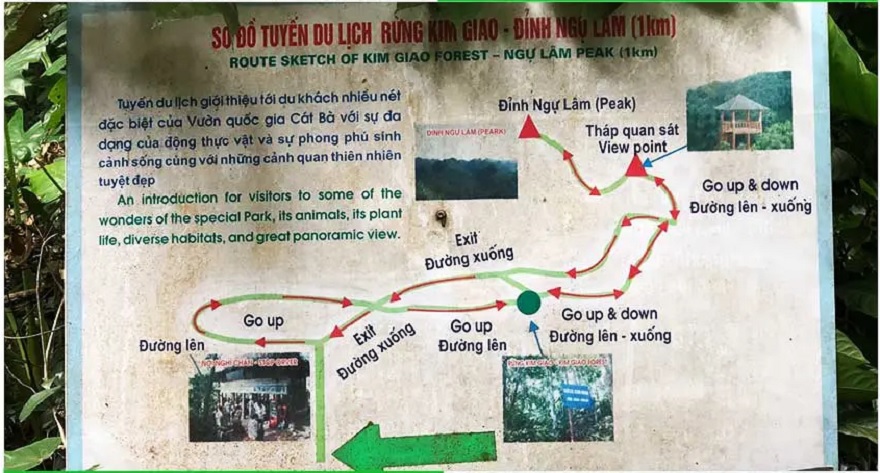
Kim Giao Forest – Ngu Lam Peak Tourism Map
3. Discovering Ao Ech (Frog Pond)
Nestled along the trekking route from the center of Cat Ba National Park to Viet Hai Village, Ao Ech lies approximately 6 kilometers from the park headquarters. Reaching this secluded oasis requires hiking through virgin forests and navigating gentle slopes—an immersive journey that enhances the allure of Ao Ech, imparting a true sense of untamed wilderness exploration.
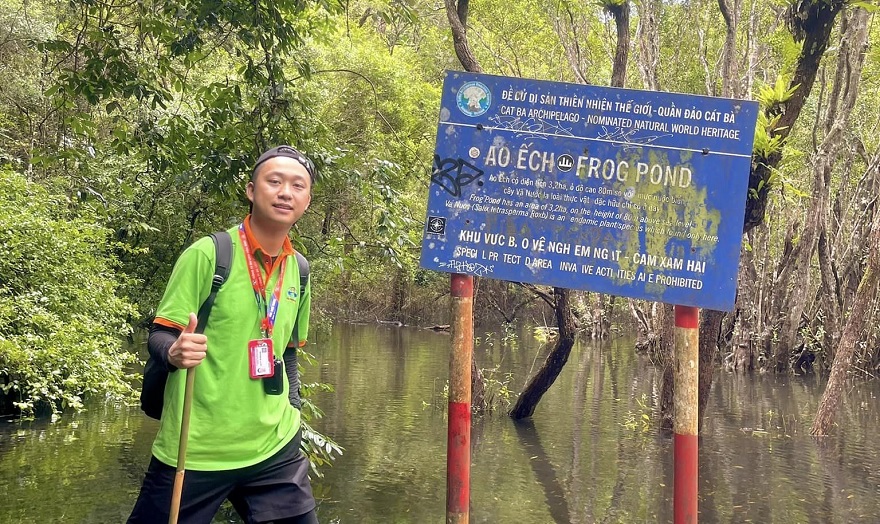
Ao Ech Area
Amidst the tranquil ambiance of the mountain forest, Ao Ech emerges like a verdant oasis with crystal-clear waters reflecting the surrounding foliage and skies above. Visitors can pause by the shoreline to relish the pristine air, accompanied by birdsong and the distant chorus of frogs. Fortunate travelers may even catch glimpses of rare bird species and other wildlife coming to drink.
Furthermore, Ao Ech serves as an ideal vantage point for observing Cat Ba’s signature forest flora. Majestic ancient trees shade the shoreline, while the understory thrives with lush vegetation and blooming wildflowers.
4. Exploring Caves
The Cat Ba heritage region is renowned for its rare and endemic natural treasures, yet few realize its historic role as a strategic defense perimeter during the French and American resistance wars. In particular, the cave networks surrounding Cat Ba National Park were utilized by the local Party committee, administration, and islanders as clandestine revolutionary bases. A prime example is Hospital Cave, which functioned as a covert underground field hospital for Vietnamese troops and remains remarkably intact six decades after its construction.
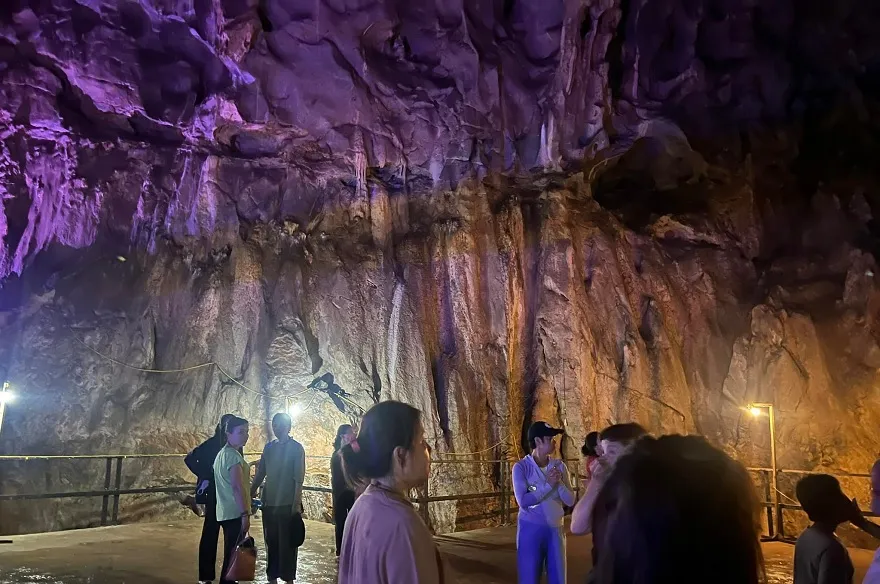
Inside Hospital Cave, the enchanting stalactite formations provide an impressive highlight for visitors
Other notable caverns include Trung Trang Cave, Hoa Cuong Cave, and Thien Long Cave, featuring mesmerizing stalactite formations, alongside historical redoubts like Committee Cave and District Party Committee Cave that preserve heroic chapters of wartime resistance.
5. Ancient Viet Hai Fishing Village
Tucked away in the heart of Cat Ba National Park, Viet Hai Fishing Village resembles a living classical painting defined by rustic tranquility. Encircled by pristine rainforests and the emerald waters of Lan Ha Bay, Viet Hai offers travelers a restorative sanctuary far removed from urban clamor.
<div id="attachment_1495" style="width: 810px" class="wp-caption aligncenter