History of the Construction of Dong Pagoda in Yen Tu
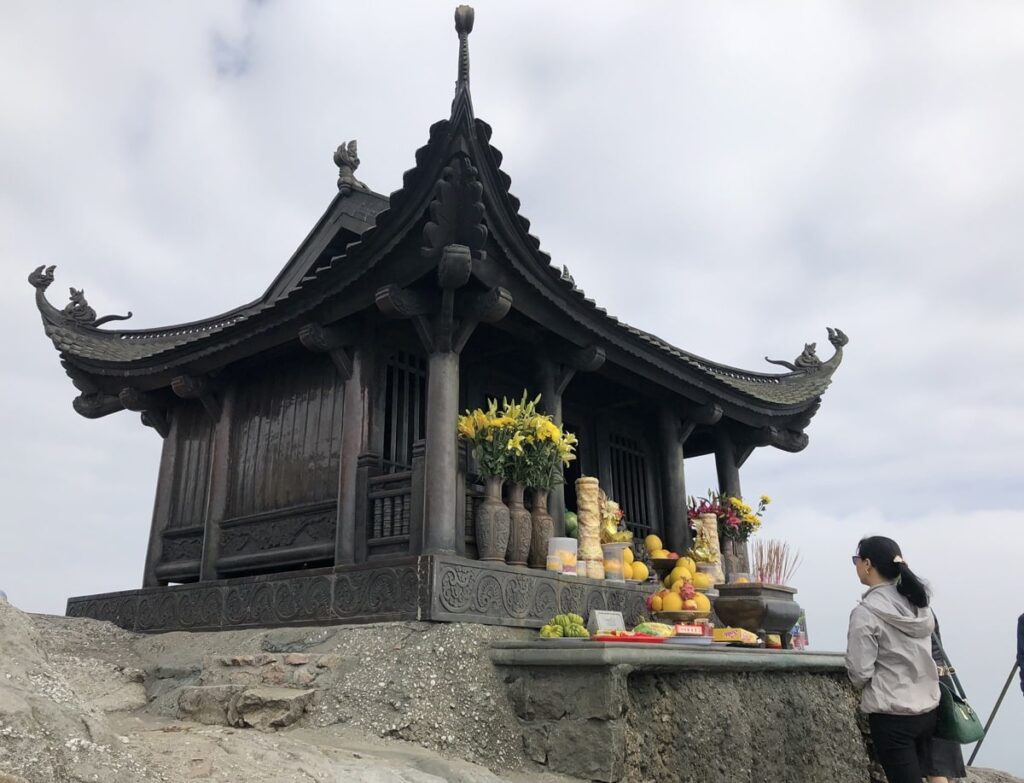
Dong Pagoda, originally named Thien Truc Tu (天竺寺 – Pagoda of the Buddhist Realm), was established in the 17th century during the Later Le dynasty. Initially, the pagoda was merely a small sanctuary cast in bronze. In 1740, during the Canh Than year under the reign of King Le Canh Hanh, a violent storm unroofed the structure, and opportunistic thieves stripped away the remaining elements, leaving behind only the pillar-hole markings on the rocky outcrop. Through centuries of historical upheavals, the pagoda suffered destruction and underwent numerous restorations. By 1930, Dong Pagoda was reduced to a modest, reinforced concrete shrine temporarily erected on the mountain peak through the devoted patronage of Ms. Bui Thi My. It was not until 2006 that Dong Pagoda was meticulously reconstructed to the original architectural prototype of Dau Keo Pagoda (Bac Ninh), funded by the pious contributions of domestic and international visitors and Buddhist followers, under the spiritual guidance of Buddhist Scholar and Venerable Thich Thanh Quyet alongside the Dong Pagoda Project Management Board. The casting ceremony and grand inauguration of Dong Pagoda took place on January 30, 2007, exactly 360 days after construction commenced on the mountain summit.
See more: Top 9 Most Sacred Pagodas in Quang Ninh
Dong Pagoda Yen Tu
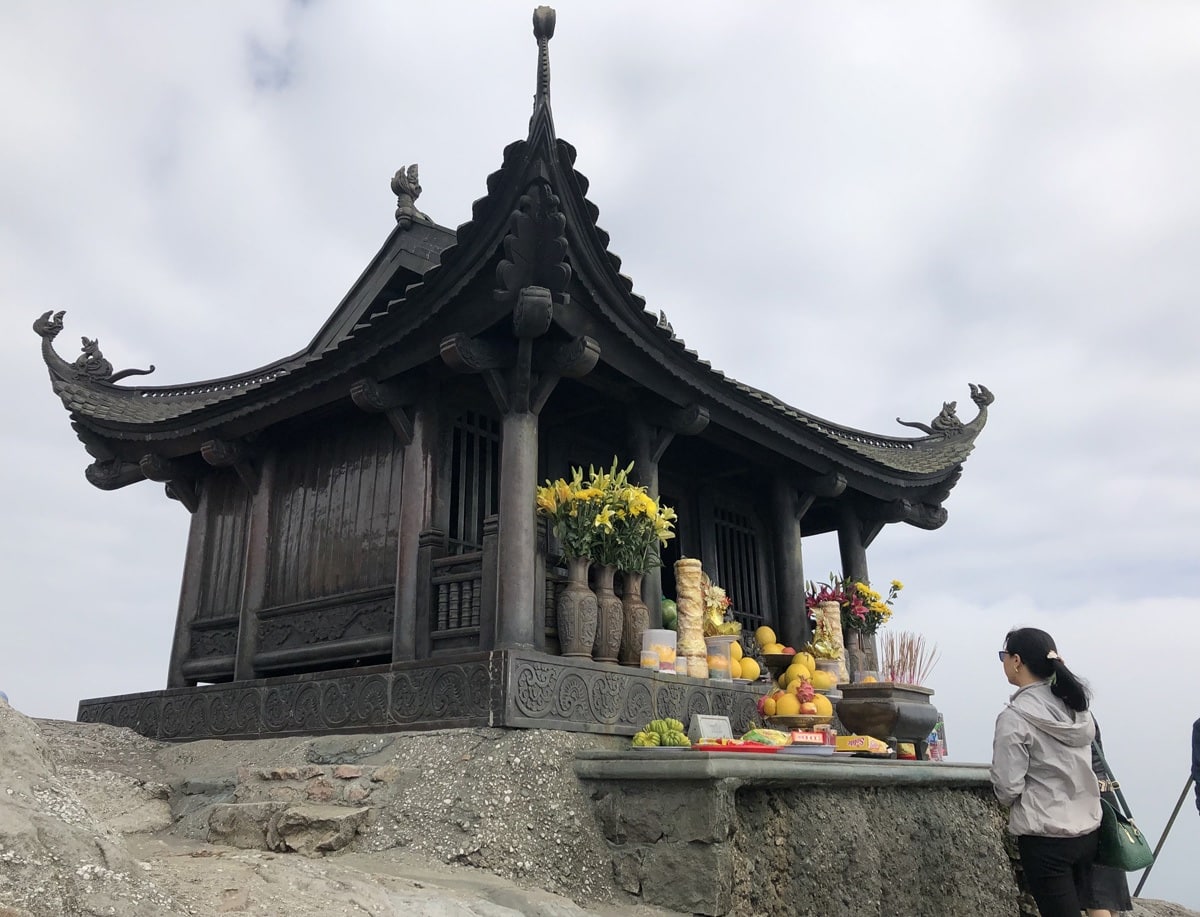
Perched at an elevation of 1,068 meters as the ultimate destination of the Yen Tu Pagoda complex, Dong Pagoda is heralded as the largest bronze mountaintop pagoda in Asia. Cast entirely from pure bronze, the structure features a square, four-roofed architectural block adorned with curved tile eaves, unadorned ridge lines, and dragon-head motifs characteristic of the Tran dynasty gracing both ends of the roof ridge and the four soaring corners. Spanning a floor area of nearly 20 square meters, the pagoda weighs an impressive 70 tons, measuring 4.6 meters in length, 3.6 meters in width, and 3.35 meters in height from the foundational pillar to the roof peak. Inside rest statues of Shakyamuni Buddha and the Three Tran Dynasty Zen Patriarchs (Tam To Truc Lam), standing between 0.45 and 0.87 meters tall and seated gracefully upon lotus pedestals. The sacred sanctuary also houses a bronze bell and ritual gong weighing over 250 kilograms.
Exhibited Artifacts of Dong Pagoda
Within the historical exhibition space on the second floor of the Quang Ninh Museum lies a distinguished thematic gallery dedicated to Yen Tu, Tran Dynasty Buddhism. The artifacts showcased here eloquently reflect the brilliant cultural and artistic architectural evolution of the Tran dynasty, particularly the Truc Lam Yen Tu Zen sect.
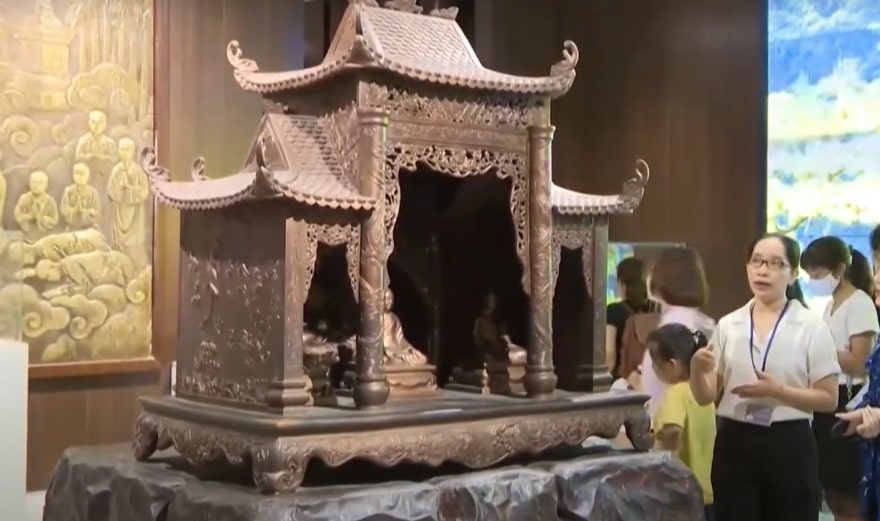
Replica artifact of Dong Pagoda at Quang Ninh Museum
Taking center stage within this exhibition space is a detailed replica of Dong Pagoda. Also known as Thien Truc Tu, Dong Pagoda was originally erected in the 17th century during the Later Le dynasty as a modest bronze shrine. In 2006, it was newly cast in the shape of a blossoming lotus bloom following the design blueprints drafted by architect Tran Quoc Tuan from the Institute for Conservation of Relics. Ever since, it has remained a serene spiritual haven for countless pilgrims traveling from afar to pay their respects. The model displayed at the Quang Ninh Museum emulates the traditional three-tiered roof architecture of the past, differing from the single-roof design of the current Dong Pagoda in Yen Tu. The shrine venerates Shakyamuni Buddha alongside the Three Truc Lam Patriarchs: Emperor-Monk Tran Nhan Tong, Phap Loa, and Huyen Quang.
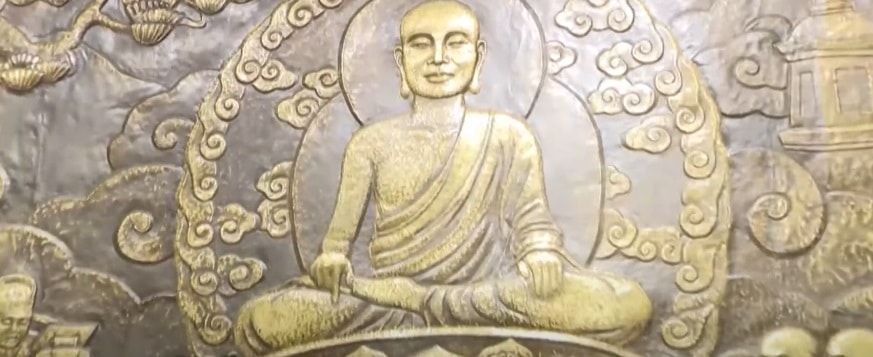
Bronze painting of Emperor-Monk Tran Nhan Tong
Embodying the central theme of the gallery is a magnificent bronze relief portraying the Emperor-Monk Tran Nhan Tong in deep meditation, surrounded by civil and military mandarins as well as monks bowing with hands clasped in reverence. Positioned prominently within the exhibition hall, this artwork offers visitors an optimal viewing experience. Directly beneath the painting rest the ancestral spirit tablets of the Three Truc Lam Patriarchs—authentic historical artifacts that highlight the profound sacredness and spiritual heritage of the Zen sect.
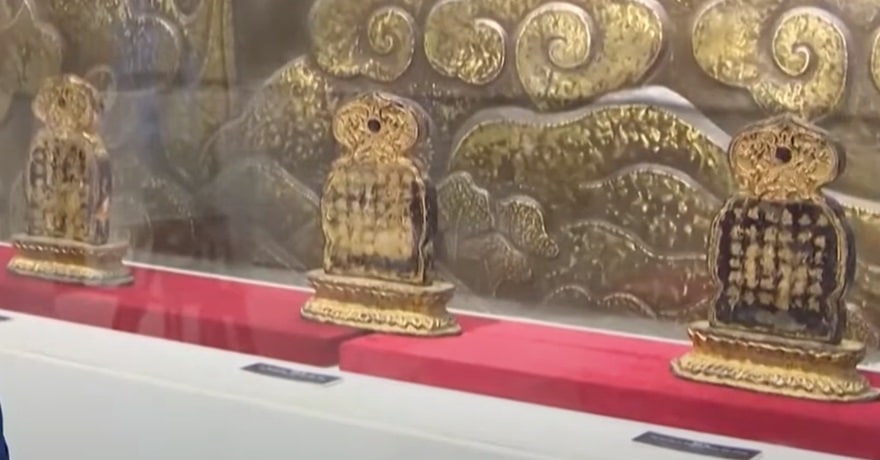
Spirit tablets of the Three Truc Lam Patriarchs
In addition, the Quang Ninh Museum exhibits a curated collection of ancient artifacts recovered from the Yen Tu sacred site, including decorative bricks featuring chrysanthemum motifs, double-lotus yin-yang tiles, and dragon-head carvings with exquisite patterns. These relics date back to the 13th and 14th centuries, representing the golden age of the Tran dynasty. Alongside these treasures are archival photographs showcasing various historic towers of Yen Tu and Ngoa Van Hermitage.
See more: Yen Tu Day Tour