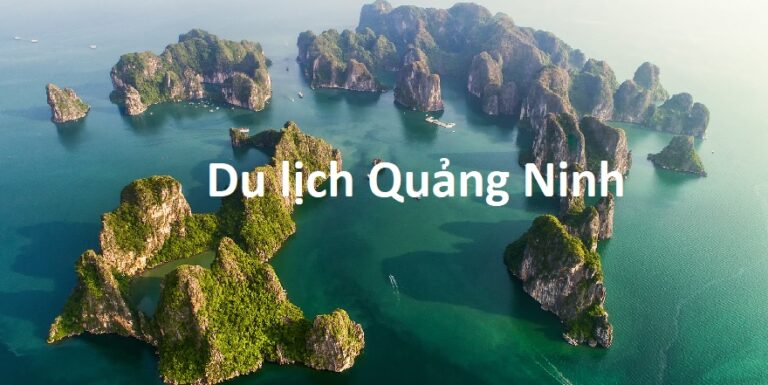

Imagine floating amidst the majestic, ink-wash painting landscape of Ha Long Bay, where you suddenly encounter a colossal stone incense burner standing tall and dignified, as if diffusing a meditative, sacred mist across the boundless sea and sky. That is Incense Burner Islet (Hon Dinh Huong), affectionately known as Lu Huong Islet—one of the most unique, famous, and iconic stone islands in Ha Long Bay. In this article, let us decode the captivating allure of Hon Dinh Huong together.
Location and Significance of Hon Dinh Huong
One of the factors that makes Hon Dinh Huong renowned and easily admired is its exceptionally favorable location in the core heritage zone of Ha Long Bay, surrounded by other famous landmarks such as Dau Go Cave, and Stone Dog Islet (Hon Cho Da), while located just a short distance from the iconic Fighting Cocks Islet (Hon Trong Mai / Hon Ga Choi). This prime location ensures that Hon Dinh Huong remains an unmissable highlight on any bay discovery voyage.

The location of Hon Dinh Huong on Google Maps
Situated approximately 6 km from Bai Chay tourist wharf and an estimated 3 km from Tuan Chau international passenger port, the central location of Hon Dinh Huong is exceptionally convenient for travelers. In fact, there is no need to charter a private vessel or arrange a specialized itinerary, as this iconic islet lies directly along Ha Long Bay’s two most popular sightseeing routes: Route 1 and Route 5. Choosing these routes allows you to admire Hon Dinh Huong while your schedule typically includes other fascinating destinations such as Thien Cung Cave, Dau Go Cave, or Fighting Cocks Islet (for Route 1), ensuring a truly comprehensive Ha Long Bay exploration.
Beyond its convenient location, Hon Dinh Huong leaves a profound impression with its one-of-a-kind silhouette, resembling a sculptural masterpiece crafted by Mother Nature’s own hands over millions of years. Viewed from afar or up close, Hon Dinh Huong emerges with an overall shape identical to an ancient, colossal incense burner standing steadfast and majestic amidst the vast expanse of water. Rising about 10 meters high, this stone island is formed from a single massive limestone block, appearing relatively slender and flat when viewed from the side.

Visitors can easily observe Hon Dinh Huong from the boat
The most unique feature creating the incense burner imagery is its “base.” The island does not connect directly to the water’s surface as a solid mass; instead, it rests securely on four smaller, much thinner stone slabs underneath, acting like sturdy legs. These stone legs are the result of millions of years of relentless seawater erosion against the limestone block. With this distinctive stance, Hon Dinh Huong resembles a majestic guardian standing across the pathway of touring vessels, creating a striking and unforgettable visual impact.
The beauty of Hon Dinh Huong is far from static; it transforms delightfully with the tides, offering travelers diverse perspectives depending on the time of their visit. When the tide recedes, all four eroded stone legs are fully exposed. At this moment, Hon Dinh Huong most closely resembles an incense burner or a large urn standing firmly on slender legs. Visitors can clearly observe the marks of time and the masterful carving of seawater on the base, evoking a pristine, ancient charm. Conversely, when the tide rises, this distinctive base is completely submerged beneath the jade-green waters. The islet loses its “slender” appearance on legs and instead rises like a massive, stately, and imposing stone screen blocking the bay. Adding to the vitality of this limestone masterpiece, lush green clusters of vegetation sprout from tiny crevices at the summit of Hon Dinh Huong, imparting a lively touch to the scenery.
Yet, this physical beauty carries an even deeper layer of meaning, transcending a mere geological masterpiece. Hon Dinh Huong embodies profound spiritual and cultural significance, standing as a sacred symbol in the Vietnamese consciousness. To fully grasp its meaning, one must look at the role of the incense burner in Vietnamese culture. An ancestral incense burner is an immensely vital and sacred ritual object, typically placed in solemn locations such as communal houses, pagodas, temples, or family altars. It is a vessel for burning agarwood, creating a tranquil, solemn ambiance and serving as a spiritual bridge between humanity, the heavens, deities, and ancestors, expressing profound reverence and gratitude.
With its extraordinary shape, Hon Dinh Huong standing proudly amidst Ha Long Bay is far more than an inanimate rock. It is likened to a colossal incense burner bestowed by nature, devoutly offering prayers to the heavens and earth day and night. This imagery evokes sacred prayers for national prosperity, favorable weather, and a peaceful, prosperous life. At the same time, Hon Dinh Huong serves as a poignant reminder of the tradition of “Drinking water, remembering its source”—a cherished national heritage. It reminds us of our gratitude toward the contributions of our ancestors and fallen heroes who shed their blood to build and protect this magnificent homeland.

Hon Dinh Huong resembles a colossal incense burner amidst the misty clouds of heaven and earth

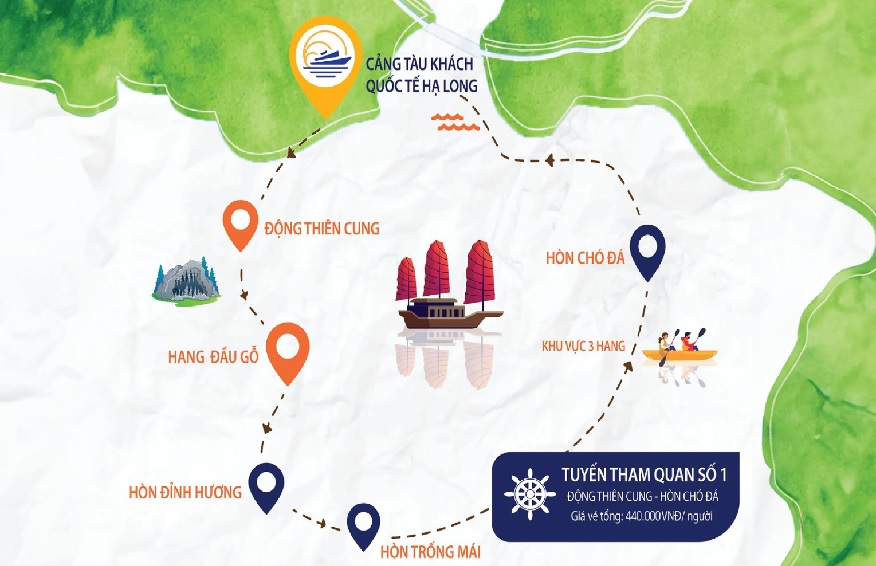
The position of Hon Dinh Huong on the Ha Long Bay Route 1 tour itinerary
To ensure your visit to Hon Dinh Huong and exploration of Ha Long Bay are completely seamless and fulfilling, please take note of these essential Ha Long travel tips and important guidelines:
Choosing the Ideal Time: When is the best season to visit Ha Long? The answer is generally during the dry season, from October to April of the following year. At this time, the weather is typically dry, sunny, and pleasant with minimal rain and calm seas, which is highly favorable for cruising and sightseeing. It is advisable to avoid the storm season (usually from July to September) to guarantee safety and the best possible experience. Early April (as of this writing in April 2025) offers one of the most idyllic periods to visit Ha Long.
Essential Items to Prepare: Camera/Smartphone, sunscreen, sun hat, sunglasses—as you will spend considerable time on the sundeck—and comfortable clothing.
Join Hands to Protect Ha Long Bay’s Environment: Ha Long Bay is a World Natural Heritage site that must be preserved. When visiting, please uphold your awareness of protecting Ha Long Bay’s environment through practical actions:
-
- Never litter into the sea or on the islands. Collect your waste and dispose of it in designated bins on board or bring it back to the mainland.
- Do not touch, carve on, or deface the stone islands, break coral, or harm the natural ecosystem.
- Comply strictly with all regulations set by the Ha Long Bay Management Board.
Carefully Verify Your Tour Itinerary: Although Hon Dinh Huong is featured on Routes 1 and 5, to be 100% certain, double-check the detailed itinerary of your booked tour to ensure this attraction is explicitly listed, especially if it is a priority destination for you.
This concludes all the information about Hon Dinh Huong. We hope this article has provided you with useful insights. If you wish to charter a boat to Ha Long Bay to visit this scenic destination, please contact us for further details.