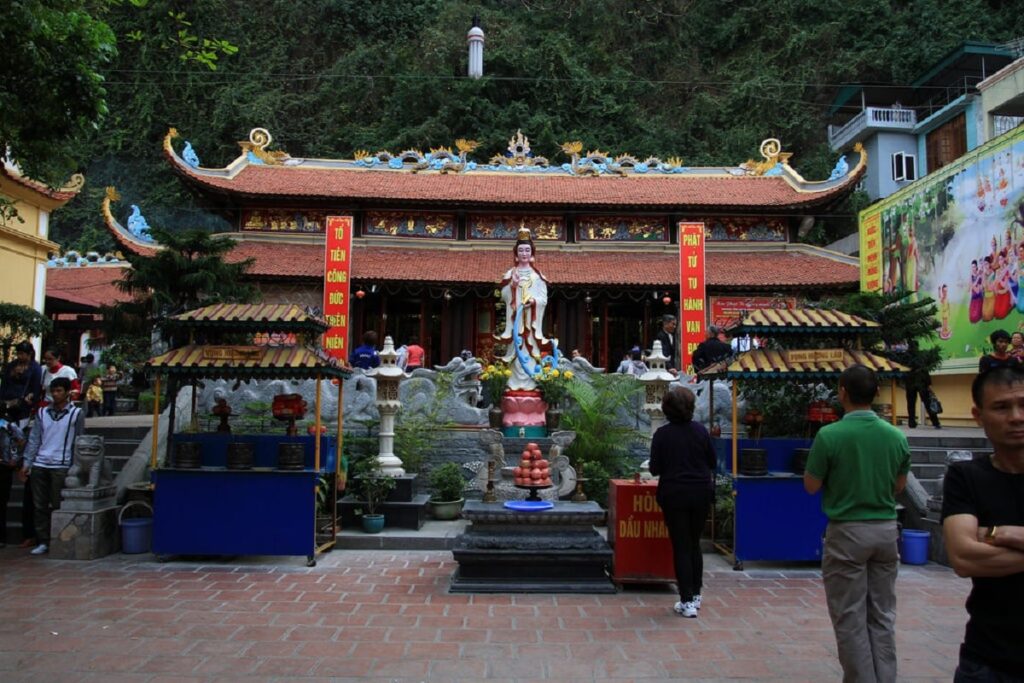
Long Tien Pagoda is a renowned Buddhist sanctuary nestled in the heart of Ha Long City, Quang Ninh Province. Founded in the late 19th century, the pagoda has weathered the passage of time and historical transformations, undergoing numerous restorations. Beyond serving as a place of monastic practice, Long Tien Pagoda stands as an alluring spiritual landmark for both domestic and international travelers. The sanctuary boasts exquisite architecture, an extensive collection of sacred Buddha statues, and ancient artifacts. It is also celebrated for its vibrant annual festival held on the 24th day of the third lunar month, drawing thousands of pilgrims and visitors. Join us as we explore the timeless grace of Long Tien Pagoda in the article below!
see more: Famous attractions and experiences in Hon Gai
The History of Long Tien Pagoda – A Sacred Ancient Sanctuary in Ha Long
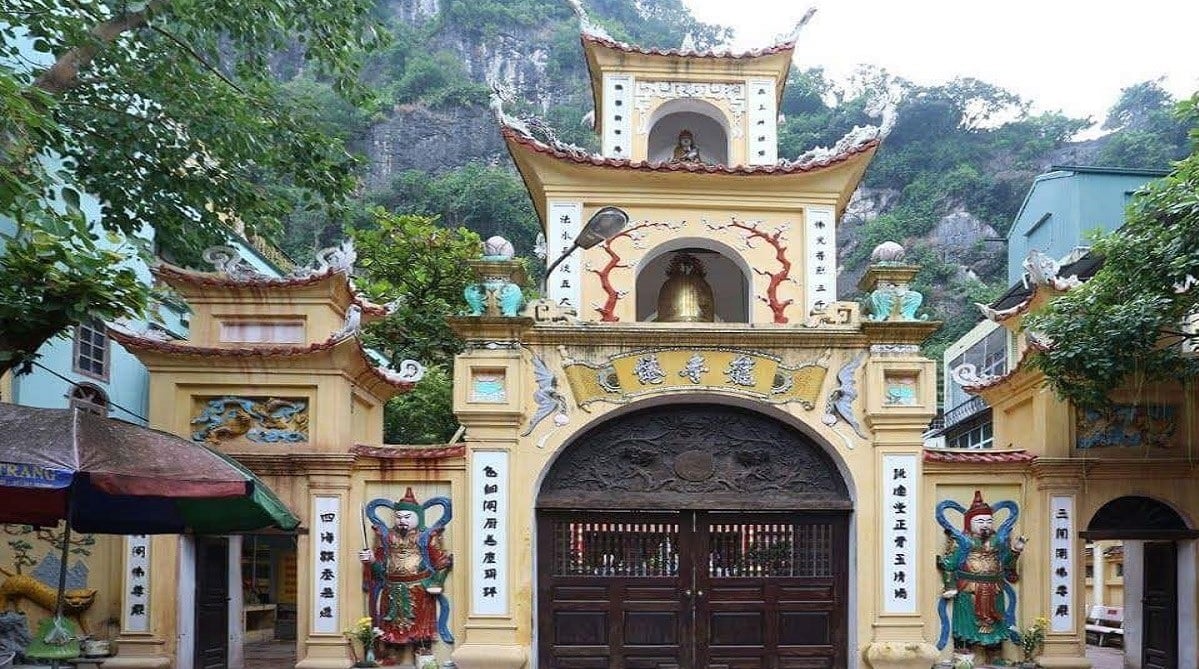
Long Tien Pagoda Ha Long
Every ancient monument carries its own distinct narrative, and Long Tien Pagoda is no exception. Its history is deeply intertwined with the cultural currents and historical shifts of the Ha Long region, evolving from primitive sanctuaries into the flourishing Buddhist center it is today.
From Humble Shrines to a Majestic Pagoda at the Foot of Poem Mountain
Before Long Tien Pagoda was officially established on its present scale, the foothills of Poem Mountain were already a revered spiritual enclave. Legend has it that the area once housed ancient hermitages used by spiritual seekers of bygone eras. Among the most prominent was Thien Thach Dong Hermitage, also known as Thien Long Tien Hermitage. This serene retreat served not only as a sanctuary for Zen masters seeking enlightenment but also as a sacred space dedicated to Amitabha Buddha. Alongside Thien Long Tien, historical accounts note the existence of Chin Co Hermitage on the right and the Tran Dynasty Temple on the left, dedicated to honoring the monumental contributions of the Tran Dynasty generals in defending the nation’s borders. Though modest in their beginnings, these shrines laid the sacred foundation for the magnificent pagoda that would follow.
The Construction of Long Tien Pagoda (1942)
In 1942, the construction of Long Tien Pagoda officially commenced, marking a pivotal milestone in its history. The structure prominently features the distinct architectural and sculptural artistry characteristic of the Nguyen Dynasty, highlighted by intricate “chồng rường giá chiêng” (stacked timber framing) techniques and traditional decorative motifs. The original purpose of building the pagoda was not only to envere the Buddha and cater to the spiritual needs of the local populace, but also to pay homage to the revered generals of the Tran Dynasty—national heroes who made legendary contributions during historical resistance wars against foreign invaders.
Historical Milestones and Enduring Legacy
Having weathered the trials of national history, Long Tien Pagoda bears the imprints of time. Among its most harrowing chapters was a period when the temple was consumed by flames during wartime. However, driven by the profound devotion and unwavering determination of Buddhists and local residents, the pagoda was meticulously restored and embellished to preserve its intrinsic architectural splendor, reaffirming its vital role as a spiritual sanctuary. Its endurance through countless adversities stands as a testament to the resilient vitality of cultural and spiritual heritage within the community.
Long Tien Pagoda – A National Cultural and Historical Relic (1992)
In recognition of its profound historical, cultural, and architectural significance, Long Tien Pagoda received official state distinction. On August 31, 1992, the Ministry of Culture and Information (now the Ministry of Culture, Sports and Tourism) issued Decision No. 1140/QD, officially recognizing Long Tien Pagoda (along with the Poem Mountain historical complex) as a National Cultural and Historical Relic. This esteemed recognition not only fills the people of Quang Ninh with immense pride but also provides a vital legal framework for the preservation and promotion of the site, elevating its status within Vietnam’s prestigious network of cultural and spiritual destinations.
See more: Top 9 Sacred Pagodas in Quang Ninh
Exquisite Architecture and Sculpture of Long Tien Pagoda
Beyond its profound historical and spiritual resonance, Long Tien Pagoda is a masterpiece of artistic architecture, epitomizing the classic Nguyen Dynasty Vietnamese temple style. Every graceful curve and intricate detail reflects the peerless craftsmanship of past artisans and enduring traditional values.
Sprawling across a tranquil estate of approximately 1,000 square meters, Long Tien Pagoda is masterfully planned with a harmonious and balanced layout. The complex exudes the majestic charm of Nguyen royal architecture, featuring sophisticated wooden “chồng rường giá chiêng” joinery that ensures both structural integrity and grand presence. The overall architectural blueprint may follow the Chinese character “二” (Two) shape, while the Main Sanctuary embraces the “丁” (T-shape/Ding) layout—a classic configuration in ancient Vietnamese temple design, seamlessly connecting the Front Hall (Tiền đường) with the Upper Sanctuary (Thượng điện). A crowning architectural highlight is the multi-tiered roof system designed in the traditional “double-eave, eight-roof” style, gracefully covered with traditional yin-yang tiles. The soaring dragon-tail corners curve upward with fluidity and elegance, bestowing a sense of ethereal lightness while preserving the sanctuary’s solemn dignity. The majestic three-entrance gate (Tam Quan) and the central Main Sanctuary (Mahavira Hall) vividly showcase this distinguished aesthetic.
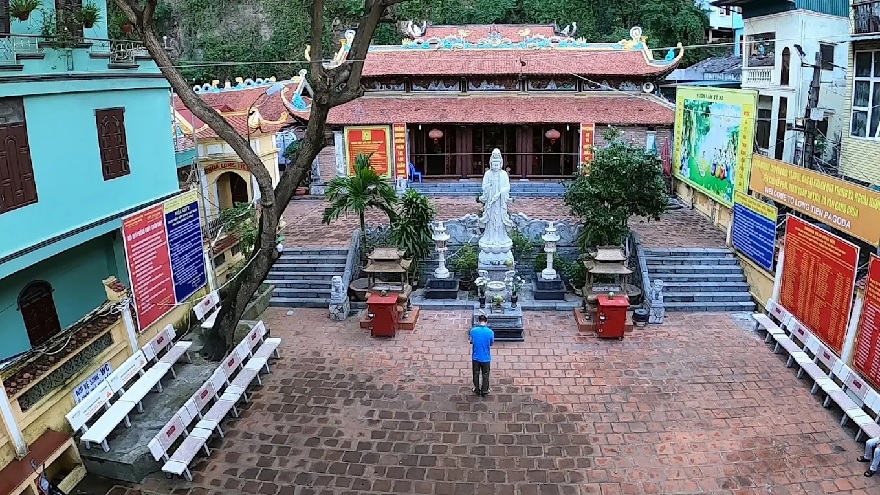
The Main Sanctuary featuring the traditional T-shaped (Ding) architecture at Long Tien Pagoda
Situated directly behind the Main Sanctuary is the Patriarch House (Tổ Đường), an indispensable component of traditional temples. This sacred space is dedicated to venerating the founding patriarchs who pioneered and propagated Buddhism, particularly the revered patriarchs of the Truc Lam Zen Sect such as the Buddha-King Tran Nhan Tong, First Patriarch Phap Loa, and Second Patriarch Huyen Quang, thereby honoring the unbroken spiritual lineage of Vietnamese Buddhism. Additionally, the temple grounds encompass verdant courtyards, lush gardens, monks’ quarters, guest houses, and ancillary facilities, thoughtfully designed to support the monastic community while warmly welcoming pilgrims and travelers from near and far.
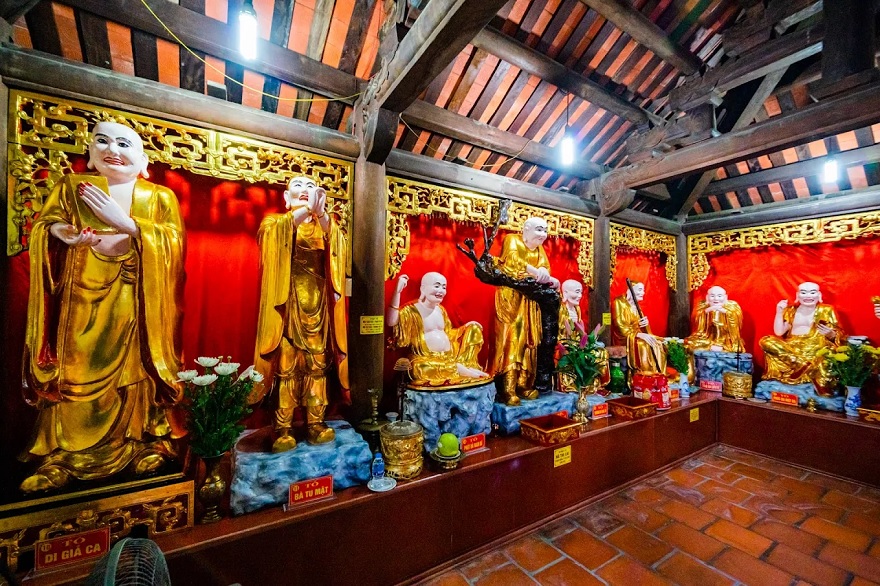
The Patriarch House area
The sculptural and decorative artistry within Long Tien Pagoda is breathtakingly intricate. The vast majority of wooden structural elements—including columns, beams, and brackets—are meticulously carved with traditional motifs such as soaring dragons, dancing phoenixes, and stylized flora (pine, chrysanthemum, bamboo, and apricot blossom). These artistic embellishments not only elevate the aesthetic grandeur of the monument but also carry profound symbolic meanings within Vietnamese Buddhist and folkloric traditions. A standout artistic feature in the front hall is a magnificent relief mural depicting iconic scenes from Journey to the West, featuring Master Xuanzang alongside Sun Wukong, Zhu Bajie, and Sha Wujing on their arduous pilgrimage to India for sacred scriptures. This vivid tableau serves as both a visual marvel and an educational allegory of perseverance and the challenging spiritual path toward absolute truth.
Within a unified sanctuary space, the pagoda venerates three distinct realms: Buddhism, Sage Tran Hung Dao alongside Tran Dynasty generals, and the Three Mother Goddesses. The pantheon of statues here is remarkably diverse, distinctive, and of exceptional artistic value.
| Architecture | Characteristics |
|---|---|
| Tam Quan Gate | At the summit of the Tam Quan gate sits a seated statue of Amitabha Buddha, while the lower level houses the bell tower bearing the inscribed characters “Long Tien Tu” and the year of construction. Flanking the gate are distinguished parallel couplets: “Long tác linh, tiên tác danh,” signifying that the presence of dragons brings sacred power, and the presence of fairies brings eternal renown. The Tam Quan features a three-tiered pyramidal double-eave structure, beautifully synthesizing divine and Buddhist elements. |
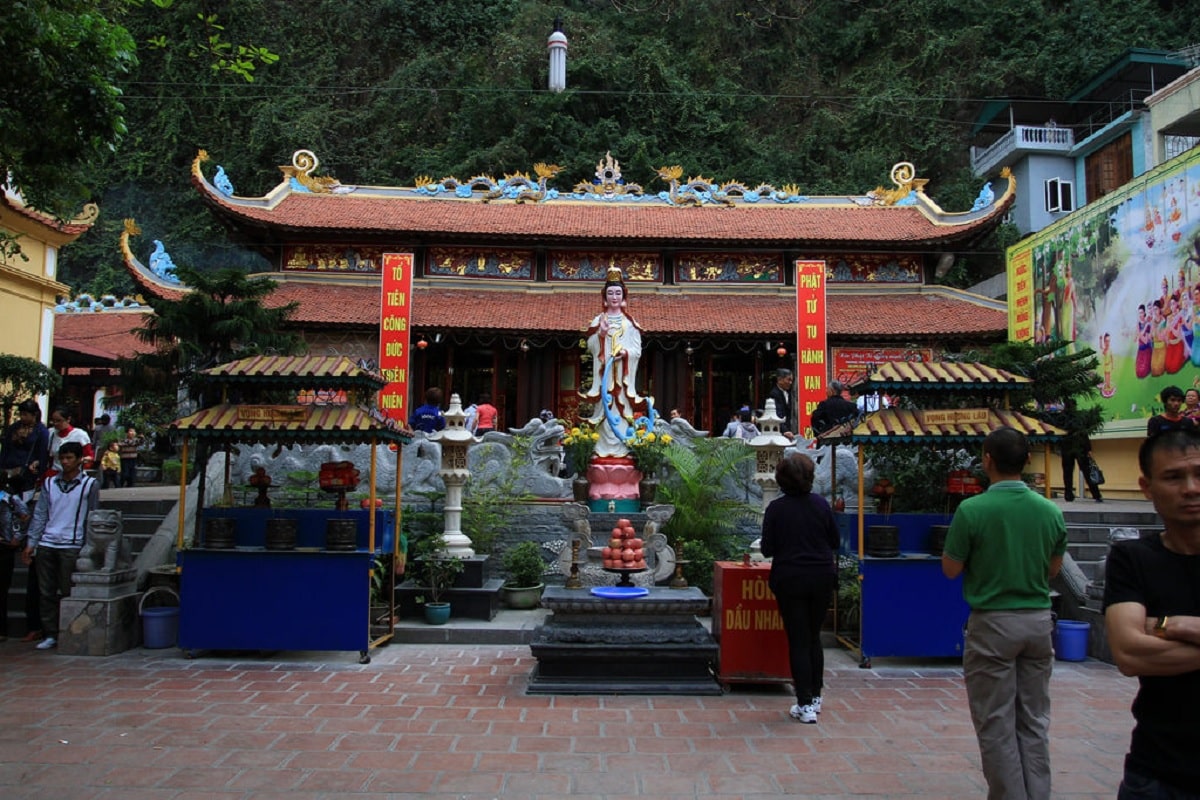
| Main Sanctuary | The Main Sanctuary is a grand hall known as the Mahavira Hall, where Buddhist deities are enshrined across tiered altars:
Additionally, the right side of the Main Sanctuary venerates the Tran Dynasty generals, while the left side is dedicated to the Three Realms Mother Goddess Palace. |
A Rich Sanctuary and Harmonious Blend of Beliefs at Long Tien Pagoda
Long Tien Pagoda is far more than an architectural marvel; it is a diverse spiritual cosmos that encapsulates and reflects the rich religious life of the Vietnamese people. Upon stepping into the sanctuary, visitors are immediately embraced by a harmonious synthesis of Buddhism and indigenous folk beliefs.
Embracing the Mahayana Buddhist Tradition
As a traditional Buddhist establishment, Long Tien Tu adheres to the Mahayana (Northern Buddhism) school, one of the two major branches of Buddhism and the most prevalent in Vietnam. Mahayana doctrines emphasize the Bodhisattva path—the sublime ideal of practicing not merely for personal enlightenment, but to liberate all sentient beings from the ocean of samsara (suffering and rebirth). This philosophy is eloquently expressed through the solemn altar pantheon in the Main Sanctuary, featuring the Amitabha Triad, Amitabha Buddha, the Thousand-Eyed Thousand-Armed Avalokiteshvara, alongside regular rituals and assemblies that guide humanity toward virtuous living and ultimate liberation.
A Confluence of Vietnamese Folk Beliefs
One of the most captivating aspects of Long Tien Pagoda is its unique integration of Buddhism with traditional Vietnamese folk religions. This is vividly demonstrated by the joint veneration of guardian deities, national heroes, and Mother Goddesses directly within the temple complex:
- Veneration of National Heroes: As observed in the Main Sanctuary architecture, alongside Buddhist altars, the temple reserves a place of profound honor for Sage Tran Hung Dao and the commanding generals of the Tran Dynasty. This reflects deep gratitude and reverence for those who made supreme sacrifices to safeguard the nation, embodying the quintessential Vietnamese virtue of “drinking water, remembering its source.”
- Mother Goddess Worship (Dao Mau): The presence of the Three Realms Mother Goddess Palace (Tam Phu Thanh Mau) and the shrine dedicated to Van Phuong Thanh Mau highlights the profound influence of Mother Goddess veneration in Vietnamese spirituality. This integration makes the pagoda intimately relatable, catering to the diverse spiritual aspirations of the community.
- Syncretism with Taoist Elements: The enshrinement of the Jade Emperor within the Buddhist hall further exemplifies the harmonious syncretism of the Three Teachings (Buddhism – Taoism – Confucianism) alongside indigenous folk traditions, painting a colorful tapestry of spiritual culture at Long Tien Pagoda.
The Festival at Long Tien Pagoda
The Long Tien Pagoda Festival – A Unique Cultural Heritage of the Mining Region (24th Day of the 3rd Lunar Month)
Every year on the 24th day of the third lunar month, Long Tien Pagoda becomes the vibrant epicenter of one of the largest and most distinctive traditional festivals in Ha Long City and Quang Ninh Province as a whole. This auspicious occasion serves not only as a moment for locals and pilgrims to express profound reverence to sacred deities, but also as a rare opportunity to immerse oneself in a culture steeped in national identity.
The Solemn Procession of Duc Ong Tran Quoc Nghien
The central and most eagerly anticipated event of the Long Tien Pagoda Festival is the exceptionally grand and solemn palanquin procession dedicated to Duc Ong Tran Quoc Nghien (the eldest son of Hung Dao Vuong Tran Quoc Tuan). Accompanied by fluttering ceremonial umbrellas, rhythmic gongs, resounding drums, and immaculately marshaled contingents, the grand procession sets forth from Long Tien Pagoda, traversing other prominent spiritual landmarks in the vicinity such as the Duc Ong Temple (the primary shrine dedicated to Duc Ong Tran Quoc Nghien). It then continues past the An Duong Vuong Temple in Vung Dang and the Loong Toong intersection before returning to the pagoda. This ritual not only honors national heroes who rendered meritorious service to the country and Quang Ninh Province, but also symbolizes communal spiritual unity, reminding future generations of the timeless adage: “Drinking water, remember its source.”
Other Unique Folk Cultural Activities
In addition to the dignified palanquin procession, the Long Tien Pagoda Festival bursts with a myriad of vibrant folkloric activities that attract enthusiastic participation:
- Chau Van Singing and Mediumship Rituals (Hat Van & Hau Dong): Melodic devotional chants extolling the virtues of Holy Saints, deities, and Mother Goddesses, paired with solemn and mystical trance rituals, create an intensely spiritual atmosphere.
- Traditional Folk Games: The temple courtyard and surrounding areas buzz with lively traditional competitions such as traditional wrestling, Chinese chess tournaments, and tug-of-war, celebrating martial spirit and athletic agility.
- Traditional Performing Arts: Cheo (traditional opera) troupes and local art ensembles frequently perform classical theatrical excerpts or musical tributes to the homeland, enriching the cultural vitality of the festival.
- Floating Lantern Release: As evening descends, glowing floating lanterns carrying heartfelt wishes for peace and happiness are gently released onto the water, painting an ethereal and deeply sacred scene.
Etiquette and Guidelines for Visitors
Regarding Attire
- When visiting the pagoda, attire should be neat, clean, modest, and elegant.
- Avoid wearing short skirts, shorts, revealing tops, halter necks, or off-the-shoulder outfits to maintain utmost respect for the sacred hall.
- Opt for subdued, tasteful color palettes—neither excessively flashy nor overly somber.
Regarding Forms of Address
- When addressing monastic residents, use “Thay” (Master) or “Ni” (Nun) according to their gender.
- Bow slightly with palms folded gently across the chest as a greeting.
- Speak in soft, courteous, and respectful tones.
Regarding Worship Customs
- Upon entering the temple, cross the threshold through the Right Gate (Gate of Falsehood/Vidya) and exit through the Left Gate (Gate of Emptiness/Sunyata). The Central Gate is reserved exclusively for monarchs, eminent monks, and scholastic laureates.
- Remove shoes and footwear before entering the main Buddha hall to show reverence.
- When offering incense, light 3 or 5 sticks, ensuring they do not extinguish prematurely. Incense should be offered in the courtyard censer; indoor burning is strictly limited.
- When bowing in prayer, kneel or stand slightly to the left or right of the altar rather than blocking the center. Pay respects to the Buddhas and Saints from the center outward, proceeding from right to left.
- Formulate prayers asking for divine protection and blessings, avoiding selfish or unreasonable requests. Pray with a sincere heart and keep ceremonies concise to accommodate fellow visitors.
Regarding Conduct
- Maintain silence, solemnity, and avoid making noise while inside the temple grounds.
- Silence mobile phones or set them to vibrate prior to entering, especially before offering incense and prayers.
- Refrain from running around, chatting loudly, critiquing, sitting, or lying down inside the prayer halls.
- Avoid sneezing, nose-blowing, or spitting near the Buddha shrines and Three Jewels altar.
- Refrain from unauthorized photography and videography, particularly in restricted sacred sanctuaries.
- Do not touch Buddha statues, ritual objects, or take temple property home as personal souvenirs.
Regulations of Long Tien Pagoda
In accordance with Article 6 of Inter-ministerial Circular No. 04/2014 dated May 30, 2014, issued by the Ministry of Culture, Sports and Tourism and the Ministry of Home Affairs, visitors and participants in religious and spiritual activities must observe the following responsibilities:
- Strictly comply with legal regulations, internal rules, and guidelines of religious establishments, upholding a civilized lifestyle during all visits.
- Show respect to all individuals and safeguard the sacred atmosphere of spiritual and religious sites. Wear modest, dignified attire appropriate for the moral customs of religious grounds.
- Preserve sanitation, security, and public order while protecting the natural landscape and environment at spiritual sites.
- Place monetary donations and merit offerings strictly in designated areas.
The Long Tien Pagoda Festival is a distinctive spiritual and cultural event cherished by the people of Quang Ninh and Vietnam alike. The festival is not only an occasion to express devotion to the Buddhist Dharma and ancestral sages, but also a wonderful opportunity to connect, learn, and showcase the exquisite traditional heritage of Ha Long. Attending the Long Tien Pagoda Festival grants travelers an immersive experience of unique spiritual and cultural values, alongside breathtaking vistas of Poem Mountain and Ha Long Bay. Capture these beautiful, meaningful moments during your visit to Long Tien Pagoda and share them with your cherished family and friends!