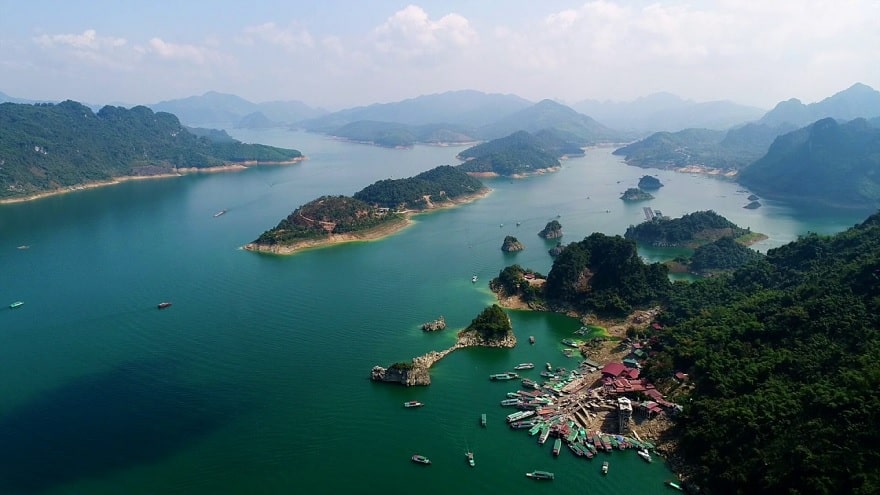
Thung Nai is an enchanting destination in Hoa Binh Province, widely celebrated as the “Halong Bay on land” due to its numerous picturesque islets emerging from serene, turquoise waters. Thung Nai possesses a poetic beauty that harmoniously blends breathtaking nature with vibrant local culture. Visitors can immerse themselves in the distinctive cultural heritage of the Thai and Muong ethnic groups, savor exquisite highland delicacies, and partake in a myriad of captivating lake activities. Thung Nai is an idyllic sanctuary for those seeking ultimate relaxation, rejuvenation, and discovery.
Introduction to Thung Nai
Thung Nai is a mountainous commune in Cao Phong District, Hoa Binh Province, covering an area of 36.38 square kilometers with a population of approximately 1,617 residents (as of 1999), predominantly belonging to the Muong and Thai ethnic minorities. According to legend, this area was once a lush, verdant valley where herds of deer roamed freely. Hence, locals named it “Thung Nai,” combining “thung” (meaning valley) and “nai” (meaning deer). In 1988, during the construction of the Hoa Binh hydroelectric reservoir, Thung Nai was partially submerged, transforming into a reservoir commune dotted with enchanting islands rising amidst crystal-clear waters. These undulating islets along the Da River create a uniquely magnificent natural landscape. Consequently, many travelers fondly compare it to the legendary Halong Bay of Vietnam’s Northwest region. Thung Nai enjoys a delightfully cool climate year-round, with average temperatures ranging from 18 to 25 degrees Celsius, making it exceptionally well-suited for experiential travel.
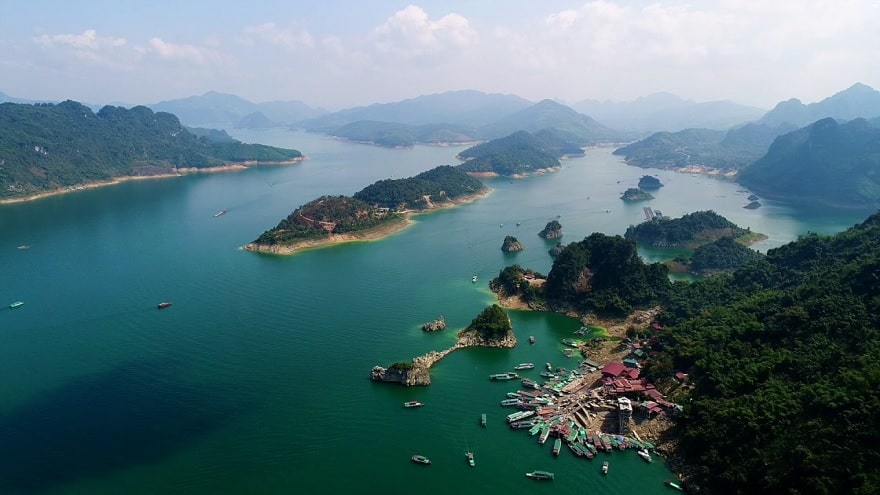
Thung Nai Hoa Binh
Located approximately 120 kilometers northwest of Hanoi, Thung Nai is easily accessible, offering travelers a variety of convenient transportation options such as motorbikes, private cars, or long-distance coaches. Those traveling by coach can purchase tickets at My Dinh Bus Station bound for Hoa Binh. Upon arrival in Hoa Binh, visitors can take a taxi or motorbike taxi for the remaining 20-kilometer journey to Thung Nai. For those traveling by personal vehicle, it is recommended to take Thang Long Boulevard by car or the parallel service road by motorbike toward Hoa Lac. From there, continue along the new Hoa Lac – Hoa Binh expressway, and upon reaching Hoa Binh City, follow the Tay Tien route according to the directional signage leading to Thung Nai.
Scenery & Attractions in Thung Nai
Thung Nai unveils a distinct beauty across every season; however, summer—from May to August—is the ideal time for visitors to relish the refreshingly crisp and pristine air. Spring, on the other hand, is arguably Thung Nai’s most enchanting season, when flora bursts into a riot of colors and nature awakens with boundless vitality. From Thung Nai Pier, travelers can gaze out over the vast expanse of the Hoa Binh reservoir, punctuated by majestic limestone karsts, islands, and awe-inspiring caves. The scenery mirrors a miniature Halong Bay, featuring untouched mountain jungles and cultivated forests casting their reflections upon the immaculate azure waters. Thung Nai also preserves the rich, authentic cultural tapestry of the highland peoples. Visitors can partake in traditional festivals, savor specialty dishes, listen to soothing folk melodies, and admire exquisite folk art. Furthermore, travelers can explore several renowned local attractions, including:
1. Ba Chua Thac Bo Temple
Legend has it that this sacred temple honors two female generals: Dinh Thi Van (of Muong ethnicity) and a woman of the Dao ethnic group. During the reign of King Le Loi, these two heroines rendered invaluable service by assisting the army and local people in transporting provisions and boats across Thac Bo to Muong Le (Son La) to quell rebellions. Following their passing, they frequently manifested to guide travelers safely through the perilous, roaring rapids before the Da River was dammed. Out of profound gratitude, the local people erected this temple to honor them, praying for their divine protection during river journeys. The Ba Chua Thac Bo Temple is renowned for its profound spiritual energy and constantly bustles with pilgrims. The temple festival annually spans from the 7th day of the first lunar month through the end of March.
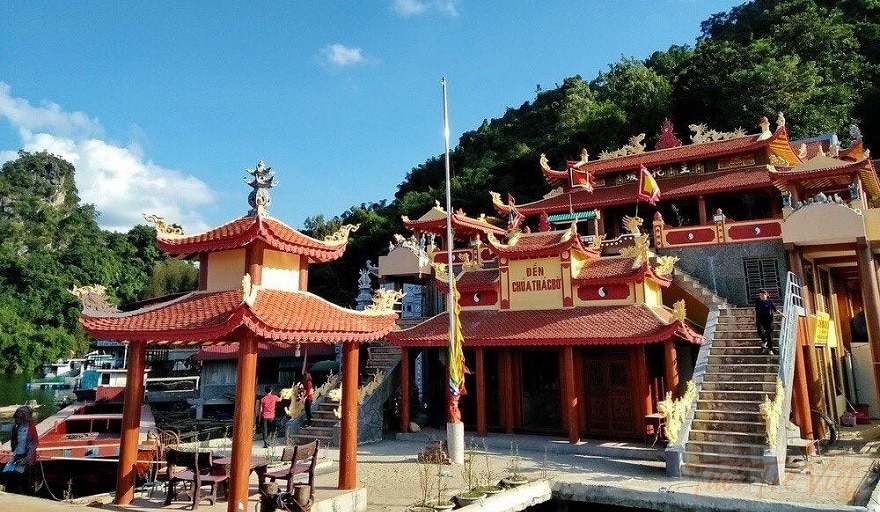
Ba Chua Thac Bo Temple
The temple complex comprises two main sites—one atop Hang Than Hill and another at the foot of Thac Bo Waterfall—featuring unique architecture in perfect harmony with nature. To reach the temple, visitors embark on a scenic combination of walking and a 30-minute boat ride across the Da River. Along the way, you will be captivated by the boundless vistas of earth, water, and sky that render Thung Nai as poetic as Halong Bay. In addition to visiting the two shrines dedicated to the Goddess of Thac Bo, travelers also have the opportunity to explore the magnificent and expansive Thac Bo Cave during the journey.
2. Thac Bo Cave
After visiting the Ba Chua Thac Bo Temple, guests proceed to the nearby Thac Bo Cave. The cave leaves a profound impression with its breathtaking array of stalactites and stalagmites in wondrous, whimsical shapes, sculpted over hundreds of thousands of years by dripping mineral-rich water—a testament to the boundless artistry of Mother Nature. From the cave entrance, visitors can gaze into the distance, letting their spirits soar across the panoramic magnificence of the legendary Da River and marveling at nature’s masterpieces of undulating mountain ranges.
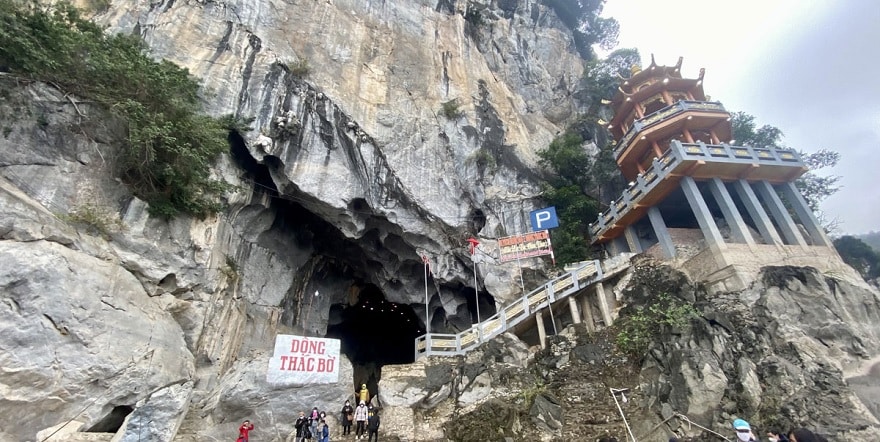
Thac Bo Cave
Thac Bo Cave is a classic karst formation nestled within limestone mountains. It was officially designated as a National Scenic Heritage site by the Ministry of Culture, Sports, and Tourism in 2008. The cave is divided into three distinct zones: aside from the main chamber adorned with magnificent rock formations, there is a reception area for visitors, and ascending about 50 meters leads to the Buddhist worship area. Inside, one finds numerous altars dedicated to the Buddha, Quan Yin (Goddess of Mercy), local guardian deities, and a revered altar dedicated to President Ho Chi Minh. Thac Bo Cave is deeply intertwined with the legend of the Goddess of Thac Bo, the Muong woman who aided King Le Loi in defeating invaders and safely guiding travelers past the treacherous rapids. Following her passing, her spirit has continuously manifested to protect the local inhabitants.
3. Trach Stream
While many travelers enjoy hiring motorboats to admire the majestic Da River and visit the Ba Chua Temple and Thac Bo Cave, few are aware of another hidden gem: Trach Stream and its upstream waterfall. Trach Stream is a crystal-clear, refreshing waterway winding gracefully over rugged rocks. To reach Trach Stream, visitors take a motorboat from Thung Nai Pier onto the Da River reservoir, followed by a scenic one-kilometer trek. As you draw closer, the resounding roar of cascading water echoes through the air, beckoning you onward. The rushing water plunges into a natural swimming pool of breathtaking scale. While the waterfall is not exceptionally high, it is remarkably poetic, with twin streams of pristine white water plunging down the rocky cliffs to create a mesmerizing, ethereal landscape.
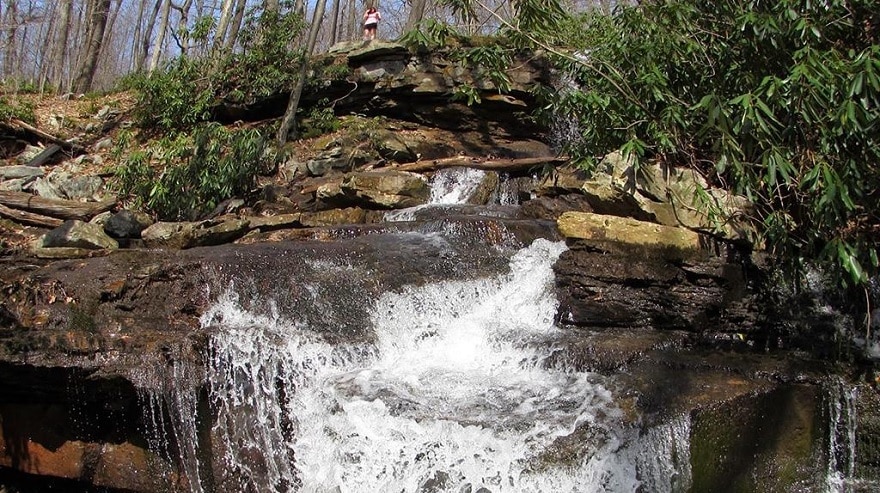
Trach Stream
4. Kayaking on the Reservoir
For travelers with ample time who desire a more leisurely, independent way to explore Thung Nai, kayaking across the reservoir is an absolute must. This delightful and accessible activity requires no prior experience; guests only need about 15 minutes to familiarize themselves with the boat and paddle before navigating with ease. Gliding smoothly across the mirror-like waters of Thung Nai reservoir offers a wonderful, restorative experience for any vacationer seeking absolute tranquility.
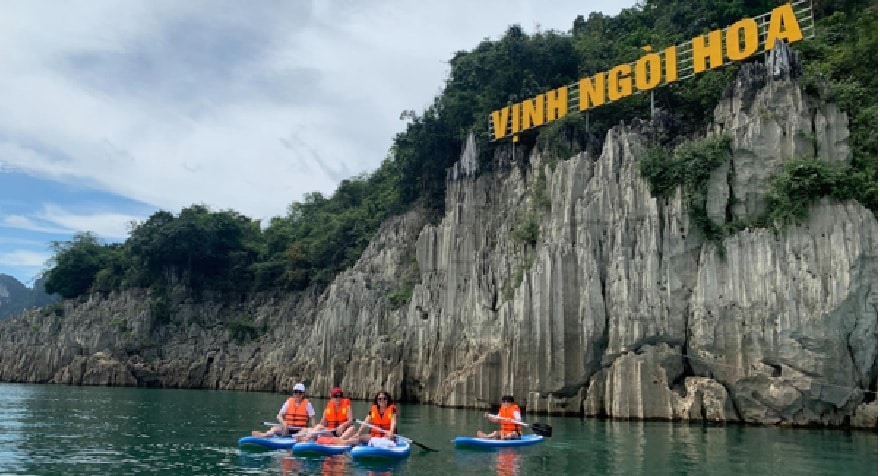
Kayaking on Thung Nai Reservoir
5. Giang Mo Muong Village
For those who prefer a land-based exploration of Thung Nai or have extended time to spare, a visit to Giang Mo Muong Village is highly recommended. Nestled at the foot of Mo Mountain, this charming and captivating village is home to over 100 Muong households, drawing domestic and international travelers alike to discover the rich culture and daily life of the Muong people.
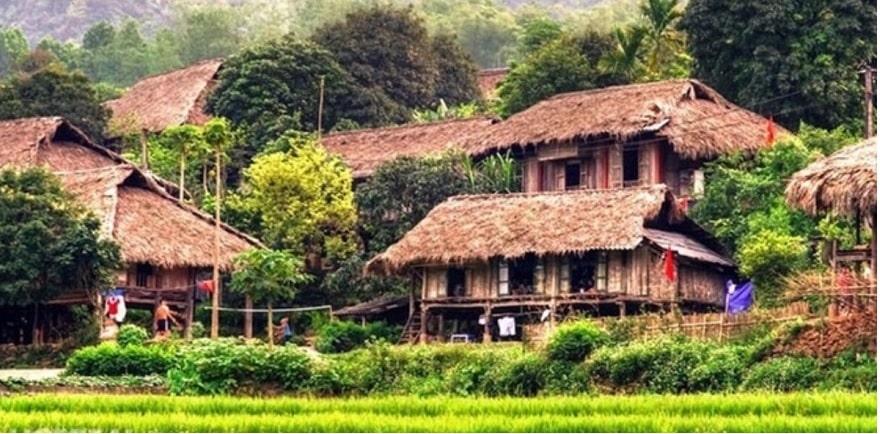
Giang Mo Muong Village
Upon arriving in Giang Mo, visitors can stroll along winding paths hugging the mountain slopes, taking in the idyllic, verdant scenery. Guests also have the unique opportunity to learn about the customs, traditions, and daily routines of the villagers, engaging in meaningful cultural exchanges with the warm locals. Furthermore, you can experience authentic hospitality by staying in traditional stilt-house homestays and indulging in mountainous culinary specialties such as honey-grilled Muong pork, wild apple wine (ruou tao meo), and bamboo-tube rice (com lam).
6. Ngoi Village
Ngoi Village is an ancient Muong settlement tucked away amidst pristine forests and the sprawling Hoa Binh reservoir. Accessible exclusively by water with no connecting roads, reaching the village requires a serene boat journey. Locally known as Bua Dam—which in the Muong language translates to a flat plateau on a high mountain abundant with large timber trees—the village is enveloped by dramatic limestone mountain ranges harboring rare flora and fauna.
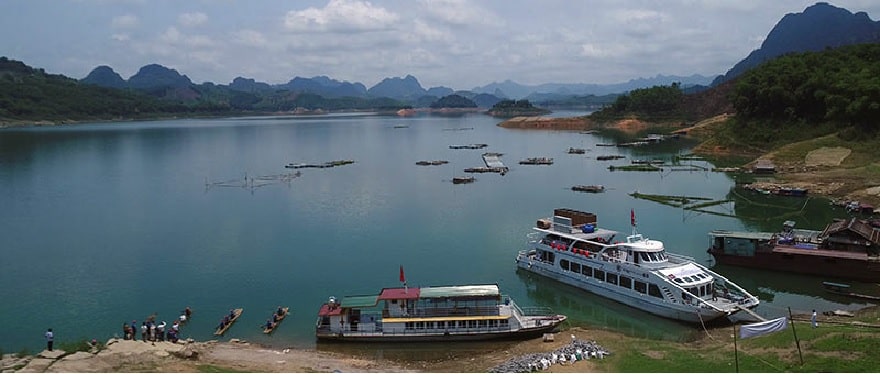
Ngoi Village
Ngoi Village is equally renowned for its stunning karst caves. While certain caverns like Hoa Tien Cave and Bat Cave have long been explored, others remain completely untouched by human footprints, such as the newly discovered Bua Dam Cave. The village comprises 81 Muong households who sustain themselves primarily through hillside cultivation, fishing, and residing in traditional wooden stilt houses.
7. Thac Bo Floating Market
The Thac Bo Floating Market is a fascinating attraction in Thung Nai, offering visitors a firsthand glimpse into the vibrant river trade of the Muong people along the Da River. Convening exclusively on Sunday mornings from early dawn until approximately 8:00 AM, the market serves as a bustling trading hub for the bountiful produce of the Hoa Binh reservoir, including fresh fish, dried prawns, dried fish, and forest bamboo shoots. Visitors can purchase these regional specialties as souvenirs or enjoy them freshly prepared on-site. The floating market also provides a wonderful venue for cultural interaction, allowing travelers to connect with locals and gain deeper insight into the unique customs and heritage of the Muong community.
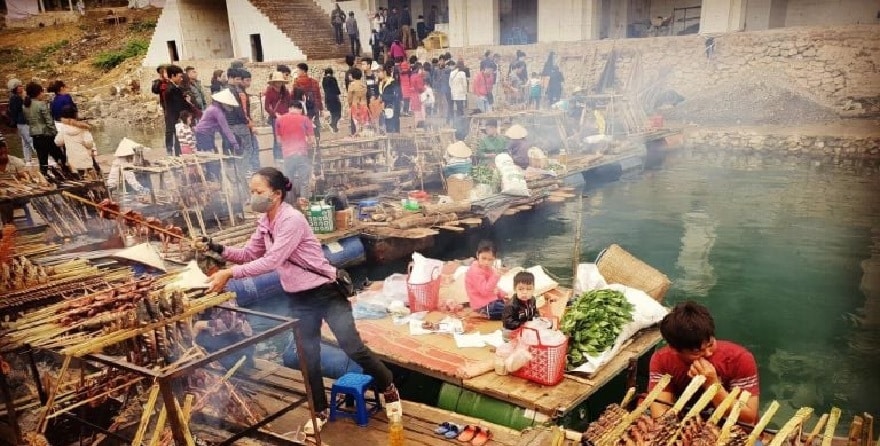
Thac Bo Floating Market
Thung Nai Cuisine
1. Da River Grilled Mang Fish
The Da River is celebrated for its abundance of delectable fish species, such as hemibagrus, black carp, and mang fish. While available year-round, these fish reach their absolute culinary peak during the flood season in September and October. Grilled fish is a signature delicacy of the Da River basin. The fish is meticulously cleaned, soaked in brine, rubbed with coarse salt, and slowly roasted over charcoal embers for hours. The resulting dish is wonderfully fragrant, with firm flesh, crispy charred skin, and a perfectly balanced savory flavor. It is traditionally served with young plum leaves, myrtifolia, Piper lolot, and aralia leaves, accompanied by a tangy green chili dipping salt. The natural sweetness of the fish paired with the spiced salt and aromatic herbs neutralizes any earthy notes while enriching the flavor profile, becoming progressively more succulent with every bite. The smoky aroma of wood embers, the briny touch of salt, and the fragrance of bamboo and fresh fish create an unforgettable gastronomic experience.
If time permits, you can stop by a local grilled fish vendor along National Highway 6, or specifically near the foot of Ba Chua Thac Bo Temple, to savor the dish piping hot. However, visitors should carefully inspect the fish for freshness, as frozen fish is occasionally used, resulting in a soft, less desirable texture. You can test for freshness by gently probing the fish with a skewer; if the flesh appears cooked on the outside but remains reddish near the bone, it is likely frozen. Alternatively, sitting beside a crackling wood fire to grill your own catch while sipping a few glasses of local wine is an utterly sublime experience.
2. Muong Ethnic Pork
Muong ethnic pork is a renowned delicacy of Hoa Binh Province, originating from the ancient Muong Khuong swine breed native to the high mountains of Northwest Vietnam. Distinctive for their black coats, small heads, long ears, short snouts, curved backs, and curled tails, these pigs are raised according to traditional free-range methods in the forest rather than in enclosed pens. Steeped in history, this indigenous breed serves as an important cultural and spiritual symbol for the Muong people. Muong pork is exceptionally lean with thin, crispy skin and minimal fat, offering a remarkably fragrant, nutritious flavor profile. When prepared, the meat emits no gamey odor, remains firm yet tender, and never dries out.
Important Notes for Visiting Thung Nai
- Due to significant daily temperature fluctuations in the mountainous terrain, evenings can become quite cold; visitors are advised to pack adequate warm clothing and jackets.
- Thung Nai offers numerous aquatic activities, so travelers should bring swimwear to fully enjoy the water sports.
- Overnight camping in Thung Nai is a phenomenal experience, and guests interested in this activity should bring appropriate camping equipment.
- Local tourism services, particularly dining establishments, remain relatively rustic. Travelers are encouraged to pre-order meals directly at their accommodation or bring supplementary snacks.