
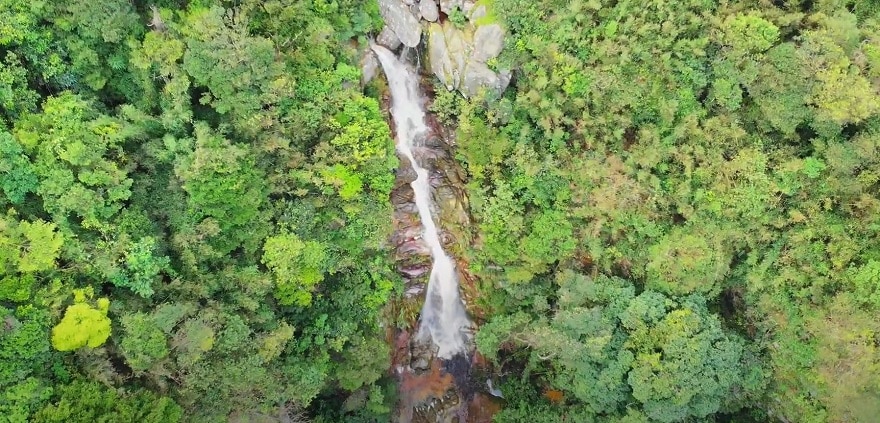
Introduction to Bo Dai Waterfall
Bo Dai Waterfall, also known as Phieu Linh Waterfall, is located in Binh Khe commune, Dong Trieu, Quang Ninh province. According to local residents, the waterfall earned its unconventional name because the cascading water forms pools with a yellowish hue, reminiscent of cow urine. The waterfall consists of four majestic tiers with a total height of approximately 100 meters. During the rainy season, the water flow is powerful, creating a rhythmic, thundering sound that resonates like an eternal anthem of the mountains and forests. Each tier possesses its own unique charm:
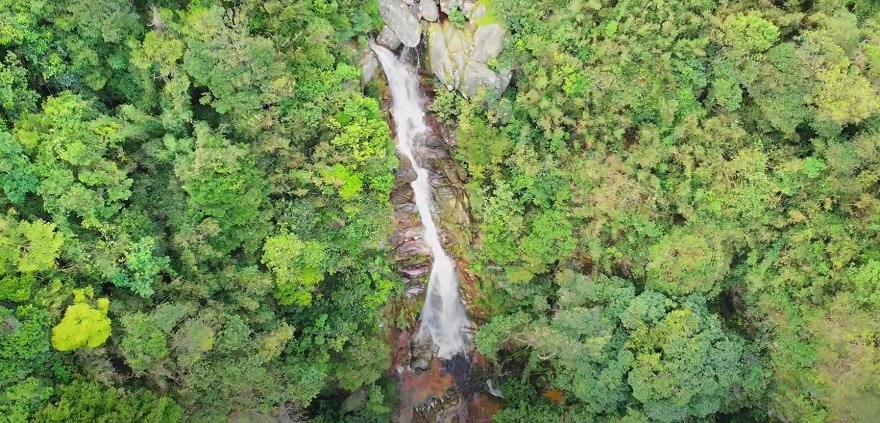
Bo Dai Waterfall
The first tier boasts the most expansive space among the four. The water cascades rapidly over five or six layered rock formations, resembling a grand staircase carved by nature. At the base lies a wide, deep pool fed by the relentless flow. The water is crystal clear, and when contrasted against the white spray of the waterfall and the lush greenery clinging to the cliffs, it creates a truly poetic and breathtaking scene. Looking down into the depths, one can clearly see two massive boulders resting on the lake bed.
The second tier sees the stream divide into two branches; one flows gently, while the other crashes against the rocks, forming white, frothy torrents. At its base sits a small, refreshing, and pristine pool. Here, visitors can admire large boulders stacked against one another like a natural dam preventing the water from escaping.
The third tier is the longest, stretching approximately 30 meters. The water flows from high above, dancing over numerous rock ledges like a flowing silk ribbon. At the bottom, there is a formation of stacked rocks consisting of three levels; unlike the first and second tiers, this section does not form a pool.
The fourth tier is the highest point of Bo Dai Waterfall. Here, the upstream source from the Bo Dai ravine flows down gently, murmuring softly throughout the year. This tier is rarely visited due to the challenging and rugged terrain.
According to the locals, the waterfall reaches its most imposing state during the rainy season. The sound of the falling water carries the distinct resonance of the Ngu Dai Mountain range. This waterfall is also the origin of the Da Mai stream, a place where forest travelers traditionally stop to rest and sharpen their knives.
Getting to Bo Dai Waterfall
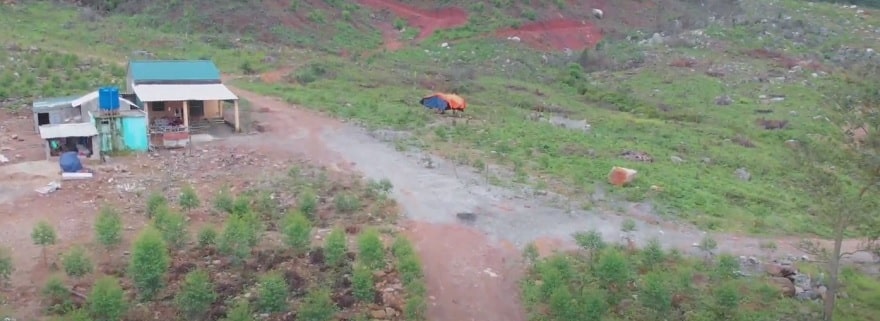
Turn left for the path to Ngoa Van Stone Field, turn right for the path to Bo Dai Waterfall
The path leading to Bo Dai Waterfall is a small dirt trail carved out by the locals. The terrain is relatively steep and challenging. If traveling by motorbike, a manual transmission bike is highly recommended. Please note that mobile signals and 4G coverage are unavailable in this area, so it is essential to prepare carefully and bring a map to avoid getting lost. After traveling a few kilometers along the dirt road, you will spot a ravine on the left; this is the sign that you are nearing the base of the waterfall. It is advisable to park your vehicle here and proceed on foot, as the path leading directly to the waterfall is significantly more rugged, characterized by rocky terrain and pools of water.
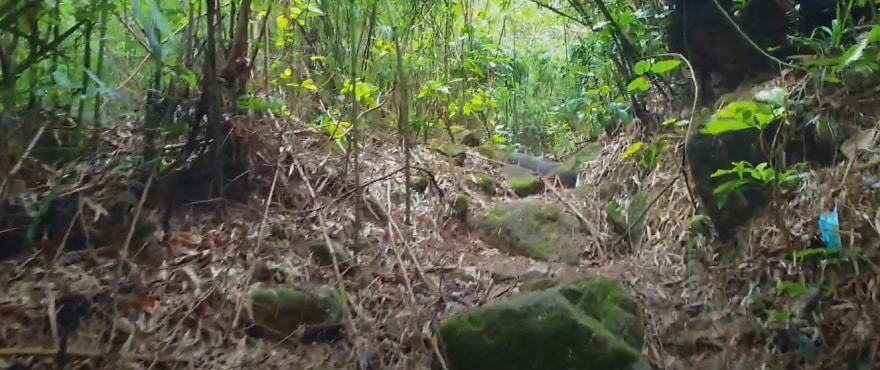
Hill path leading to the waterfall
The access route is a narrow, singular trail, so there is little risk of losing your way. Every 30 meters, you will find small red arrows painted on the rocks along the path. After covering about two-thirds of the distance, continue to follow the arrow signs to the left to reach tiers 1 and 2. Beyond this point, the path disappears, and you will need to hike through the forest terrain. It is best to follow the track where the vegetation has already been flattened. Generally, we recommend visiting only the first and second tiers, as the route to the third and fourth tiers is quite demanding; continue only if you are an experienced explorer looking for a challenge.