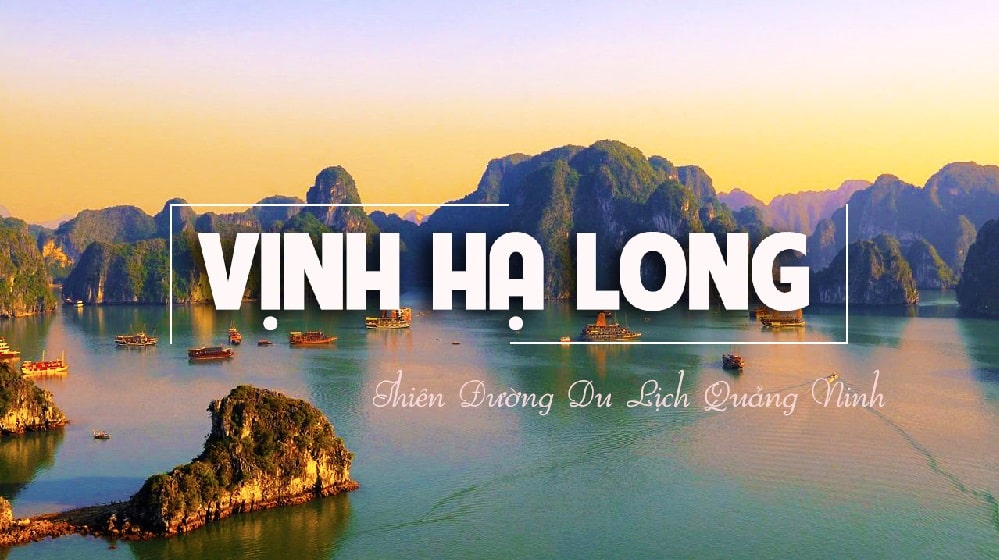
Ha Long Bay is one of Vietnam’s most captivating travel destinations, drawing millions of domestic and international visitors each year. Beyond its breathtaking natural landscapes, the bay holds profound cultural, historical, and biological significance. Ha Long Bay has been twice recognized by UNESCO as a World Heritage Site: first in 1994 for its exceptional aesthetic value and natural beauty, and again in 2000 for its outstanding geological and geomorphological significance. Join us as we explore the milestones that defined Ha Long Bay’s legacy.
The UNESCO Recognition Process: Ha Long Bay as a World Natural Heritage Site
Ha Long Bay is one of the world’s most renowned natural heritages, admired and cherished by millions of travelers both domestically and internationally. The journey to achieving the title of World Natural Heritage was a long and arduous process, yet it remains a source of immense glory and pride for Quang Ninh province and Vietnam as a whole. This article explores the timeline and the process behind UNESCO’s recognition of Ha Long Bay as a World Natural Heritage site, covering the years from 1991 to 2000.
1991: The Vietnamese government approves the drafting of the Ha Long Bay nomination dossier
Recognizing the universal value of Ha Long Bay and the aspiration for global recognition and celebration, the Government of Vietnam officially authorized the preparation of the Ha Long Bay nomination dossier for submission to the World Heritage Committee on December 21, 1991. This was a critical first step in affirming the stature and significance of Ha Long Bay on the international stage.
To prepare the dossier, the Ha Long Bay Management Board collaborated with various domestic and international agencies, units, and experts to conduct essential tasks, including: surveying, researching, collecting, synthesizing, and compiling scientific data on the Bay; establishing a conservation and sustainable development plan; and designing and printing the documentation according to UNESCO’s requirements. These efforts spanned two years, from 1991 to 1993.
The nomination dossier consisted of two main parts: Part I provided a comprehensive overview of the Bay’s geography, geology, ecology, history, and culture; Part II outlined the management plan, detailing specific goals, principles, and measures. The dossier was produced in English and French, supplemented by maps, photographs, and reference materials.
The nomination was submitted to UNESCO in 1993 and reviewed during the 18th session of the World Heritage Committee in Phuket, Thailand, in 1994. After reviewing reports from experts and Vietnamese representatives, the Committee highly valued the universal significance of Ha Long Bay and decided to grant it World Natural Heritage status for its aesthetic beauty.
1994: UNESCO recognizes Ha Long Bay as a World Natural Heritage site for its aesthetic value
Following the submission of the dossier, UNESCO dispatched teams of experts to Quang Ninh to conduct site surveys, provide guidance, and evaluate the documentation in situ. These experts offered recommendations to further refine the proposal and provided positive feedback, reinforcing the universal value of the Bay.
During the 18th session in Phuket, Thailand, the World Heritage Committee reviewed and appraised the nomination after hearing reports from the field survey teams. On December 17, 1994, UNESCO officially inscribed Ha Long Bay on the World Natural Heritage list for its exceptional aesthetic value.
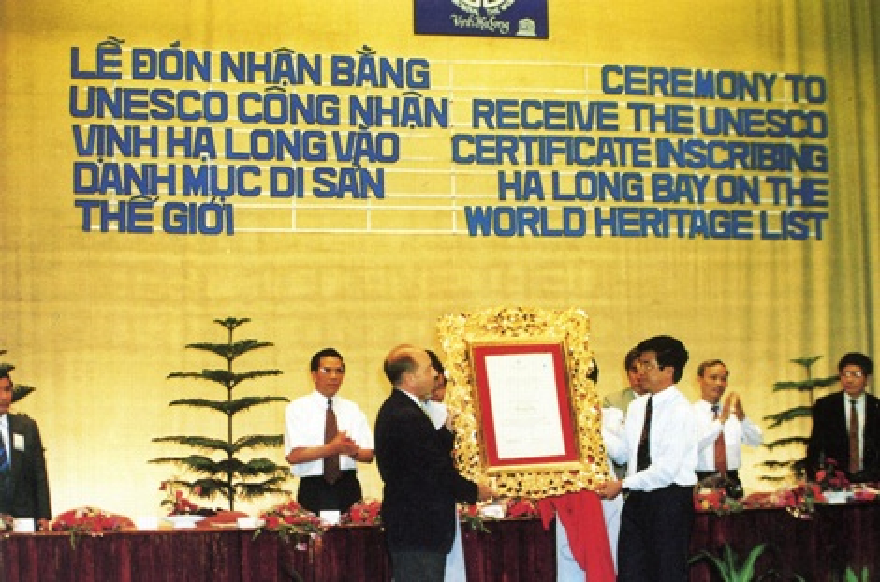
Ceremony receiving the UNESCO World Heritage Certificate for Ha Long Bay in 1994
This achievement was the result of immense effort by the Ha Long Bay Management Board, along with numerous agencies, organizations, and experts. It stands as a point of pride for both Quang Ninh and Vietnam, as it represents a natural treasure recognized and honored by the world. It also serves as a driving force for the ongoing protection and sustainable development of Ha Long Bay for future generations.
To be recognized as a World Natural Heritage site for aesthetic value, Ha Long Bay had to meet UNESCO’s criterion (vii):
- Represent superlative natural phenomena or areas of exceptional natural beauty and aesthetic importance;
- Contain superlative natural phenomena or areas of exceptional natural beauty and aesthetic importance;
- Contain areas of exceptional natural beauty or aesthetic importance resulting from related geological or biological processes.
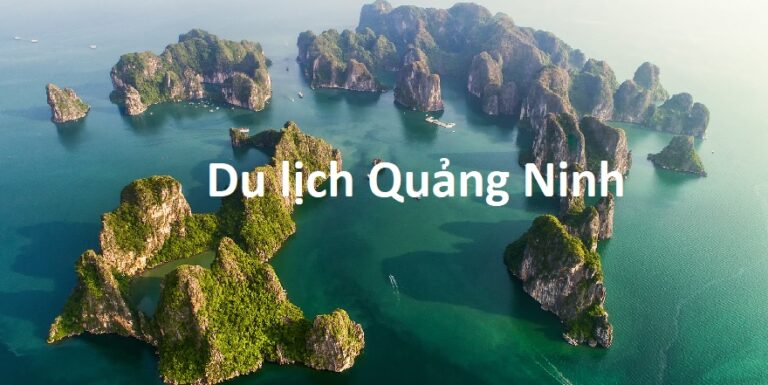
As a UNESCO-recognized aesthetic heritage site, Ha Long Bay is famous for its unique and mysterious landscape, featuring thousands of limestone islands that create dramatic, vibrant vistas. The Bay is also home to magnificent caves, housing diverse and beautiful stalactites. Beyond its rich and varied ecosystem, home to many rare and endemic flora and fauna, Ha Long Bay is steeped in the legends, history, and culture of the Vietnamese people, elevating it to a natural heritage of high cultural value.
See more: Aesthetic and landscape values of Ha Long Bay
1999: The Ha Long Bay Management Board continues to build and submit a scientific dossier to UNESCO
Following its recognition for aesthetic value, the Ha Long Bay Management Board continued to research and explore the Bay’s other dimensions. Recognizing the Bay’s exceptional universal geological and geomorphological values, the Board sought further recognition from UNESCO for these criteria.
To achieve this, the Management Board continued to collaborate with domestic and international agencies and experts to conduct investigations, research, data collection, and compilation, while refining the dossier according to UNESCO’s standards. The scientific dossier for Ha Long Bay was finalized and submitted to UNESCO in 1999.
The dossier consisted of three parts: Part I: General introduction to Ha Long Bay; Part II: The exceptional values of Ha Long Bay; Part III: Conservation and sustainable development plan. Part II was notably enhanced to include geological and geomorphological values in accordance with the standards of the Convention Concerning the Protection of the World Cultural and Natural Heritage.
Accordingly, Ha Long Bay is recognized as one of the most complex and diverse areas of limestone formation in the world. These limestone structures were shaped by tectonic processes occurring over billions of years. Ha Long Bay serves as a witness to sea-level fluctuations throughout the Earth’s evolutionary history, providing living evidence of global climate change. These geological features include distinct columns, caves, coastal structures, coral reefs, and sandy beaches.
To be recognized as a World Natural Heritage site for geological and geomorphological value, Ha Long Bay had to meet UNESCO’s criterion (i):
- Represent major stages of Earth’s history, including the record of life;
- Represent significant ongoing geological processes;
- Represent outstanding or unique geological and geomorphological features;
- Represent outstanding examples of geological processes occurring within ecosystems and biological communities.
Ha Long Bay was subsequently recognized by UNESCO for its geological and geomorphological heritage due to the development of its Karst limestone topography over billions of years. These forms are the result of tectonic shifts, deformation, uplift, erosion, dissolution, and sea-level changes. As one of the regions reflecting sea-level variations from the Cretaceous period to the present, Ha Long Bay stands as a living testament to global climate change. Furthermore, the interplay between geological and biological processes has created a rich and diverse ecosystem.
The Year 2000: UNESCO designates Ha Long Bay as a World Natural Heritage site for the second time, recognizing its outstanding geological and geomorphological values.
Following the submission of the Ha Long Bay dossier, UNESCO dispatched expert delegations to Quang Ninh to conduct on-site surveys, provide guidance, and evaluate the nomination. These experts offered valuable feedback and recommendations to further refine the documentation, while concurrently offering positive assessments that affirmed the global significance of Ha Long Bay.
During the 24th session in Cairns, Australia, the World Heritage Committee reviewed and appraised the Ha Long Bay dossier after hearing reports from the on-site survey teams. On December 2, 2000, UNESCO officially recognized Ha Long Bay as a World Natural Heritage site for the second time, honoring its exceptional geological and geomorphological values.
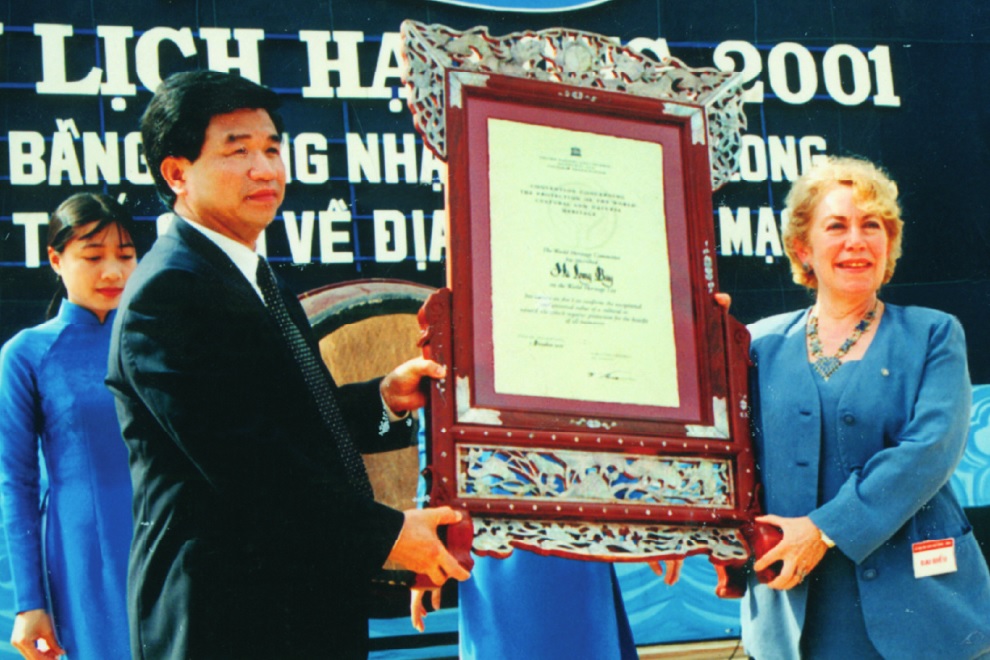
Ha Long Bay recognized by UNESCO for the second time for its outstanding global geological and geomorphological values
This landmark achievement stands as a testament to the dedicated efforts of the Ha Long Bay Management Board, along with various domestic and international agencies and experts who worked tirelessly on the nomination. It is a source of immense pride for Quang Ninh province and Vietnam as a whole to possess a natural heritage site with two UNESCO-recognized criteria—a rarity among natural heritage sites worldwide. This recognition serves as a powerful motivation to ensure the ongoing protection and sustainable development of Ha Long Bay for generations to come.
By securing this second UNESCO World Natural Heritage designation, Ha Long Bay has solidified its pivotal role in the preservation and promotion of Earth’s natural legacy. Ha Long Bay is not merely a breathtaking natural masterpiece; it is a colossal geological museum, preserving vital evidence of the formation, movement, and evolution of the Earth’s crust in this region.
Ha Long Bay received this UNESCO recognition due to the development of its Karst limestone formations over billions of years. These formations are the result of tectonic movements, deformations, uplifts, erosion, weathering, and sea-level changes. Ha Long Bay is also one of the areas that has witnessed significant sea-level fluctuations throughout the Earth’s evolutionary history, from the Cretaceous period to the present. Consequently, Ha Long Bay serves as living evidence of global climate change. Furthermore, the interplay between geological and biological processes here has fostered a rich and remarkably diverse ecosystem.
To qualify for recognition as a World Natural Heritage site for its geological and geomorphological values, Ha Long Bay had to satisfy UNESCO’s criterion (viii), which encompasses:
- Representing major stages of Earth’s history, including records of life;
- Representing significant ongoing geological processes or features;
- Representing unique or exceptional geological and geomorphological features;
- Representing outstanding examples of ongoing geological processes in ecosystems and biological communities.
Ha Long Bay was recognized as a World Heritage site for its geological and geomorphological significance due to the multi-billion-year evolution of its Karst limestone formations. These limestone structures are the product of tectonic activity, deformation, elevation, erosion, decomposition, and shifts in sea levels. Ha Long Bay remains a definitive area for studying sea-level changes throughout the history of Earth’s evolution, serving as living proof of global climate change. The intersection of geological and biological processes at the bay continues to create a remarkably rich and diverse ecosystem.
Read more: The Geological and Geomorphological Values of Ha Long Bay
Exploitation, Development, and Protection of Ha Long Bay
Ha Long Bay is an invaluable natural heritage of both Vietnam and the world. The process of achieving UNESCO recognition as a World Natural Heritage site for the second time, specifically for its geological and geomorphological values, was long and challenging, yet it remains a source of immense pride and glory for Quang Ninh province in particular and Vietnam as a whole. This achievement is the result of dedicated efforts and collaboration between the Ha Long Bay Management Board and various domestic and international agencies, units, and experts. It also represents a great honor and a significant responsibility toward the future protection and sustainable development of Ha Long Bay.
To develop, utilize, and protect Ha Long Bay in accordance with UNESCO standards, Quang Ninh has implemented several critical measures, including:
- Developing and executing strategic plans, policies, and frameworks for sustainable tourism development for the province in general and Ha Long Bay heritage tourism in particular1. Notable plans include: The Master Plan for Tourism Development in Quang Ninh Province to 2020 with a vision toward 2030; The Detailed Plan for the management, conservation, exploitation, and promotion of Ha Long Bay’s values through 2020 (pursuant to Decision No. 142/2002/QD-TTg dated December 21, 2002, by the Prime Minister); Resolutions of the People’s Council on strengthening the management, conservation, and promotion of Ha Long Bay’s World Natural Heritage values for the 2013–2015 period with a vision toward 2020; the development of a Strategic Plan for transport infrastructure; and the implementation of a Green Action Plan for Ha Long Bay tourism for the 2019–2025 period.
- Attracting strategic investors to build synchronous, modern tourism infrastructure and diversify tourism products. Significant projects include: The Hai Phong – Ha Long Expressway; Van Don International Airport; Sun World Ha Long Park; Yoko Onsen Quang Hanh Eco-Resort; Cat Ba Amatina Eco-Resort; and the Bai Chay – Tuan Chau Eco-Tourism Complex.
- Implementing environmental protection measures for Ha Long Bay, such as: Developing and launching programs, projects, and activities for conservation, education, and raising awareness about the heritage’s value; establishing environmental protection standards and codes of conduct for tourism activities on the Bay; conducting monitoring, supervision, and assessment of seawater and air quality; managing the treatment of wastewater and domestic/industrial waste; and collaborating with international and domestic organizations to protect the Ha Long Bay environment.
We hope this article has provided you with useful information. If you would like to charter a cruise to Ha Long Bay to visit this destination, please contact us for further details.