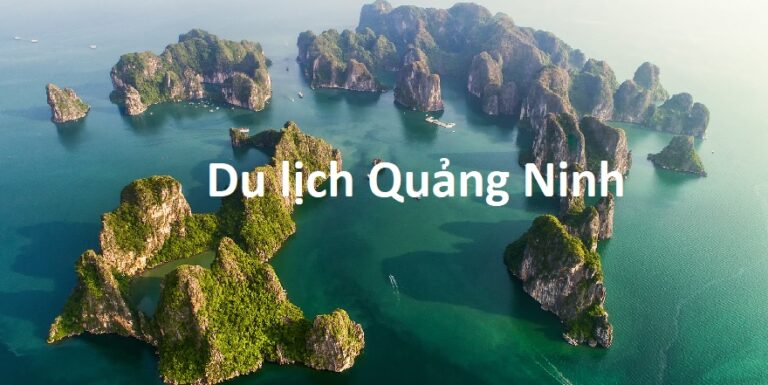
Ha Long Bay – a natural masterpiece – is not merely a source of national pride and Vietnam’s premier destination; it is globally revered as a New Natural Wonder of the World and a UNESCO World Heritage Site. From the very first glance, Ha Long captivates the soul with a unique, unparalleled beauty: thousands of limestone islands of all shapes and sizes rise proudly from the serene, emerald-green waters, creating a colossal ink-wash painting that is at once majestic, primordial, and imbued with a mysterious allure.
To ensure your journey to explore this wonder is seamless and complete, Halong Lan Ha Bay Cruise Tours is delighted to provide you with a comprehensive guidebook to Ha Long Bay. Here, you will find every detailed and up-to-date piece of information, ranging from must-see caves and islets, exciting sea and land-based activities, expert advice on selecting the perfect cruise, recommendations for ideal accommodations, to the secrets of savoring exquisite local cuisine.
I. Introduction to Ha Long Bay: A Natural Masterpiece, a Treasury of Legends, and a Global Destination
Ha Long Bay, the crown jewel of Quang Ninh province and the pride of Vietnam, has long cemented its status as one of the world’s premier natural wonders. The bay has been honored by the United Nations Educational, Scientific and Cultural Organization (UNESCO) as a World Heritage Site three times, affirming its Outstanding Universal Value (OUV). The first recognition came in 1994 for its Aesthetic Value (Criterion vii), acknowledging Ha Long Bay as an area containing “superlative natural phenomena or areas of exceptional natural beauty and aesthetic importance,” expressed through the spectacular landscape of thousands of limestone islands with diverse, magnificent shapes, blanketed in lush vegetation and rising from the tranquil jade waters. The second recognition occurred in 2000 for its Geological and Geomorphological Value (Criterion viii), recording the bay as “outstanding examples representing major stages of earth’s history, including the record of life, significant ongoing geological processes in the development of landforms, or significant geomorphic or physiographic features,” bearing witness to a complex geological development history spanning hundreds of millions of years and unique Karst evolution. Notably, in 2023, the Ha Long Bay site was expanded to include the Cat Ba Archipelago (Hai Phong City), thereby further highlighting its Biodiversity Value (Criterion x) as an essential component of its Outstanding Universal Value, recognizing that this expanded area “contains the most important and significant natural habitats for in-situ conservation of biological diversity, including those containing threatened species of outstanding universal value from the point of view of science or conservation.”
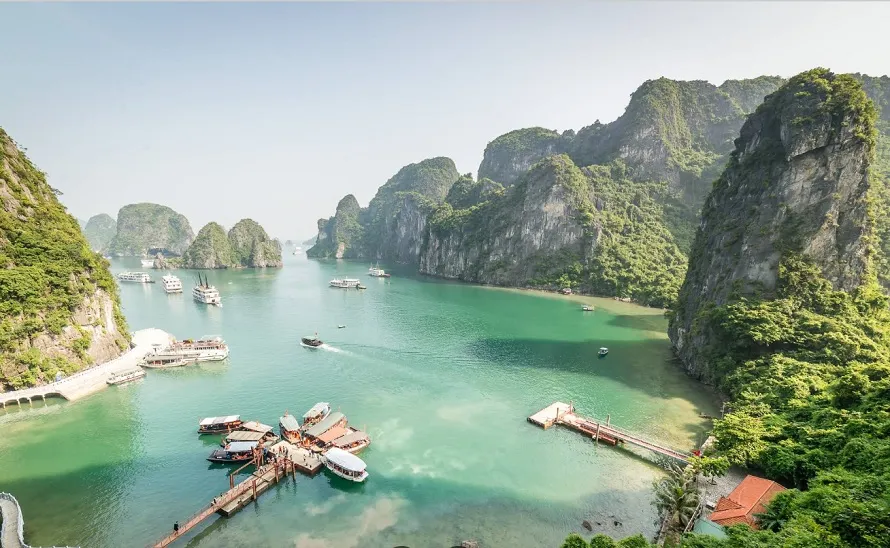
Ha Long Bay
The allure of the Bay extends even further, having been voted by the global community as one of the New 7 Wonders of Nature by the New Open World organization in 2012. Most recently, on August 25, 2024, the Ha Long Bay – Cat Ba Archipelago complex was further recognized as a World Geological Heritage by the International Union of Geological Sciences (IUGS). These prestigious accolades, combined with its status as a founding member of the Club of the Most Beautiful Bays in the World since March 1997, and its consistent recognition by prestigious travel magazines and organizations—such as the World Travel Awards (WTA) naming it “Asia’s Leading Tourist Destination,” TripAdvisor’s “Best of the Best Destinations” award, and top-tier rankings from Travel + Leisure—all testify to the significance and irresistible magnetism of Ha Long Bay on the global tourism and heritage map. It is more than just a destination; it is an icon of natural beauty and enduring value.
Hidden behind the majestic beauty of limestone karsts rising from jade-colored waters, Ha Long Bay is more than a natural wonder—it is a sacred landscape, a living treasury of Vietnamese legend. The very name “Ha Long” (Descending Dragon) evokes a mythical narrative, suggesting that celestial beings played a role in sculpting this breathtaking seascape. According to legends passed down through generations, when the nation was in its infancy and faced invaders, the Jade Emperor sent the Mother Dragon and her children to earth. They descended from the heavens, spitting out pearls and jade that transformed into thousands of stone islands, forming a formidable fortress to protect the realm. Each island and cavern in Ha Long Bay seems to hold its own secret or ancient tale—from the tragic love story of Virgin Cave (Hang Trinh Nu) and Drum Cave (Hang Trong), to the enduring symbol of devotion at Fighting Cock Island (Hon Trong Mai), and the heroic historical imprints within Dau Go Cave. These myths do more than offer a poetic explanation for the origin and shapes of these geological formations; they reflect the deep-rooted culture, spiritual beliefs, and resilient spirit of the Vietnamese people. It is this seamless intertwining of unparalleled natural scenery and profound cultural lore that makes Ha Long Bay truly unique.
Ha Long Bay is not merely a single destination but a sprawling complex of distinct characteristics. Located in the Gulf of Tonkin off the northeastern coast of Vietnam in Quang Ninh Province, Ha Long Bay emerges like a monumental sculpture crafted by nature herself. Spanning an impressive area of approximately 1,553 km², the bay is home to a magnificent ensemble of nearly 2,000 limestone islands of varying shapes and sizes. Around 980 of these have been named, with each moniker often tied to a unique shape or fascinating tale. The original UNESCO World Heritage site (prior to the 2023 expansion) covered an area of 434 km² with 775 islands, representing the most densely packed concentration of karst scenery, intricate cave systems, and hidden white-sand beaches. The 2023 expansion, which incorporated the Cat Ba Archipelago, has further enhanced the scale and integrity of the site, establishing a unified, extraordinary geological and ecological landscape.
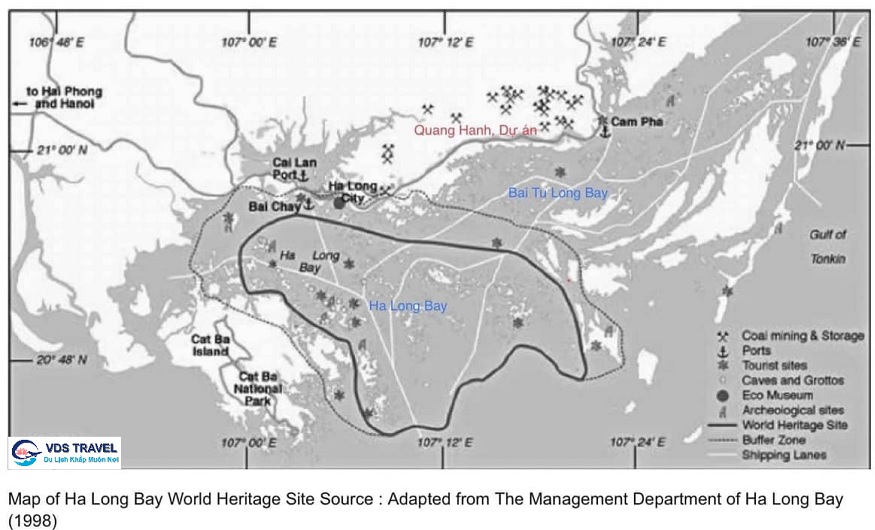
Map of Ha Long Bay boundaries
To ensure your journey aligns perfectly with your preferences and expectations, it is essential to understand the unique characteristics of each area within the Ha Long Bay complex. The three primary bays often highlighted for their distinct appeal are:
1. Ha Long Bay (Central Area)
This area serves as the vibrant heart of the entire heritage site. It is the most famous and iconic region, home to the quintessential landscapes that have made Ha Long a global name, such as Fighting Cock Island, Ti Top Island with its crescent-shaped beach and panoramic summit views, the spectacular Surprise Cave (Hang Sung Sot), and the mystical Thien Cung Grotto. This area hosts a high density of cruise ships and highly developed tourist services, offering a lively atmosphere and a wealth of activity options. It is an ideal choice for first-time visitors who wish to witness “must-see” landmarks and prefer the excitement and convenience of comprehensive travel infrastructure.
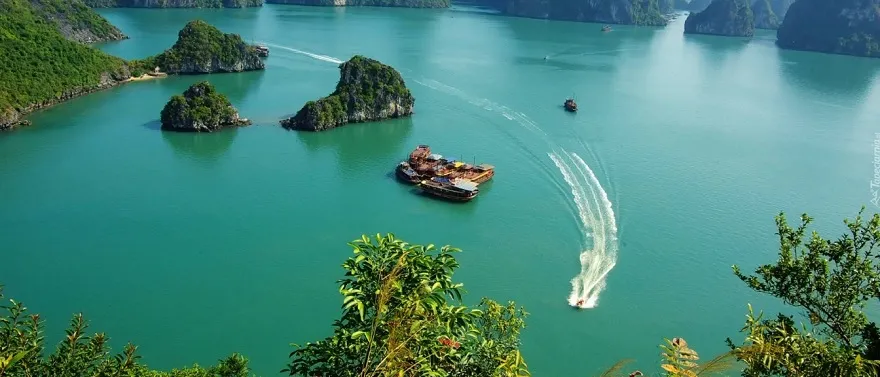
Ha Long Bay
2. Lan Ha Bay
Located south of Ha Long Bay within the administrative boundary of Hai Phong city, Lan Ha Bay is often likened to a “forgotten paradise” defined by its serene and pristine beauty. Renowned for its clearer waters and fewer crowds compared to the central bay, Lan Ha boasts hundreds of untouched, tiny sandy beaches tucked at the base of limestone karsts, along with quiet lagoons and captivating caves like the Dark and Bright Cave (Hang Sang Toi). It is a superb location for kayaking, swimming, and nature exploration. This bay is frequently included in itineraries exploring Cat Ba Island and Cat Ba National Park, making it perfect for travelers seeking tranquility, pure natural beauty, and a less commercialized Ha Long experience.
Read more: Lan Ha Bay Travel: The Ultimate A-to-Z Guide for a Perfect Trip
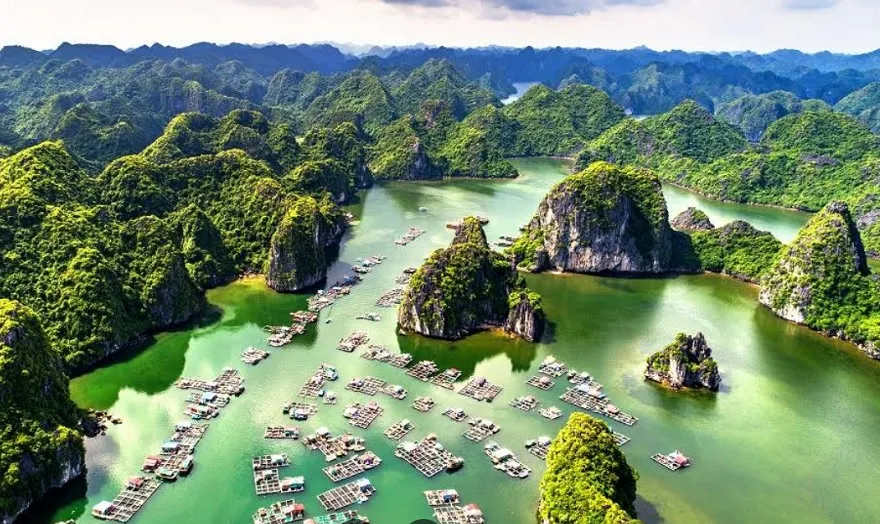
Lan Ha Bay
3. Bai Tu Long Bay
Located to the northeast of Ha Long Bay, this region remains one of the most pristine and untouched areas, largely shielded from the impacts of mass tourism. Bai Tu Long Bay offers a vast, tranquil expanse featuring mysterious limestone karsts, serene floating fishing villages like Vung Vieng, and magnificent caverns such as Thien Canh Son. It is the perfect choice for seasoned travelers to Ha Long who crave exploration, seek a truly secluded sanctuary, and wish to fully immerse themselves in nature to experience absolute serenity.
read more: Bai Tu Long Bay – An Unmissable Travel Destination
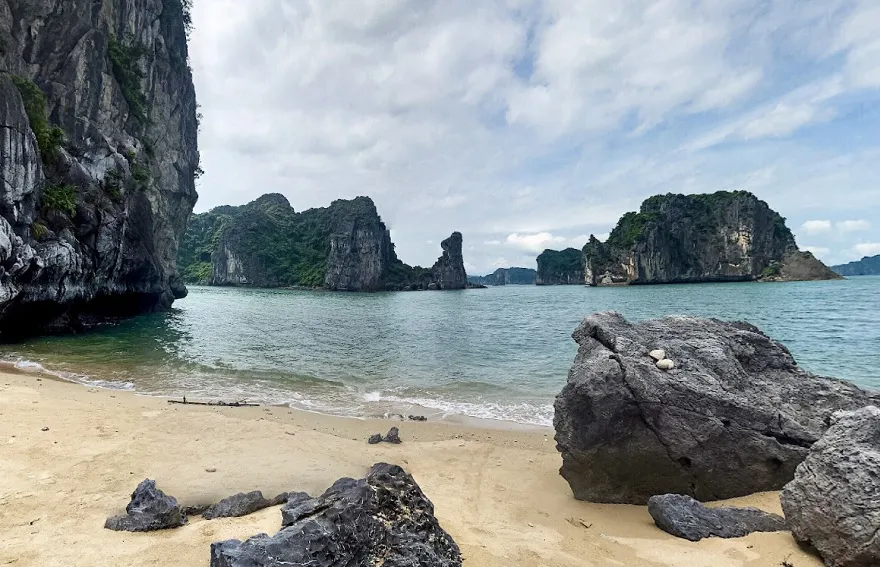
Bai Tu Long Bay
Your decision to explore one or multiple bays will shape your cruise itinerary, the type of vessel, and the overall experiences you encounter. Carefully consider your personal preferences to curate the perfect choice for your 2025 Ha Long Bay adventure.
Beyond its status as a geological masterpiece, the Ha Long Bay – Cat Ba Archipelago World Heritage site serves as a vital center of biodiversity. This bay area hosts at least 7 to 10 distinct tropical marine-island ecosystems, including mangroves, coral reefs, and particularly the unique “tung” and “ang” systems—secluded saltwater lagoons nestled within limestone mountains—alongside complex cave ecosystems. This ecological diversity forms the foundation for remarkable species richness, with approximately 3,000 to nearly 5,000 plant and animal species recorded. Among these, roughly 198 species appear on the IUCN Red List, with about 51 being endemic—thriving exclusively in this region. Botanical highlights include 17 endemic species such as the Ha Long Palm (Livistona halongensis), Ha Long Cycad (Cycas tropophylla), and various indigenous bamboo species. The fauna is equally distinctive, featuring the critically endangered Cat Ba Langur (white-headed langur), along with endemic geckos, Ha Long cave crabs, cave fish, and snapping shrimp. The bay also serves as a critical fishing ground, housing hundreds of fish species, over 50 types of crabs, and approximately 300 species of mollusks.
These diverse accolades, ranging from expert scientific recognition to public acclaim and prestigious tourism industry awards, paint a comprehensive portrait of the value and allure of Ha Long Bay. It is a heritage site that is not only visually stunning but also scientifically profound and globally captivating, inviting travelers to not just admire it, but to truly feel and explore its depths.
II. The Resonant History and Mystical Culture of Ha Long Bay
Ha Long Bay is more than just a masterpiece of nature; it is a living chronicle where every cliff and cavern whispers tales of antiquity. From the dawn of prehistoric cultures and the golden pages of legendary naval battles to its role as a bustling international trading port and a source of vibrant folklore, Ha Long Bay has left an indelible mark on the historical and cultural tapestry of the Vietnamese nation.
A. The Cradle of Vietnamese Prehistoric Culture: Footprints of the Ancient Vietnamese
From a very early stage, archaeologists identified the Ha Long Bay area as one of the most important settlements for ancient Vietnamese people. Beginning with the accidental discovery of a stone axe in 1937, a series of subsequent investigations and excavations have continuously revealed a wealth of evidence regarding the presence and development of prehistoric cultures, spanning from approximately 18,000 to 3,500 years ago.
1. Soi Nhu Culture (18,000 – 7,000 BC)
As the oldest known culture in the region, the Soi Nhu people primarily inhabited limestone caves along the coast and on the islands of Ha Long Bay, Bai Tu Long Bay, and Cat Ba. Archaeological findings consist mainly of layers of Melania and Cyclophorus shells, indicating a diet highly adapted to the coastal cave environment. Stone tools from this period remain rudimentary, mostly fashioned by flaking local limestone. The presence of Bac Son-style ground-edge axes also reveals early instances of cultural exchange.
2. Cai Beo Culture (7,000 – 5,000 BC)
Developing primarily on Cat Ba Island and certain areas of Ha Long Bay, the Cai Beo culture marks a significant transitional phase. Archaeological artifacts include a more diverse range of stone tools (featuring both flaking and rudimentary grinding techniques), various types of pottery (porous ceramics and cord-marked pottery), and marine animal remains, suggesting a stronger shift toward exploiting marine resources alongside hunting and gathering.
3. Ha Long Culture (5,000 – 3,500 BC)
With nearly 50 discovered sites, the Ha Long culture reflects a more advanced level of stone tool craftsmanship and sophisticated pottery (utilizing potter’s wheels and diverse patterns). The lives of the Ha Long people were intimately linked to the sea, and the evolution of this culture was significantly influenced by fluctuations in sea levels at the time, demonstrating humanity’s dynamic adaptability to the environment. The Ha Long culture did not merely receive influences but also exerted its own impact on inland cultural regions, cementing its position as a vital maritime cultural hub.
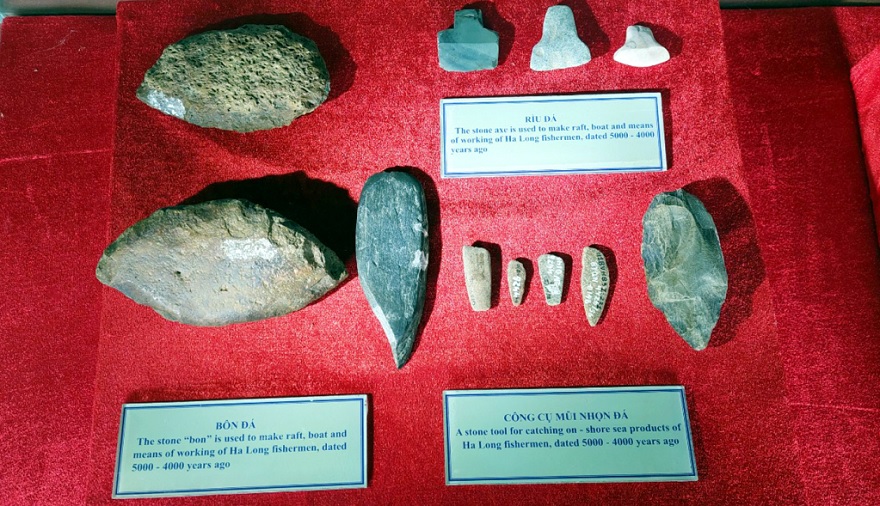
Ancient Vietnamese tools discovered in the caves of Ha Long Bay are currently preserved and exhibited at the Quang Ninh Museum.
The succession of these three cultures not only proves continuous human habitation but also reveals a process of sophisticated cultural adaptation and development, laying the foundation for future maritime island communities.
B. Strategic Military Fortress and Illustrious Historical Naval Battles
With its formidable and discreet terrain—defined by countless limestone islands, intricate waterways, and unique tidal patterns—Ha Long Bay and the Bach Dang estuary area (located approximately 40km from Ha Long Bay’s Cua Luc) served as a “natural fortress” and the site of decisive naval battles in the nation’s history of defending its sovereignty. The Bach Dang River, the vital waterway connecting the East Sea to the ancient imperial capital of Thang Long, was the stage for three great victories:
- 938 AD: King Ngo Quyen ingeniously utilized the terrain and tidal patterns, ordering sharpened wooden stakes to be driven into the riverbed, shattering the invading Southern Han fleet, ending over a millennium of Northern domination, and ushering in an era of independence and autonomy for Dai Viet.
- 981 AD: King Le Hoan once again leveraged the local terrain to defeat the Song dynasty forces, firmly consolidating the nation’s nascent independence.
- 1288 AD: General Hung Dao Vuong Tran Quoc Tuan, with masterful strategy, replicated the wooden stake battlefield to completely sink the formidable Mongol-Yuan fleet, crushing the invasion ambitions of one of the world’s most powerful empires at the time and firmly securing Dai Viet’s sovereignty. Legend has it that Dau Go Cave in Ha Long Bay was where the commander prepared and hid these historic ironwood stakes.
The Bach Dang victories are not only shining milestones in Vietnamese military history but also confirm the strategic role of Ha Long Bay as a natural shield, a symbol of patriotism, and the brilliant military artistry of our ancestors.
C. Van Don Trading Port: A Bustling Gateway for International Commerce (12th – 18th Centuries)
Beyond its military significance, Ha Long Bay has long served as a vital hub for maritime commerce. In 1149, during the reign of King Ly Anh Tong, the Van Don Trading Port was established within the bay, rapidly ascending to become the largest and most bustling international maritime gateway of Dai Viet at the time. Over seven centuries of development—reaching its zenith during the Tran Dynasty—Van Don became a destination for merchant vessels from across Asia, including Japan, China, and India, as well as European nations such as the Netherlands.
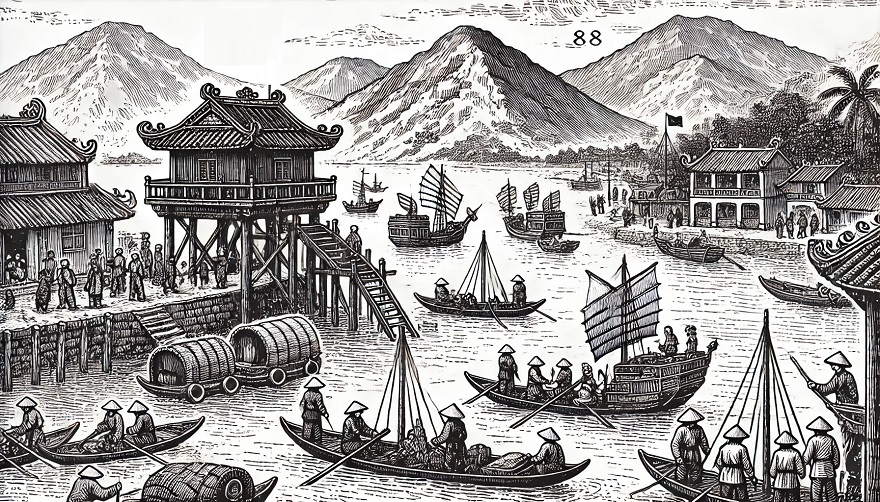
Van Don was once a thriving international trading port
With its strategic location and a system of islands providing naturally sheltered anchorages, Van Don acted as a critical gateway for trade and a bustling transshipment point, connecting Dai Viet to regional and international maritime trade networks. A diverse array of goods, including spices, ceramics, fine silks, and exotic forest products, were traded here, fueling economic prosperity and extensive cultural exchange. Though the port declined in the 19th century due to shifting policies and the rise of other coastal hubs, the legacy of Van Don’s golden era remains, standing as a testament to the dynamic, outward-looking spirit of Vietnamese economic history.
D. Ha Long Bay in the Modern Era: Unforgettable Historical Milestones
Entering the 20th century, Ha Long Bay continued to serve as a witness to and a stage for many of the nation’s most pivotal historical events:
- May 1, 1930: The red flag with the hammer and sickle was hoisted for the first time atop Poem Mountain (Nui Bai Tho), a historic peak inscribed with royal poetry from centuries past. This event marked a major turning point in the revolutionary struggle of the mining working class in Quang Ninh.
- March 24, 1946: On the waters of Ha Long Bay, President Ho Chi Minh held a critical diplomatic meeting with French High Commissioner d’Argenlieu aboard the cruiser Émile Bertin to discuss the signing of a formal peace treaty—a significant milestone in the early efforts to defend the nation’s newfound independence.
- The 1960s and the Vietnam War: Ha Long Bay became one of the departure points for the legendary “ships without numbers,” which secretly transported weapons and supplies to the southern battlefield, contributing significantly to the success of the Ho Chi Minh Trail at sea.
- August 5, 1964: In the skies and waters above this bay, our military and people achieved their first major victory, shooting down a U.S. aircraft and capturing the first American pilot (Alvaret) during the U.S. Air Force’s destructive war against Northern Vietnam.
These events, along with the Duc Tien Cave (where the insurgent forces of De Hong and Cai Thai once forged their weapons), have further solidified Ha Long Bay’s reputation as a landmark synonymous with heroic history, indomitable will, and the Vietnamese people’s enduring aspiration for peace in the modern age.
III. The Perfect Time for Your Ha Long Bay Adventure
Ha Long Bay features the characteristic climate of Northern Vietnam, with four distinct seasons—Spring, Summer, Autumn, and Winter—each bestowing its own unique beauty and offering a truly different experience:
- April to June (Spring transition to Summer): This is widely considered the most ideal time to visit Ha Long. The weather is pleasantly warm (average temperature 20°C – 22°C) with brilliant sunshine, clear blue skies, and minimal rainfall—perfect conditions for cruising the bay, swimming, and kayaking. Note that April can be peak season for international travelers, so booking your services in advance is highly recommended.
- June to August (Summer): This is the peak domestic travel season, particularly for families during the school holidays. Expect higher foot traffic and potentially increased service costs. Summer weather is quite hot (reaching up to 37°C). Please be aware that July and August are times when Ha Long Bay may be susceptible to tropical depressions and storms, which can occasionally disrupt itineraries.
- September to November (Autumn – Specifically October and November): Autumn brings refreshing, comfortable temperatures (24°C – 28°C) and decreasing rainfall, with skies typically clear and bathed in soft sunlight. This is considered one of the absolute best times to experience Ha Long Bay, and it is also a peak season for international guests seeking a more serene atmosphere.
- December to March (Winter and Early Spring): The weather is cool to cold (averaging 17°C – 22°C, though it can drop below 10°C) with occasional fog and light drizzle, which may limit visibility. However, this remains a peak season for international tourists, offering a unique opportunity for those who wish to experience a tranquil, mystical Ha Long away from the crowds.
Understanding these weather patterns and seasonal trends will help you craft the perfect itinerary. Remember to check the weather forecast before your departure, especially if you have scheduled a cruise tour.
IV. The Ha Long Bay Cruise Experience: A Journey Through the Wonder
A cruise is the quintessential and most popular way to fully appreciate the magnificence of Ha Long Bay. It allows guests to navigate through thousands of spectacular limestone karsts, discover mysterious caves, and immerse themselves in the vast, open natural landscape. Whether you have limited time or are looking for an extended getaway, Ha Long Bay offers diverse itineraries—from dynamic day trips to luxurious overnight stays at the heart of this World Heritage site. Currently, there are 8 designated routes in Ha Long Bay available for day cruises and overnight voyages.
| Route | Price | Sightseeing Highlights |
|---|---|---|
| VHL1 | 310,000 VND/pax | Thien Cung Cave – Dau Go Cave – Stone Dog Islet – Ba Hang Area – Incense Burner Islet – Fighting Cocks Islet |
| VHL2 | 310,000 VND/pax | Soi Sim Beach – Ti Top Island – Sung Sot Cave – Tung Sau Area – Me Cung Cave – Bo Nau Cave – Luon Cave – Trong Cave – Trinh Nu Cave – Fairy Lake |
| VHL3 | 260,000 VND/pax | Cua Van Floating Cultural Center – Tien Ong Cave – Ba Ham Lake – Ba Men Temple – Ang Du – Bamboo Forest |
| VHL4 | 260,000 VND/pax | Co Cave (Thien Canh Son) – Thay Cave – Cap La Cave – Vung Vieng – Tung Ang Ecological Zone – Cong Do Island – Hon Xep Park |
| VHL5 | 310,000 VND/pax | Thien Cung Cave – Dau Go Cave – Stone Dog Islet – Ba Hang – Incense Burner Islet – Fighting Cocks Islet – Gia Luan Pier (Cat Ba – Hai Phong) |
| VHL6 | 150,000 VND/pax/trip | Elephant Foot Islet – Ba Cua Area – Tung Lam Island – Cap Bai Islet (final point connecting to Gia Luan, Lan Ha Bay – Hai Phong) |
| VHL7 | 600,000 VND/pax | Ha Long Bay exploration routes VHL1-2-3-4 (exclusively for discovery cruises) |
| VHL8 | 70,000 VND/pax/trip | Tuan Chau International Cruise Port – Ha Long International Cruise Port – Nam Cau Trang Port |
A. Day Cruises: Swift and Convenient Bay Sightseeing
Ideal for travelers with limited time or those looking to combine a bay excursion with other land-based activities, day cruises offer a concise yet profoundly impressive overview of this World Heritage site.
1. Halong Bay Day Cruise Tours
Read more: Ha Long Bay Day Cruise (4 – 6 – 8 hour tours)
Price List for Private Boat Charters for Ha Long Bay Day Tours
Read more: 2025 Ha Long Bay Boat Charter and Ticket Price List
2. Overnight Cruises: Fully Immerse Yourself in the Bay’s Beauty
This is the ultimate way to fully immerse yourself in the ethereal landscape of this World Heritage site. It allows travelers to admire romantic sunsets descending over limestone karsts, awaken to pristine dawns amidst the open sea, and experience the mystical tranquility of the bay at night. Overnight tours typically last 2 days/1 night or 3 days/2 nights, featuring comprehensive itineraries and a diverse array of activities.
| Category | Key Features | Cruise Examples | Estimated Price (2D1N/person) |
|---|---|---|---|
| 3-Star (Budget) | – Traditional wooden or steel boats- Standard cabins with private bathrooms- Essential amenities | Cozy Bay Cruise, Dragon Gold Ha Long, Halong Scorpion Cruise | ~ 1,900,000 VND |
| 4-Star (Mid-range) | – Spacious rooms with upgraded amenities- Balconies available, small spa- Excellent service, great value | Silver Sea Cruise, Sapphire Ha Long, Bhaya Cruises, Glory Legend Cruise | ~ 1,950,000 – 2,250,000 VND |
| 5-Star (Luxury) | – Modern steel ships with sophisticated design- Cabins with balconies, fine-dining restaurants, bars, sundecks, spas, and potential swimming pools | Ambassador, Paradise Elegance/Grand/Peak, Scarlet Pearl, Stellar of the Seas, Indochine, President Cruise | ~ 2,250,000 – 5,000,000+ VND |
| 6-Star (Ultra-Luxury) | – Premium interiors, personalized service- Elite spaces with exquisite design- Focused on opulent experiences | Essence Grand Cruise, Elite of the Seas | ~ 4,900,000 – 6,350,000+ VND |
| Boutique / Thematic | – Cultural-inspired designs- Private spaces featuring art and exhibitions- Highly personalized, unique experiences | Heritage Binh Chuan Cat Ba | Depends on itinerary & season |
Read more: Ha Long Bay Cruises: 2 Days 1 Night, 3 Days 2 Nights Tours
Itinerary: Includes on-board meals (usually 1 breakfast, 2 lunches, and 1 dinner for 2D1N tours), visits to famous caves (Sung Sot, Luon), stunning islands (Titop), and floating villages (Cua Van, Vung Vieng, depending on whether the route covers Ha Long Bay, Bai Tu Long, or Lan Ha Bay). 3D2N tours offer additional time to explore more remote, less crowded areas or participate in specialized activities.
Activities: Kayaking, swimming, night squid fishing, cooking demonstrations, and morning Tai Chi sessions on the sundeck.
3. Private Cruises
The Ha Long Bay tourism market is experiencing a robust evolution, with a growing sophistication in personalized and ultra-luxury cruise options. This trend has emerged to meet the rising demands of discerning travelers who seek absolute privacy, exclusive experiences tailored to individual preferences, and world-class services that transcend even standard 5-star hospitality benchmarks.
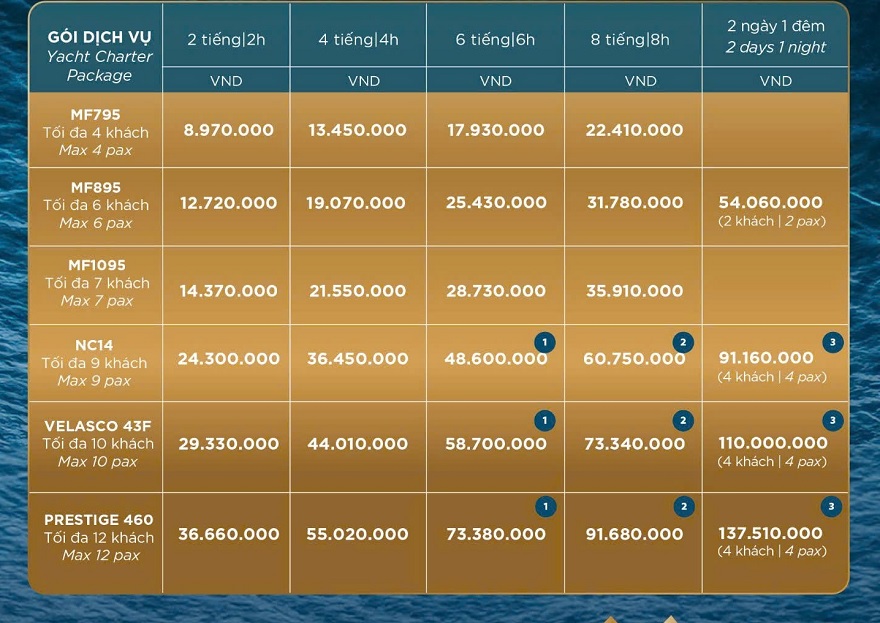
Private Yacht Charter Price List in Ha Long
One of the premier choices for ultimate privacy and flexibility is our private yacht charter service. This is an ideal solution for families seeking a cozy, safe environment for quality time, groups of close friends craving joyful and undisturbed freedom, or couples in pursuit of a romantic, secluded space to celebrate special milestones. Our private charter services offer a diverse fleet—ranging from intimate vessels for smaller groups to larger yachts equipped with multiple cabins and premium amenities. With flexible scheduling for both day trips and multi-day voyages, these cruises typically depart from Tuan Chau International Marina or other private harbors. The hallmark of this experience is that guests enjoy full autonomy over their itinerary: from selecting desired destinations among the bay’s countless wonders and setting the pace of exploration to curating bespoke entertainment and personalized culinary menus. This level of customization allows you to discover Ha Long Bay your own way, ensuring an experience that is deeply personal and unencumbered by the constraints of fixed schedules.
See more: Private Yacht Charter Rates for Families in Ha Long
V. Diverse Exploration and Unique Experiences in Ha Long Bay
Ha Long Bay is not only mesmerizing for its majestic landscape when viewed from afar, but also invites travelers to immerse themselves in every corner of this heritage site through an array of rich, experiential activities. From gliding silently across the water by kayak and exploring mysterious grottoes to swimming in the refreshing waters of pristine beaches, or marveling at the wonders from above via seaplane and trying your hand at night squid fishing like a local—every activity offers a unique perspective and a distinct connection to Ha Long.
1. Kayaking and Bamboo Boat Rowing: An Intimate Encounter with Nature
Kayaking or riding a traditional bamboo boat is arguably one of the most magnificent and intimate ways to fully appreciate the beauty of Ha Long Bay. This experience allows you the freedom to glide gently over turquoise waters, weaving through towering limestone karsts to deeply feel the silence and grandeur of this awe-inspiring natural masterpiece. It is an opportunity to get up close to million-year-old cliffs, discover hidden lagoons, or explore low-ceiling sea caves inaccessible to larger cruise ships, revealing hidden perspectives and the secret charms of this World Heritage site.
Ha Long Bay and its surrounding areas boast numerous outstanding locations for kayaking and bamboo boat rowing, catering to a wide variety of guest preferences. Luon Cave is a classic destination often included in Route 2 itineraries, where you can paddle through a natural grotto entrance to emerge into a circular, calm, and completely secluded lagoon hidden within the mountains. The Ba Hang area, located near Thien Cung Cave, is also a popular choice often integrated into Route 1, perfect for those wishing to enjoy this activity within a shorter timeframe.
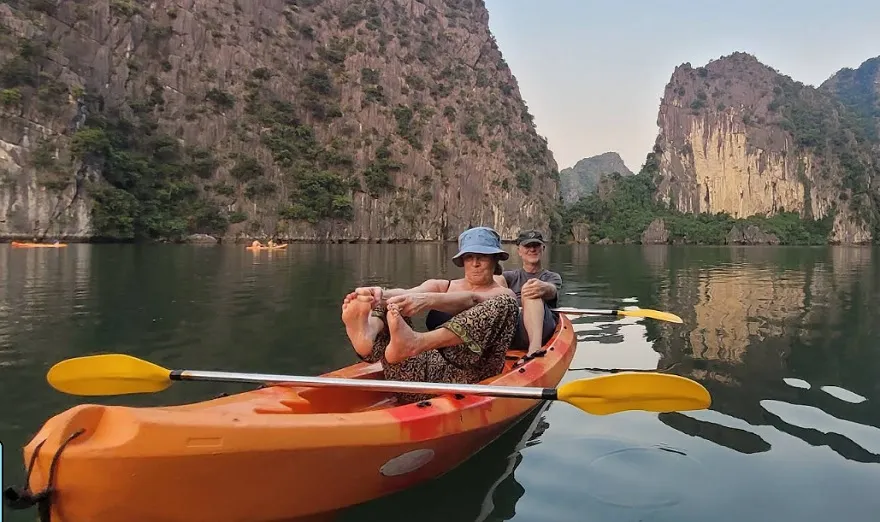
Kayaking in Ha Long Bay
For those seeking a more serene atmosphere with calm, sheltered waters and countless pristine sandy beaches, Lan Ha Bay is a true paradise. Ideal kayaking spots here include the Dark & Bright Cave area with its unique cave-passage experiences, or the enchanting beauty of the Ba Trai Dao (Three Peaches) area. Further towards Bai Tu Long Bay, visitors can combine rowing sampans with exploring the distinctive cultural life of famous floating fishing villages such as Cua Van or Vung Vieng. Additionally, other areas such as Lom Bo Island, Cong Do, Hang Co, Cong Dam (in Bai Tu Long Bay), or Hon Ban Chan offer fascinating paddling routes, leading you into the lesser-known corners of the bay.
Regarding costs, kayaking services are generally included in the cruise tour price, applicable to both day trips and overnight cruises. If you wish to rent one privately, prices typically start from 50,000 VND per person, or are charged hourly at approximately 50,000 to 100,000 VND per kayak, depending on the specific location. For sampan boats, which are usually rowed by local residents, the cost is approximately 50,000 VND per person. To ensure a safe and enjoyable journey, always remember to wear a life jacket throughout the activity, strictly follow the instructions of the operator or guide, and it is recommended to prepare a waterproof bag for your personal electronic devices.
2. Unveiling Subterranean Secrets: Exploring the Magnificent Cave System
An exploration of Ha Long Bay would not be complete without the opportunity to unveil the secrets hidden deep within the heart of its majestic limestone islands. The cave system here is incredibly rich and diverse; each cave not only possesses a unique geological beauty but is also tied to its own legends and tales, inviting visitors into a whimsical and mesmerizing world.
Among the most renowned caves, Sung Sot (Surprise) Cave, located on Bo Hon Island and typically a highlight of Route 2 itineraries, truly earns its name. To step into this magnificent space, visitors must climb approximately 100 stone steps along the mountainside, but the reward is one of the largest and most beautiful caves in Ha Long Bay. The cave astounds visitors with its vast interior, divided into several chambers, featuring countless spectacular stalactites and stalagmites of various shapes formed over millions of years of geological evolution. Closer to the cruise port, and usually included in Route 1 and Route 5 itineraries, are the pair of Thien Cung (Heavenly Palace) Cave and Dau Go (Wooden Stakes) Cave. Thien Cung Cave is famous for its ethereal beauty, likened to a majestic celestial palace, where uniquely shaped stalactites are highlighted by artistic lighting to enhance their shimmering, magical allure. Nearby, Dau Go Cave carries an ancient beauty with its expansive space and unique architecture; the cave is also steeped in history, associated with the legend of General Tran Hung Dao, who is said to have hidden ironwood stakes here in preparation for the glorious Battle of Bach Dang.
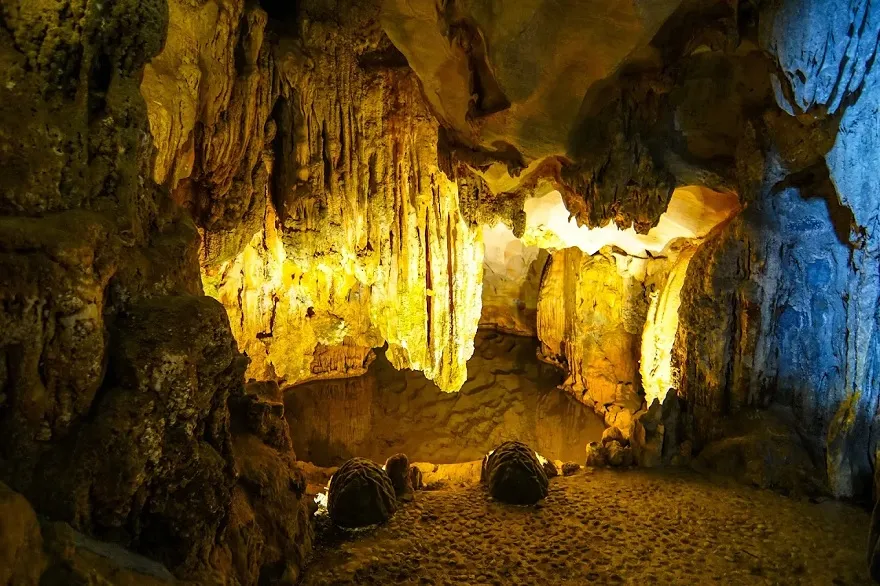
Sung Sot Cave
Beyond the icons familiar to many travelers, Ha Long Bay conceals lesser-known caves of exceptional value, patiently waiting to be explored. Tien Ong Cave, an intriguing highlight often included in Route 3, is not only captivating for its breathtaking stalactites but also serves as a significant archaeological site where scientists have uncovered traces of prehistoric inhabitants dating back tens of thousands of years. Venturing further toward Bai Tu Long Bay as part of Route 4, Co Cave—also known as Thien Canh Son—offers a distinct experience. While more modest in scale than the central caves, Thien Canh Son enchants visitors with its pristine beauty, tranquil ambiance, and the profound sense of being fully immersed in untouched, serene nature.
Furthermore, the list of remarkable caves in Ha Long Bay continues with numerous other fascinating sites, each possessing its own unique allure that enriches the visitor’s journey. Notable mentions include Luon Cave, a unique water cave where travelers can traverse by kayak or sampan to discover a hidden, picturesque lagoon inside. Me Cung Cave (Maze Cave) challenges explorers with its intricate structure, resembling a natural labyrinth. Bo Nau Cave remains stoic with its distinctive rock formations, while the cluster of Trong Cave and Trinh Nu Cave (Drum and Virgin Caves) is steeped in tragic yet romantic folklore. Additionally, Ho Dong Tien (Fairy Lake Cave) features tranquil, emerald-hued pools hidden within the heart of the mountains—many of these are integral components of popular itineraries like Route 2. Visiting these caves is almost always an essential and highly anticipated part of any Ha Long Bay cruise program. Each cave is not merely a geological wonder meticulously crafted by Mother Nature over millions of years, but is also imbued with local legends and folklore, adding layers of cultural depth and fascination to every excursion into the heart of this World Heritage site.
3. Experience Ha Long Bay from Above via Seaplane
4. Night Squid Fishing: An Authentic Local Experience Under the Starlit Sky
As the sun dips below the horizon and the mystical veil of night descends upon Halong Bay, an authentic and delightful local experience awaits: squid fishing. Under a canopy of sparkling stars, this activity not only offers a relaxing form of entertainment but also serves as a wonderful opportunity to gain a deeper insight into the daily lives of local fishermen while fully embracing the profound tranquility and peace of the bay at night.
Night squid fishing typically begins around 17:30 or 18:00 and may last until approximately 22:30 or even midnight, depending on the tour itinerary. The ideal locations chosen by cruise operators are areas with calm, sheltered waters, often near landmarks such as the vicinity of Sung Sot Cave, Titop Island, or near Cua Van floating village, where squid populations are abundant. Upon joining, guests are provided with all the necessary equipment by the experienced crew, including specialized fishing rods (usually hand lines or small reels) and artificial lures equipped with flashing lights to attract the squid in the deep water. With attentive guidance on techniques and tips from seasoned seafarers, you will quickly get the hang of it and experience the thrill of your very first catch.
Perhaps the most rewarding and enticing part of this experience is the prize itself. The fresh squid you catch can be prepared right on board—often grilled over glowing charcoal for a fragrant aroma or boiled briefly to retain its natural, succulent sweetness. Enjoying the fruits of your labor amidst the vast night sea, listening to the gentle lapping of waves, and feeling the cool breeze is guaranteed to be an unforgettable memory.
There are numerous tour options available for travelers eager to experience nighttime squid fishing. All-inclusive packages typically range from approximately 500,000 to 550,000 VND per person, which often includes a sumptuous dinner served on board before or during the excursion. If you prefer to focus solely on the fishing experience without a dinner service, the cost is more accessible, at around 350,000 VND per person. For groups of friends or families seeking more privacy and flexibility, chartering a private boat is a viable option, with estimated costs ranging from 600,000 to 1,000,000 VND per boat, depending on the vessel’s size and amenities. To ensure a successful and bountiful catch, local experts suggest that the most ideal times are during dark, moonless nights (typically the 30th and 1st of the lunar month). This is especially true from the 1st to the 3rd lunar months and from the 6th to the 9th lunar months each year, when squid enter their spawning season and frequent the shallower waters near the shore.
see more: Ha Long Nighttime Squid Fishing Tour: Join-in or Private Charter
5. Scuba Diving and Coral Reef Exploration (Primarily in Lan Ha Bay)
For those with a soul destined to uncover the mysterious beauty of the ocean, Lan Ha Bay—a vital and stunning component of the Ha Long Bay-Cat Ba Archipelago World Heritage site—stands out as a premier destination. Boasting clearer waters and more favorable natural conditions than many neighboring areas, alongside a wealth of vibrant coral reefs and diverse marine ecosystems, Lan Ha Bay reveals a captivating underwater world, beckoning travelers to dive deep and explore its wonders.
The scuba diving experience here offers a rare opportunity to behold vast, colorful coral carpets undulating gracefully along the seabed, serving as a sanctuary for countless marine species. You can easily encounter schools of sergeant-major fish with their signature striped patterns, playful clownfish (anemonefish) tucked away within the swaying tentacles of soft anemones, and a multitude of other reef fish and sea creatures, all coming together to form a vivid and mesmerizing underwater tapestry. Services include scuba diving for both beginners (typically featuring short training courses or “discovery dives” with an instructor) and experienced divers, as well as snorkeling, which is simple and accessible for all ages, including children. To ensure maximum safety and service quality—particularly for deep-sea diving—travelers are encouraged to prioritize operators certified by internationally recognized organizations such as PADI (Professional Association of Diving Instructors).
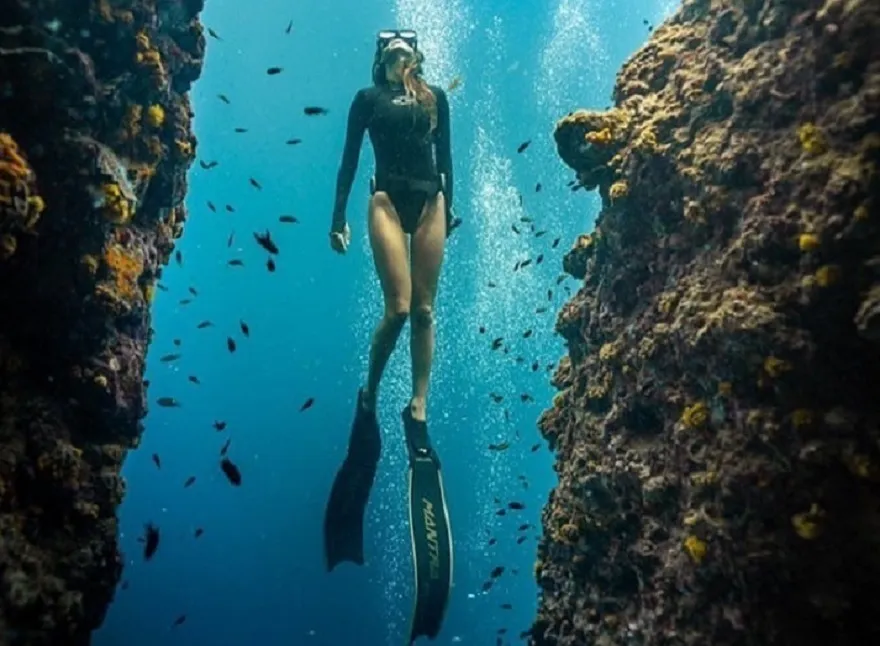
Scuba Diving and Coral Reef Exploration
Regarding costs, a coral reef snorkeling and ocean exploration tour in Lan Ha Bay typically starts from approximately 990,000 VND per person. However, this price may vary based on the service provider, the duration of the excursion, the type of diving (snorkeling vs. scuba diving), the number of dives, the equipment provided, and additional services such as lunch or transfers. To achieve the best diving experience with clear underwater visibility and favorable sea conditions, travelers should consider planning their trip during the calmer seasons. Generally, spring (from March to May) and autumn (from September to November) are considered the most ideal times. During these periods, the sea is typically calmer with fewer large waves, and the water is clearer, creating the perfect environment to fully explore the magical world hidden beneath the turquoise waters of Lan Ha Bay.
6. Immerse Yourself in Fishing Village Culture and Pearl Farm Tours
An inseparable aspect that contributes to the unique allure of exploring Ha Long Bay is the opportunity to immerse yourself in the characteristic cultural life of the river-dwelling communities. Visiting traditional floating fishing villages and learning about the art of pearl cultivation provides not only stunning photo opportunities but also profound insights into a unique lifestyle preserved through generations, as well as the sophisticated traditional craftsmanship that defines the heritage of the bay.
Among the most renowned floating villages, Cua Van Fishing Village—typically featured in Route 3 excursions—holds a special place of historical and cultural significance. Once one of the largest and most bustling floating communities in Ha Long Bay, Cua Van has since been repurposed into the Cua Van Floating Cultural Center. This site offers an engaging, immersive look into the material life, traditions, and diverse customs of the ancient Ha Long fishing community. Visitors typically explore the area by bamboo boat or kayak, winding through the floating homes to discover traditional fishing tools, examine raft house models, and listen to captivating stories of the sea and a life shaped by the rhythm of the waves.
Another equally compelling destination, known for its serene and pristine beauty, is Vung Vieng Fishing Village. Located in the heart of Bai Tu Long Bay and frequently included in Route 4 cruise itineraries, Vung Vieng captivates travelers with its tranquil atmosphere and stunning natural scenery. Here, guests often navigate through the humble floating houses on bamboo boats rowed by local residents. It is a unique opportunity to gain deeper insight into the craft of artisanal pearl cultivation—a profession demanding immense patience and precision—and to connect with the slow, harmonious, and deeply nature-bound lifestyle of the local community.
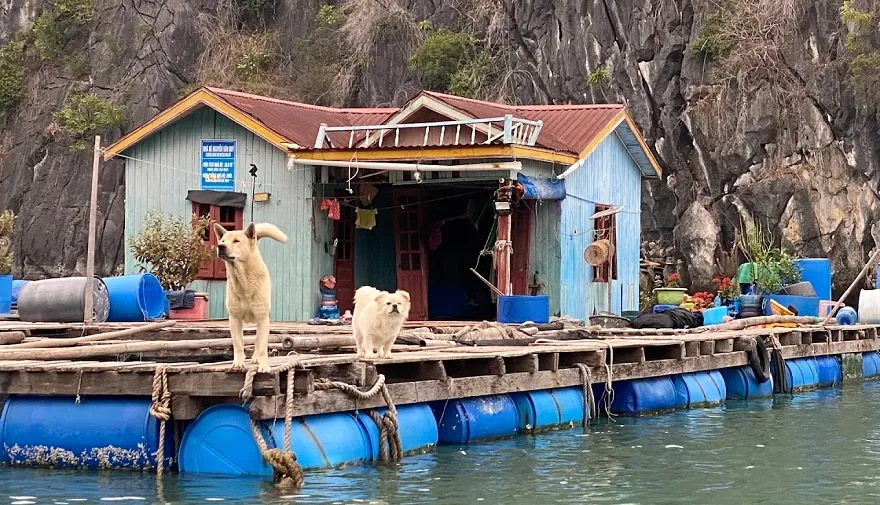
Vung Vieng Fishing Village Area
The Ba Hang area, situated near Thien Cung Cave and often part of Route 1 tours, offers a smaller-scale but equally delightful stop. Visitors usually visit Ba Hang to experience kayaking or bamboo boat rowing through small caves, catching a glimpse of the floating homes and the daily life of this intimate maritime community. Beyond visiting fishing villages, many cruise lines now incorporate trips to pearl farms into their schedules. At these facilities, guests can witness the meticulous, complex process of crafting precious pearls firsthand—from selecting the mother oyster and implanting the nucleus to the careful nurturing beneath the bay’s clear waters, and finally, the harvesting and artistry. After the tour, guests have the opportunity to admire and purchase exquisite, high-quality pearl jewelry as meaningful souvenirs.
It is important to note that, due to government relocation and planning policies aimed at improving the welfare of residents while better preserving the landscape of the World Heritage site, many traditional fishing villages in Ha Long Bay have undergone significant changes in recent years. Some villages no longer serve as permanent residences for fishermen but have been transformed into cultural tourism hubs that recreate and preserve traditional values. Nevertheless, visiting these locations remains a deeply rewarding experience. They not only open a window into the rich intangible cultural heritage of Ha Long Bay but also highlight the admirable adaptability and resilient optimism of a people who have lived in harmony with the sea for generations.
7. Musical Tourism and Cultural Events: A Fresh Breeze for the Heritage
One of the most prominent trends gaining strong momentum in Ha Long in recent years is the rise of unique events and experiences, where the majestic natural beauty of the world heritage site blends elegantly with the allure of music and art. This fresh breeze does not merely enrich traditional tourism activities; it offers a profound, modern, and multidimensional way to experience Ha Long Bay, attracting a large number of travelers seeking moments of transcendence amidst the wonders of the world.
A popular and beloved way for travelers to enjoy music is through live performances hosted directly aboard luxury cruises, especially within the romantic ambiance of the evening. Many vessels—ranging from those dedicated to dinner cruises and sightseeing, such as Sea Octopus or Symphony Cruise, which feature the gentle, melodic sounds of light music and instrumentals—to premium overnight cruise lines like Ambassador Cruise, frequently showcase international bands performing vibrant and diverse genres. These melodies, echoing across the vast expanse of the sea and under the shimmering lights, have become an indispensable part of the experience, elevating the elegance and memorability of every dinner or moment of relaxation in the heart of this heritage bay.
Moving beyond the intimate stages on cruise ships, the trend of hosting larger-scale concerts and music events—featuring elaborately staged performances set against the breathtaking natural backdrop of Ha Long Bay—is steadily gaining momentum and widespread acclaim. The success of specialized artistic programs, such as the “Love in the Bay” series held on large cruise ships or the previously hosted “Sounds on the Pines” (Thanh âm trên Thông) program, serves as clear evidence of the potential and appeal of this genre. It offers an exceptionally unique way for audiences to enjoy world-class performances by famous artists while simultaneously experiencing the beauty of the heritage site in a completely fresh, emotive, and stirring way.
Furthermore, major signature cultural events of the city, such as the Ha Long Carnival, which is held annually on an increasingly grand scale, have also begun to focus more on integrating contemporary music, vibrant DJ sets, and modern street art performances alongside the celebration of traditional cultural values. This skillful fusion has created colorful cultural and artistic “feasts” that attract a diverse range of visitors of all ages and tastes, contributing to the promotion of Ha Long as a dynamic and continuously innovating destination.
The strong growth of “music tourism” and arts-and-culture events in Ha Long does more than just enrich tourism products and offer more experiential choices for travelers. More importantly, it helps position Ha Long as a compelling destination for events, attracting a new segment of travelers—the younger generation and art enthusiasts—who seek contemporary cultural experiences, unique, one-of-a-kind events held in the world’s most spectacular natural heritage setting. This is a highly promising direction that elevates the travel experience and reaffirms Ha Long Bay’s status not only as a natural wonder but also as a premier regional hub for culture, art, and entertainment.
8. Wellness Tourism: Finding Balance in Nature
Amidst the hustle and pressure of modern life, the need to retreat to nature to soothe the soul, relax the body, regenerate energy, and embrace holistic health is becoming increasingly essential. Keenly grasping this global trend, wellness tourism is gradually taking shape and developing in Ha Long Bay, promising to provide new, profound, and truly meaningful experiences for visitors arriving at this heritage region.
One of the most prominent and palpable expressions of this trend is the increasing focus of luxury cruises on integrating diverse, professional wellness services into their itineraries. Guests are no longer simply sightseeing and enjoying fine dining; they now have the opportunity to indulge in restorative spa treatments and therapies performed by skilled technicians amidst the seascape. Many vessels are also equipped with modern fitness centers featuring advanced equipment, allowing guests to maintain their workout routines while enjoying breathtaking panoramic views of the bay. In particular, starting an invigorating new day with wellness classes such as Tai Chi to harmonize the body’s energy, or sunrise Yoga sessions on the spacious sundeck, has become a favorite highlight for many. All of these activities, when practiced amidst the vast, tranquil space and the pure, fresh air of the bay, not only improve physical health but also bring profound relaxation and peace to the soul.
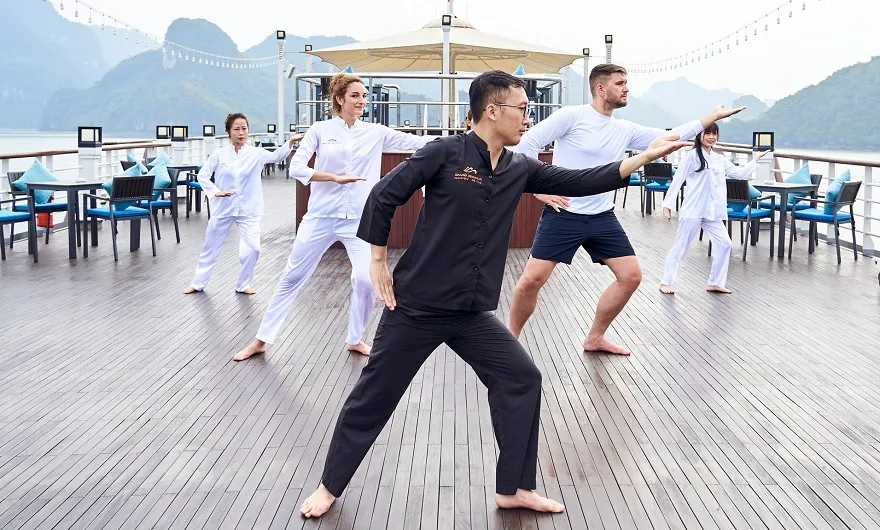
Practicing Tai Chi on a cruise ship
Beyond the onboard services, the pure beauty, tranquil atmosphere, and relative seclusion from the noise of mass tourism in areas such as Lan Ha Bay or Bai Tu Long Bay provide an ideal setting for immersive retreats focused on restoring mental and physical well-being. These magnificent natural landscapes, with their serene limestone karsts reflecting off jade-colored waters, serve as a miraculous healing therapy in themselves, allowing guests to easily disconnect from daily stresses and rediscover inner balance.
Although still in the early stages of development compared to other famous wellness destinations globally or even within the region, health and wellness tourism in Ha Long Bay is regarded by experts as a highly promising and potential segment. It not only meets the growing demand of health-conscious travelers but also delivers profound and distinctive experiences. This is the perfect fusion of marveling at a UNESCO-recognized natural wonder while investing in one’s own health and happiness—a journey that enriches not only knowledge and emotions but also physical and mental vitality.
Blessed by nature with a rich and diverse marine ecosystem, Ha Long Bay not only captivates visitors with its spectacular scenery but also serves as a true paradise for seafood aficionados. Exploring Ha Long without savoring its signature seafood would be a significant oversight, as each dish carries the essence and briny flavors of the open sea, promising unforgettable gastronomic experiences.
When mentioning Ha Long cuisine, one cannot overlook hand-pounded Ha Long squid cakes – a dish considered the “soul” and pride of the locals, a specialty that has been honored in the Vietnamese culinary record books. What makes these squid cakes famous is the use of fresh-caught cuttlefish, which is meticulously pounded by hand by artisans in stone mortars. This laborious process retains the perfect texture, signature crunch, and irresistible natural sweetness that no modern food processor can replicate. Once fried, the golden-brown squid cakes exude a tantalizing aroma and are best enjoyed hot. You can pair them with fragrant sticky rice, silky steamed rice rolls (bánh cuốn), or simply dip them in spicy chili sauce or creamy mayonnaise to fully appreciate their excellence. Furthermore, horseshoe crab (sam bien) is another unique specialty not to be missed when visiting Ha Long. With its peculiar appearance and distinctively sweet, firm meat, horseshoe crab is expertly prepared by talented chefs into a variety of delectable dishes, ranging from tangy stir-fried horseshoe crab and refreshing salads that awaken the palate, to rich, golden-fried roe, and charcoal-grilled meat that perfumes the entire air with its savory scent.
Another rare and exquisite seafood delicacy of the Quang Ninh region is the Ngan sea clam. While similar in appearance to a common clam, it is significantly larger; its meat is renowned for a distinct, rich sweetness, a perfectly balanced creaminess, and exceptionally high nutritional value. Ngan can be prepared into a variety of unforgettable dishes, such as smooth, nourishing Ngan porridge; steamed Ngan, which preserves its natural sweetness; and Ngan grilled with scallion oil for a fragrant indulgence. Furthermore, one cannot overlook Ngan wine—a unique, warming, and spicy beverage exclusive to Quang Ninh, widely considered to be highly beneficial for one’s health. Continuing the list of marine treasures is the milk oyster, a nutritious specialty favored for its freshness and delightful flavor. Ha Long milk oysters are most commonly enjoyed in two ways: grilled with fragrant scallion oil, where the creaminess of the oil blends with the sweetness of the oyster to melt in your mouth, or served raw with pungent mustard and a squeeze of fresh lime to fully savor the pristine, natural essence of the sea.
Equally alluring is the mantis shrimp (known locally as bề bề), prized for its firm, sweet, and savory meat, which serves as the essential ingredient for Ha Long’s famous mantis shrimp noodle soup. A steaming bowl of this soup—featuring a refined, sweet broth slow-simmered from the shells, succulent mantis shrimp, fresh greens, fried tofu, and signature spices—is certain to warm the heart of any traveler. Additionally, mantis shrimp stir-fried with salt or steamed with lemongrass and beer are excellent, casual treats that perfectly preserve the natural sweetness of the meat. Another small marine fish with a characteristic flavor unique to Ha Long Bay is the cá ba gai (also known as rabbitfish). This fish yields two types of meat, with the golden variety prized for being more flavorful and richer than the white meat. Local fishermen often prepare it by braising it thoroughly with galangal to release its aromatic qualities or cooking it with green bananas for a hearty, rustic, and deeply authentic coastal dish.
The world of snails in Ha Long is vast and invites culinary exploration. Razor clams, named for their long, finger-like shape, have firm, chewy, and crunchy meat that is at its peak during the rainy season (roughly from May to July). Popular preparations for razor clams include steaming with lemongrass and chili, stir-frying in a tangy tamarind sauce, sautéing with morning glory, or steaming with beer to retain their natural sweetness. Another “star” in the seafood repertoire is the geoduck (tu hài), a bivalve mollusk highly valued for its exceptional flavor profile. Geoduck meat is thick, pearly white, and possesses a delicate, refreshing sweetness often compared to abalone. It can be transformed into high-end culinary masterpieces, such as nourishing porridge, grilled with fragrant scallion oil, baked with creamy cheese, or steamed with lime, lemongrass, or in a light Thai style.
Finally, one cannot fail to mention dried squid—a thoughtful gift from the sea that visitors often purchase for friends and family. Premium Ha Long dried squid is famous for its ideal texture; the bodies are thick with a natural pinkish-white hue and maintain a deep, savory sweetness. A high-quality dried squid should still have a fine layer of white powder on the surface, and when grilled over glowing charcoal, it releases an irresistibly fragrant aroma. Grilled dried squid is typically shredded and served with spicy chili sauce, making it the perfect accompaniment for intimate conversations or festive gatherings.