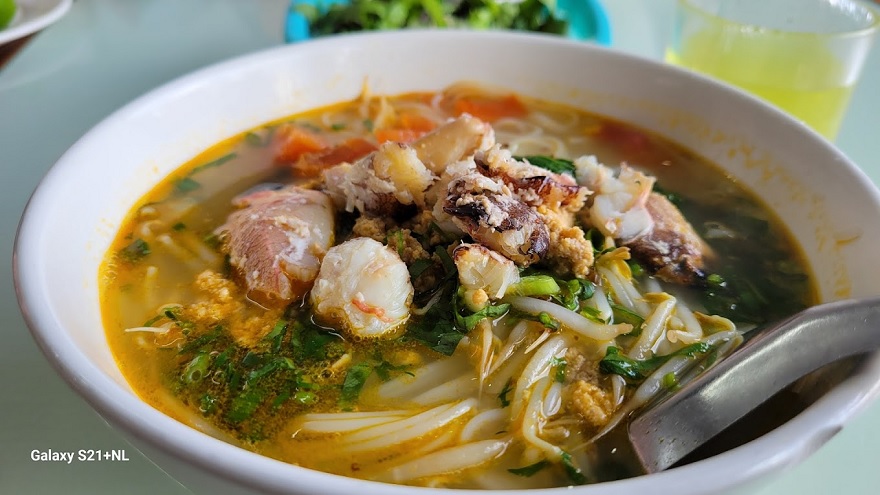
When it comes to Ha Long cuisine, beyond the fresh and delicious seafood delicacies like horseshoe crab, sipunculid worms, and mantis shrimp, one cannot overlook the rustic yet deeply flavorful “Bun Cu Ky” (fiddler crab noodle soup). In this article, Halong & Lan Ha Bay Cruise Tours will introduce you to this fragrant and savory local specialty.
See more: Ha Long Specialties: What to eat? What to buy?
Ha Long Bun Cu Ky – The “Culinary Beacon” of the Mining Region
When discussing the rich culinary tapestry of Ha Long, Quang Ninh, alongside familiar names like horseshoe crab, sipunculid worms, or mantis shrimp, it would be a major oversight to omit Bun Cu Ky – a dish that, while rustic, carries within it the profound, quintessential essence of the ocean. Often likened to a “culinary beacon,” Bun Cu Ky has evolved from a simple local specialty into a symbol and a point of pride for the people of the mining region. It serves as a warm “greeting” from the flavors of Ha Long Bay, an experience that every visitor is encouraged to try to fully grasp the soul of local cuisine—a dish that has truly “made a name” for the entire region.
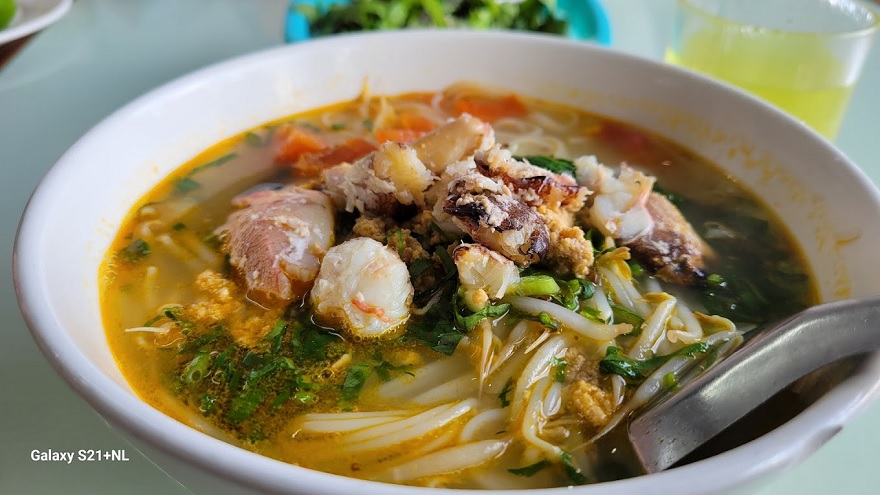
Bun Cu Ky in Ha Long
The journey of Bun Cu Ky, from a local dish born from the ingenuity of coastal fishermen utilizing the abundant local crab population to a highly sought-after delicacy for travelers from afar, is a fascinating story. Initially, it may have been nothing more than simple bowls of noodles meant to warm the bellies of sailors. Over time, however, through skillful preparation and subtle enhancements, Bun Cu Ky has conquered even the most discerning palates, rising to become a “star” on the culinary map and attracting not only domestic visitors but also international travelers eager for a unique taste experience.
Cu Ky – The “Soul” of the Famous Noodle Dish
To fully appreciate the allure of Ha Long’s Bun Cu Ky, we must first “decode” the protagonist that creates its signature flavor: the Cu Ky crab itself. This seafood species not only boasts a unique name but also possesses intriguing characteristics and a backstory that makes it the true “soul” of this renowned dish.
Cu Ky, also known by various local names such as “thunder crab” or “rock crab,” is a species of sea crab native to tropical waters like those in Malaysia and Indonesia. In Vietnam, while Cu Ky can be found in many coastal regions, including Quang Ninh and Khanh Hoa, it is the Quang Ninh variety that has achieved true fame, favored for its superior culinary value. You can easily recognize the Cu Ky by its distinctive appearance: a dark brown shell, striking bright green eyes, and, most notably, two large, robust claws, while its remaining legs are often covered in fine hair. It is these “muscular” claws that contain the most succulent and prized meat of the crab.
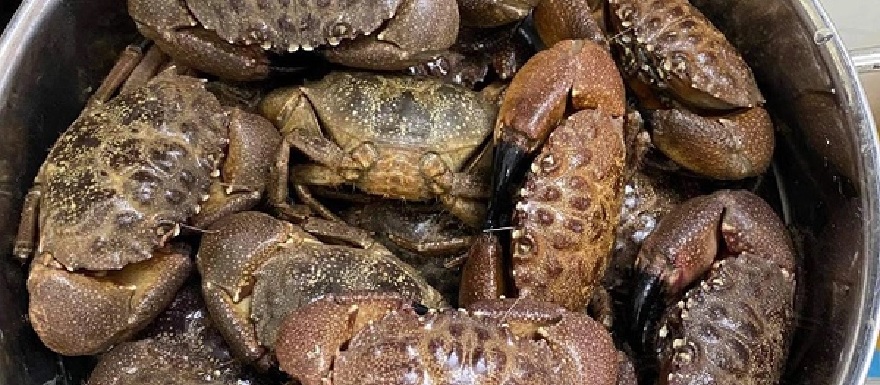
Quang Ninh Black Stone Crab commands a premium price of up to 400,000 VND/kg
Recommended Bun Cu Ky spots in Ha Long
Halong Lan Ha Bay Cruise Tours has curated a list of the 3 finest bun cu ky establishments in Ha Long, covering both the Bai Chay and Hon Gai districts. These venues have been meticulously selected based on firsthand experiences and positive feedback from both the local community and travelers.
1. Huong Beo Bun Cu Ky
If you are searching for a premier location to savor the renowned bun cu ky in Ha Long, Huong Beo is an exceptional choice. Located on Tan Mai Street in Bai Chay, this eatery has become a beloved destination for both locals and tourists eager to experience the authentic specialty flavors of Quang Ninh’s coastal region.
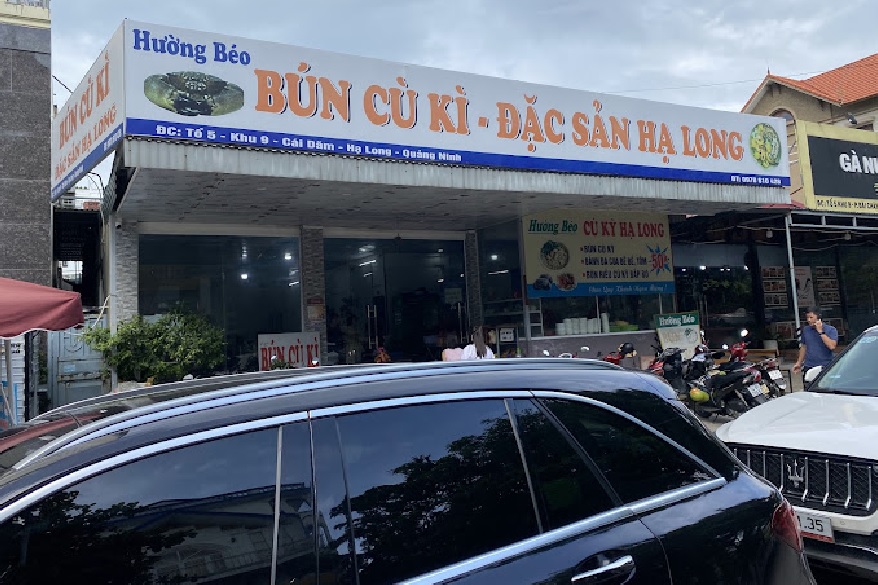
Huong Beo Bun Cu Ky
Restaurant Information:
- Address: 20 Tan Mai, Bai Chay, Ha Long, Quang Ninh.
- Phone number: You can easily look up the contact number on online platforms or simply ask the friendly locals!
- Opening hours: 5:30 AM – 2:00 PM daily (may close early if sold out).
- Price: 50,000 – 100,000 VND/bowl (depending on selection).
Pros and Cons Comparison
| Pros | Cons |
|---|---|
|
|
Cong Doan Bun Cu Ky is one of the most reputable culinary destinations in Ha Long, boasting over a decade of operation. The noodles here are highly regarded for their fresh “cu ky” (fiddler crab) meat and rich, savory broth. The menu offers a variety of toppings, such as betel leaf-wrapped pork, fried tofu, and fresh herbs, allowing guests to customize their bowls.
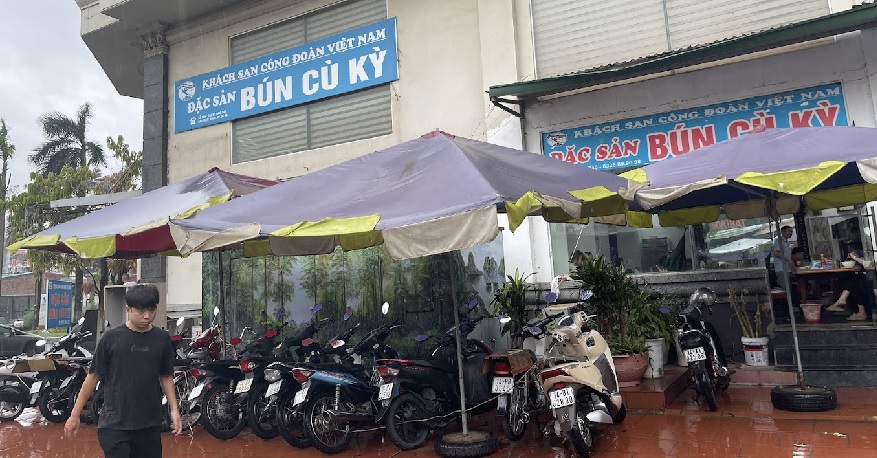
Cong Doan Bun Cu Ky
Restaurant Information:
- Address: No. 1, Group 5, Zone 9A, Ha Long, Quang Ninh, Vietnam
- Phone: +84 203 3844 740
- Opening hours: 5:00 AM – 1:30 PM daily
- Price: 50,000 – 100,000 VND/bowl (depending on selection).
Pros and Cons Comparison
| Pros | Cons |
|---|---|
|
|
Review
Despite receiving some negative feedback recently, Cong Doan Cu Ky Noodle Shop remains a well-known destination for those seeking to savor authentic Cu Ky noodles in Ha Long. The staff have shown a receptive attitude toward customer feedback and continuous improvement.
3. Gia Truyen Cu Ky Noodle Shop
Unlike other establishments, the Gia Truyen (Traditional) Cu Ky Noodle Shop offers a unique flavor profile passed down through generations. The secret lies in the broth, meticulously simmered from Cu Ky (rock crab) shells and combined with crab roe and proprietary spices to create a delicate, rich, and unforgettable sweetness. The meat is fresh, firm, and carefully prepared to ensure the highest standards of food safety and hygiene.
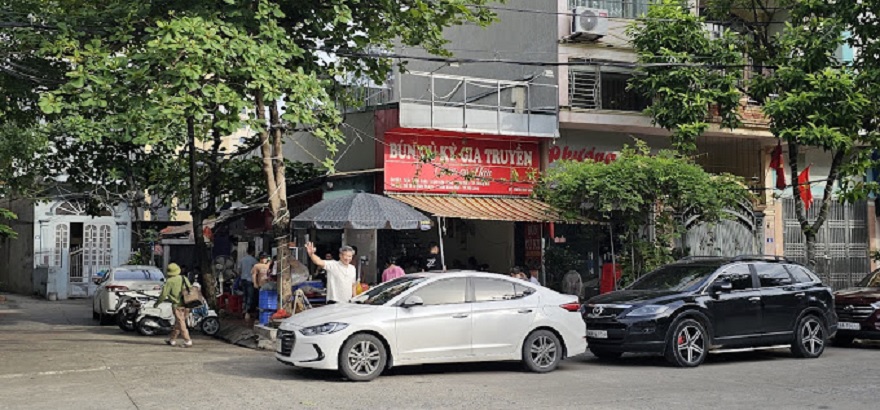
Traditional Cu Ky noodles
In addition, the shop serves Cu Ky rice noodles for those looking for a different texture. The chewy rice noodles harmonize beautifully with the fragrant broth and sweet crab meat, resulting in an equally compelling dish.
Restaurant Information:
- Address: No. 10, To Hien Thanh Street, Tran Hung Dao Ward, Ha Long City.
- Opening hours: 6:00 AM – 11:00 AM.
- Price: 50,000 – 100,000 VND per bowl (depending on selection).
Pros and Cons Comparison
| Pros | Cons |
|---|---|
|
|
Review
Bun Cu Ky Gia Truyen (Traditional Fiddler Crab Noodle Soup) is an excellent choice for those looking to savor authentic local flavors in the Hon Gai area.
Bun Cu Ky – More Than a Meal, A Ha Long Cultural Experience
Bun Cu Ky (Fiddler crab noodle soup) has transcended the role of a simple dish to become an inseparable part of the cultural and travel experience in Ha Long. Enjoying a bowl of this delicacy is not merely about sustenance; it is a gateway for travelers to deeply connect with the land, its people, and the unique culinary values that define this region.
The allure of Bun Cu Ky lies in an irresistible multi-sensory experience. From the moment the bowl is served, diners are captivated by its vibrant aesthetic: the rich red of the crab claws, the golden hue of the crab roe, and the fresh green of scallions and herbs, all set against the pristine white of the vermicelli and the glistening, flavorful broth. Next comes the seductive aroma—a sophisticated harmony of the delicate sweetness of fresh seafood, the savory fragrance of sautéed crab roe, and the gentle scent of fresh herbs. Finally, upon tasting, the palate is awakened by the deep, rich sweetness of the broth, the firm and succulent texture of the crab meat, the creamy richness of the roe, and the refreshing crispness of local greens, balanced by the subtle tang of lime and chili. Every element comes together perfectly, leaving diners in awe and creating a memory that lingers long after the meal.
Within the rich culinary “map” of Ha Long, where options like mantis shrimp noodle soup or assorted seafood noodles abound, Bun Cu Ky firmly holds its own unique position. Its distinction lies not only in the main ingredient—the fiddler crab, with its signature flavor and texture—but also in the masterful preparation of the broth, extracted from the crab itself, and the unmistakable, velvety crab roe paste. These qualities have elevated Bun Cu Ky to a true “specialty,” a must-try dish for any traveler seeking an authentic experience in this coastal mining region.
Beyond winning over the local palate, Bun Cu Ky has become a charming “culinary ambassador” for Quang Ninh, playing a significant role in attracting visitors. Many travelers are drawn to Ha Long partly by the curiosity to taste this “exotic” dish. Vibrant, mouth-watering photos of Bun Cu Ky frequently trend on social media, becoming a favorite “check-in” topic and spreading the dish’s reputation far and wide. After tasting it, many visitors do not hesitate to share glowing reviews, confirming it as an essential experience when visiting the Heritage Bay.
The influence and prestige of Bun Cu Ky were further solidified through large-scale culinary events designed to honor and elevate its status. A memorable milestone was the setting of the record for the “Largest Bowl of Bun Cu Ky in Vietnam” on December 1, 2023. This event was organized by SeaLife Group aboard the luxurious Sea Octopus cruise ship, set against the magnificent backdrop of Ha Long Bay. To create this impressive culinary masterpiece, chefs utilized a massive quantity of premium ingredients, including 50kg of fresh fiddler crab, 25kg of mantis shrimp, 12kg of tiger prawns, and 90kg of vermicelli, all combined with various spices and herbs within a custom-made 180-liter bowl.
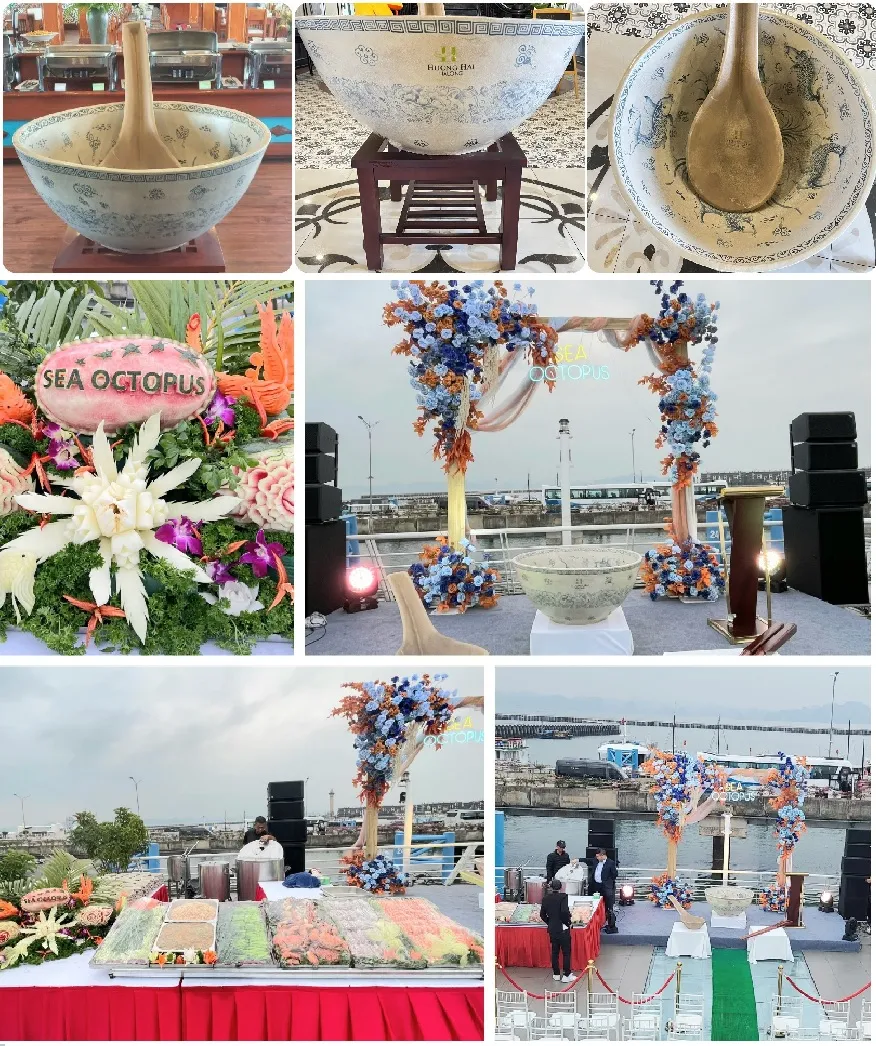
A 180-liter bowl with a 100cm diameter, 44cm height, and 44cm base.
This was far more than an impressive culinary performance intended to set a national record; it carried a deeper meaning. The event was a heartfelt effort to “honor Vietnamese cuisine, especially the specialties of Quang Ninh,” while “paving the way for the Culinary Voyage and future culinary festivals” envisioned by the organizers. It reflects the vision of SeaLife Group, embodied in the slogan “SeaLife – A Culinary Voyage in the Heart of the Heritage,” which aims to deliver authentic, high-end local dining experiences to guests amidst luxurious voyages. By bringing Bun Cu Ky to such a prestigious stage, it not only elevates this specialty to stand alongside fine dining experiences within a natural wonder, but it also affirms that Bun Cu Ky is more than just a satisfying meal—it is a source of local pride and a vibrant, captivating culinary story of Ha Long.
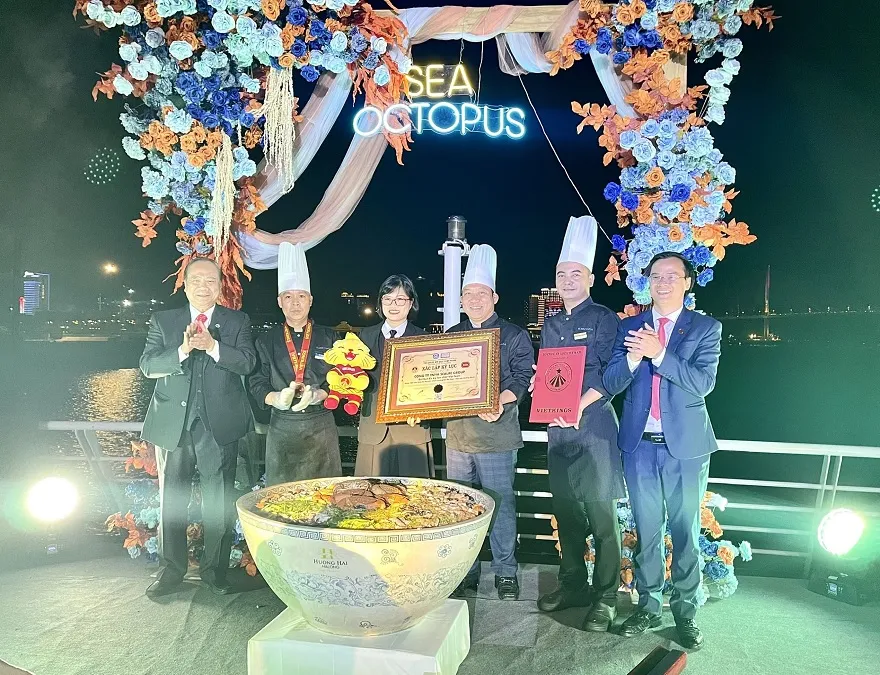
The SEALIFE GROUP Record Recognition Ceremony, featuring the presence of Dr. Tran Ngoc Tang – Vice President of the Vietnam Record Association (far left) and Mr. Hoang Thai Tuan Anh – Secretary General of the Indochina Record Organization and Chief Representative of the Vietnam Record Organization in the North (far right).
Related Articles
[blog_posts style=”normal” type=”row” columns=”3″ columns__md=”1″ ids=”14864,14840,14804,14167,14065,10334″ show_date=”false” image_height=”56.25%”]