Did you know that on Cat Ba Island, alongside pristine beaches, the magnificent Lan Ha Bay, and a diverse national park, there lies a destination of exceptional historical and military significance? That is the Cannon Fort, a monumental structure built during the French colonial era that witnessed the fierce battles fought by the military and people of Cat Ba against colonial and imperial invaders. Join us as we explore the historic Cannon Fort through the article below!
Location and History of the Cannon Fort
The Cannon Fort, also known as High Point 177, is situated at the summit of a hill 177 meters above sea level within the Cat Ba tourist zone, Cat Hai district, Hai Phong city. As one of the highest vantage points on Cat Ba Island, it commands a sweeping panoramic view of Vietnam’s crucial maritime frontline.
Constructed by the French military in 1942, the Cannon Fort was designed to control the northeastern gateways of Vietnam and the southeastern approaches of Hai Phong. The fortress features an extensive network of tunnels, defensive trenches, heavy coastal artillery capable of striking targets up to 20 kilometers away, alongside observation posts and a command center. This stood as one of the most sophisticated military engineering feats of the French in Indochina at the time. Following the success of the August Revolution, the fort was taken over by our revolutionary forces and placed under the management of the Ký Con Company.
The Cannon Fort served as a silent witness to both the French resistance and the American war, where Vietnamese soldiers utilized these heavy coastal artillery pieces to defeat the enemy. During the French resistance, the fort contributed significantly to the successful defense of Cat Ba and Hai Phong against French military offensives. Throughout the American war, the fort participated in historic engagements such as the battle of Hai Duong (1964), the battle of Bach Dang (1972), and naval engagements (1973), inflicting severe damage on the U.S. Navy.
Structure and Design of the Sub-zones at the Cannon Fort
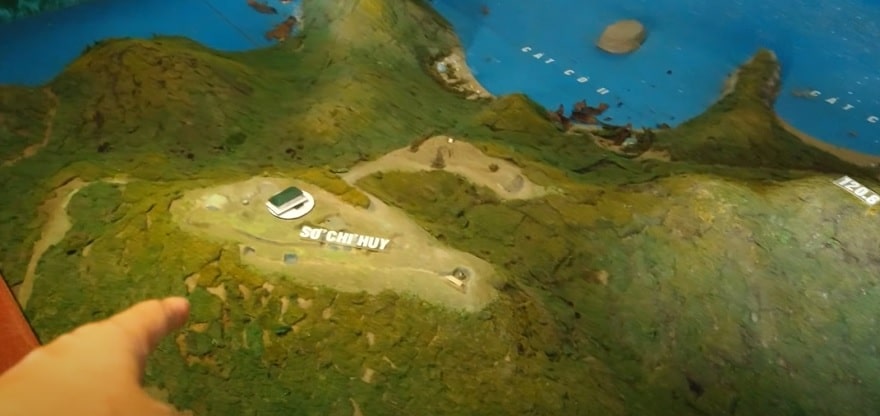
Spanning an area of approximately 10,000 m2 and designed in a crescent shape, the fort comprises three main sections: the central command post, flanked by the artillery zones and residential quarters. The central section houses the command headquarters, featuring communication systems, maps, trajectory computers, and other military apparatus. Nestled deep underground within this area is a heavily reinforced command bunker designed to withstand atomic blasts. Inside the bunker, visitors will find numerous historical maps, data charts, communication devices, and personal items belonging to the commanders. Guests can also listen to preserved audio recordings capturing the fierce battles fought from the fort. One of the most striking audio features is the deafening explosion recorded when an American aircraft carrying an atomic payload was shot down.
Command Post Area
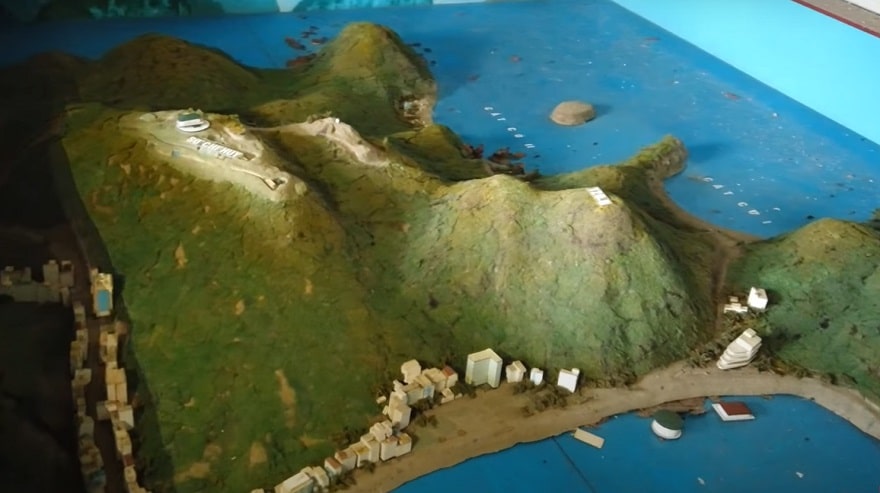
Diorama of Sub-zones at the Cannon Fort
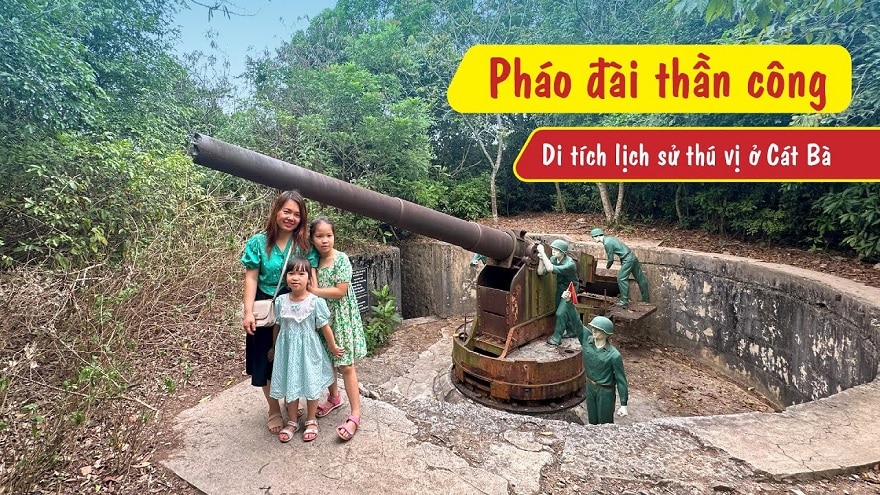
The flanking sections of the fort comprise the artillery zone and residential quarters. The artillery zone features three massive coastal defense guns imported from France. The largest artillery piece weighs 79 tons and boasts a firing range of up to 40 kilometers. Affectionately revered as the “Divine Cannon” due to its pinpoint accuracy over immense distances, it is mounted on a 360-degree rotating platform that allows for effortless target alignment. In addition to the central piece, visitors can discover two other cannons positioned at either end of the fortress, which feature a shorter range of approximately 10 kilometers.
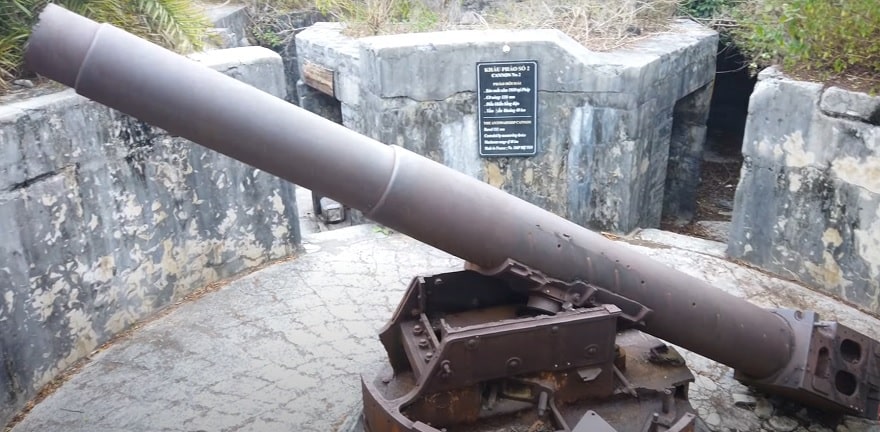
Coastal Defense Artillery (Gun No. 2)
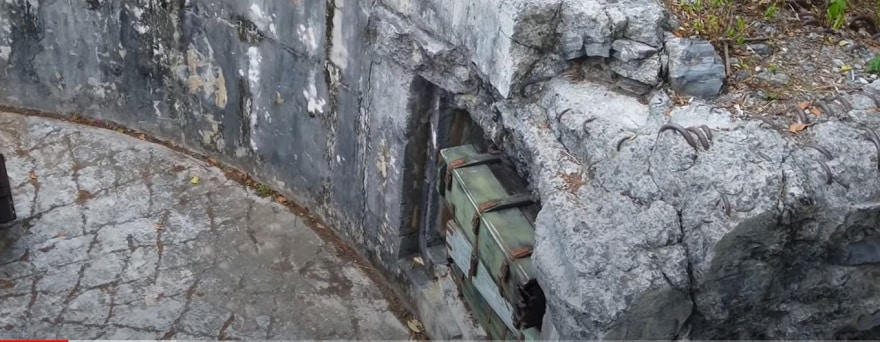
Ammunition Crate for Gun No. 2
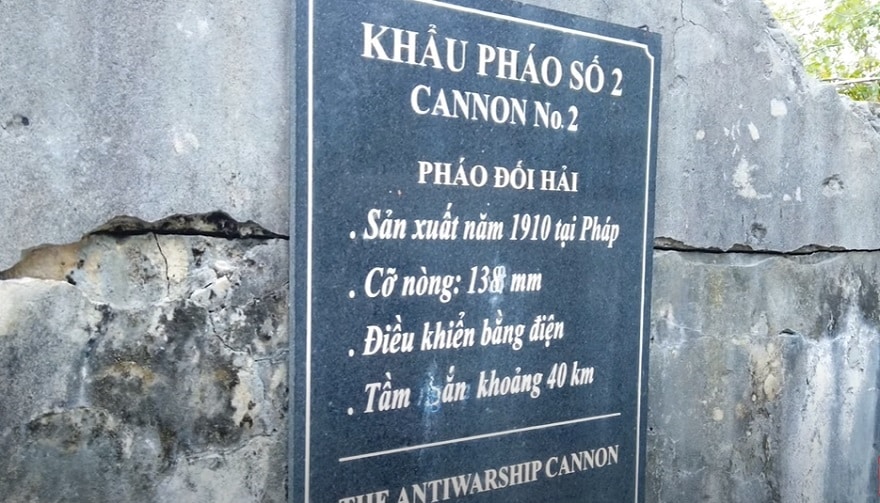
Information regarding Gun No. 2
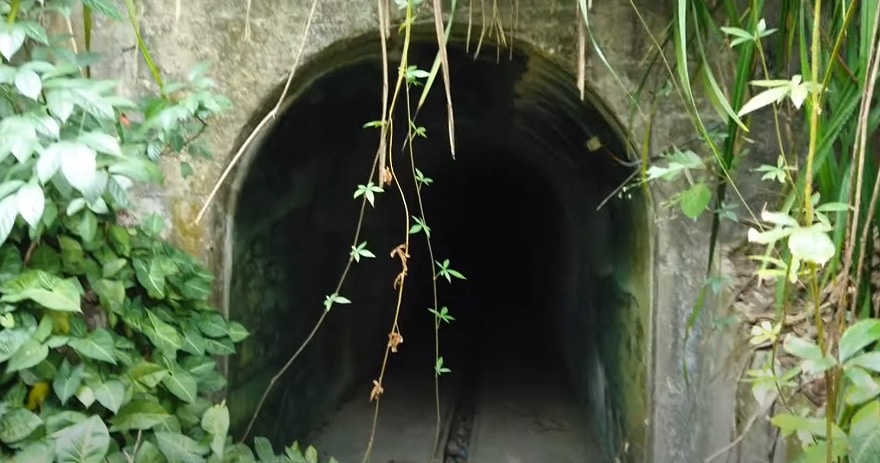
U-shaped tunnel leading to the command zone
The artillery area also incorporates three observation posts, offering visitors breathtaking panoramic vistas of Cat Ba town, Lan Ha Bay, and Cat Co Beaches 1 & 2 from above. Each observation post is equipped with a massive telescope to track targets and relay information back to the command center. The residential area served as living quarters for the soldiers and support personnel stationed at the fort. It includes a mess hall, sleeping quarters, infirmary, medical station, and a traditional gallery room. The traditional gallery preserves historical artifacts, documents, and photographs from the wars of resistance against the French and Americans.
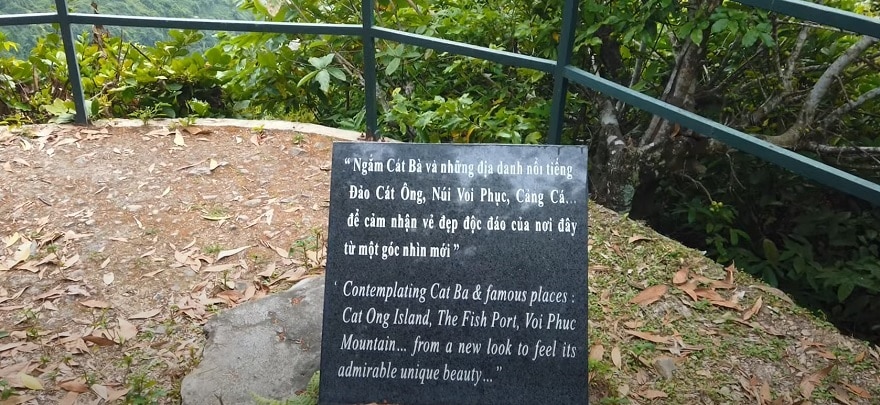
Western observation post of the Fort
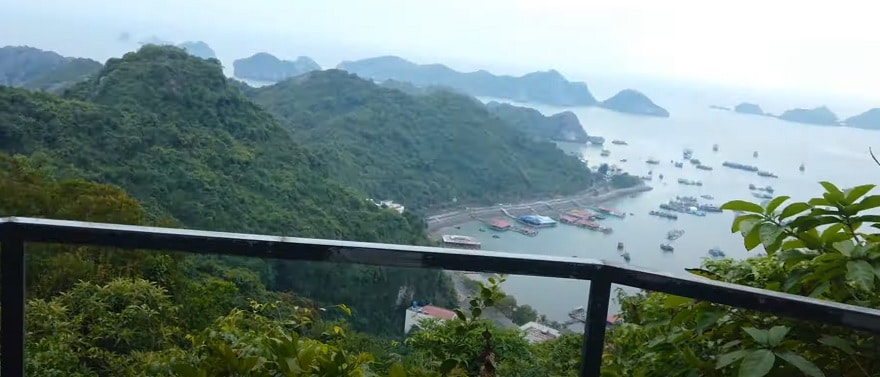
The observation post offers views over the entirety of Cat Ba and Cat Ong islands
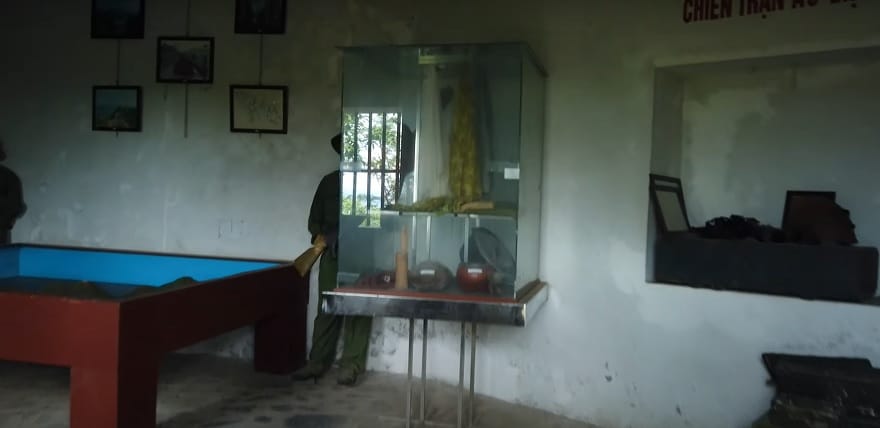
Additionally, this area features a military helicopter pad and a traditional display room. The military helipad was constructed during the American resistance war near the entrance of the Cannon Fort to facilitate personnel transport should land and maritime routes be severed. Meanwhile, the exhibition room located near the command post showcases artifacts and memorabilia associated with the fort’s history and military exploits. Visitors will encounter numerous photographs, audio tapes, video recordings, publications, and other items. Guests can also listen to heroic accounts of the fort’s defenders broadcast through loudspeakers. Notable artifacts include a bomb shell recovered from a downed U.S. aircraft, a smaller anti-aircraft gun used to shoot down enemy planes, and the helmet worn by the fort’s commander.
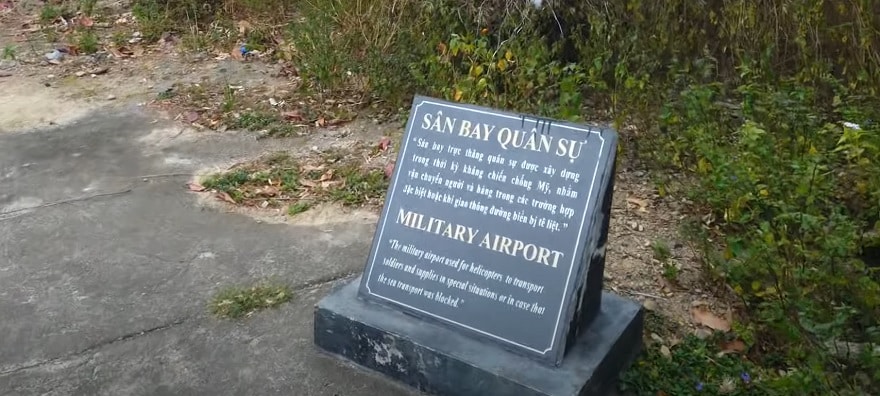
military helipad
Ticket Prices and Opening Hours of the Cannon Fort
To visit the Cannon Fort, travelers can choose from various modes of transportation from the center of Cat Ba tourist town, including motorbike, car, bus, or speedboat. Depending on the chosen vehicle and distance, the journey takes between 15 to 45 minutes. The path leading up to the fort is quite steep and winding, requiring careful navigation. After traversing a slope approximately 1 kilometer long, visitors arrive at the parking area at the base of the fort. From there, a short 300-meter walk leads up to the main fortress grounds.
Entrance tickets to the Cannon Fort are priced at 80,000 VND per adult and 20,000 VND per child. Tickets can be purchased at the ticket counter at the foot of the fort or before boarding transport to the site. The ticket fee includes access to all areas within the fort and listening to the heroic accounts of the defenders broadcast via loudspeaker. For a deeper, more detailed narrative of the fort’s history and significance, private tour guides are available for hire at 100,000 VND per group of 1 to 10 guests.
The Cannon Fort is open daily from 7:30 AM to 5:30 PM. We recommend visiting in the morning or late afternoon to avoid the midday heat and to catch magnificent sunset views from the observation platforms. Guests are advised to bring hats, sunscreen, drinking water, and a light jacket to protect against the sun and cooling coastal breezes.
The Cannon Fort is an essential historical and scenic landmark in Cat Ba that should not be missed during your travels. Here, you will admire a unique military engineering masterpiece, deepen your understanding of the history and triumphs of the Cat Ba military and people, and take in the majestic landscape of this frontline maritime region. Plan your itinerary today and discover the captivating Cannon Fort!