
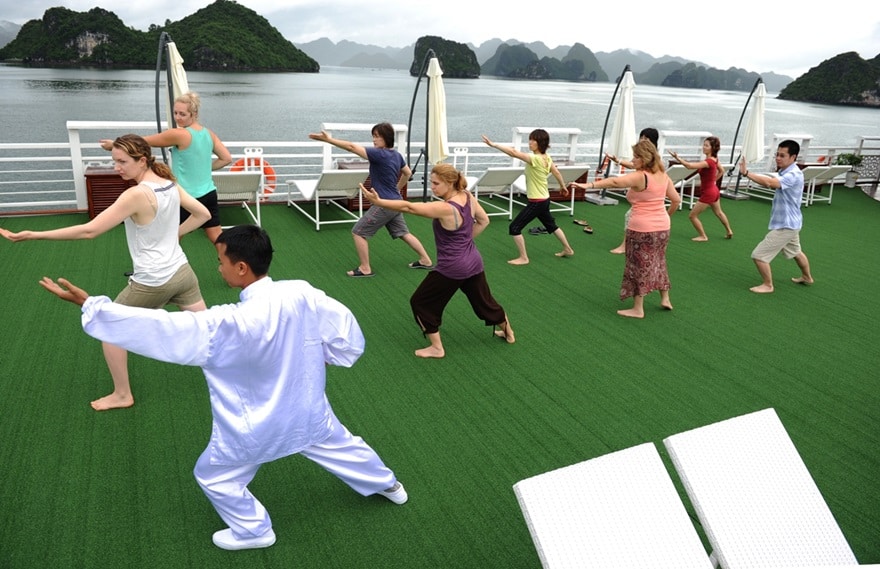
In the early morning of Ha Long Bay, as the first rays of sunlight gently kiss the turquoise water, the majestic limestone islands awaken from a night of silent repose. Amidst this ethereal and serene landscape, the image of travelers gracefully practicing Tai Chi on the cruise deck has become a poetic and captivating highlight. More than just a physical activity, Tai Chi on a Ha Long Bay cruise is increasingly becoming a unique experiential accent—a spiritual “delicacy” that many seek during their voyage of discovery through this World Natural Heritage site.
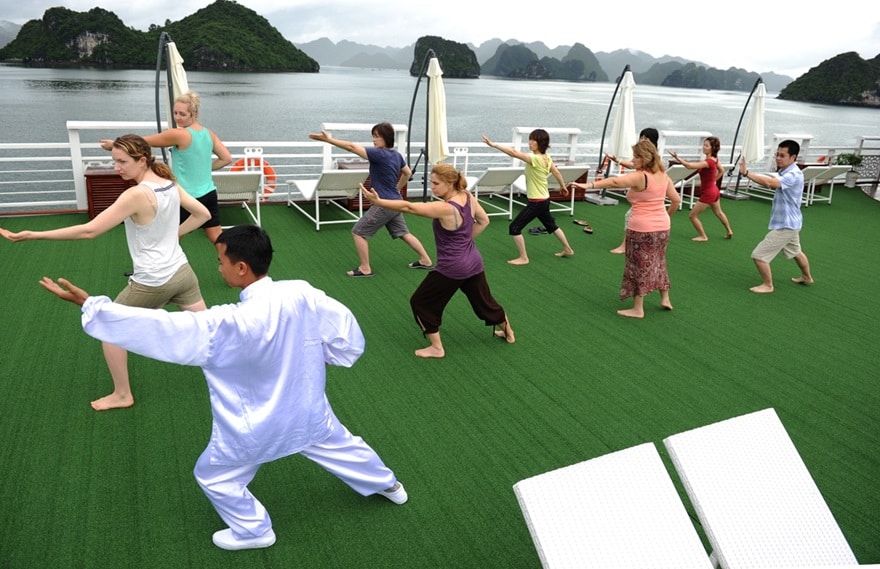
Experiencing Tai Chi on a Ha Long Bay cruise
Wellness tourism is increasingly gaining prominence, and the integration of Tai Chi into Ha Long Bay cruise itineraries is a clear testament to this trend. It is not only an ideal way to begin a new day full of vitality but also an opportunity to connect more deeply with oneself and immerse in the magnificent beauty of nature.
I. Discovering Tai Chi: The Essence of Martial Arts and Holistic Health
A. The Origins and Profound Philosophy of Tai Chi
Before surrendering yourself to the fluid motions on the deck amidst the poetic Ha Long Bay, let us travel back in time to discover the origins of Tai Chi—an ancient, mysterious, and captivating form of martial art and healing. Originating in China, Tai Chi encompasses not only physical exercises but also a treasure trove of profound philosophy.
The history of this martial art is often linked to two prominent figures. According to legend, the Taoist sage Zhang Sanfeng (12th century or the late Yuan to early Ming dynasty) attained enlightenment and created Tai Chi after observing a battle between a snake and a crane on Wudang Mountain, emphasizing natural harmony and the principles of Yin and Yang. However, many historians argue that the military general Chen Wangting (late Ming to early Qing dynasty) from Chenjiagou, Henan Province, played the pivotal role in systematizing and birthing Chen-style Tai Chi, the foundation for many subsequent schools.
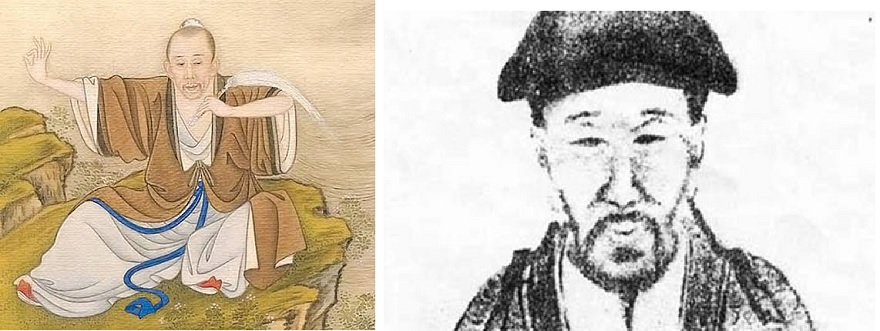
Zhang Sanfeng (left) and Chen Wangting (right)
The very name “Tai Chi” (太極拳 – T’ai Chi Ch’uan) encapsulates the spirit of the discipline. “Tai Chi” represents the supreme principle, the origin of the universe, where Yin and Yang—two opposing yet complementary forces—are born and in constant flux. “Ch’uan” refers not merely to hand combat techniques but signifies an internal martial art that focuses on cultivating internal energy. Thus, Tai Chi can be understood as a martial art based on the harmony and transformation of Yin and Yang.
The philosophy of Tai Chi is deeply imbued with Taoist thought, clearly expressed through core principles such as “using softness to overcome hardness”—employing suppleness and fluidity to neutralize and defeat rigid force. Each slow, continuous movement is not just a physical workout but a form of “meditation in motion,” helping practitioners achieve unity between Body, Mind, and Qi (internal energy). The focus on every breath and movement allows the mind to reach stillness and find internal balance.
Transcending the borders of China, the value and appeal of Tai Chi have spread globally. The pinnacle of international recognition occurred in December 2020, when UNESCO officially inscribed Tai Chi on the Representative List of the Intangible Cultural Heritage of Humanity. This event is not only an honor but also affirms the deep cultural, philosophical, and medical values of this martial art—a precious legacy contributing to cultural diversity and global health.
B. Over 11 Proven, Superior Health Benefits
Beyond its philosophical and cultural values, the comprehensive health benefits of Tai Chi are widely recognized by both traditional medicine and modern scientific research. Regular practice of this healing martial art offers a long list of positive effects, including more than 11 remarkable benefits for both physical and mental well-being.
1. Superior Physical Health Improvements:
- Stronger cardiovascular and respiratory systems: Gentle movements combined with deep breathing improve blood circulation, regulate blood pressure, and enhance heart health. Numerous studies indicate that Tai Chi is highly beneficial for patients with respiratory issues, including chronic obstructive pulmonary disease (COPD), by increasing lung capacity and mobility.
- Enhanced muscle strength, flexibility, and superior balance: Continuous shifts in center of gravity and fluid, rotating movements strengthen muscle groups—particularly the legs—while increasing joint flexibility. This is critically important, especially for Tai Chi for seniors, as it significantly reduces the risk of falls, a primary concern in aging.
- Support for weight management and chronic conditions: Tai Chi helps stimulate metabolism, aiding in the maintenance of a healthy weight. Furthermore, it has been proven to be an effective complementary therapy for conditions such as arthritis (reducing pain and improving range of motion), Parkinson’s disease (enhancing balance and reducing tremors), fibromyalgia, and various other ailments.
2. Enhanced Mental Wellbeing and Cognitive Function:
- Reduced stress, anxiety, and symptoms of depression: Slow, graceful movements paired with focused breathing have a positive impact on the nervous system, calming the mind, alleviating stress, and promoting a more relaxed and optimistic outlook.
- Improved sleep quality: Many Tai Chi practitioners report falling asleep faster and experiencing deeper rest, especially those who previously struggled with sleep issues due to stress or anxiety.
- Sharpened cognitive function, memory, and focus: Cultivating “Yi” (intention) in Tai Chi strengthens concentration. Research also suggests that Tai Chi can improve memory and the ability to perform complex tasks, which is particularly beneficial for older adults facing cognitive decline.
These benefits are not merely anecdotal; they are validated by numerous scientific studies worldwide, confirming that Tai Chi is a holistic practice that brings practical value to modern life.
II. Sunrise Tai Chi Amidst the Majesty of Ha Long Bay: A Unique and Unforgettable Experience
Imagine standing on a breezy sundeck as the first rays of dawn bathe the magnificent bay in hues of pink, gracefully moving through the fluid forms of Tai Chi. This is the irresistible allure of a Tai Chi class aboard a Ha Long Bay cruise—an experience everyone should enjoy at least once in a lifetime. The “golden hour” usually falls between 6:00 and 6:30 AM, when the surroundings are silent and the bay’s surface is as smooth as a mirror, reflecting the brilliant sunrise. Instead of a standard gym, you are immersed in a one-of-a-kind practice space: the ship’s sundeck. High and airy, completely detached from the hustle and bustle of the mainland, it offers a panoramic view of the thousands of karst limestone islands that define this World Natural Heritage site. The perfect synergy between the essence of traditional martial arts and the awe-inspiring, poetic beauty of Ha Long Bay’s pristine, fresh air transforms your practice into a spiritual retreat and an indelible memory.
Once ready on the sundeck with a spirit of anticipation, you will be welcomed by a professional and experienced instructor (often referred to as a “Sifu” or “Master”). Their role goes beyond demonstrating precise movements; they explain the meaning behind each posture and how to harmonize physical motion with the rhythm of your breath. They serve as guides and sources of inspiration, sharing the unique cultural elements embedded in every exercise. A session typically begins with gentle warm-ups, followed by the introduction and practice of fundamental Tai Chi movements, focusing on slow, controlled fluidity and steady, deep breathing. The beauty of these classes lies in their accessibility; they are designed for everyone, from absolute beginners to those who may require “seated Tai Chi” due to mobility limitations.
When Tai Chi movements are performed amidst such majestic surroundings, it is far more than a mere physical exercise. It is a moment where you truly feel a magical harmony, a journey that awakens your entire Body, Mind, and Spirit. In the stillness of dawn, each slow, conscious movement encourages you to listen to your body, helping your mind gradually release the worries of daily life to embrace tranquility and inner peace. The session not only improves physical flexibility but is also a wonderful way to “recharge your batteries,” awakening positive energy from deep within to prepare for an exciting day of exploration. Experiencing Tai Chi on a Halong Bay cruise is truly a “moving meditation” – where you find the balance between movement and stillness, between the physical and the spiritual; it is a “pinnacle experience” that connects humanity with the magnificent beauty of nature.
III. Selecting the Perfect Halong Bay Cruise for Your Tai Chi Experience
Once you have envisioned the beauty of a Tai Chi morning amidst this wonder of the world, the next equally important step is choosing the perfect “floating home” to turn that experience into reality. Today, most overnight cruises in Halong Bay, especially those rated 3 stars and above, include this activity in their itineraries. However, to ensure these moments are truly worthwhile, researching and comparing your options is essential.
To give you an initial overview and assist with your decision-making, please refer to some of the most notable cruise options frequently highlighted for their Tai Chi classes in the comparison table below:
Note: Star ratings, prices, and service details are subject to change. For more information, visit: Ha Long Bay Cruises: 2-day 1-night, 3-day 2-night Tours
The comparison table above provides an initial overview. However, to truly find the perfect journey and select the best Ha Long Bay Tai Chi cruise, you should delve deeper into a few “gold” criteria. The quality of the instructor is paramount—an experienced master with excellent communication skills will elevate your session significantly. Additionally, the physical atmosphere of the sundeck is crucial: is it spacious enough, does it offer stunning vistas, and does it provide the necessary tranquility for a “moving meditation”? The duration and timing of the classes are also factors to consider. And, of course, do not overlook the overall feedback regarding other aspects of the cruise, such as cabin quality, gourmet dining, and the sightseeing itinerary.
Furthermore, your choice should be based on your personal needs and priorities. If you are traveling with a family that includes seniors or young children, prioritize cruises with spacious, safe common areas and patient instructors—some even offer “seated Tai Chi” options. For couples seeking romance, high-end, luxury cruises with private spaces are the ideal choice. If you are truly passionate about Tai Chi and desire a high-quality session, investing time in researching the instructors aboard larger cruise lines will likely yield rewarding results. Even if you have a limited budget, many mid-range cruises still offer excellent morning Tai Chi experiences, ensuring you can still appreciate the wonders of practicing amidst a natural heritage site.
Ultimately, clearly defining your needs, preferences, and budget will serve as a compass, helping you make the most informed decision to ensure a Ha Long Bay excursion that is not only memorable for its scenery but also complete with moments of relaxation through Tai Chi.
IV. “Golden” Tips for Fully Enjoying Your Tai Chi Session on a Cruise
To ensure your early morning Tai Chi session on Ha Long Bay is a truly memorable experience that delivers maximum benefits, a little preparation and a few important considerations during the practice will be extremely helpful.
A. How to Prepare Before the Session?
Thoughtful preparation will help you feel comfortable and easily immerse yourself in the atmosphere of the session. First and foremost, opt for loose-fitting clothing made from soft, breathable materials like cotton or specialized sportswear. Appropriate attire not only makes it easier to perform fluid movements but also supports better circulation. You can practice barefoot if the deck is clean, or bring along a pair of flat, soft-soled shoes to ensure safety while moving.
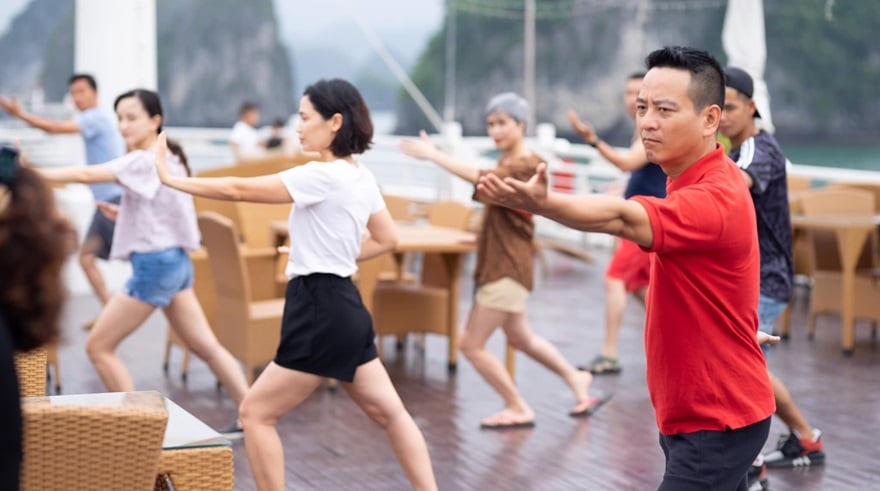
Tai Chi exercises are gentle and suitable for all ages and fitness levels
Additionally, as Tai Chi classes often start quite early to catch the sunrise, you should plan to wake up a little earlier. This gives you time to freshen up, get dressed, and head to the sundeck leisurely, ensuring you don’t miss any precious moments and can fully enjoy the crisp, fresh morning air on the bay. Most importantly, approach the session with a relaxed, open mind, ready to learn, and allow yourself to be fully immersed in this unique experience.
B. Important Considerations During Practice
Once the session officially begins, keeping a few golden rules in mind will help you maximize the benefits and ensure your personal safety. The top rule in Tai Chi is to listen to your body; this martial art focuses on comfort and enjoyment, not strain. If you feel any pain or discomfort, you should adjust your movements, reduce the intensity, or take a break—never attempt to perform movements that exceed your own limitations.
Deep, steady, and relaxed breathing is an inseparable part of the practice and is the key to energy in Tai Chi. Try to coordinate your breath with each movement, typically inhaling when the body expands or rises, and exhaling when the body contracts or lowers. At the same time, keeping your mind present in every moment—focusing entirely on your movements, bodily sensations, and the rhythm of your breath—is essential. Try to let go of any distracting thoughts to truly immerse yourself in “meditation in motion.” Especially if you are a beginner, do not fixate on the perfection of the movements right away. What is more important is the process of building a positive mindset, focus, and sensing inner harmony.
C. For Beginners and Those with Specific Health Conditions
Tai Chi is renowned as a gentle exercise suitable for a wide range of people; however, a few specific tips will help improve your experience, especially if you are new or have health concerns that require attention.
For beginners, the most important advice is to trust and follow the guidance of the qualified professionals on board. They are expertly trained to help you master poses and movements correctly, ensuring you avoid unnecessary mistakes. Do not hesitate to ask questions, and remember that consistency and focusing on your sensations are key, rather than striving for instant perfection.
If you have underlying health concerns such as severe arthritis, chronic cardiovascular or respiratory conditions (such as COPD), or are recovering from an injury, it is essential to consult with your specialist doctor before deciding to join the class. Once you have medical clearance, do not forget to clearly inform the instructor on the cruise about your specific health condition before the session begins. This allows the instructor to make appropriate adjustments, suggest gentler movements, or recommend “seated Tai Chi” if available. This is an excellent alternative, allowing you to participate and benefit from the arm, upper body, and breathing exercises without placing stress on your legs or joints. By preparing thoughtfully and keeping these points in mind, your Tai Chi session aboard your Halong Bay cruise is sure to be an unforgettable highlight, bringing a sense of tranquility and positive energy to your journey.