What is Landmark 1305 and where is it located?
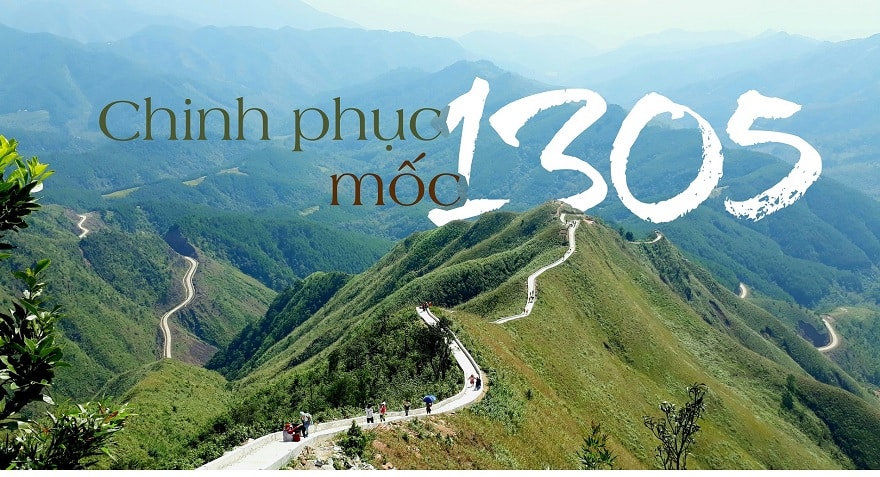
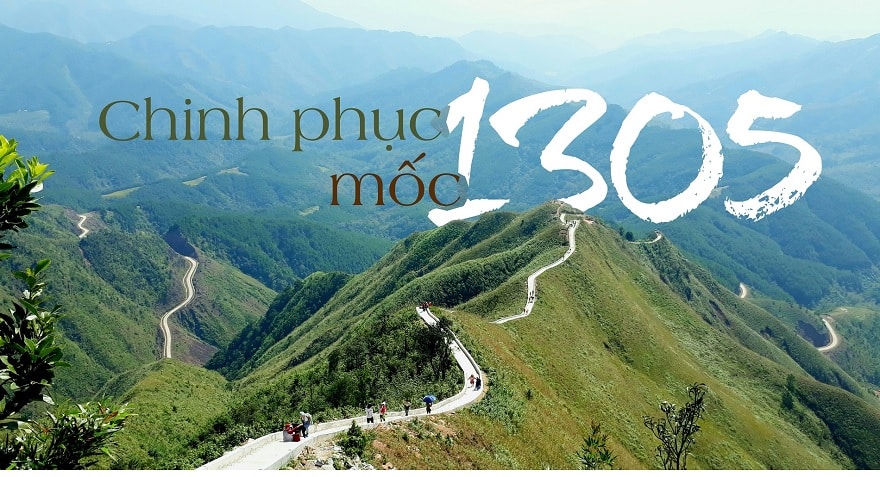
Landmark 1305 is one of the four principal border markers along the Binh Lieu border patrol route, alongside 1300, 1302, 1305, and 1327. These markers are named after their respective elevations in accordance with the 1999 Vietnam-China border agreement, designed to establish the official demarcation between the two nations (stretching from Dien Bien to Quang Ninh). Among them, Landmark 1305 presents the ultimate challenge as it perches atop the highest mountain in Hoanh Mo commune, Binh Lieu district, standing at an altitude of approximately 1,305 meters above sea level. This is the highest border landmark in Quang Ninh province. The pathway to conquering Landmark 1305 is famously dubbed the “Dinosaur Backbone” or a miniature “Great Wall of China.” This moniker stems from its location on the Ma Thong Thuan mountain range, featuring a sharply curved, undulating, and at times sheer vertical ridge reminiscent of a dinosaur’s spine or an imposing fortress wall.
Read more: Binh Lieu Travel Guide
Landmark 1305 is not only a symbol of Vietnam’s territorial sovereignty but also a testament to the pride and unwavering dedication of those who constructed and protect it. Furthermore, conquering Landmark 1305 is regarded as a profound test of willpower, endurance, and emotional resilience for every traveler who sets foot here.
How to get to Landmark 1305
Upon arriving at the parking lot, you will embark on a 2 km trek featuring steep inclines and nearly 2,000 stone steps, taking about 1.5 hours to reach the summit. Portions of the ascent are precipitously steep, particularly along the “Dinosaur Backbone” stretch, flanked by plunging mountain slopes. Historically, the path was far less secure than it is today—consisting merely of a rudimentary dirt trail about 50 cm wide, choked with overgrown grass on both sides, causing many travelers to abandon their journey halfway due to dangerous slippery conditions. In 2018, the Ministry of Defense undertook construction to pave concrete steps and widen the path to approximately 1 meter, making the ascent significantly more accessible than in previous years. However, if you do not engage in regular physical training—especially office workers who spend long hours sitting and lead a sedentary lifestyle—our seasoned travel experts recommend carefully considering your participation. Due to the distance and rugged terrain, you are likely to experience severe leg fatigue during the climb. In such cases, alternative markers such as 1297 will be a more suitable choice.
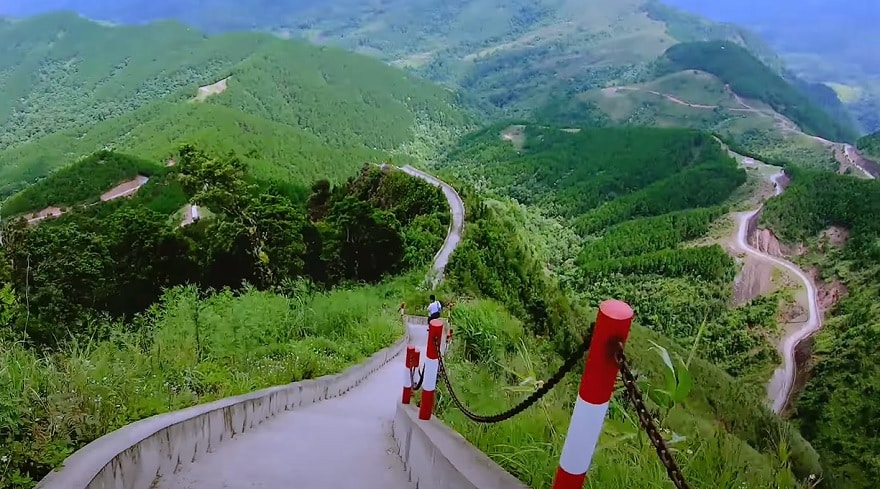
The pathway famously known as the Dinosaur Backbone of Binh Lieu
As you hike up to the landmark, you will be caressed by refreshing breezes carrying the signature pine scent of the northeastern mountains. Flanking the trail are panoramic vistas of rolling mountains and the legendary “Dinosaur Backbone” ridge of Binh Lieu. According to our travel expertise, we advise packing light while carrying an ample supply of water. It is also essential to select a day with favorable weather—free of intense heat or rain—ideally in the late autumn or early winter when the air is crisp and the wild reeds are in full bloom, offering yet another signature charm of Binh Lieu. Otherwise, you risk having to turn back after covering only a third or half of the route. Higher up, wild grass grows thicker and encroaches upon the pathway, and you may occasionally cross paths with local ethnic minority villagers foraging for bamboo shoots along the way.
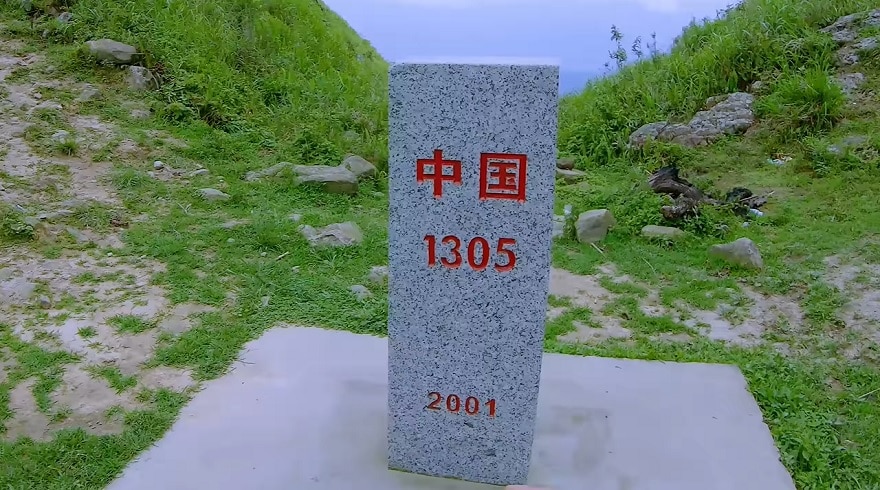
Landmark 1305
Upon reaching the summit, you will find Landmark 1305 constructed of concrete in a rectangular monolith, standing 1.8 meters tall, 0.6 meters wide, and 0.4 meters thick. Inscribed upon the marker are serial numbers and the names of both nations: one side displays “VIET NAM 1305 – 2001”, and the reverse side displays “中国 (China) 1305 – 2001.”
Important notes for visiting Landmark 1305
- Reaching Landmark 1305 entails navigating a demanding and hazardous route, which requires robust physical fitness and mountaineering proficiency. You should adequately prepare drinking water, medical supplies, sturdy footwear, and weather-appropriate attire. Bringing a raincoat or umbrella is also recommended in case of sudden showers.
- It is best to visit during the dry season (from October to April) to avoid slippery and perilous conditions during the climb. The dry season is also the ideal period to admire the stunning beauty of emerald pine forests and golden terraced rice fields. The radiant expanse of ripe rice paddies will undoubtedly leave you awestruck and enchanted.
- We recommend traveling in a group accompanied by a guide or a local resident to ensure effortless navigation and prevent getting lost. You must strictly adhere to border guard regulations and refrain from venturing too close to the boundary line. Taking photographs or recording videos in the border area without prior authorization from the border guards is strictly prohibited.
- Feel free to capture lasting memories through photos and videos, but ensure you leave no litter behind and do not deface the landmark. Let us preserve the environment and Vietnam’s territorial sovereignty. Bringing flowers or small tokens of appreciation for the border soldiers stationed here is also a thoughtful gesture to honor those who safeguard our frontier security.
Dinosaur Backbone – Landmark 1305 Conquest Tour
07:00: Pick-up at the Bai Chay area, Halong
08:00: Depart for Binh Lieu
10:00: Visit Khe Van Waterfall
11:30: Lunch at a local restaurant
13:30: Check-in at Hoanh Mo Border Gate
14h30: Conquer the Dinosaur Backbone and Landmark 1305
18:30: Dinner at a local restaurant
19:30: Return transfer to Halong
21:30: Tour concludes
Halong & Lan Ha Bay Cruise Tours currently offers a convenient day-trip excursion to conquer Landmark 1305. Guests can refer to the itinerary above or view full details (Here)