Geographical Location of the Gulf of Tonkin
The Gulf of Tonkin is one of the largest and most magnificent saltwater bays in the world. Situated between Vietnam and China, it serves as the northwestern arm of the South China Sea (East Sea) and forms part of the Pacific Ocean. The Gulf covers an area of approximately 126,250 km², with a maximum width of about 310 km and a minimum width of 207 km. The Gulf is relatively shallow, with an average depth of less than 60 meters, and is fed primarily by the Red River.
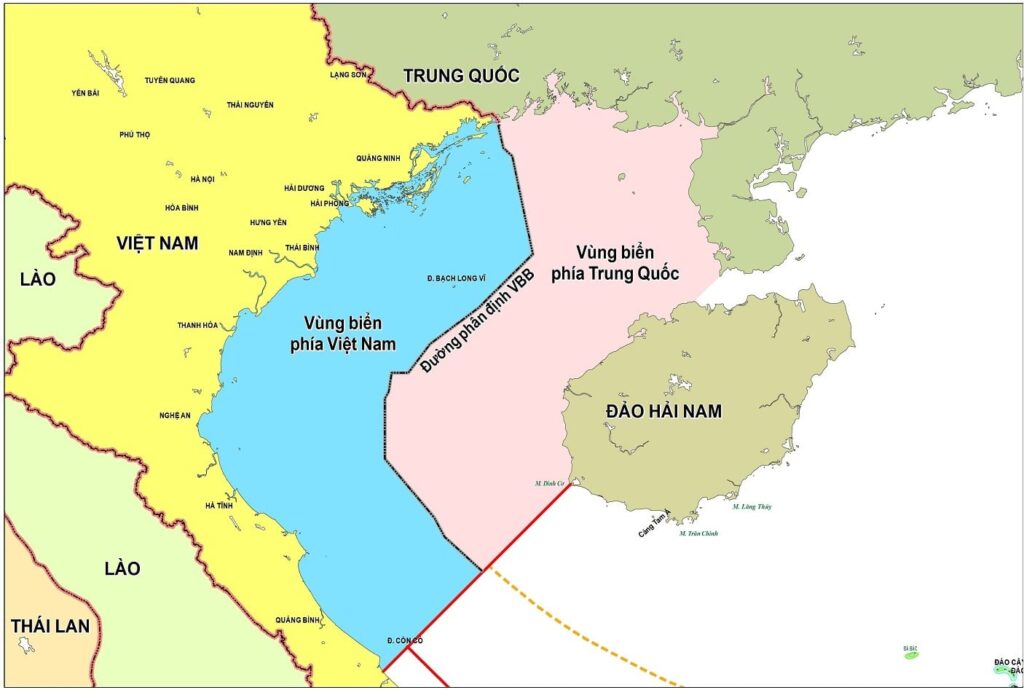
The Gulf of Tonkin lies at the northernmost region of Vietnam, bordered to the north by China, to the west by Laos, and to the east by the South China Sea. The Gulf features two primary sea gates: the Qiongzhou Strait, which spans 35.2 km between the Leizhou Peninsula and Hainan Island (China), and the main mouth of the gulf, defined by a straight line stretching from Con Co Island, Quang Tri Province, Vietnam, to Oanh Ca Cape, Hainan, China, spanning 110 nautical miles (approximately 200 km). Within these limits, Vietnam possesses 763 km of the Gulf coastline, while China possesses 695 km.
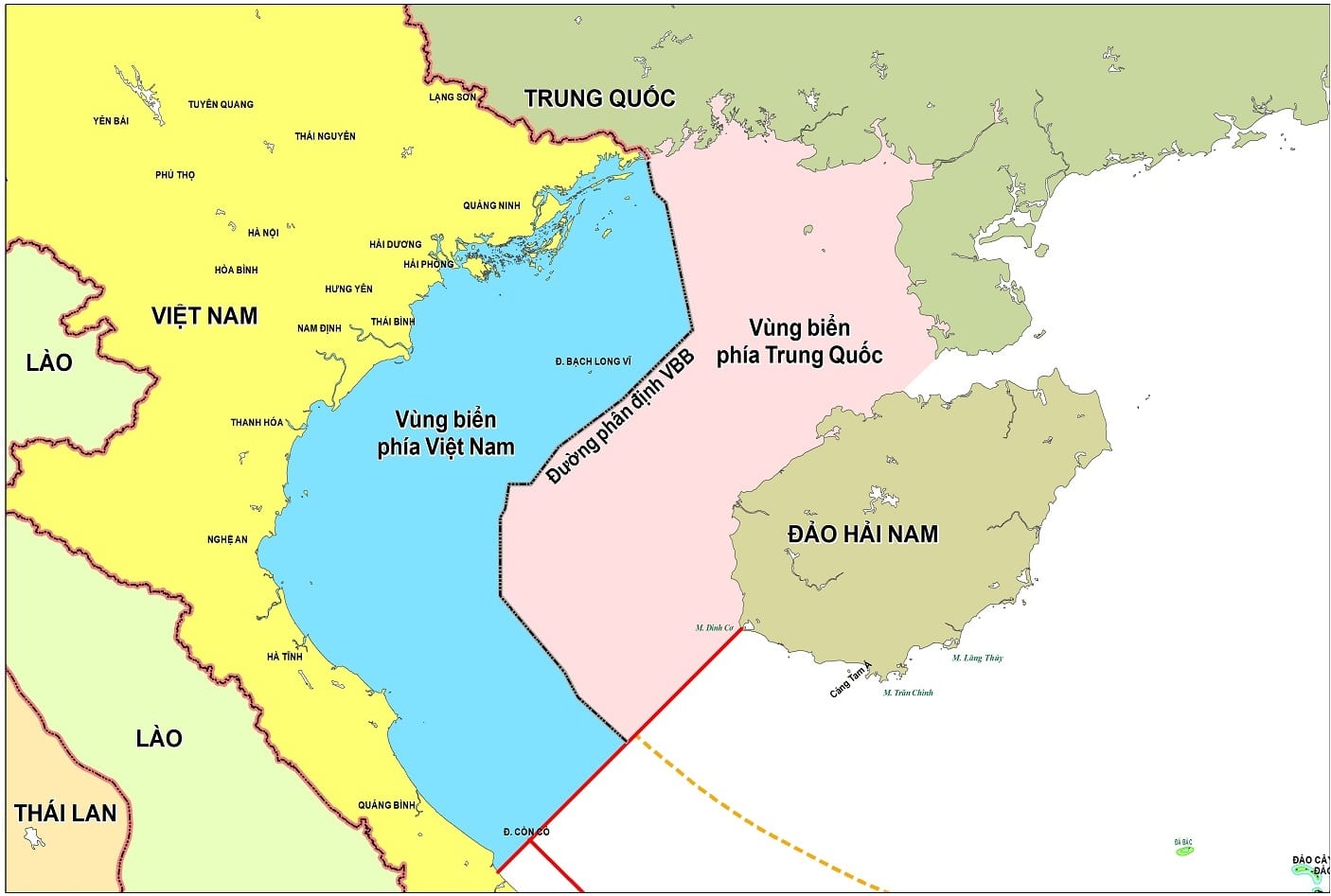
The geographical boundaries of the Gulf of Tonkin in the South China Sea, encompassing 10 coastal provinces: Quang Ninh, Hai Phong, Thai Binh, Nam Dinh, Ninh Binh, Thanh Hoa, Nghe An, Ha Tinh, Quang Binh, and Quang Tri (Vietnam), along with the two provinces of Guangxi and Hainan (China).
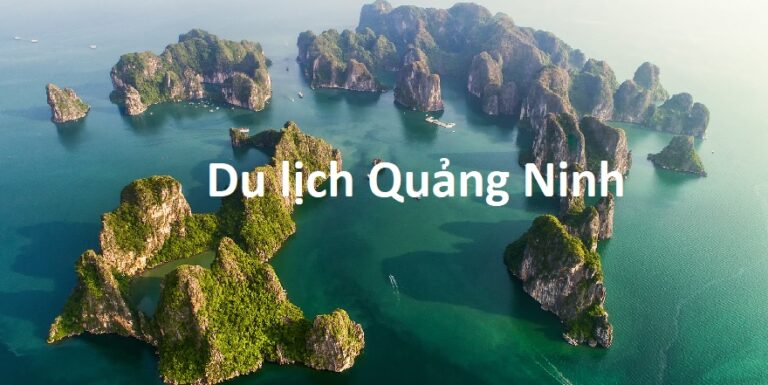
The topography of the Gulf of Tonkin is complex and diverse. To the west and northwest lies the Northern Midlands and Mountainous region, characterized by high and rugged mountain ranges extending from the northern border (shared with China) down to the western part of Thanh Hoa province. To the south of the Gulf is the Red River Delta—Vietnam’s second-largest delta after the Mekong Delta—covering approximately 15,000 km² and accounting for 4.5% of the country’s total land area. The eastern side of the Gulf consists of the Northeast region, featuring low mountains and hills along the coast, interspersed with numerous islands and archipelagos. The Gulf of Tonkin is home to a collection of nearly 3,000 islands scattered throughout the waters of Ha Long Bay, Bai Tu Long Bay, Cat Hai Island, the Cat Ba Archipelago, and Bach Long Vi Island of Vietnam, alongside a small number of islands in the northeastern part of the gulf, such as Weizhou and Xieyang islands of China.
In international texts, the Gulf of Tonkin is commonly referred to as the “Gulf of Tonkin” or “Beibu Gulf.”
- Gulf of Tonkin: This is the standard English term used in international documentation.
- Beibu Gulf: This is the name frequently used in official English-language documents published by China.
The word “Tonkin,” written in Sino-Vietnamese characters and modern Vietnamese script, translates to “Eastern Capital” and refers to the historical name for Hanoi, the current capital of Vietnam. In the 17th and 18th centuries, the term referred to the territory of Dang Ngoai (Outer Realm), which included Northern Vietnam and the Thanh-Nghe region, situated north of the Gianh River under the control of the Trinh Lords. From 1883 to early 1945, the name “Tonkin” was used to designate the French protectorate of Tonkin, encompassing the territory of modern-day Northern Vietnam.
Historical Event: The Gulf of Tonkin Incident
1. What was the Gulf of Tonkin Incident?
The Gulf of Tonkin incident was an event utilized by U.S. President Lyndon B. Johnson to escalate military intervention in Vietnam. According to the American account, on August 2, 1964, the U.S. destroyer USS Maddox was allegedly attacked by three North Vietnamese patrol boats while operating in international waters in the Gulf of Tonkin. Two days later, the U.S. claimed that both the USS Maddox and the USS Turner Joy were attacked again by North Vietnamese vessels. Based on these allegations, Johnson requested that the U.S. Congress pass the Gulf of Tonkin Resolution, which authorized him to use military force against North Vietnam without a formal declaration of war.
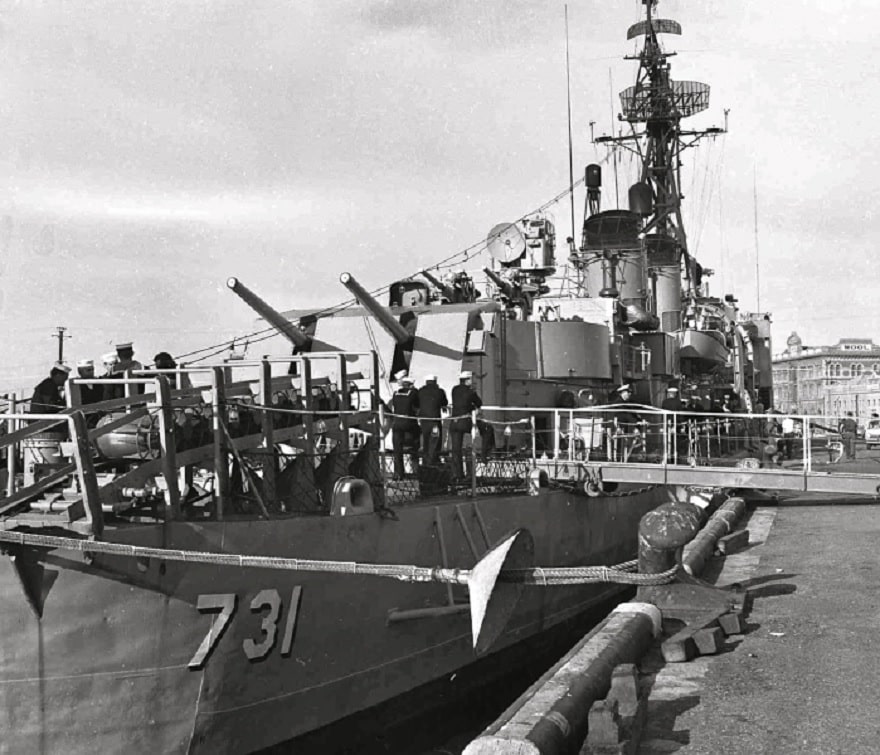
The path leading the US to the “Gulf of Tonkin Incident” in August 1964
However, the Gulf of Tonkin incident has since been exposed as a deceptive American maneuver. In reality, the USS Maddox was engaged in espionage and provocative operations against North Vietnam, aligned with the CIA’s OPLAN 34A. The engagement on August 2, 1964, was a legitimate defensive response by North Vietnam to protect its sovereignty. Conversely, the alleged attack on August 4, 1964, was entirely fictitious—a result of misinterpreting radar signals and radio transmissions. Despite being aware of the truth, US leaders deliberately concealed and distorted the facts to justify the war.
The Gulf of Tonkin incident marked a new phase in the Vietnam War, as the US launched intense air strikes on North Vietnam (Operation Rolling Thunder) and deployed hundreds of thousands of troops into South Vietnam. This event also triggered fierce international opposition and internal dissent within American society, as more people began to recognize the injustice and absurdity of the conflict.
2. Causes
Following the end of the First Indochina War and the Viet Minh’s victory over the French at Dien Bien Phu in 1954, countries at the Geneva Conference divided Vietnam into two parts—North and South—governed by separate regimes with plans for a general election to reunify the country under a single government. The communists appeared poised to win the election, largely due to their superior organization and broader appeal in rural areas. However, the United States, determined to prevent the expansion of communist regimes, invoked the Southeast Asia Treaty Organization (SEATO) Charter of 1954 to support South Vietnamese leader Ngo Dinh Diem when he refused to hold the elections. While Diem seized control of the South Vietnamese government, he was unable to halt communist infiltration. By 1959, the Viet Cong—the South Vietnamese communist guerrillas—and the Viet Minh launched a large-scale insurgency in the South, marking the beginning of the Second Indochina War.
Ngo Dinh Diem failed to earn the loyalty of the South Vietnamese people in the way Ho Chi Minh had garnered in the North. Despite US support, Diem’s rural policies and indifference toward necessary changes, such as land reform, only solidified support for the Viet Cong in the rural South. By 1963, Diem’s rule had deteriorated to the point where he was overthrown and assassinated by his own generals with the tacit approval of the Kennedy administration. Three weeks later, US President John F. Kennedy was also assassinated, and the war continued under new leadership in both nations. Before his death, Kennedy had increased the number of US military advisors in South Vietnam, hoping that a US-backed “nation-building” program would stabilize the new South Vietnamese government. Nevertheless, South Vietnam continued to face political instability and military losses against North Vietnam.
By August 1964, the Johnson administration believed that escalating the US presence in Vietnam was the only solution. The post-Diem South appeared even more unstable than it had been under his rule, and the South Vietnamese military was largely ineffective. Beyond supporting ongoing South Vietnamese operations in the countryside and conducting US bombing missions in Laos to disrupt supply lines, the US military began assisting South Vietnamese attacks on the North Vietnamese coast. The US Navy stationed two destroyers, the Maddox and the Turner Joy, in the Gulf of Tonkin to support these activities. They reported an attack by North Vietnamese patrol boats on August 2 and a second alleged attack on August 4. Later, doubts emerged as to whether the second attack on the Turner Joy had actually occurred.
Immediately following reports of the second attack, Johnson requested that the US Congress authorize the protection of US forces in Southeast Asia. The Senate passed the Gulf of Tonkin Resolution with only two dissenting votes, and the House of Representatives passed it unanimously. Congress supported the resolution under the assumption that the president would return to seek their approval before engaging in further escalations of the war.
The Gulf of Tonkin Incident and the subsequent Gulf of Tonkin Resolution provided the justification for the United States to further escalate the conflict in Vietnam. Believing that Hanoi would eventually weaken under the pressure of intensified bombing raids, Johnson and his advisors ordered the U.S. military to launch Operation Rolling Thunder, a strategic bombing campaign against the North. Operation Rolling Thunder began on February 13, 1965, and continued through the spring of 1967. Johnson also authorized the first of many deployments of regular combat ground troops to Vietnam to counter the Viet Cong in the countryside.
Related Articles
[blog_posts style=”normal” type=”row” columns=”3″ columns__md=”1″ ids=”9011,8994,9565″ show_date=”false” image_height=”56.25%”]