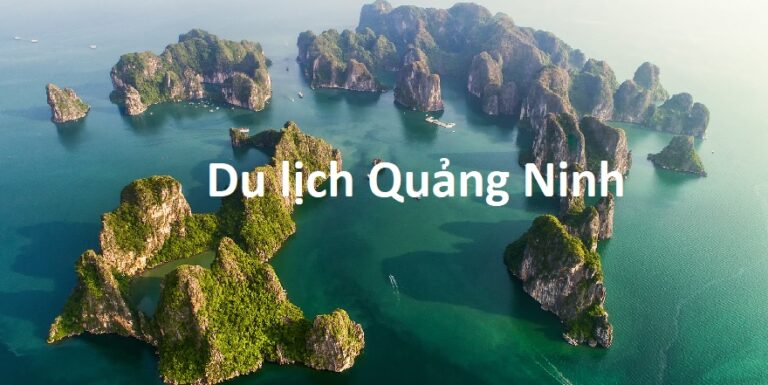
Lunar New Year (Tet) is the ideal time for travelers to visit Quang Ninh, not only to immerse themselves in the heritage beauty of Ha Long Bay but also to embark on a spiritual journey at the start of the year. Many visitors choose to begin this meaningful pilgrimage by cruising aboard bay discovery vessels, savoring the pristine air of the sea and sky before paying their respects at some of Vietnam’s most sacred ancient pagodas. This harmonious blend of leisurely cruising and spiritual devotion lends a uniquely captivating charm to springtime travel in Quang Ninh. Below is a curated list of Quang Ninh’s most renowned sacred sites.
1. Yen Tu Pagoda
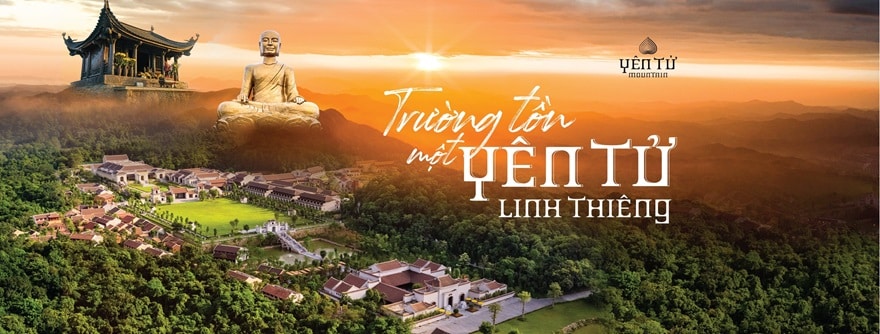
Yen Tu Pagoda
Yen Tu Pagoda is a venerable and deeply sacred sanctuary nestled on the majestic Yen Tu Mountain in Quang Ninh Province. Revered as the cradle of the Truc Lâm Yen Tu Zen school—a distinctive Vietnamese Buddhist denomination that beautifully synthesizes Buddhist teachings with national identity—the complex was established by King Tran Nhan Tong. Having abdicated the throne to his son, the monarch sought solace in the Buddhist path, practicing and expounding the Dharma here alongside his two principal disciples, Phap Loa and Huyen Quang, to found the Truc Lâm Zen sect. Yen Tu features exquisite and unique architectural marvels that reflect its profound mystical and sacred allure.
2. Ba Vang Pagoda

Ba Vang Pagoda: A majestic and spiritually significant temple in Quang Ninh, originally constructed in 1706 during the reign of King Le Du Tong. It has been officially recognized by the Vietnam Records Organization as the mountain pagoda with the largest main sanctuary hall in the country. Situated on Thanh Dang Mountain in Quang Trung Ward, Uong Bi City, Quang Ninh, the pagoda boasts magnificent architectural components, including the main sanctum, ancestral altar house, Mother Goddess altar house, triple gate (Tam Quan), five-direction stupa, bell tower, drum tower, and the graceful eastern and western corridors.
One of the pagoda’s standout highlights is the imposing 10-meter-tall statue of Avalokiteshvara Bodhisattva (Quan The Am Bo Tat), weighing nearly 50 tons. Carved entirely from a single block of monolithic granite, it showcases the master craftsmanship of Vietnamese artisans.
3. Cua Ong Temple
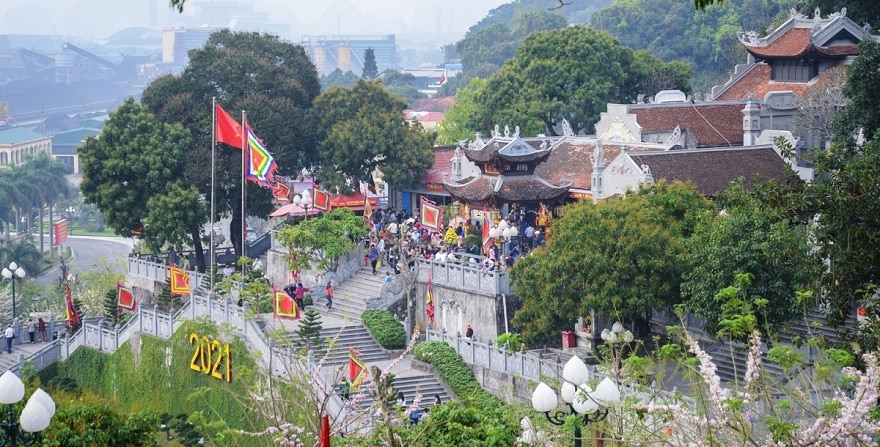
Cua Ong Temple is a site of immense historical, cultural, and spiritual value in Quang Ninh. Dedicated to Third Duc Ong Cua Suot – Hung Nhuong Vuong Tran Quoc Tang, the third son of the legendary Tran Hung Dao, the temple honors a heroic figure who played a pivotal role in defending the nation’s northeastern frontier and repelling the invading Mongol armies. Additionally, the temple enshrines esteemed Tran dynasty generals and family members, including Tran Quoc Tuan, Tran Quoc Uyen, Tran Khanh Du, Tran Nhat Duat, Tran Quang Khai, Tran Thai Tong, Tran Thanh Tong, and Tran Nhan Tong. Cua Ong Temple is gracefully perched on a hill in Zone 9A, Cua Ong Ward, Cam Pha City, Quang Ninh, approximately 40 km from the provincial center.
4. Quynh Lam Pagoda
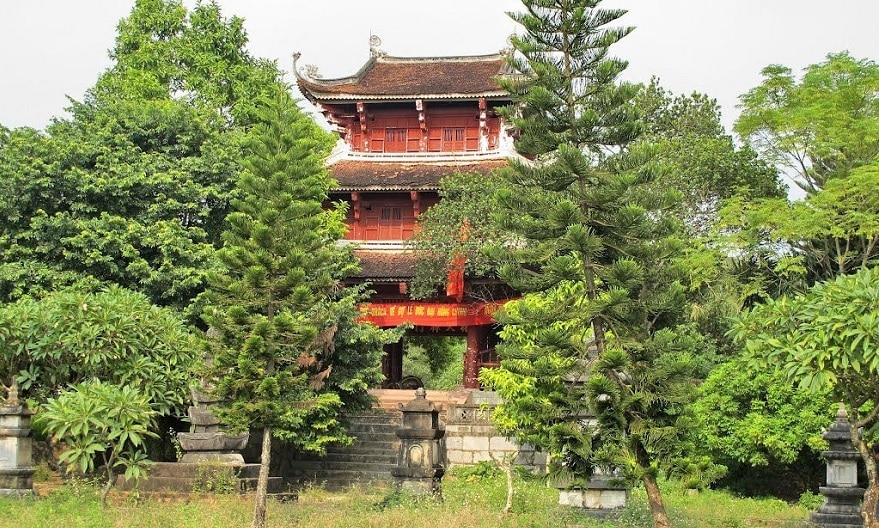
Quynh Lam Pagoda is a renowned ancient temple in Quang Ninh, situated within the Tran Dynasty relic complex in Dong Trieu. Founded during the reign of King Ly Than Tong (1116–1138) by National Master Nguyen Minh Khong—who famously aided the king in defeating the invading Southern Han forces—the pagoda is celebrated for housing a monumental 20-meter-tall bronze statue of Maitreya Buddha, historically hailed as one of the Four Great Treasures of An Nam. It also served as a prominent Buddhist center for the Truc Lam Zen lineage, hosting the activities of Zen Master Phap Loa, the second patriarch of this order. Quynh Lam Pagoda stands on a hill in Trang An Ward, Dong Trieu Town, Quang Ninh, about 3.5 km from the center of Dong Trieu and 83 km from Ha Long City.
5. Am Ngoa Van Pagoda
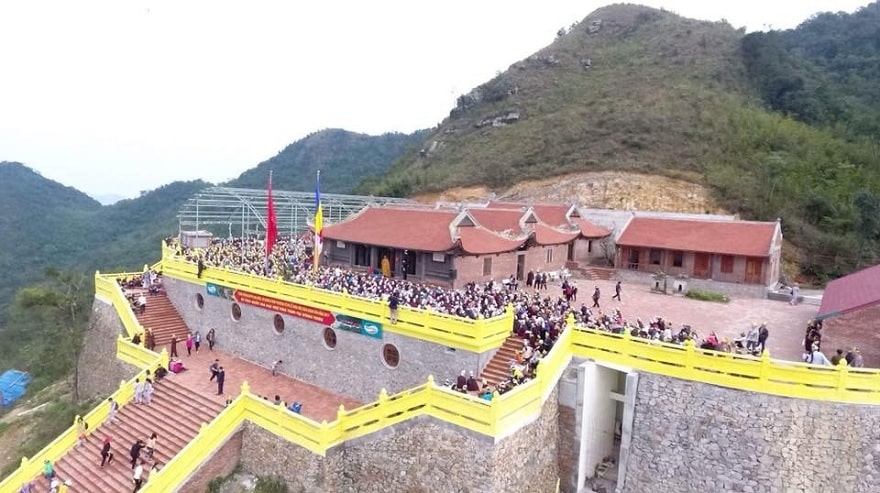
The architectural style of Am Ngoa Van Pagoda
Ngoa Van Pagoda is a pivotal monument within the spiritual realm of Truc Lam Yen Tu Buddhism. It holds an exceptionally significant position in the spiritual and cultural life of the Vietnamese people, as it serves as the final resting place of King-Monk Tran Nhan Tong, who renounced his throne to pursue enlightenment and teach the Dharma to monks, nuns, and followers.
The pagoda is situated at the heart of the southern slope of Bao Dai Mountain (Dragon’s Enclosure), at an average altitude of 588m – 644m above sea level. With its back resting against Bao Dai Mountain, it overlooks the “Brush Peak” (Ngon But) as a natural frontispiece. The pagoda complex spans from the base to the summit of Ngoa Van Peak, an area currently known to locals as the “Ruined Pagoda” zone, the Mother Temple (Nha Mau), and the Fairies’ Chessboard.
6. Cai Bau Pagoda
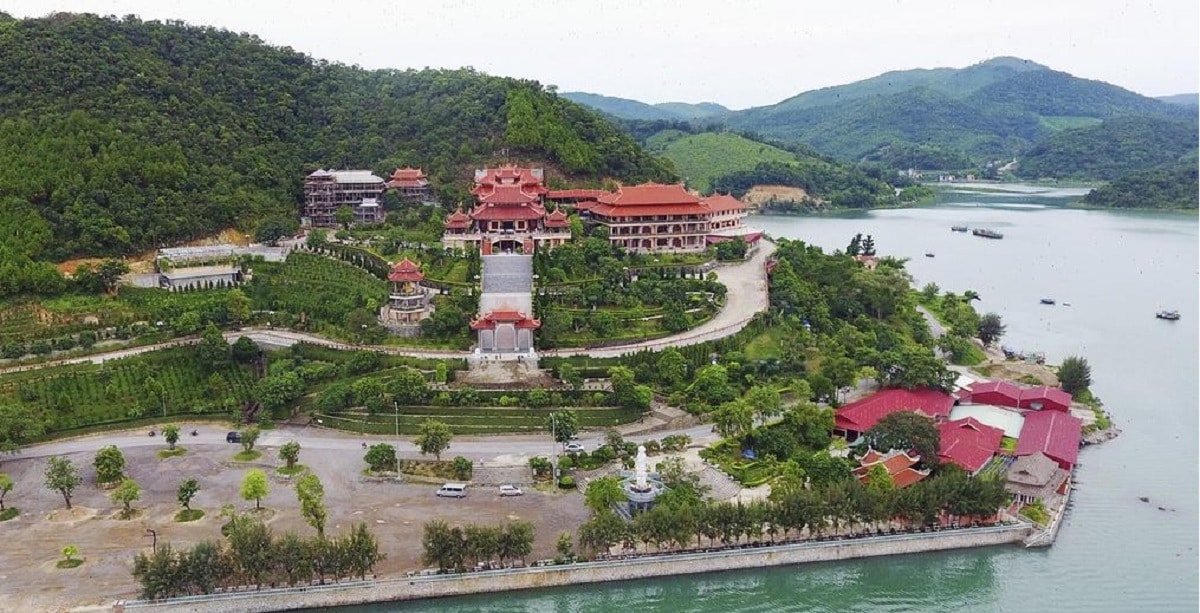
Cai Bau Pagoda with its back to the mountain and face to the sea
Cai Bau Pagoda, also known as Truc Lam Giac Tam Zen Monastery, is a Buddhist nunnery within the Zen lineage. It was built upon the foundations of Phuc Linh Tu, an ancient pagoda dating back to the Tran Dynasty. Located in Ha Long Commune, Van Don District, Quang Ninh, it sits 65 km from the city center. The pagoda houses shrines dedicated to the Tran Dynasty generals who repelled the Mongol invaders in the 13th century. After years of deterioration, the site was restored in 2009 and now covers an area of 20 hectares.
7. Loi Am Pagoda
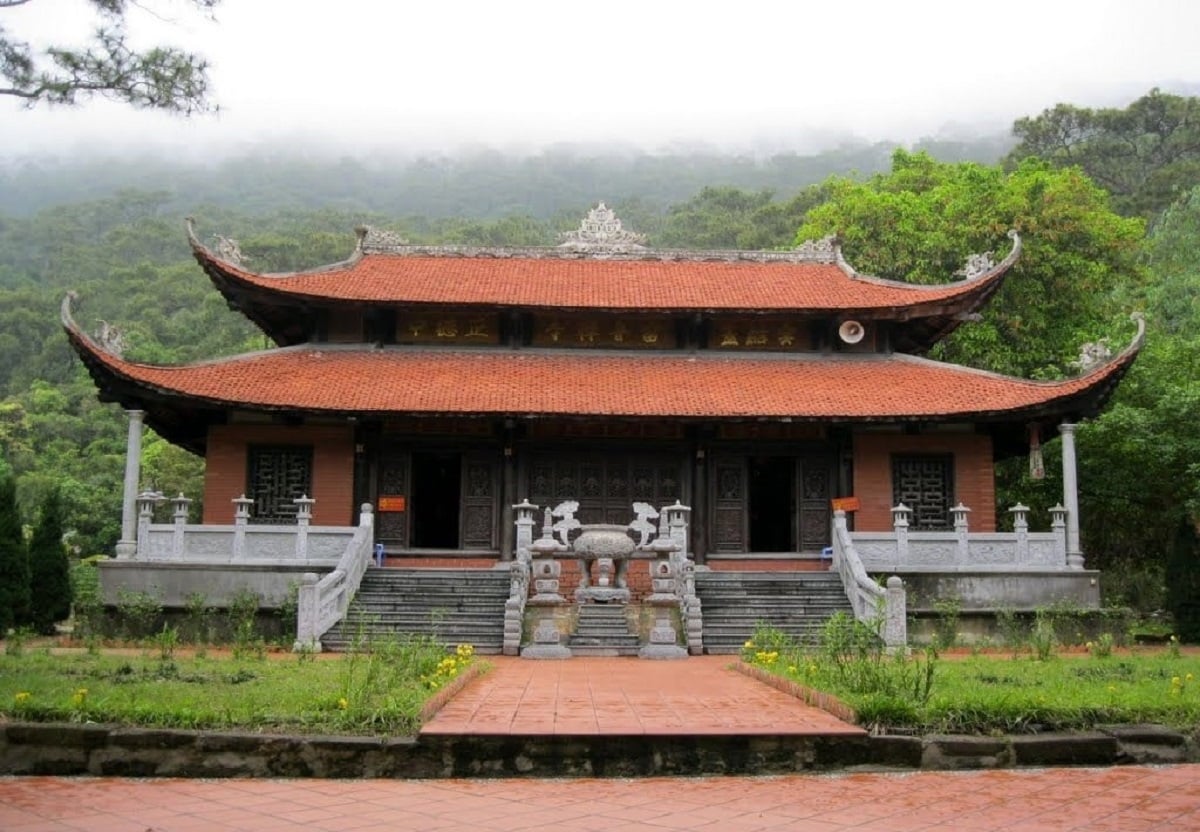
Loi Am Pagoda
Loi Am Pagoda is situated on Linh Thuu Mountain in Ha Long City, Quang Ninh. According to the “Dai Nam Nhat Thong Chi” records, Linh Thuu Mountain stands taller than its neighbors, and its summit features a clearing void of vegetation, often referred to as the “fairies’ chessboard” or the “sky market.” An ancient pagoda named Loi Am lies on the mountainside.
Based on surviving stone steles, Loi Am Pagoda was once a renowned scenic destination in the Hai Dong region, originally constructed during the Tran Dynasty. The pagoda has undergone multiple restorations throughout history, including in 1626 (8th year of Vinh To), 1660 (3rd year of Vinh Thuan), and another undated renovation.
Following the wars against the French and the Americans, Loi Am Pagoda suffered significant destruction; it has recently been rebuilt upon the original foundations. Relics of the old pagoda remain preserved, including 14 bluestone and brick tomb towers, two stone water vats, a 2.48m-tall stone incense burner carved with lotus and chrysanthemum motifs, five stone steles featuring Le-Mac period artistic styles (17th century), and numerous stone column bases.
8. Long Tien Pagoda
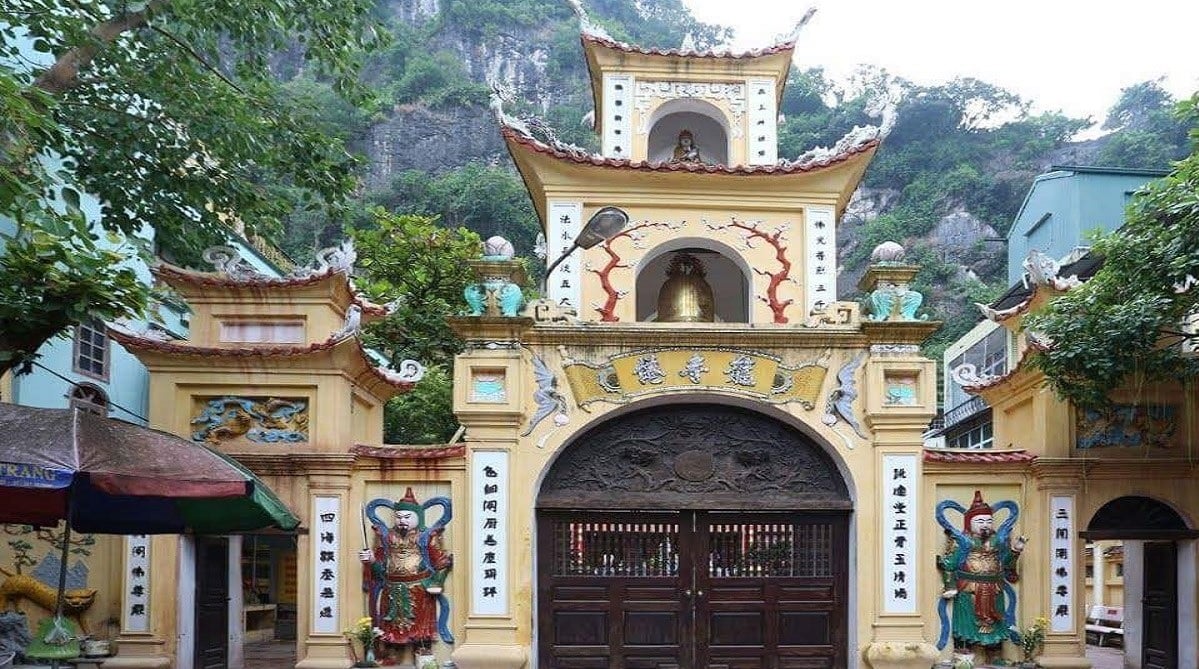
Long Tien Pagoda Ha Long
Long Tien Pagoda is the largest pagoda in Ha Long City and is recognized as a national historical monument by the Ministry of Culture, Sports and Tourism. Built in 1941, it embodies the architectural and sculptural style of Nguyen Dynasty pagodas. The pagoda honors various deities and Tran Dynasty generals who made significant contributions to the nation. Long Tien Pagoda is located at the foot of Poem Mountain (Bai Tho Mountain) on Le Quy Don Street, Bach Dang Ward, Ha Long City, Quang Ninh.
9. Bao Hai Linh Thong Tu Pagoda
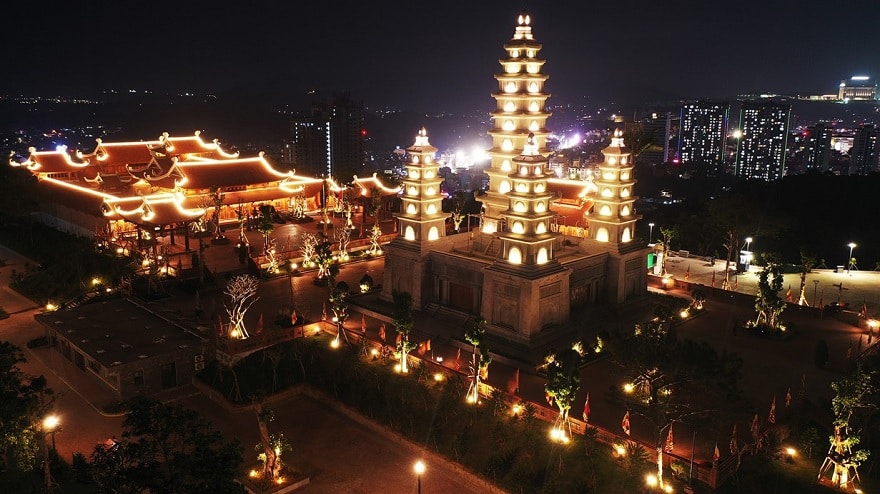
Bao Hai Linh Thong Tu at night
Situated atop Ba Deo Hill within the Mystic Mountain area of Sun World Ha Long Park, this spiritual and cultural complex is a breathtaking sight to behold. Designed in the traditional architecture of the Later Le Dynasty, the pagoda radiates an aura of ancient elegance and solemn majesty, offering panoramic, sweeping views across the magnificent Ha Long Bay. Since its inauguration on April 3, 2021, the pagoda has welcomed pilgrims and travelers from all corners of the globe. Spanning approximately 4,000 square meters, the complex features a main sanctuary, ancestral halls, a Mother Goddess shrine, a three-entrance gate, five precious stupas, bell and drum towers, and grand verandas. The pagoda is dedicated to the worship of Buddha, Bodhisattvas, esteemed monks, and patriarchs. It houses a collection of exquisite wooden statues, including those of Guan Yin, Amitabha Buddha, the Three Jewels, and the figures of Virtue and Vice. Beyond its architectural grandeur, the pagoda hosts spiritual retreats and prayer sessions dedicated to peace and blessings for victims of natural disasters, invoking the power of the Three Jewels to guide souls toward enlightenment. Bao Hai Linh Thong Tu stands as a profound symbol of serenity, peace, and the enduring spirit of the Vietnamese people.
These are the 9 most renowned pagodas in Quang Ninh, each captivating visitors not only with its unique architectural beauty but also with its deep spiritual and historical significance. Every pagoda bears the distinct imprint of Buddhist heritage, ranging from vital centers of cultivation to sacred landmarks associated with legendary figures. Whether you are embarking on a pilgrimage, seeking inner peace, or simply wishing to admire the stunning surroundings, these sacred sites promise an unforgettable and deeply enriching experience.
| Location | Notable Pagoda | Key Features |
|---|---|---|
| Uong Bi | Yen Tu Pagoda | A sacred sanctuary of Truc Lam Buddhism, deeply associated with King-Monk Tran Nhan Tong. |
| Ba Vang Pagoda | Renowned for housing the largest main hall in Vietnam amidst picturesque landscapes. | |
| Dong Trieu | Ngoa Van Pagoda | The site where King-Monk Tran Nhan Tong attained Nirvana; part of the Tran Dynasty historical complex. |
| Quynh Lam Pagoda | A major Buddhist center during the Tran Dynasty, once home to a colossal Maitreya Buddha statue. | |
| Ha Long | Long Tien Pagoda | The largest pagoda in the city, celebrated for its unique architecture and profound historical significance. |
| Loi Am Pagoda | Perched atop Linh Thuu Mountain, offering a pristine and tranquil atmosphere. | |
| Cam Pha | Cua Ong Temple | A famous sacred site dedicated to General Tran Quoc Tang, a hero of the Tran Dynasty. |
| Van Don | Cai Bau Pagoda | Also known as Truc Lam Giac Tam Zen Monastery, located by the sea, offering serenity and peace. |