Ha Long Bay, one of the world’s natural wonders, is renowned not only for its thousands of majestic limestone karsts but also for the mesmerizing subterranean world hidden within—a system of mysterious and magnificent caves. Each cavern, adorned with shimmering stalactites, stalagmites, peculiar formations, and legends of old, stands as a masterpiece of nature, contributing to the irresistible allure of Ha Long Bay. Join Halong Lan Ha Bay Cruise Tours as we explore the geological history and the most breathtaking caves in Ha Long Bay!
The Formation of Caves in Ha Long Bay
The creation of the spectacular caves in Ha Long Bay is a geological narrative spanning hundreds of millions of years. Beginning approximately 200 million years ago, rainwater enriched with carbonic acid seeped through tiny fissures in the limestone, silently dissolving and widening them. This process, known as karstification, persisted tirelessly over millions of years, carving out vast subterranean voids large enough for human exploration. This complex karstification, combined with diverse geological and environmental factors, has crafted a remarkably rich and varied cave system in Ha Long Bay, with over 60 caves discovered to date.
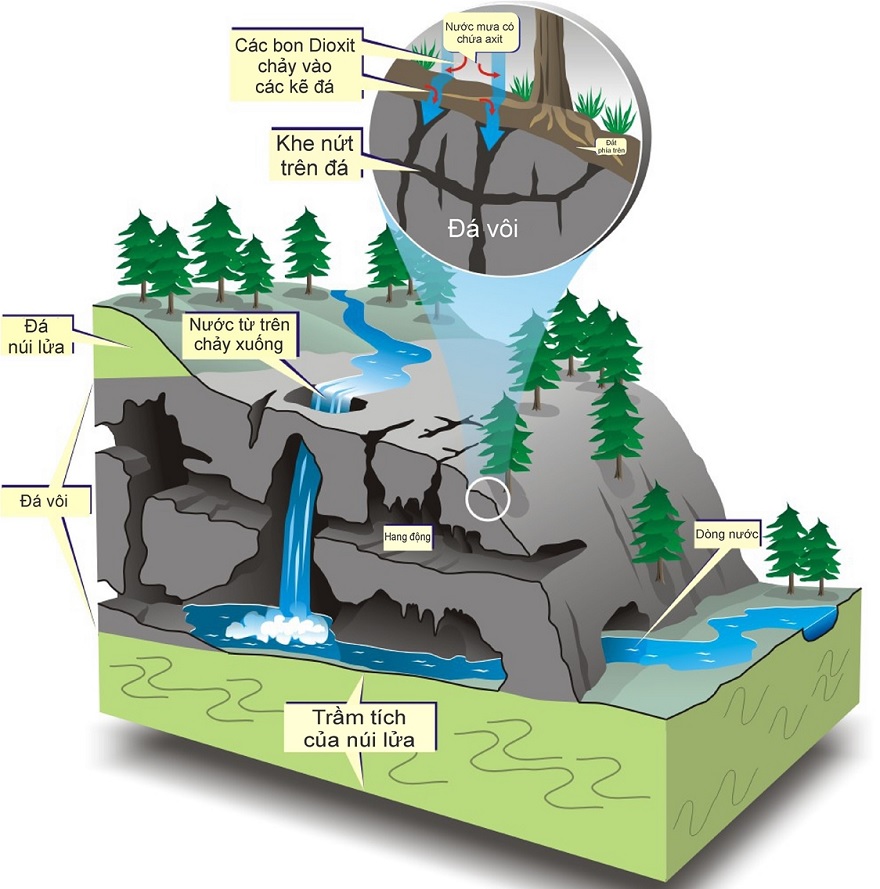
The process of cave formation in Ha Long Bay
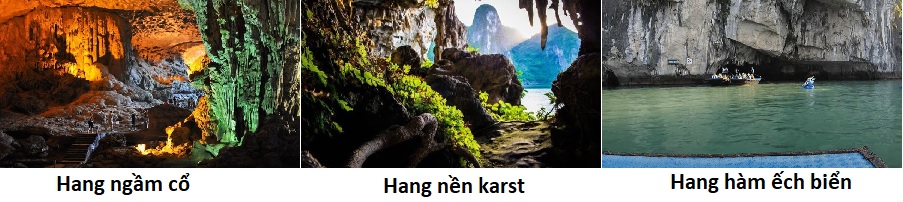
Scientists have categorized these caves into three primary groups, each representing a distinct phase of formation and evolution within the bay’s extensive geological history:
- Ancient Subterranean Caves (Hanging Caves): These are ancient formations typically found at higher elevations above current sea levels. Groundwater once flowed through limestone fissures, carving out subterranean passages. Over time, due to erosion, tectonic shifts, and fluctuating sea levels, these caves were left “suspended” high above, creating unique landscapes. Iconic examples include Sung Sot Cave and Thien Cung Cave.
- Karst Floor Caves: Formed as groundwater flowed horizontally through limestone layers, these caves feature relatively flat floors. Karst floor caves are often rich in stalactites, stalagmites, and other whimsical formations. Notable examples in Ha Long Bay include Trinh Nu Cave and Bo Nau Cave.
- Marine Notch Caves: These caves were shaped by the relentless action of ocean waves. Waves crashing against the limestone cliffs have hollowed out caves resembling an open frog’s mouth. These marine notch caves generally feature wide entrances and low ceilings. A classic example is Luon Cave.
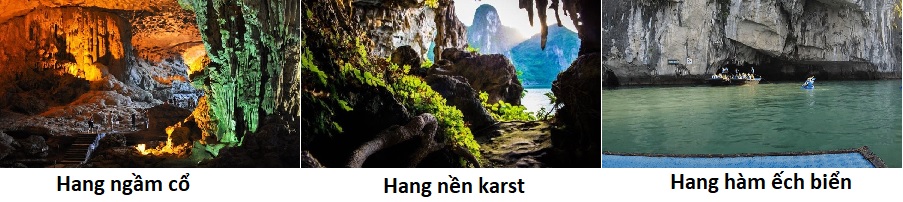
Three main groups of caves in Ha Long Bay
The ethereal beauty of Ha Long Bay, with its thousands of limestone islets and exquisite cave systems, is the crystallization of this mysterious and majestic geological evolution.
The Most Beautiful and Representative Caves in Ha Long Bay
Ha Long Bay possesses a remarkably diverse and abundant system of caves. However, based on their natural beauty, scientific value, and historical significance, Halong Lan Ha Bay Cruise Tours recommends the 6 most outstanding caves in Ha Long Bay that you simply cannot miss during your visit.
1. Sung Sot Cave (Surprise Cave)
With its vast scale, diverse array of stalactites and stalagmites, and unique formations, Sung Sot Cave rightfully tops the list of the most captivating caves to explore in Ha Long Bay. Located on Bo Hon Island and part of the No. 2 tour route, this cavern is widely considered the largest in the bay, covering a total area of 12,200m².
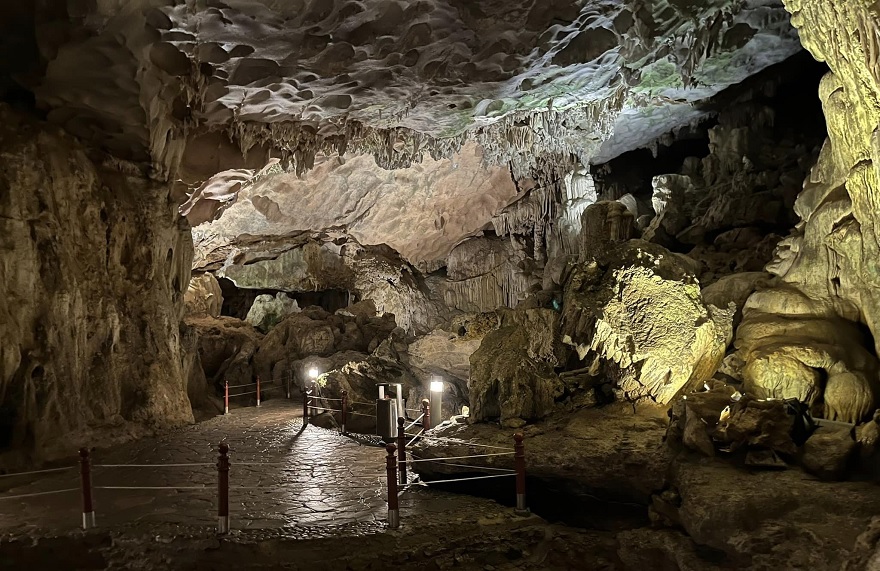
Sung Sot Cave
Sung Sot Cave was first discovered by the French in 1901. Explorers were left spellbound by the cave’s ethereal beauty and the diversity of its unique formations, prompting them to name it “Grotte des Surprises” (Cave of Surprises). In early 2023, the American television network CNN honored both Sung Sot Cave and Luon Cave as two of the seven most remarkable caves in Vietnam.
2. Thien Cung Cave
Thien Cung Cave, part of the No. 1 sightseeing route, is among the most magnificent caves in the Ha Long Bay system and remains one of the most popular destinations for travelers on the bay. The cave features a shimmering, mystical system of stalactites and stalagmites, often likened to a majestic palace or a fine art museum filled with vivid, million-year-old rock formations. The name “Heavenly Palace Cave” was inspired by this extraordinary beauty.

Thien Cung Cave
3. Dau Go Cave
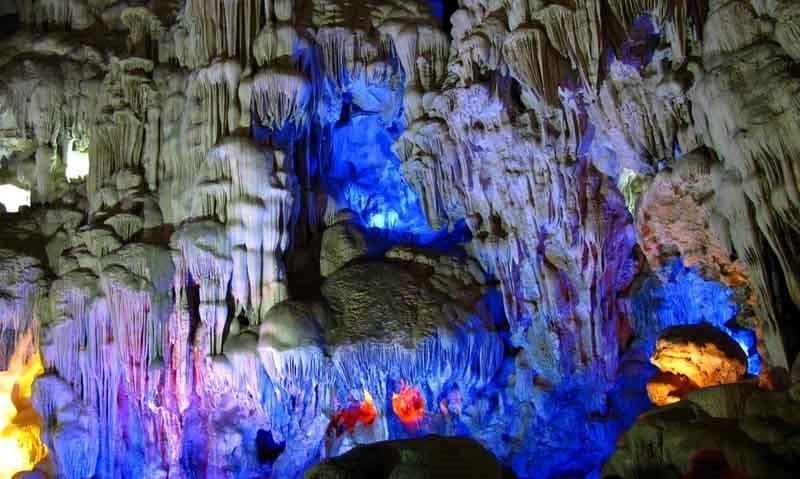
In 1938, Dau Go Cave was first mentioned in a French travel magazine titled Merveille de Monde (Wonder of the World). The author used elegant prose to praise Dau Go as “Grotte des Merveilles” (Cave of Wonders). Beyond its natural beauty, characterized by impressive stalactites and stalagmites, Dau Go Cave is steeped in fascinating historical legends that only add to its unique allure.
4. Luon Cave
Luon Cave is a natural grotto formed over millions of years by the relentless erosive power of seawater against limestone karsts. It serves as a quintessential example of a unique “arch-shaped” karst cave structure: the base of the cave remains below sea level, while the ceiling rises above the water. It spans approximately 100 meters in length and 4 meters in width, with a height of about 3 meters (subject to tidal fluctuations).
Unlike other caverns, Luon Cave resembles a water-filled tunnel that opens into a vast, serene lake spanning roughly 1.2 square kilometers, completely encircled by towering limestone cliffs. Due to this distinctive geography, visitors can only access the inner lake by “navigating” through the tunnel via a small rowboat or kayak—a feature that inspired its name, “Hang Luồn” (literally, “Creeping Cave”).
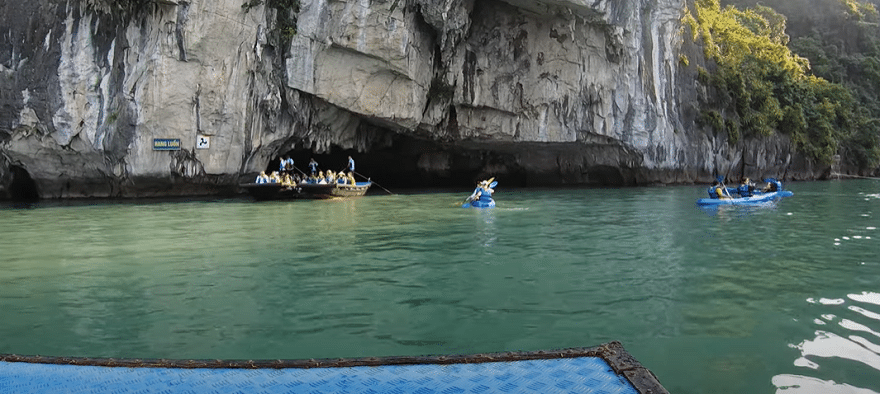
Luon Cave in Halong Bay
Additionally, there is another cave in Halong Bay that shares similar characteristics to Luon Cave, known as Ba Hang (Three Cave), which features three tunnel entrances leading into a lake. As these two caves are quite similar in nature, Halong-LanHaBayCruiseTours will focus on the most prominent landmark within this category.
5. Maze Cave (Me Cung Cave):
Maze Cave is located on Lom Bo Island, approximately 2 kilometers southwest of Titop Island. Although Maze Cave sits along the same Route 2 sightseeing itinerary in Halong Bay as Luon Cave and Surprise Cave, travelers on day-trip cruises will not be able to visit this site. Only those opting for overnight cruises have the exclusive opportunity to explore this unique destination.
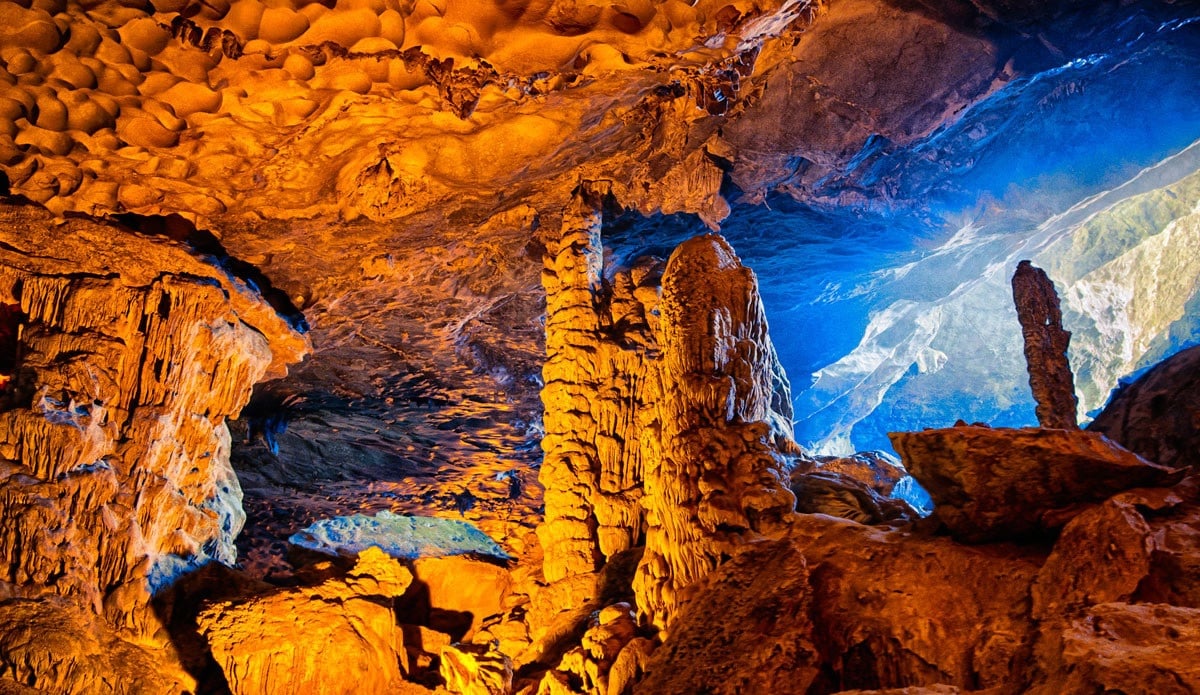
Maze Cave – A journey to discover the mysterious underground world
From a distance, the entrance to Maze Cave resembles a roof tucked away on the mountainside. Locals call it “Maze Cave” due to its complex interior structure, characterized by numerous partitions and narrow chambers. Entering the cave, visitors may feel as though they have wandered into a magnificent labyrinth, hence the name. Based on residual sediment, archaeologists have concluded that Maze Cave is a relic of the prehistoric Halong culture, which inhabited this region between 7,000 and 10,000 years ago. During their explorations, scientists discovered numerous historically significant artifacts, including sediment deposits and mollusk shells. Furthermore, oyster fossils and animal bones were found within the cave. These findings provide profound insights into the living environments and spiritual beliefs of the prehistoric inhabitants of Halong Bay.
6. Tien Ong Cave
Among the many caverns, Tien Ong Cave stands out for its mystical natural beauty and exceptional archaeological value. It served as a home for ancient Vietnamese people of the Soi Nhu culture between 8,000 and 10,000 years ago. Tien Ong Cave is not only an alluring tourist destination but also a window into the rich prehistoric culture of ancient Vietnam, offering visitors a unique and insightful experience.
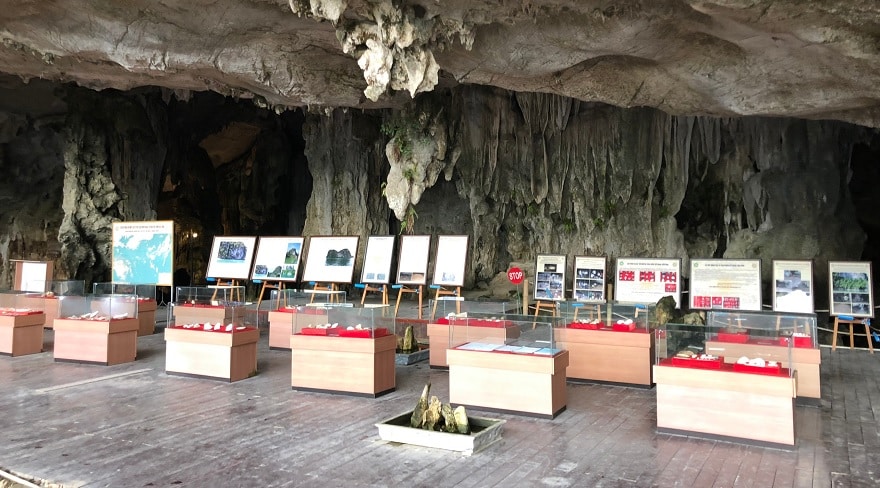
Artifact display area at the entrance of Tien Ong Cave
Pricing and sightseeing routes for Halong Bay caves
| Sightseeing Route Pricing and Itinerary Overview | ||
|---|---|---|
| Route | Entrance Fee | Itinerary |
| Route 1 | 310,000 VND/person | Thien Cung Cave, Dau Go Cave, Stone Dog Islet, Fighting Cock Islet, Incense Burner Islet, Ba Hang area. |
| Route 2 | 310,000 VND/person | Soi Sim Island, Ti Top Island, Sung Sot Cave, Bo Nau Cave, Luon Cave, Ho Dong Tien Cave, Trong Cave, Trinh Nu Cave, Me Cung Cave. |
| Route 3 | 260,000 VND/person | Cua Van Floating Cultural Center, Bamboo Forest area, Tien Ong Cave, Ang Du, Ba Ham Lake, Ba Men Temple. |
| Route 4 | 260,000 VND/person | Co Cave, Thay Cave, Cong Do Island area, Cap La Cave, Tung – Ang Cong Do ecological area, Hon Xep Park, Vung Vieng area. |
| Route 5 | 310,000 VND/person | Cruise Port – Thien Cung Cave – Dau Go Cave – Stone Dog Islet – Ba Hang – Incense Burner Islet – Fighting Cock Islet – Gia Luan Pier (Cat Ba – Hai Phong). |
Important notes for cave exploration:
- Ideal time to visit: As most caves in Ha Long Bay are dry caves, visitors can comfortably explore them at any time of the year.
- Attire: We recommend wearing comfortable, agile clothing suitable for walking and light climbing. Bringing a light jacket is advised, as temperatures inside the caves are typically cooler than the outdoor climate.
- Environmental preservation: Please do not litter, avoid touching the stalactites, and refrain from defacing or writing on cave walls.
For more detailed information regarding pricing and cruise options, please visit: https://halong-lanhabaycruisetours.com/gia-tau-du-lich-tham-vinh-ha-long