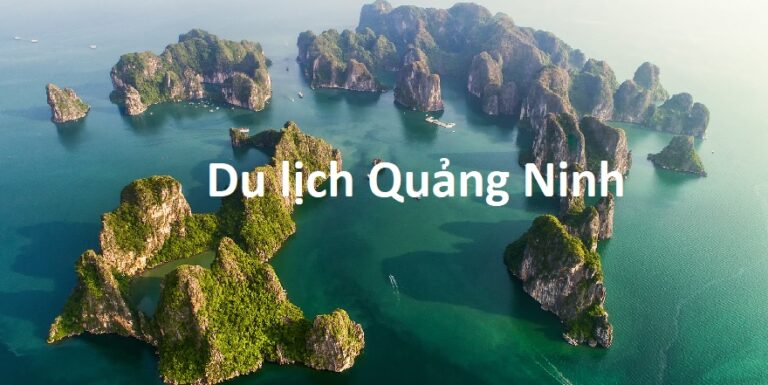
Ha Long Bay stands as one of the world’s most celebrated natural wonders, situated in Quang Ninh Province, Vietnam. Home to approximately 2,000 limestone karst islands and islets of mesmerizing and extraordinary shapes, it conjures a landscape of breathtaking majesty and poetic allure. Ha Long Bay’s peerless aesthetic value has long been internationally acclaimed.
You may also be interested in:
- The Geological and Geomorphological Values of Ha Long Bay
- Legends and Historical Formation of Ha Long Bay
A majestic and spectacular landscape adorned with thousands of limestone islands of all sizes, ethereal grottoes, and pristine beaches
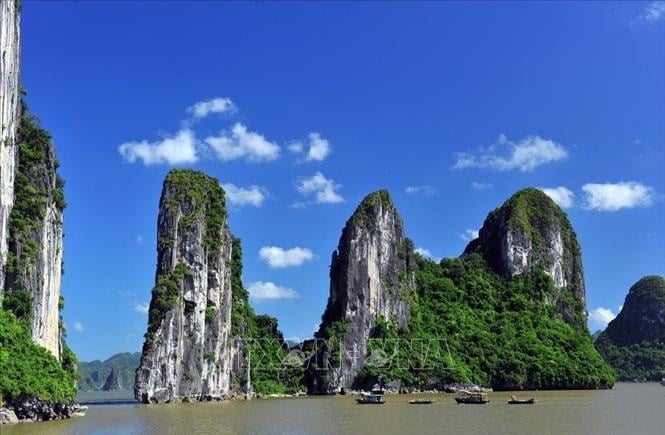
This is the defining essence that forms the irresistible allure of Ha Long Bay. Viewed in its entirety, the scenery of Ha Long Bay is a harmonious synthesis of towering mountains, boundless sea, expansive skies, crystalline waters, and drifting clouds. The deep emerald islands rising from the turquoise waters create a majestic, awe-inspiring seascape resembling a masterpiece meticulously crafted by nature over millennia. The crystal-clear azure sky mirrors upon the sea like a vast polished glass, while gentle white clouds drift softly like floating blossoms in the air. Brilliant golden rays of sunlight or the glowing hues of dusk render the landscape all the more ethereal and romantic.
Each island bears a distinct silhouette—sometimes resembling a dragon, a turtle, a rooster, or a horse; at times evoking the likeness of a man, a woman, or a maiden; or perhaps mirroring a stately head, a majestic helmet, or a suspended bell. These islands are named according to their evocative shapes or fascinating legends, such as Dau Go (Timber Cave), Dinh Huong (Incense Burner), Ga Choi (Fighting Cocks), Trong Mai (Amorous Couple), Titop, and Ngoc Vung. Every single island possesses its own singular beauty and captivating tale.
Furthermore, Ha Long Bay boasts an extraordinary system of mystical limestone caves. With approximately 59 discovered and officially named caverns, each grotto reveals a distinct spatial volume and architectural wonder, adorned with cascading stalactites and stalagmites that form wondrous, dreamlike formations. Some caverns are remarkably grand and deep, such as Thien Cung (Heavenly Palace), Dau Go, and Sung Sot (Surprise); others are intimate and compact, such as Trinh Nu (Virgin) and Trong (Drum). Certain caves invite visitors to glide through by tender or swim inside, like Luon and Ba Ham, while others reward those who climb to elevated heights, such as Tien Ong and Titop. Each cave is intimately intertwined with a legend or folklore that breathes life into its unique name and contours.
Beyond its architectural wonders, Ha Long Bay is graced with pristine, inviting beaches. Around 100 beaches of varying sizes are scattered across the archipelago, typically featuring powdery white sands and crystal-clear waters. Renowned shores include Titop, Quan Lan, Minh Chau, and Ngoc Vung. Alongside swimming, discerning travelers can partake in exhilarating aquatic pursuits such as scuba diving, kayaking, and paddleboarding, or simply revel in the serene splendor of a sunset upon the sea.
The richness and diversity of limestone landforms: limestone pillars, caverns, coastal lines, coral reefs, and sandy shores
Ha Long Bay is the magnificent product of billions of years of Earth’s tectonic evolution. It stands as one of the regions showcasing the most complex and affluent development of limestone geomorphology, encompassing soaring pillars, intricate caves, scenic coastlines, vibrant coral reefs, and tranquil white-sand beaches.
Ha Long Bay represents one of the world’s most intricate and diverse regions of limestone development. These landforms were sculpted over millions of years through relentless processes of dissolution, erosion, precipitation, and the biological activities of marine organisms. Several characteristic limestone formations include:
- Limestone Pillars: Soaring, vertical karst towers that manifest in diverse profiles such as cylinders, cones, and fluted columns. These pillars are carved by the corrosive forces of seawater and wind, which widen fissures and grooves on the rock surface until massive blocks are distinctly separated. As the most ubiquitous landform across Ha Long Bay, these pillars cultivate a breathtaking and singular vista.
- Caverns: Expansive cavities honeycombed within the limestone massifs, varying greatly in dimension and depth. These caves are forged through the chemical dissolution of seawater and subterranean streams carving passages through the stone. Within these chambers, delicate stalactites and stalagmites flourish as calcium carbonate precipitates from dripping groundwater. These enchanting grottoes remain a primary magnet for travelers exploring Ha Long Bay.
- Coastal Lines: Gentle stretches of sand or pebbled shorelines fringing the mainland coast or encircling the islands, formed through the continuous accumulation of marine sediments driven by ocean waves. These coastal zones provide an atmosphere of relaxed elegance and romance for visitors.
- Coral Reefs: Living biological structures formed by colonies of stony corals attached to submerged limestone foundations. These reefs develop as coral polyps secrete calcium carbonate to construct their protective exoskeletons. Possessing exceptional ecological value, these reefs sustain a rich and vibrant marine biosphere.
- Sandy Beaches: Intimate pockets of sand nestled between towering limestone monoliths or hidden within cavern interiors, accumulated through the gentle forces of wind and wave action. These secluded beaches add a touch of exotic, picturesque charm to the Ha Long Bay experience.
UNESCO’s recognition of Ha Long Bay’s aesthetic value
In 1994, the core zone of Ha Long Bay was officially inscribed by UNESCO as a World Natural Heritage site for its supreme aesthetic value (Criterion vii), followed by a second inscription in 2000 recognizing its outstanding universal geological and geomorphological value (Criterion viii). This milestone underscored Ha Long Bay’s monumental standing on the global stage while affirming Vietnam’s steadfast commitment to preserving and elevating this timeless heritage.
The milestone journey of UNESCO’s recognition of Ha Long Bay’s aesthetic values unfolded as follows:
- On December 21, 1991, the Government of Vietnam authorized the compilation of the Ha Long Bay dossier for submission to the World Heritage Committee. This marked a vital inaugural step in establishing the bay’s international stature and significance. To compile the dossier, the Ha Long Bay Management Board collaborated closely with domestic and international agencies, institutions, and specialists to conduct exhaustive field surveys, scientific research, and data synthesis, subsequently formulating a sustainable conservation master plan and producing the dossier according to stringent UNESCO standards.
- In 1993, the comprehensive scientific dossier for Ha Long Bay was finalized and transmitted to UNESCO for evaluation. The dossier comprised three principal sections: Part I: General Introduction to Ha Long Bay; Part II: The Outstanding Universal Value of Ha Long Bay; and Part III: The Conservation and Sustainable Development Plan. Part II stood as the cornerstone, highlighting Ha Long Bay’s unrivaled global aesthetic value in accordance with the Convention Concerning the Protection of the World Cultural and Natural Heritage. Accordingly, Ha Long Bay was appraised as an earthly landscape without parallel—a natural masterpiece marrying sublime sculpture with painting, perfect compositional harmony and chromatic grace, monumental grandeur with delicate, poetic charm.
- Throughout the dossier refinement process, UNESCO dispatched successive delegations of international experts to Quang Ninh Province to conduct field surveys, provide technical guidance, and appraise the site in situ. These expert missions contributed invaluable insights and recommendations to perfect the documentation while offering glowing commendations that reaffirmed Ha Long Bay’s global significance.
- On December 17, 1994, during its 18th session in Phuket, Thailand, the World Heritage Committee officially inscribed Ha Long Bay onto the World Heritage List for its exceptional aesthetic value. This represented a monumental triumph for the Ha Long Bay Management Board and associated domestic and international experts whose tireless dedication brought the dossier to fruition. It remains a profound honor and source of pride for Quang Ninh specifically and Vietnam as a whole, celebrating a natural heritage acclaimed and revered by the global community. It likewise serves as an enduring catalyst for safeguarding and promoting Ha Long Bay for generations to come.
- Following its recognition as a World Natural Heritage site for aesthetic brilliance, Ha Long Bay attracted a soaring influx of domestic and international travelers eager to explore its wonders. This presented a golden opportunity for tourism development and the promotion of Quang Ninh and Vietnam’s national brand. Concurrently, it posed a profound challenge in balancing heritage conservation and management against the potential pressures of burgeoning tourism and socioeconomic activities.
- To uphold its prestigious World Heritage status, Ha Long Bay must strictly satisfy UNESCO criteria regarding integrity, conservation rigor, and effective management. Furthermore, the destination must demonstrate sustainable development—striking a harmonious equilibrium between heritage preservation and socioeconomic progress. To achieve this, the Ha Long Bay Management Board has implemented a robust suite of measures, including formulating and enforcing specialized master plans, policies, and regulations; intensifying site inspections, monitoring, and violation enforcement; elevating community awareness and stewardship; fostering international partnerships to mobilize resources and share expertise; and submitting periodic conservation reports to UNESCO.
- Beyond its aesthetic splendor, Ha Long Bay possesses extraordinary global geological and geomorphological values, representing one of the planet’s most complex and advanced limestone landscapes shaped by billions of years of tectonic activity. The bay reflects dramatic sea-level fluctuations throughout Earth’s evolutionary history, serving as a living archive of global climate change. To honor these scientific values, the Management Board prepared and submitted a supplementary scientific dossier to UNESCO in 1999. Following rigorous review and appraisal, UNESCO inscribed Ha Long Bay for a second time in the year 2000 for its outstanding geological and geomorphological significance. Thus, Ha Long Bay achieved the rare distinction of holding dual UNESCO heritage recognitions—a profound honor and immense responsibility for Quang Ninh and Vietnam.
This landmark event resonated powerfully across the international community, capturing the fascination of travelers worldwide. Ha Long Bay has since blossomed into an iconic emblem of Vietnamese tourism, projecting the nation’s splendid image and brand across the globe while continuously inspiring elevated standards for sustainable management, preservation, and future development.
Itinerary routes where travelers can experience the aesthetic splendor of Ha Long Bay
| Routes | Tariff | Sightseeing Destinations |
|---|---|---|
| VHL1 | 310,000 VND/person | Thien Cung Cave – Dau Go Cave – Cho Da (Stone Dog) Islet – Ba Hang Cave – Dinh Huong (Incense Burner) Islet – Trong Mai (Fighting Cocks) Islet |
| VHL2 | 310,000 VND/person | Soi Sim Beach – Titop Island – Sung Sot (Surprise) Cave – Tung Sau Lagoon – Me Cung Cave – Bo Nau Cave – Luon Cave – Trong (Drum) Cave – Trinh Nu (Virgin) Cave – Dong Tien Lake |
| VHL3 | 260,000 VND/person | Cua Van Floating Cultural Center – Tien Ong Cave – Ba Ham Lake – Ba Men Temple – Ang Du Area – Bamboo Forest |
| VHL4 | 260,000 VND/person | Co Cave (Thien Canh Son) – Thay Cave – Cap La Cave – Vung Vieng Fishing Village – Tung Ang Ecological Zone – Cong Do Island – Hon Xep Park |
| VHL5 | 310,000 VND/person | Thien Cung Cave – Dau Go Cave – Cho Da Islet – Ba Hang – Dinh Huong Islet – Trong Mai Islet – Gia Luan Pier (Cat Ba – Hai Phong) |
| VHL6 | 150,000 VND/person/trip | Chan Voi (Elephant Foot) Islet – Ba Cua Lagoon – Tung Lam Island – Cap Bai Islet (terminal point of the journey bordering Gia Luan, Lan Ha Bay – Hai Phong) |
| VHL7 | 600,000 VND/person | Ha Long Bay sightseeing across itineraries VHL1-2-3-4 (applicable exclusively to discovery cruise vessels) |
| VHL8 | 70,000 VND/person/trip | Tuan Chau International Passenger Port – Ha Long International Cruise Port – Nam Cau Trang Port |
The information above encapsulates the aesthetic magnificence of Ha Long Bay; we trust this article provides valuable insights for your journey. Should you wish to charter a private cruise to explore Ha Long Bay and immerse yourself in its peerless beauty, please contact us for bespoke arrangements and further details.