Quan Lan Island is one of the most remote and pristine islands in the Ha Long Bay region. It is truly an exceptional haven for those seeking to immerse themselves in pristine nature and escape the hustle and bustle of city life. As an off-the-beaten-path destination, travelers have the rare opportunity to enjoy a supremely peaceful getaway. In this article, we provide you with a comprehensive travel guide to Quan Lan Island.
Introduction to Quan Lan Island
Quan Lan is a charming small island nestled within the magnificent Bai Tu Long Bay. Though relatively new to many international travelers, it has become a favored summer retreat for northern tourists in recent years. The island comprises two communes within Van Don district, Quang Ninh province: Quan Lan and Minh Chau. Spanning approximately 11 square kilometers, the island exudes a majestic beauty with soaring mountain ranges stretching from the Van Don range to Got Mountain, acting as a sturdy “natural shield” that safeguards the peaceful lives of its 70,000 residents. Visitors to the island are invariably enchanted by powdery white sand beaches, crystal-clear turquoise waters, and captivating landscapes. Furthermore, you will have the opportunity to savor exquisite seafood, explore historical and cultural landmarks, and partake in a myriad of engaging activities. Despite being inhabited by locals, the island’s scenery largely retains its untouched wild charm, featuring three sprawling white-sand beaches and lush, enchanting forests. Quan Lan Island is also a magnificent place to sample authentic local seafood, boasting an abundance of fresh squid, flounder, mackerel, and prawns in its surrounding waters.
Quan Lan Island
Quan Lan Island is not only blessed with stunning natural landscapes but also boasts a heroic history and rich traditions. Based on historical documents, many researchers hypothesize that Quan Lan was the thriving heart of the ancient Van Don trading port. The remnants visible today allow us to vividly picture the bustling “bustling piers and crowded boats” of Van Don’s golden age of commerce.
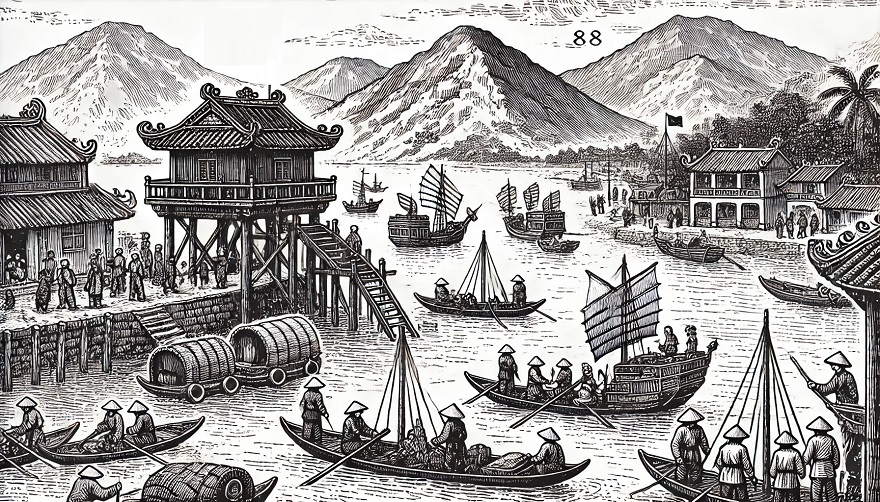
Van Don was once renowned as a bustling trading port
While the area featured numerous subsidiary ports, the primary commercial and administrative hub was located in the former Quan Lan village. During that era, it was a thriving center for trade, commerce, and the exchange of goods. Consequently, Quan Lan is often likened to a “treasure trove” of archaeological sediment, as countless fragments of ancient pottery and porcelain still lie hidden beneath the soil and fields. In the past, elders building houses were unaware of the immense value of these precious artifacts and often used them as foundations. To this day, millions of pottery shards remain scattered across the island.
Ticket Prices and How to Get to Quan Lan
To reach Quan Lan Island, you must first travel to Cai Rong Port (Van Don) to catch a boat to the island. Here, you have two options: high-speed ferries or wooden boats. Depending on your budget and preferences, you can choose the mode of transport that best suits your needs.
- High-speed ferry: You can take a high-speed boat from Cai Rong Port or Hon Gai Port to Quan Lan Island. The journey takes about 45 minutes, with ticket prices ranging from 150,000 to 200,000 VND per trip. There are typically two departures daily: in the morning at 8:15 AM and in the afternoon at 3:15 PM. It is advisable to book your tickets in advance to secure a seat.
- Wooden boat: You can take a traditional wooden boat from Cai Rong Port to Quan Lan Island. The journey takes approximately 2 hours, and tickets cost around 100,000 VND per trip. Wooden boats operate multiple times a day, generally from 7:00 AM to 4:00 PM. You can purchase tickets directly at the port or contact the operators ahead of time.
Must-Visit Attractions in Quan Lan
Quan Lan captivates visitors not only through its ancient history and culture but also via breathtaking destinations that seamlessly blend pristine nature with traditional heritage. From crystal-clear waters and powdery white sands to sites of profound spiritual significance, every landmark here offers a unique experience, making Quan Lan an ideal destination for those who love to explore and immerse themselves in Vietnamese culture. Below are the standout attractions you should not miss when visiting Quan Lan.
1. Quan Lan Communal House
Quan Lan Communal House is an ancient and uniquely architectural structure built in the 18th century, featuring traditional architectural styles: curved red-tiled roofs, ironwood pillars, intricate floral carvings, and numerous folk-art wood carvings and statues. The communal house serves as a place of worship for the island’s guardian deities and hosts vibrant local traditional festivals.
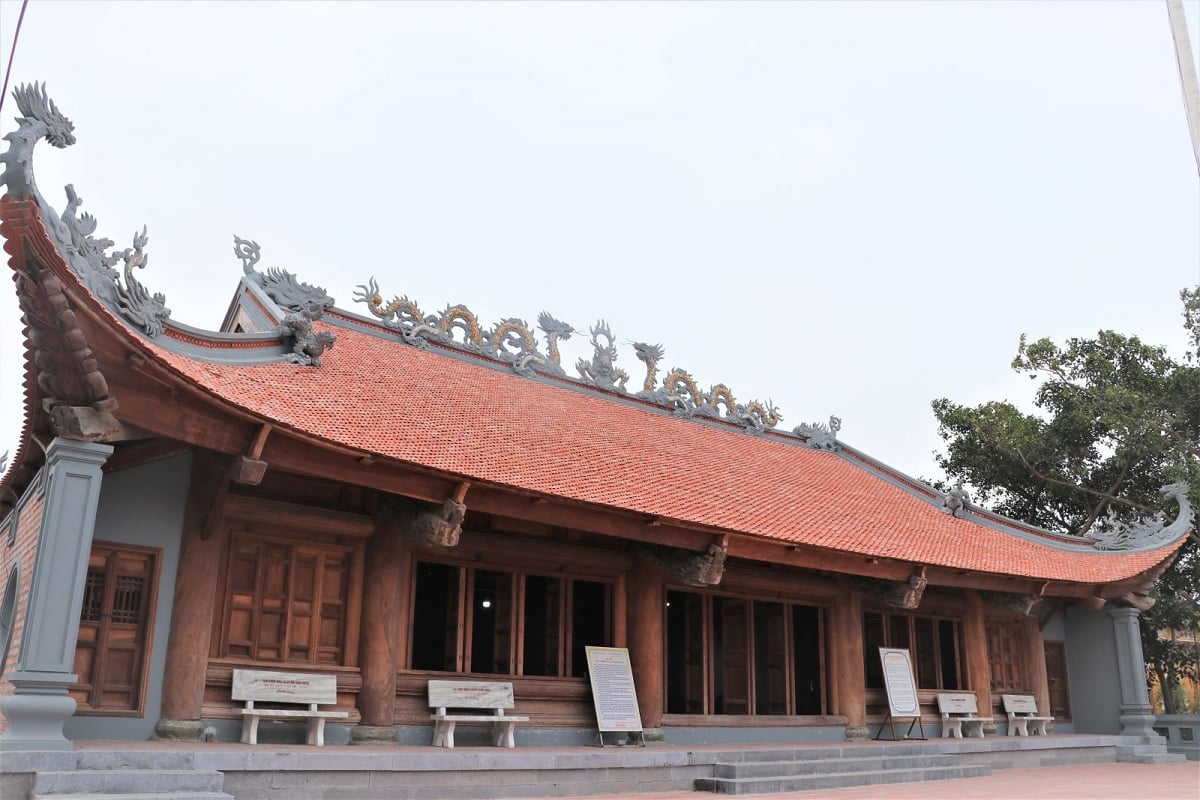
Quan Lan Communal House – Unique architecture and spiritual anchor for coastal fishermen[/caption>
The glorious military triumphs of Deputy Commander Tran Khanh Du were significantly contributed to by three talented brothers of the Pham clan. Quan Lan Communal House still preserves the ancestral tablets of these three Pham generals. The local Pham lineage originally hailed from Khe Tranh village, Quang Yen ward, Quang Yen town. The three Pham brothers served as deputy commanders under Tran Khanh Du and are venerated in Quan Lan, perfectly matching the names recorded on the ancestral tablets at the Pham lineage hall in Khe Tranh village. During that resounding naval victory, all three Pham deputy commanders heroically sacrificed their lives. Their bodies drifted ashore, where local residents respectfully recovered, buried them, and erected a temple in their honor.
[caption id="attachment_17212" align="aligncenter" width="880"]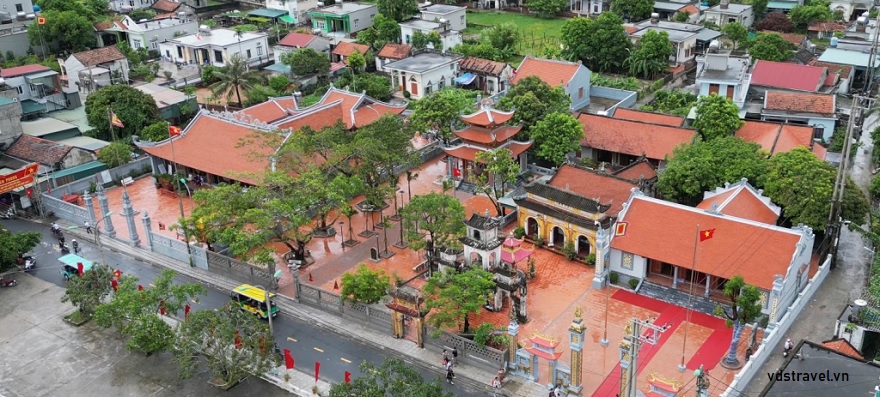 Duc Ong Temple (right), Quan Lan Communal House (left)
Renowned general Tran Khanh Du himself is worshipped in various locations throughout Quan Lan. Locally known as Duc Ong Temple, it is part of the national historical and cultural heritage complex comprising the communal house, pagoda, temple, and traditional occupation areas of Quan Lan commune. Although the Quan Lan temple complex was established very early on, decades of time and historical turbulence left the structures severely degraded. Responding to the aspirations of the local people of Quan Lan commune for restoration and preservation—not only to honor the merits of their forebears and create a dignified venue for cultural and spiritual activities, but also to instill patriotism and serve as a spiritual tourism attraction for visitors from near and far—the site has been wonderfully revitalized.
2. Mother Goddess Temple (Den Mau)
This temple was established long ago by the residents of Yen Hai village with the heartfelt prayer that the Mother Goddesses would watch over their lives, bestow health and peace, ensure prosperous business, and grant smooth, safe voyages for every fishing expedition. Originally, Den Mau was just a small shrine dedicated to Mau Thuong Thien (Mother Goddess of Upper Region) and Mau Lieu Hanh. Later, in addition to Mau Thuong Thien, the villagers of Yen Hai also enshrined Mau Thuong Ngan (Mother Goddess of the Forests) and Mau Thoai (Mother Goddess of Waters).
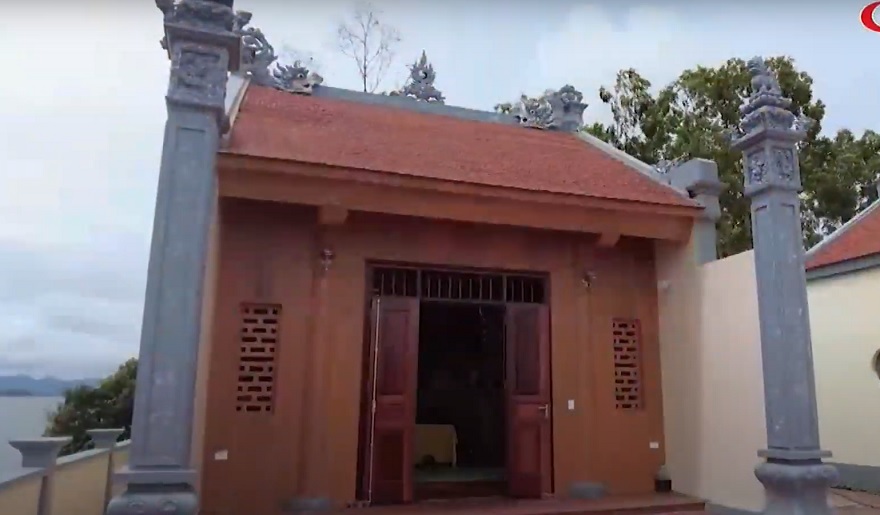
Mother Goddess Temple in Quan Lan
Den Mau was born out of the solidarity and strong bonds forged among the people of Quan Lan as they labored and produced together. It stands as a symbol of community unity, patriotism, diligence in labor, and resilience against harsh natural elements to reclaim land and expand the homeland’s borders. It is also a sacred sanctuary where subsequent generations pay homage and express profound gratitude to national heroes.
3. Beaches in Quan Lan
Quan Lan is an immensely alluring region blessed with spectacular natural beauty and distinct cultural values, among which its breathtaking beaches stand out as absolute showstoppers. When mentioning Quan Lan, one cannot overlook magnificent beaches such as Son Hao, Minh Chau, and Robinson—precious gems sparkling in the heart of the ocean, converging an untouched beauty that few places can match.
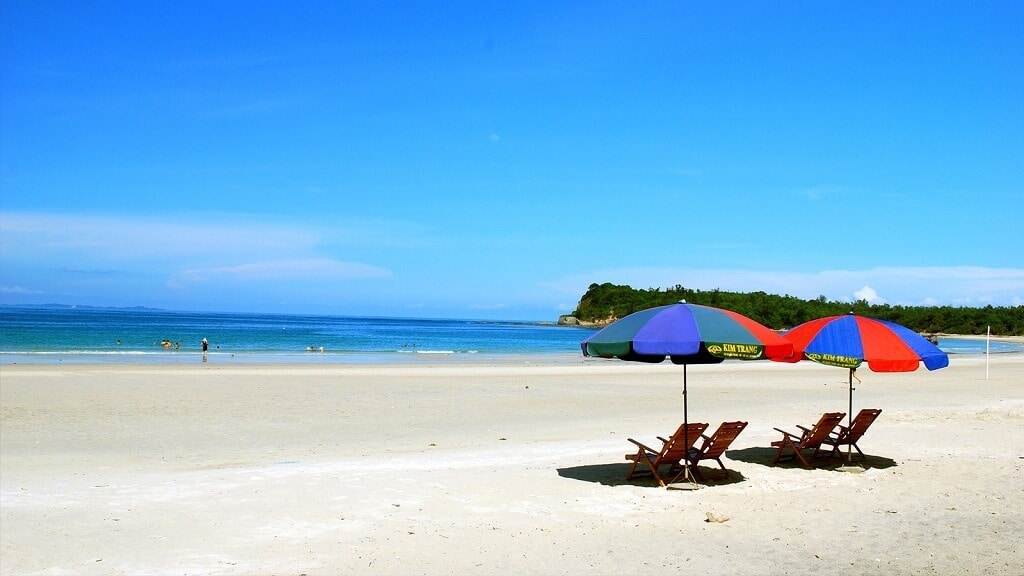
Minh Chau Beach
Unlike crowded, bustling beaches such as Ha Long or Sam Son, which are typically filled with tourist noise and closely packed eateries, the beaches in Quan Lan possess a rare, sublime tranquility. They feature crystal-clear waters reflecting shimmering sunlight and endless stretches of powdery white sand resembling soft silk ribbons. The coastline is fringed by whispering, verdant casuarina trees rustling in the breeze, creating a harmonious natural tapestry that is both poetic and serene. While many other beaches have undergone urbanization and lost their pristine charm, Quan Lan retains its pure, unforced natural beauty, offering travelers a profound sense of relaxation far away from the clamor of daily life. This blissful seclusion and peace transform the island’s beaches into a true paradise where visitors can embrace the ocean, enjoy absolute silence, and discover a Quan Lan completely distinct from other familiar destinations in Quang Ninh.
4. Quan Lan Wind Gap (Eo Gio)
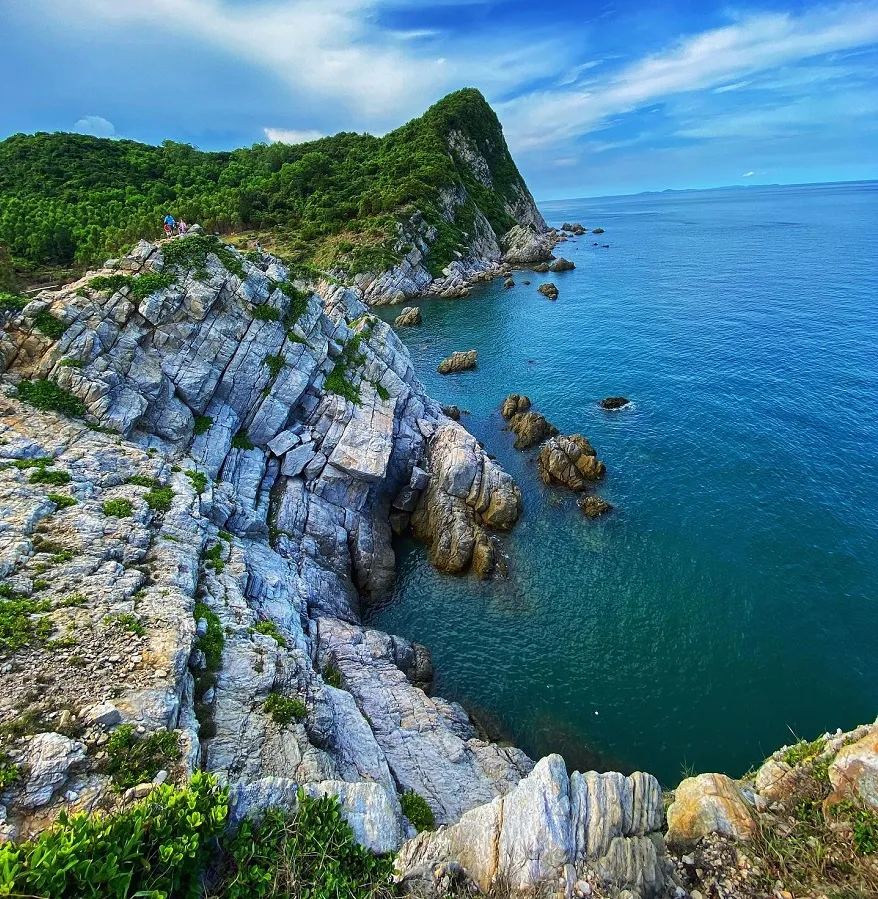
Quan Lan Wind Gap
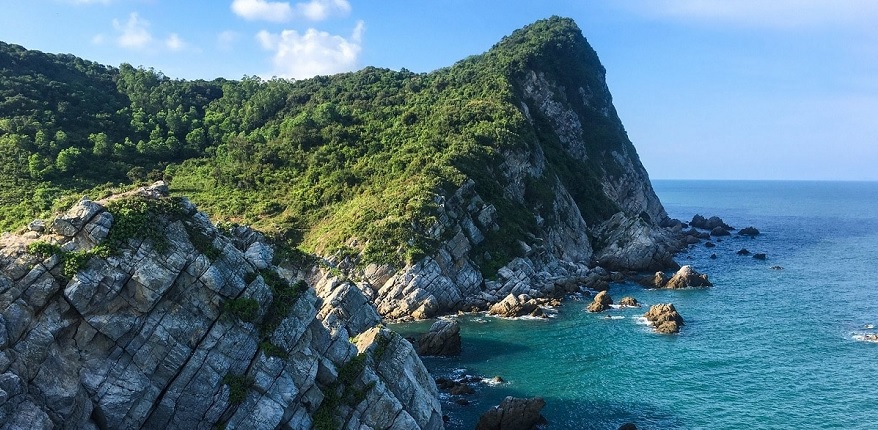
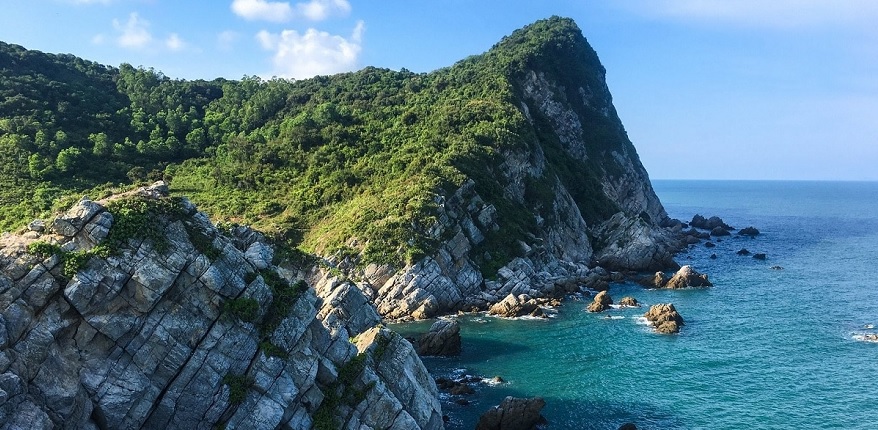
Quan Lan Wind Gap, also known as Got Beo Wind Gap, is a striking rocky headland situated at the southern tip of Quan Lan Island, within Yen Hai village. According to local fishermen, the Wind Gap features rugged terrain characterized by high mountain ridges embraced by forests and the sea, interspersed with natural depressions and hollows. Because it naturally funnels southerly winds during summer—with strong gusts howling through the mountain crevices, particularly at dawn or deep into the night—this location resonates with resounding echoes resembling a howling wind. Consequently, many locals affectionately refer to it as the “Howling Wind Hill.”
Quan Lan Cuisine – Unique and Tempting Island Flavors
Visiting Quan Lan, travelers not only admire the island’s pristine beauty and rich history but also indulge in delicious, signature local delicacies. Quan Lan cuisine predominantly features fresh seafood prepared in diverse ways, delivering bold and tantalizing island flavors. Below are some of Quan Lan’s most famous dishes that you should not miss during your trip.
- Sá Sùng (Peanut Worm): This is a rare and highly nutritious seafood delicacy that exclusively inhabits coastal sandbars. Sá sùng can be utilized as a restorative medicinal ingredient to boost health and treat various ailments. Quan Lan peanut worms can be prepared into numerous delectable dishes such as soups, stir-fries, roasted dishes, or shredded meat floss. This dish possesses a natural sweetness, fragrance, and delightful crunch that appeals to many palates.
- Cù Kỳ (Hairy Crab): A unique rock crab species featuring hairy legs, firm, flavorful meat, and exceptionally large claws. This crab has become a specialty of Quan Lan, featured in mouthwatering dishes such as noodle soup, steamed preparations, tamarind-roasted crab, charcoal-grilled, or made into shredded meat floss. The dish blends the natural sweetness of the crab meat with the sweet, sour, spicy, and savory notes of various spices, making it an absolute treat for the taste buds.
- Cầu Gai (Sea Urchin): A precious and highly nutritious seafood prized for its exceptional health benefits. Sea urchins resemble flattened, thick oranges covered in sharp spines. They can be expertly prepared into a variety of delicacies such as boiled, crispy fried, stir-fried with garlic and chili, or made into fish cakes.
- Dried Squid: A hallmark of Vietnamese culinary culture, prepared from the freshest squids using traditional sun-drying and dehydration techniques. Quan Lan dried squid can be enjoyed on its own or transformed into savory dishes like salt-and-chili roasted squid, battered and fried squid, charcoal-grilled with scallion oil, or tangy salads.
- Fresh Squid: Among the most popular and delectable seafood options in Quan Lan, caught live and cooked immediately. Fresh Quan Lan squid can be grilled, fried, stir-fried, stuffed with minced meat, or crafted into delectable squid cakes.
Traditional Festivals in Quan Lan
Amidst the rich tapestry of heritage sites in Quan Lan, local festivals are celebrated with profound humanistic significance. Most notable is the traditional Van Don Festival, also known as the Boat Racing Festival (Hội Chèo Bơi). The festival commemorates the Tran dynasty’s military and civilian forces who, under the command of Prince Nhan Hue Tran Khanh Du, decisively defeated the grain transport fleet of the Mongol invader Truong Van Ho on the historic Mang River. Traditionally, the festival spans 10 days, from the 10th to the 19th day of the sixth lunar month each year. The main festival day falls on the 18th of June, featuring key ceremonies such as the general mobilization and troop assembly rituals of the two guilds—Dong Nam Van and Doai Bac Vo—at Duc Ong Temple; the troop-feasting ceremony in the temple courtyard; and troop deployment drills conducted along the temple grounds.

Boat Racing Festival in Quan Lan
The highlight of the event is the traditional longboat racing competition between the Dong Nam Van and Doai Bac Vo guilds, recreating the legendary Van Don naval battle led by General Tran Khanh Du 735 years ago. Before the official race commences, both guilds perform a warm-up drill, rowing three laps on the sea before heading ashore. Commanders from the literary (Van) and martial (Vo) factions recite the race pledges. With only two competing teams, there is a first and second prize, but victory is secondary; the true essence lies in the shared joy and deep patriotic pride of the islanders honoring their ancestors’ glorious traditions.
Through these rituals and festive games, participants gain a deeper understanding of General Tran Khanh Du’s history and the ancient military tactics employed by our ancestors. The boat race is not merely a sporting event but a vivid reenactment of troops setting sail into battle and returning victorious in days gone by.
Weather & Climate in Quan Lan
Although Quan Lan experiences four distinct seasons—spring from February to April; summer from May to July; autumn from August to October; and winter from November to January—it also features defined rainy and dry seasons that you should keep in mind when planning your trip. The rainy season on Quan Lan lasts from May to September, while the dry season spans November to March. Each season possesses its own charm and limitations. However, the optimal months to visit are March, April, September, and October. Nevertheless, if you enjoy summer warmth, June through August is the best time to go. Please note that the weather can be erratic during summer, with torrential rains and thunderstorms occasionally interrupting ferry services back to the mainland due to storms. If you prefer milder, more pleasant weather, visiting between October and March is highly recommended.
| Months |
Daily Temperature Range (°C) |
Precipitation |
| January |
19°/11° |
20 mm |
| February |
19°/12° |
12 mm |
| March |
24°/16° |
60 mm |
| April |
26°/20° |
89 mm |
| May |
30°/24° |
139 mm |
| June |
32°/26° |
232 mm |
| July |
33°/27° |
239 mm |
| August |
34°/27° |
229 mm |
| September |
31°/25° |
138 mm |
| October |
27°/20° |
85 mm |
| November |
24°/19° |
42 mm |
| December |
19°/12° |
27 mm |
These are the essential insights about Quan Lan Island that we wish to share with you. Quan Lan Island is an ideal destination for anyone who adores coastal getaways and desires to experience a peaceful, unspoiled sanctuary steeped in history. If you have the opportunity to visit Quang Ninh, do not miss the chance to explore Quan Lan Island and uncover all the fascinating experiences it has to offer. Wishing you a wonderful and safe journey to Quan Lan!