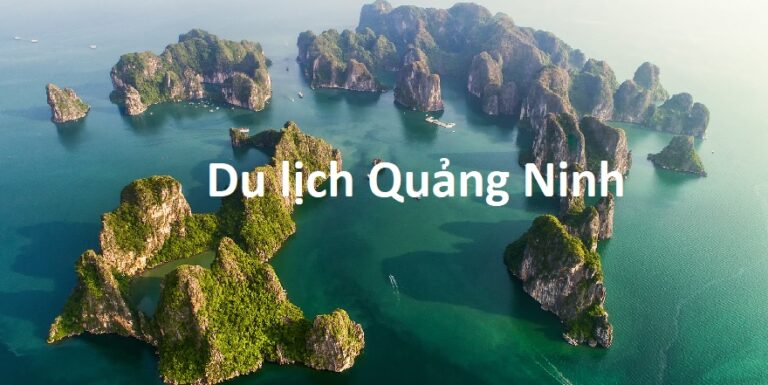
Bai Tu Long National Park is one of the most compelling and unique travel destinations in Quang Ninh. Nestled within the spectacular Bai Tu Long Bay, this national park boasts breathtaking island seascapes, a rich and diverse ecosystem, and a wealth of engaging, rewarding travel experiences. Join us as we explore the wonders of Bai Tu Long National Park in this article!
Location of Bai Tu Long National Park
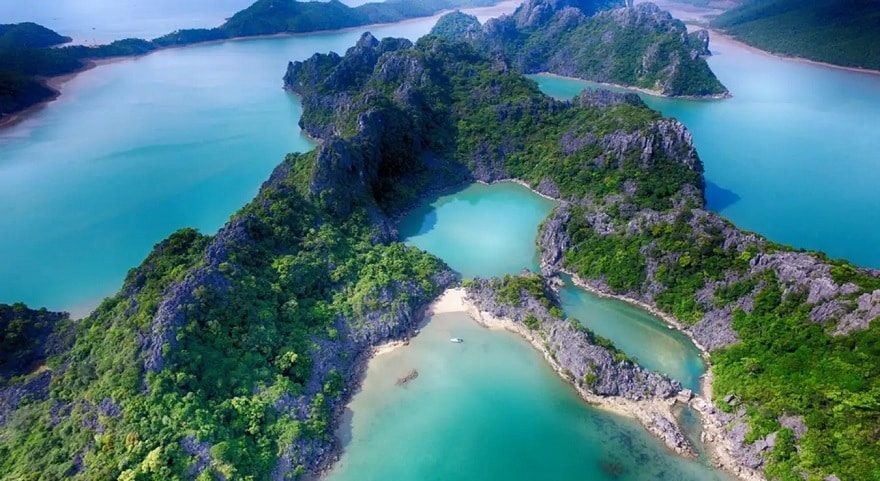
The core zone of Bai Tu Long National Park spans three communes in the Van Don island district: Minh Chau, Van Yen, and Ha Long, home to approximately 24,000 residents. Established on June 1, 2001, under Prime Ministerial Decision No. 85/2001/QD-TTg, the park was founded upon the former Ba Mun Nature Reserve. It covers a total natural area of 157.83 km² (extending to 260 km² when including the buffer zone), comprising 61.25 km² of terrestrial land—featuring over 80 islands and islets—and 96.58 km² of marine aquatic area. The geology of this region is defined by a mix of soil-based and limestone islands, such as Ba Mun, Tra Ngo Lon, Tra Ngo Nho, Sau Nam, Sau Dong, Dong Ma, Hon Chinh, Lo Ho, Mang Ha Nam, Mang Ha Bac, Di To, Chay Chay, Da Ay, and more. Notably, the area preserves remnants of the Soi Nhu culture , with archaeological sites revealing traces of ancient Vietnamese people dating back approximately 14,000 years. Furthermore, the region features limestone mountain ranges encircling vast valleys, creating unique lagoons and hidden bays that provide a rich habitat for a wide array of flora and fauna.
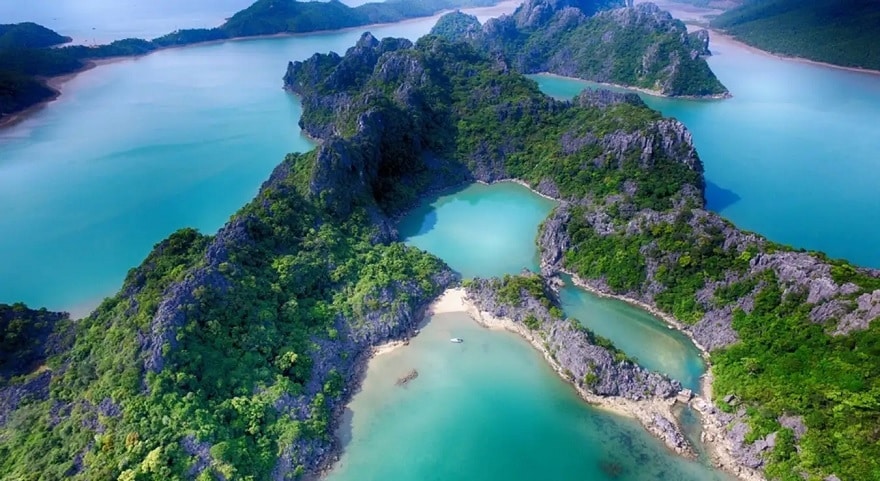
Bai Tu Long National Park
- Flora includes Chukrasia tabularis, Aglaia gigantea, Ardisia sylvestris, and more.
- Fauna includes bears, rhesus macaques, long-tailed macaques, porcupines, three-striped box turtles, leopards, and more.
- Marine life includes dolphins, abalone, sipunculid worms, and particularly two species of sea turtles: green turtles and hawksbill turtles.
- Bird species include the crested serpent eagle, Japanese sparrowhawk, black eagle, white-rumped shama, greater coucal, Hainan blue flycatcher, and more.
It is evident that the flora and fauna inhabiting Bai Tu Long National Park are extraordinarily rich, rare, and hold significant value for genetic conservation. “For this reason, the area is considered the largest natural wildlife reserve in the Northeast region.” In May 2017, Bai Tu Long National Park was honored to become the 6th national park in Vietnam and the 38th in ASEAN to be recognized by the ASEAN Centre for Biodiversity (ACB). Mr. Roberto Oliva, Executive Director of the ACB, stated that Bai Tu Long National Park met five strict criteria regarding ecological integrity, representativeness, naturalness, uniqueness (including rare species and habitats), and legal status.
The most impressive aspect remains its ecosystems, which possess unique characteristics within Southeast Asia from ecological, scientific, and educational perspectives. Bai Tu Long National Park is also a unique case among national parks—both in Vietnam and globally—for containing three distinct and remarkably intact ecosystems: terrestrial forest, wetlands, and marine environments, providing a sufficiently large area for forest and marine flora and fauna to thrive.
Ecosystems of Bai Tu Long National Park
Bai Tu Long National Park is home to remarkable biodiversity, encompassing six primary ecosystems: evergreen broadleaf forests on soil mountains, forest ecosystems, evergreen broadleaf forests on limestone mountains, mangrove forests, coral reefs, seagrass beds, and the unique marine lake (tung/ang) ecosystems nestled within limestone karsts. This biological diversity is expressed through three key aspects.
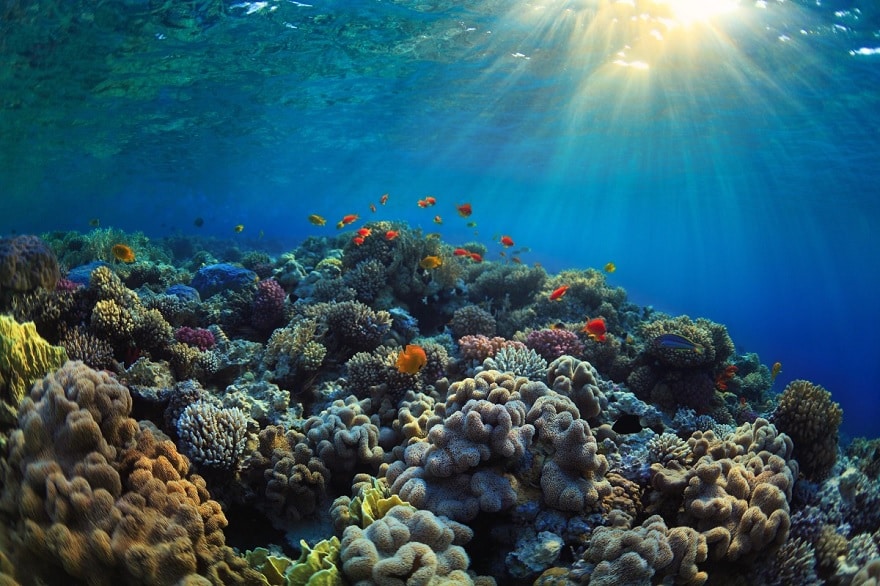
The coral reef ecosystem in Bai Tu Long is considered one of the most diverse in the world
The first aspect is its representativeness and specificity, encompassing the aforementioned ecosystems. Notably, the tropical evergreen broadleaf forest on soil mountains and the freshwater stream ecosystems on soil islands serve as unique differentiators from the World Heritage site of Ha Long Bay. Furthermore, the region features distinct marine lakes (tungs and angs)—saltwater lagoons within islands—that are unique to the Bai Tu Long and Ha Long Bay areas.
The second aspect is ecological integrity: The ecosystems here form a habitat complex that remains remarkably intact for the entire region. This is a unique case among national parks in Vietnam and globally, where typical ecosystems remain largely preserved. This is particularly significant given the current global context, where many ecosystems are facing severe fragmentation and degradation.
The third aspect is uniqueness: A prime example is Tra Ngo Lon Island, which possesses a distinctive geological structure—a single island formed upon two very different geological foundations. The northern part of the island consists of “soil mountains” on a clastic rock base, covering nearly one-third of the island’s area (over 400 hectares). The southern part is composed of limestone mountains, characterized by karst topography with numerous caves and marine lagoons (covering over 1,100 hectares). The intersection of these two ecosystems features marine lagoons hosting a rare mangrove ecosystem (Cai Lim lagoon). This ecosystem has been recognized by senior experts from the ASEAN Centre for Biodiversity (ACB) as the most unique in Southeast Asia in terms of ecology, science, and education.
Tourist attractions in Bai Tu Long National Park
To revitalize marine tourism, Quang Ninh province has intensified the development of the Bai Tu Long Bay region by introducing three permitted sightseeing routes. Among these, Route No. 3 passes through key sites within the Bai Tu Long National Park.
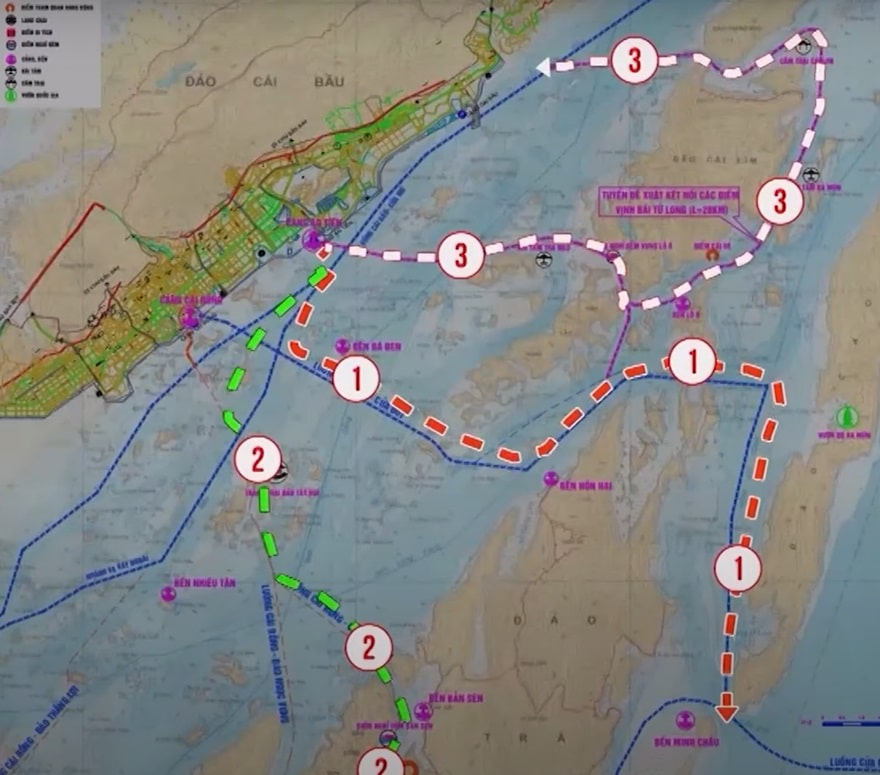
Sightseeing routes in Bai Tu Long Bay
1. Cai Lim Island
Situated within the Tra Ngo Lon island cluster, this location holds immense potential due to its pristine landscapes and invaluable biodiversity. The primary highlight here is a natural green ironwood (lim) forest, featuring hundreds of ancient trees, many so massive they cannot be encircled by an adult’s arms. This forest is slated to become a key destination within the Bai Tu Long National Park tour. Plans include the installation of ziplines between the towering trees, allowing visitors to explore the forest canopy without disturbing the delicate ecosystem below.
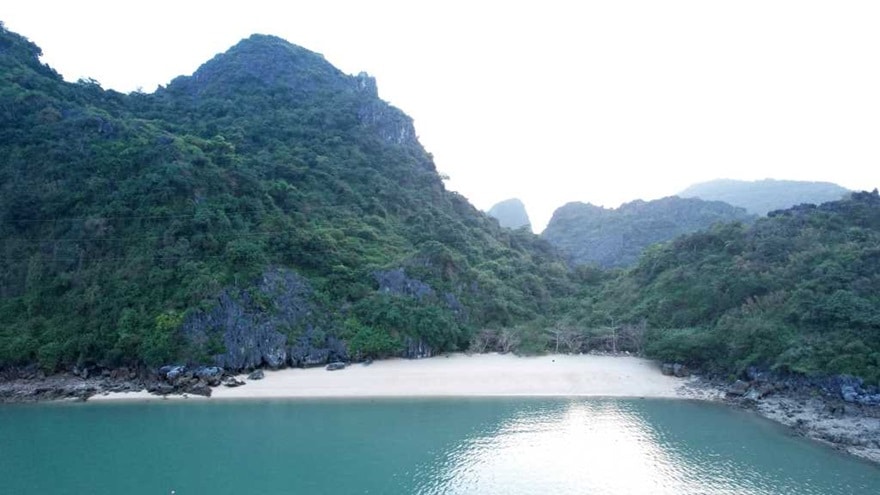
Cai Lim Island
On the trail leading to the mangrove forest at Ang Cai Lim, visitors are flanked by dense, naturally growing bamboo and reeds. The most striking features of these mangroves are the ancient *gia* trees, with their towering branches and massive, expansive root systems that spread across the landscape. Interspersed among them are equally magnificent jungle trees, some serving as ideal hosts for various orchids, creating a truly unique aesthetic. Spanning approximately 200 hectares, this mangrove forest offers an immersive exploration experience; however, it is best visited during low tide, as high tide can submerge the area to chest-height, making navigation difficult.
Beyond the mangroves lies Bat Cave (Hang Doi), an ancient, cavernous space filled with intricate stalactites and narrow passages that require visitors to duck while moving through. The cave floor is scattered with large piles of mollusk shells—remnants left by local monkeys that crack them open to feed on the contents.
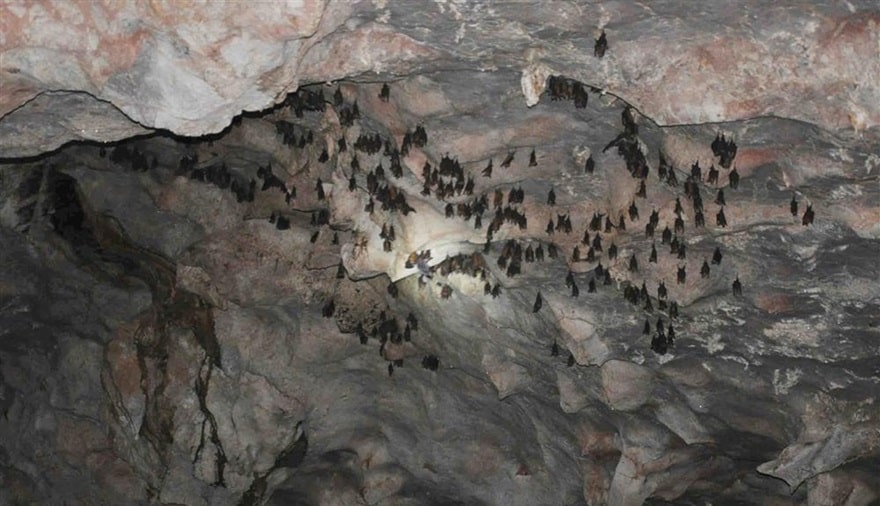
Bat Cave on Cai Lim Island
Along the trail, visitors can discover a variety of unique flora, such as wild orchid clusters growing on limestone cliffs or the “stone gecko” plant, known for its ingenious camouflage. The area is also home to the *xuoi* tree, historically used by the people of Minh Chau commune to wrap *banh gai* (thorn leaf cake) for ancestral offerings during Tet.
Cai Lim is more than just its precious ironwood forest, extensive mangroves, and Bat Cave; the surrounding area is rich in potential for tourism development. Opposite the Cai Lim ranger station is the Mang Ha area, proposed as an overnight mooring point for cruise ships touring Bai Tu Long Bay, and nearby lies the poetic Cai Lim beach tucked at the foot of the mountain. These destinations have been proposed by the Bai Tu Long National Park Management Board to the Quang Ninh Provincial People’s Committee for inclusion in a future 3-day, 2-night itinerary within Bai Tu Long Bay.
Nestled within the vast Bai Tu Long Bay, Cai Lim Island—and the wider Bai Tu Long National Park—possesses significant potential for ecological tourism, yet it has long remained like a “sleeping princess.” Previously, the region was primarily visited only by scientific expeditions and research teams.
2. Swan Islet (Hòn Thiên Nga)
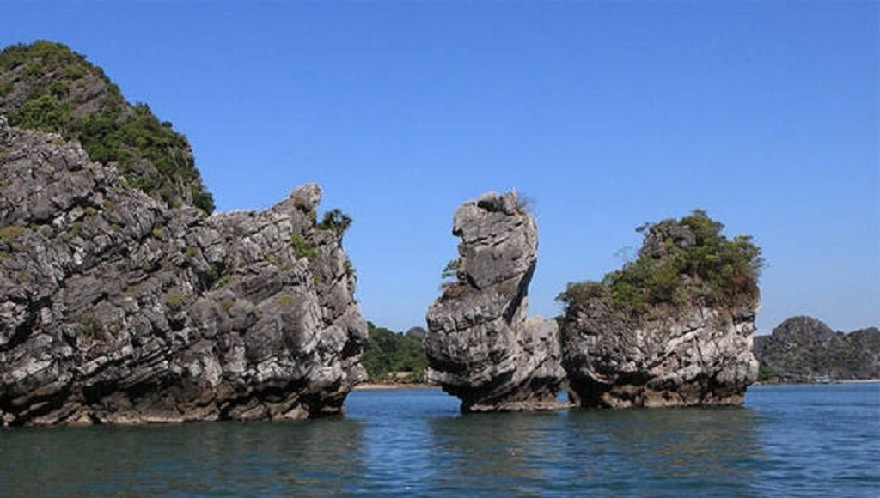
While traveling through the National Park, visitors will be captivated by the breathtaking Swan Islet, a masterpiece of nature located in Tra Than Bay (near Tra Ngo Lon Island). The islet is a natural rock formation comprised of three large boulders: one forming the body of a swan, and the other two shaping its elegant neck and head. Reaching a peak of approximately 15 meters above sea level, Swan Islet is one of the most famous landmarks in Bai Tu Long Bay. Travelers frequently pause to capture photos of this graceful maritime sculpture as they sail past.
3. Cai De Tunnel Cave
Cai De Cave is one of the largest discovered caves in Bai Tu Long Bay. Stretching between 300 to 400 meters, it runs through a limestone mountain range, with its widest points reaching up to 50 meters. The ceiling and walls are adorned with diverse stalactites in various shapes and colors, creating fantastical patterns that showcase nature’s creativity. The cave features two entrances: the outer entrance connects to Ang Cai De, while the inner entrance leads to the Cai De valley, home to a saltwater lake nestled amidst limestone peaks. Ang Cai De stretches about 500 meters and, during high tide, transforms into a long sea canal with crystal-clear water, surrounded by lush primeval forests. Here, visitors can enjoy kayaking, cave exploration, and snorkeling.
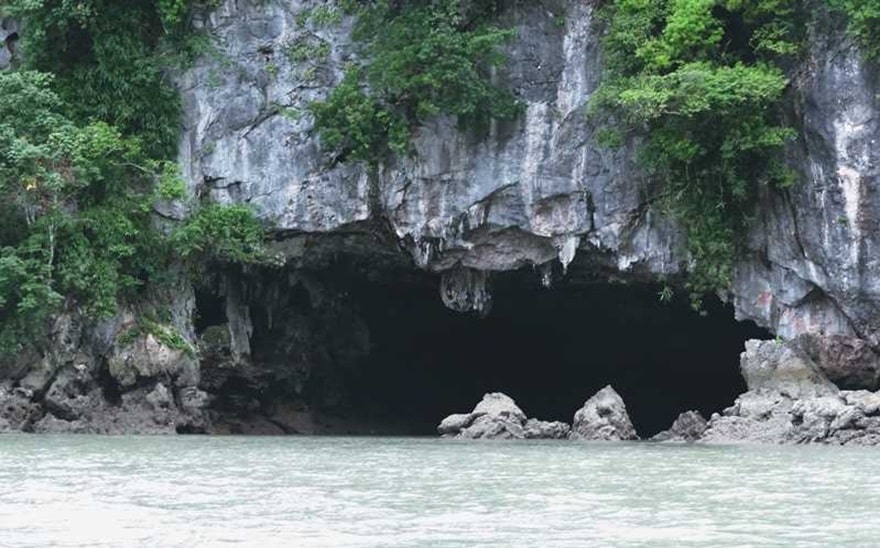
Cai De Tunnel Cave