If you are an enthusiast of Buddhism or simply wish to explore the sacred historical landmarks of our country, Ngoa Van Pagoda is an absolute must-visit. As a pivotal site within the spiritual landscape of the Truc Lam Yen Tu Zen school, this pagoda serves as a memorial to King-Monk Tran Nhan Tong, the founder of this unique Vietnamese Buddhist sect. Beyond its spiritual significance, Ngoa Van Pagoda is blessed with pristine natural beauty and hosts a variety of vibrant, meaningful festivals. Let us guide you through the wonders of Ngoa Van Pagoda in the following article.
See more: Top 9 Most Sacred Pagodas in Quang Ninh
Location of Ngoa Van Pagoda
Ngoa Van Pagoda is situated across An Sinh and Binh Khe communes in Dong Trieu town, Quang Ninh province. It stands as one of the most ancient and sacred sites in Quang Ninh, nestled within the revered cradle of Truc Lam Yen Tu Buddhism. The pagoda is located on the southern slope of a prominent peak within the Yen Tu Mountain range. Known formally as Bao Dai Son, the locals also refer to it as “Dragon Scale” or “Dragon Coil” mountain. Rising approximately 800 meters above sea level, the mountain’s silhouette resembles a dragon stretching its body. The complex is divided into four main areas comprising 15 distinct clusters of towers and temples, including Ngoa Van, Da Chong, Ba Bac, and Thong Dan – Do Kieu. Among these, Ngoa Van Pagoda occupies the central position and remains the most popular destination for pilgrims and visitors.
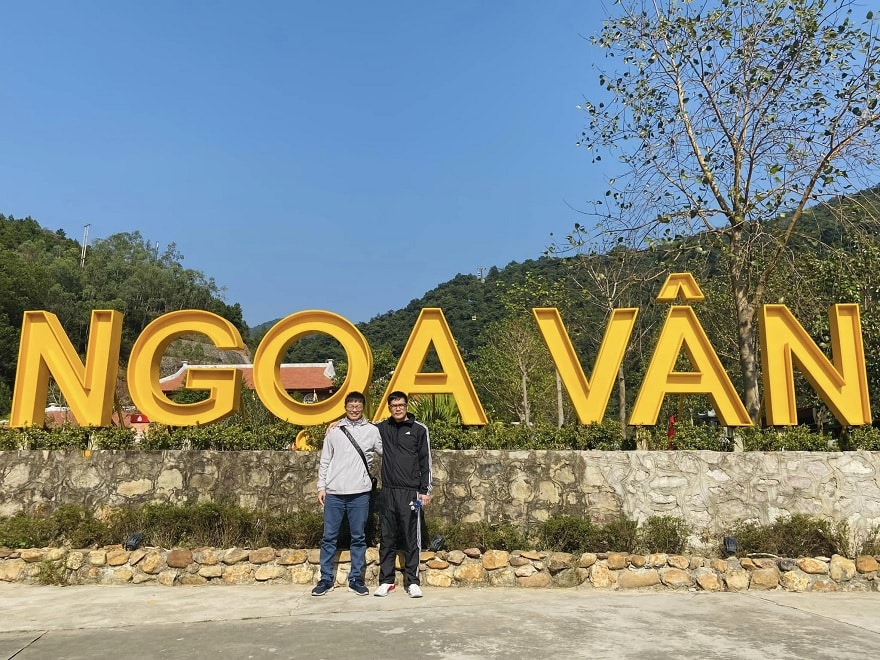
Ngoa Van Pagoda
For those unaware, “Ngoa Van” translates poetically to “Pagoda amid the clouds.” Perched at an altitude of over 500 meters, the pagoda offers breathtaking panoramic views of rolling hills shrouded in white mist during the early hours of the morning. Furthermore, the pagoda “leans” against the Ngoa Van peak—a summit permanently cloaked in clouds—while the distant, winding Cam River completes this ethereal, heaven-like landscape gifted by nature.
With its idyllic coordinates, Ngoa Van Pagoda possesses a distinct charm throughout the changing seasons, captivating all who visit. This is especially true during the first months of the lunar year, from January to March. During this period, the climate is remarkably refreshing and mild—neither too hot nor too cold. Furthermore, this season marks the time for vibrant and meaningful festivities, such as the Ngoa Van Spring Festival, where pilgrims gather to pray for peace and a smooth, prosperous journey ahead.
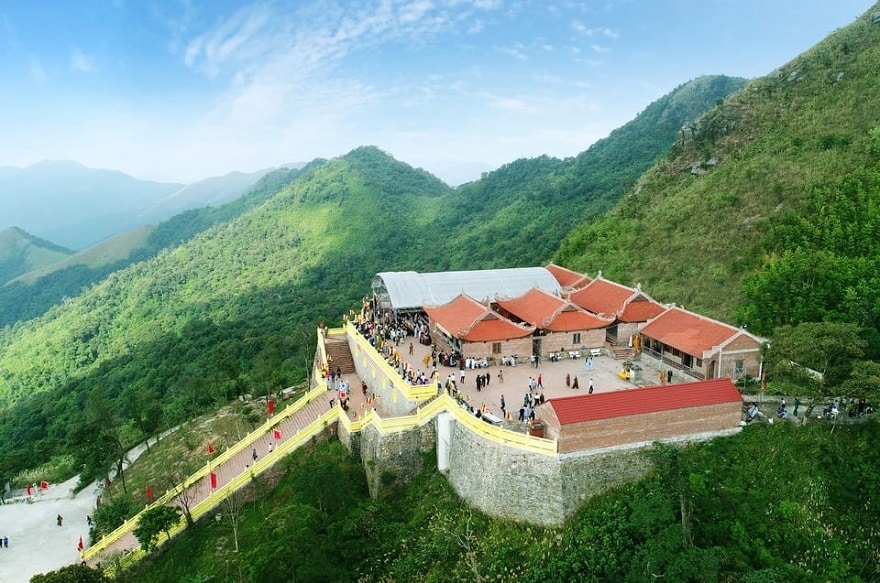
Ngoa Van Pagoda – A destination for spring excursions and Buddhist pilgrimage
Beyond the spring season, you are welcome to visit the Ngoa Van area at any time of year. We particularly recommend the Vu Lan Festival (Filial Piety Festival), celebrated on the full moon of the seventh lunar month. It serves as a beautiful occasion for visitors to express their deepest gratitude to their parents, ancestors, and loved ones who have passed away.
Historical Significance and Architecture
Ngoa Van Pagoda is an ancient Buddhist architectural marvel situated atop Ngoa Van Peak on Bao Dai Mountain, part of the Yen Tu range in An Sinh and Binh Khe communes, Dong Trieu town, Quang Ninh province. This sacred site is where the Emperor-Monk Tran Nhan Tong practiced asceticism and attained Nirvana in 1308. Following his passing, subsequent generations reconstructed the Ngoa Van hermitage and surrounding structures to honor the Buddha and uphold his teachings. Today, it stands as a grand temple and stupa complex, arranged in three distinct tiers across Bao Dai Mountain, encompassing the Ngoa Van hermitage, Ngoa Van Trung Pagoda, and other historic relics.
According to historical records, the Tran Dynasty relied heavily on Buddhism to consolidate their power, establishing Yen Tu as their spiritual stronghold. During his time of ascetic practice in the Yen Tu mountains, Tran Nhan Tong chose the Ngoa Van hermitage on Bao Dai Mountain as his sanctuary for meditation. As documented in the Dai Viet Su Ky Toan Thu (Complete Annals of Dai Viet), in May 1307, the Truc Lam Dai Si (an honorific title for the Emperor-Monk) began his practice at a hermitage on the summit of Ngoa Van—a peak shrouded in mist throughout the year, nestled within the sacred Yen Tu range. On November 1, 1308, Emperor-Monk Tran Nhan Tong entered Nirvana at the Ngoa Van hermitage (now located within An Sinh and Binh Khe communes, Dong Trieu town, Quang Ninh province).
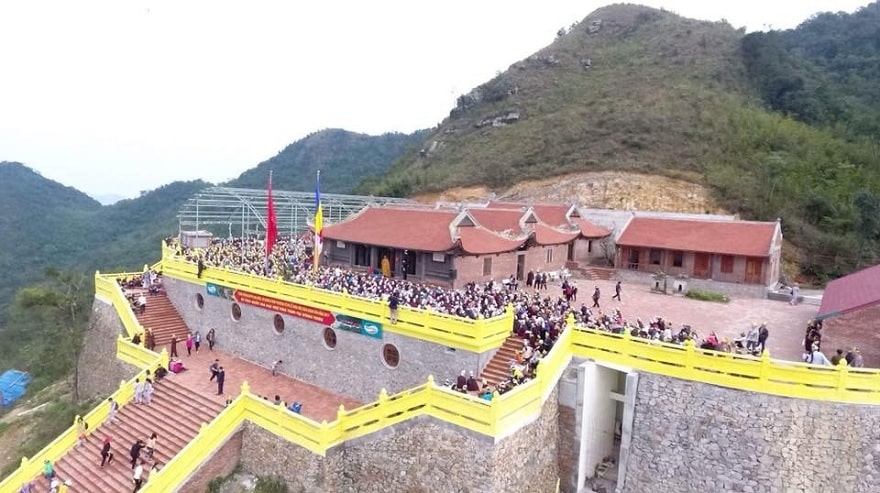
Architectural style of Ngoa Van Pagoda
Following the death of the First Patriarch of Truc Lam, later generations rebuilt the Ngoa Van hermitage to commemorate him, while also constructing pagodas and other religious buildings to worship the Buddha and practice Dharma. Today, the Ngoa Van relic site exists as a sprawling temple complex organized into three tiers on Bao Dai Mountain.
The lowest tier comprises 15 relics located at the foot of the mountain, including the ancient forests of Tan Long and Thong Dan, Phu Am Tra, Do Kieu, the Stacked Rocks, and the Three Steps. These sites are interconnected by a winding path that leads toward the summit. These architectural landmarks bear the distinct imprints of Vietnam’s feudal dynasties, as well as the rich folklore and legends surrounding the Emperor-Monk Tran Nhan Tong.
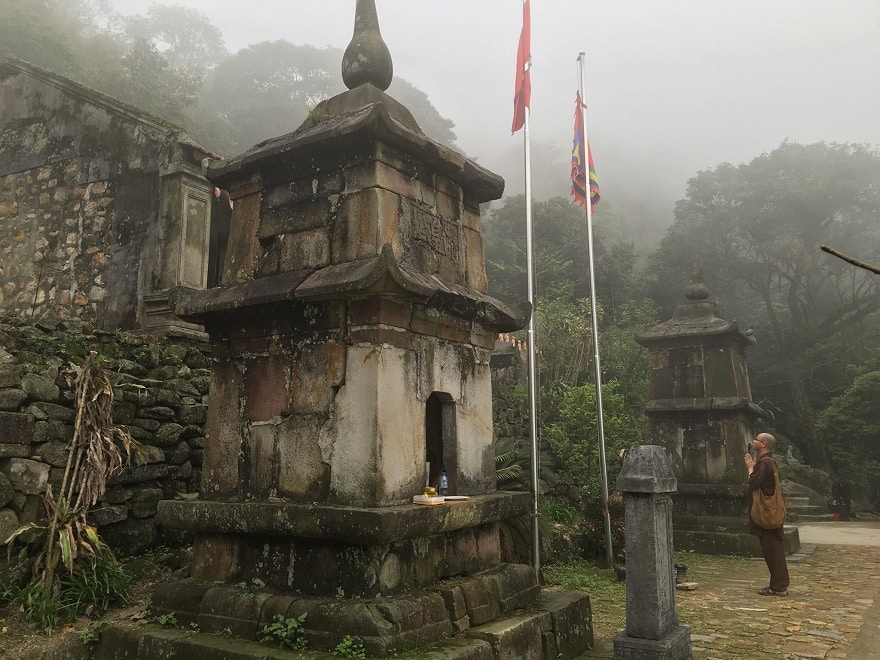
The first area is a plateau near the summit, covering nearly 1,000 m2
The second tier of the relic site is Ngoa Van Trung Pagoda, situated on the southern slope of Bao Dai Mountain. Restored in 2014 on the original foundation, the modern Ngoa Van Trung is a dignified temple featuring a “Nhi”-shaped architectural style (replicating the design from the Le Trung Hung period) consisting of two main halls: the Front Hall and the Rear Hall. The Front Hall serves as a space for worshipping Shakyamuni Buddha and preceding sages, while the Rear Hall is dedicated to the Emperor-Monk Tran Nhan Tong and the Truc Lam Patriarchs. Ngoa Van Trung Pagoda is considered the heart of the annual Ngoa Van Spring Festival (held from the 9th day of the first lunar month through the end of the third lunar month). Major ceremonies, such as the opening of the spring festival and prayers for national peace and prosperity, are held here.
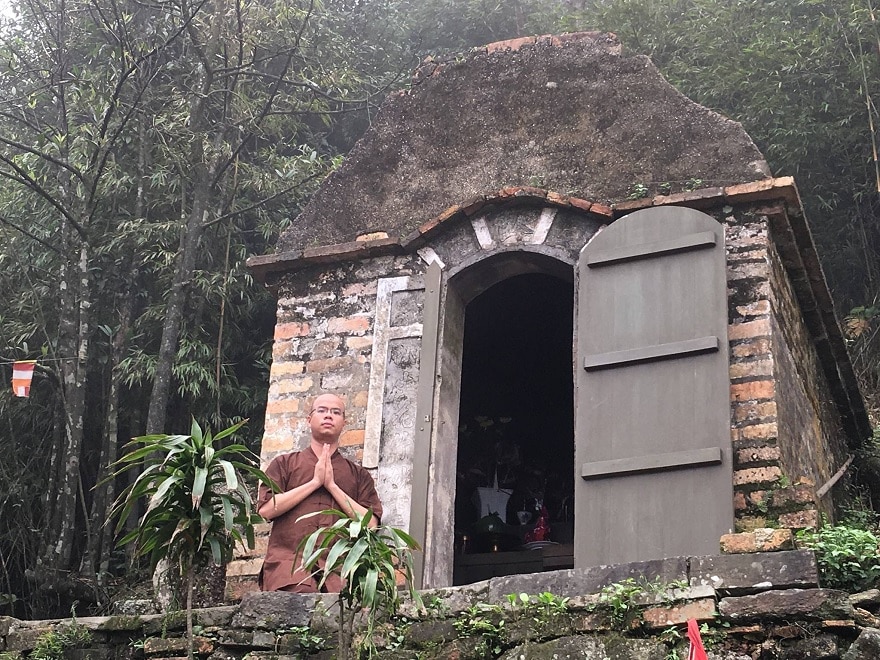
The second area is a brick-walled house with arched doorways and a collapsed roof
The third and highest tier of the Ngoa Van relic is the site once praised in verse: “Eternal is the miraculous pagoda / Fresh is the scenery through the four seasons.” This is the Ngoa Van hermitage, where Emperor-Monk Tran Nhan Tong attained Nirvana. Within the hermitage stands an altar housing a bronze statue of the Emperor-Monk in a reclining position, symbolizing his passing into Nirvana. Crafted from pure bronze, the statue stands 1.2 meters high, 0.8 meters wide, and weighs approximately 300 kg. It is regarded as a masterpiece of Tran-era Vietnamese sculpture, embodying the serenity, majesty, and wisdom of the Emperor-Monk.
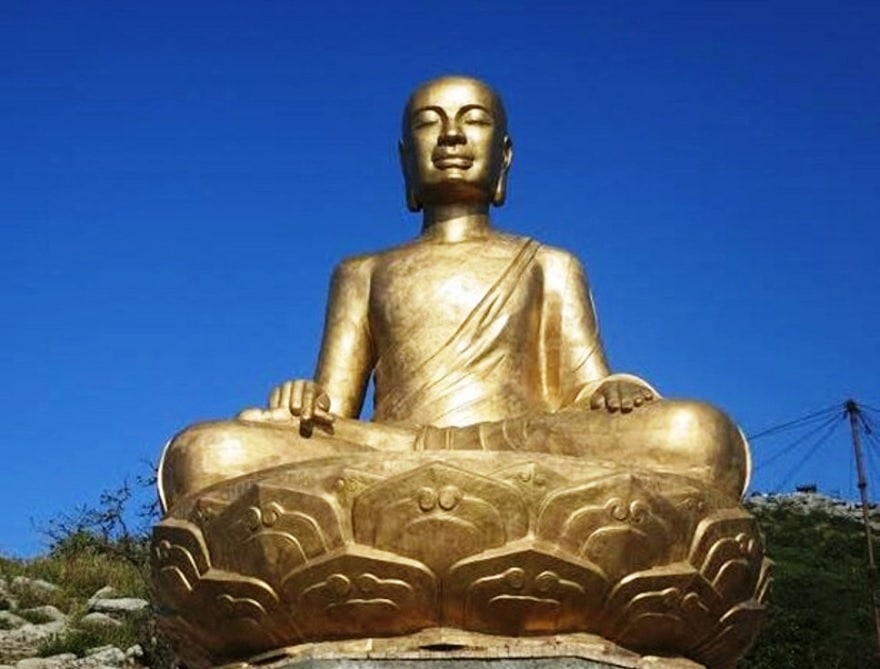
Sacred statue of Emperor-Monk Tran Nhan Tong at the third area of Ngoa Van Pagoda
Beside the statue lie two stelae documenting the life and Nirvana of the Emperor-Monk—one written in Han characters and the other in Nom script. These represent the oldest surviving stelae of Vietnamese Buddhism. The Han-script stele, known as the “Stele of the Saintly Virtue of the Holy Ancestor,” was composed in 1308 by Zen Master Huyen Quang, one of the three founders of the Truc Lam Yen Tu Zen school. The Nom-script stele, also titled “Stele of the Saintly Virtue of the Holy Ancestor,” was written in 1319 by Zen Master Phap Loa, another of the school’s three founders. Beyond recording key life events, these stelae reflect the profound thoughts and spirit of the Emperor-Monk and the Truc Lam Zen masters.
Adjacent to the Ngoa Van hermitage is the Emperor-Monk’s Stupa, which enshrines a portion of his relics. The stupa features a square architectural design, standing 14 meters tall with eight corners and eight faces. Each face features a triangular window adorned with intricate, beautiful patterns. The Emperor-Monk’s Stupa serves as a symbol of the eternal and noble legacy of Tran Nhan Tong.
Essential tips for visiting Ngoa Van Pagoda
We recommend visiting the pagoda during the spring, from the 9th day of the first lunar month through the end of the third lunar month. This period is host to a variety of vibrant and unique festivities, such as the Ngoa Van Spring Festival, ceremonies for national peace and prosperity, and commemorations of the Buddhist King Tran Nhan Tong. Alternatively, you may choose to visit during other significant festivals throughout the year, such as the Vu Lan Festival on the 15th day of the seventh lunar month, Vesak (Buddha’s Birthday) on the 15th day of the fourth lunar month, or the Guan Yin Bodhisattva celebrations on the 19th day of the second, sixth, and ninth lunar months, to fully immerse yourself in the spiritual and cultural ambiance of this sacred site.
To reach the pagoda, you may choose between hiking or taking the cable car; each option offers its own distinct advantages:
Hiking: You may begin your hike from the Trai Loc Cable Car Station No. 1 in An Sinh commune, following a scenic winding path approximately 3 km long. This is an ideal choice for those who appreciate a deep connection with nature and culture. Along the way, you will be treated to views of lush green forests, crystalline streams, and towering mountain peaks. You will also have the opportunity to visit smaller historic relics at the foot of the mountain associated with the life and ascetic practices of the Buddhist King Tran Nhan Tong. These sites include the Tan Long Old Forest, Phu Am Tra, Do Kieu, Thong Dan, Da Chong, and Ba Bac.
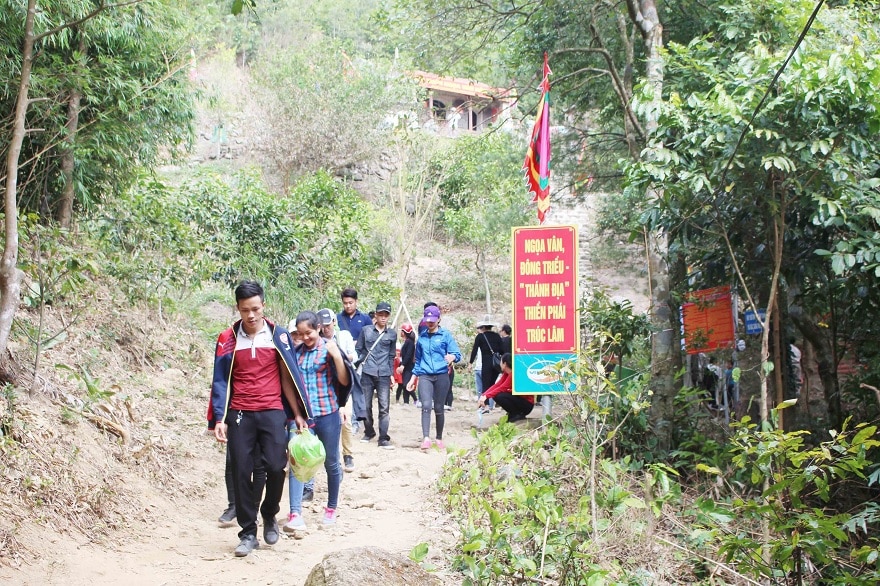
The 3km path leading up to Ngoa Van Pagoda
Taking the cable car: You can take the cable car from the Trai Loc Cable Car Station No. 1 to the final station near the central Ngoa Van Pagoda. This method is perfect for those looking to save time and energy. You will ride in a cabin with a capacity of 10 passengers, offering breathtaking aerial views of the majestic, undulating mountain ranges. The cable car ride takes approximately 15 minutes, with tickets priced at 120,000 VND for a one-way trip or 220,000 VND for a round trip. Children under 1.2m tall travel for free when accompanied by an adult. Certain other groups, including Heroic Vietnamese Mothers, wounded veterans, and members of the clergy, are also eligible for free passage as per official regulations.
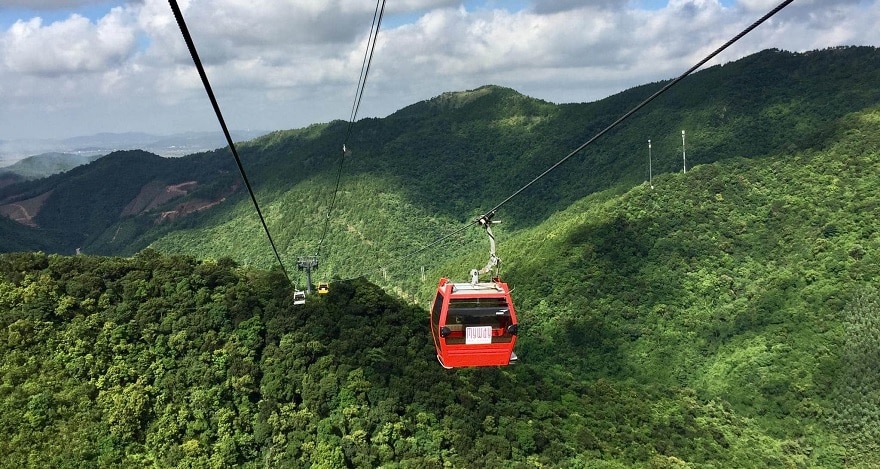
Ngoa Van Cable Car
Upon arriving at Ngoa Van Pagoda, you can participate in a variety of engaging and meaningful activities, such as:
Pilgrimage and worship: You may offer incense and make offerings at the various architectural structures of the pagoda, including the central Ngoa Van Pagoda, the Ngoa Van hermitage, and the Buddhist King’s stupa. This provides an opportunity to delve into the history and culture of the Truc Lam Yen Tu Zen school, while offering prayers for the peace and happiness of yourself and your family.
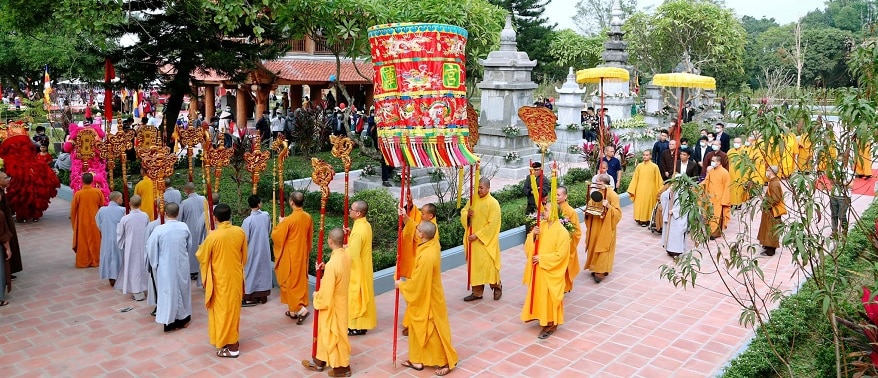
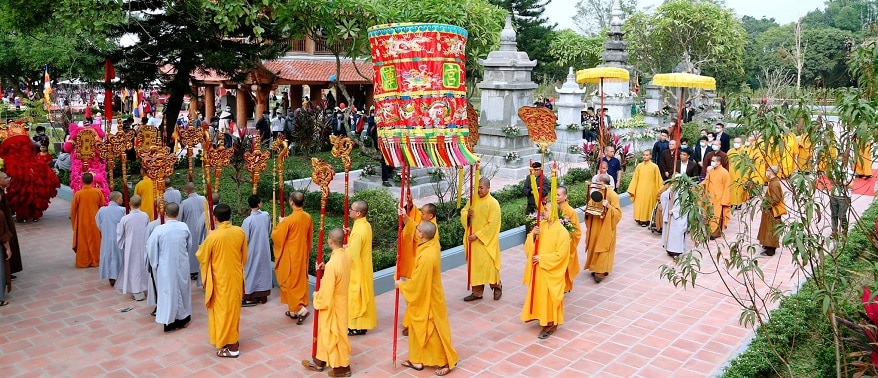
Pilgrimage ceremony at the pagoda
Participating in festivals: You can join the vibrant and unique festivities of the pagoda, such as the Ngoa Van Spring Festival, ceremonies for national prosperity, and the commemoration of the Buddhist King Tran Nhan Tong. These events offer a chance to interact with and learn about local culture, while enjoying traditional artistic performances, sports, and customs such as Ca Tru singing, Cheo theater, folk games, and boat racing.