
Archaeological discoveries of the Ha Long culture
The Ha Long culture is a Neolithic archaeological culture that flourished in the Ha Long Bay region and its surrounding areas between 5,000 and 3,000 years ago. This culture is named after Ha Long Bay, the site where the first significant archaeological findings of this civilization were unearthed.The Ha Long culture was formed through the inheritance and evolution of the Cai Beo culture, a prehistoric culture dating back to 7,000–5,000 BCE. The inhabitants of Cai Beo made significant advancements in maritime exploitation, laying the foundation for the subsequent development of the Ha Long culture.The formation of the Ha Long culture was also intrinsically linked to environmental shifts, particularly fluctuations in sea levels . Approximately 9,000 years ago, rising sea levels submerged parts of the Gulf of Tonkin and the Gulf of Thailand, compelling the inhabitants of Soi Nhu to adapt to an island-based environment . This adaptive process led to advancements in labor tools, crafting techniques, and economic exploitation methods, all of which contributed to the emergence of the Ha Long culture.
The Ha Long culture progressed through two developmental stages:
- Early Stage (approx. 6,000 – 5,000 years ago): This era was significantly impacted by the Holocene transgression, which diminished the natural habitats of the Cai Beo inhabitants. Many residents were forced to migrate to the northeast or higher elevations, sustaining themselves through hunting, foraging, primitive cultivation, maritime exploitation, and the development of stone tool craftsmanship.
- Late Stage (approx. 4,000 – 3,000 years ago): This period was shaped by the peak of rising sea levels. As the waters gradually receded, the Early Ha Long culture inhabitants migrated back and dispersed across various locations, including caves within Ha Long Bay, sand dunes, ancient plains, coastal areas, and mountain foothills. Significant archaeological sites from this era include Soi Nhu Cave, Ngoc Vung Island, and Dong Trong Cave. The inhabitants’ way of life was deeply intertwined with the marine environment, characterized by the creation of sophisticated labor tools.
The first remnants of the Ha Long culture were discovered between 1937 and 1938 by two archaeologists: M. Colani (France) and G.J. Anderson (Sweden). They originally named it the “Danh Do La Culture,” based on the French-era name for Ngoc Vung Island, to encompass the characteristics of these archaeological sites. The term “Ha Long Culture” was later coined by Vietnamese archaeologists during subsequent surveys. To date, over 40 sites belonging to the Ha Long culture have been identified. Within the core zone of the Ha Long Bay World Heritage site, researchers have unearthed numerous traces of prehistoric inhabitants, such as:
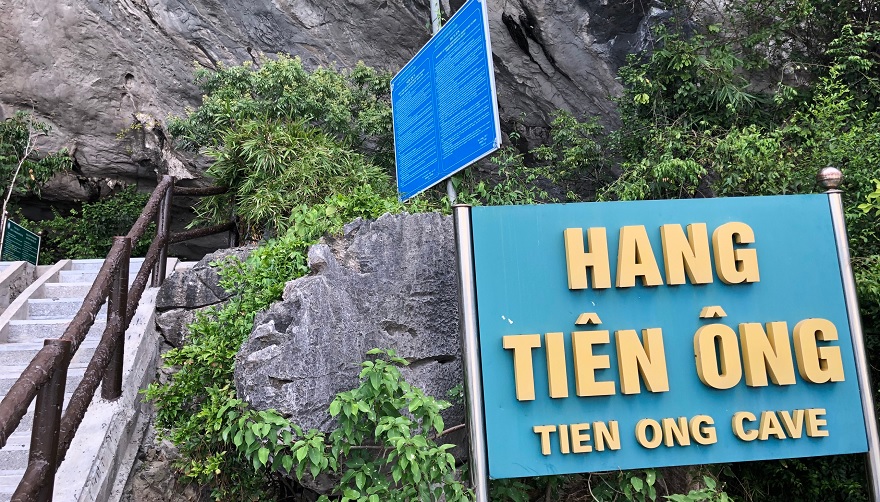
Entrance signage for Tien Ong Cave
Tien Ong Cave, also known as Cai Duc Cave, is located on Cai Tai Island within the Hang Trai island cluster, situated just behind the Cua Van fishing village in Ha Long Bay. In 1938, Swedish archaeologist J.G. Anderson conducted an expedition to survey traces of ancient Vietnamese people along the coastlines and islands of Ha Long Bay and Bai Tu Long Bay. During his exploration of Tien Ong Cave, he discovered massive sedimentary deposits filled with stream snail shells and primitive pebble tools. In 2007, after extensive excavations, archaeologists recovered various stone tools, including axes and knives, along with ceramic shards and land animal bones. Subsequent scientific reports confirmed that Tien Ong Cave was a dwelling site for ancient Vietnamese people tens of thousands of years ago.
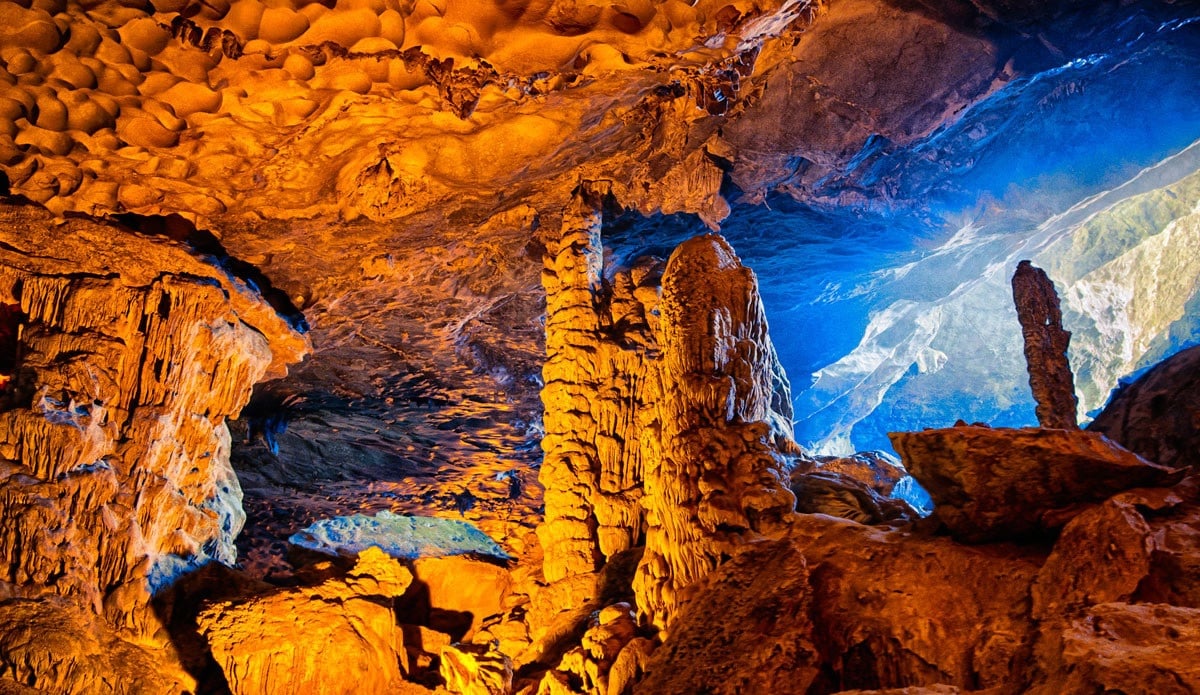
Me Cung Cave – A journey to discover a mysterious underground world
Me Cung Cave is located 2km southwest of Titop Island on Lom Bo Island, at an elevation of 25m above sea level. The cave entrance still retains a dense layer of Melania stream shells, which in ancient times reached a thickness of up to 1.2 meters, forming a semi-fossilized layered structure. Archaeologists have identified the cave as an archaeological site belonging to the pre-Ha Long culture of the Early Neolithic period, dating back 10,000 to 7,000 years.
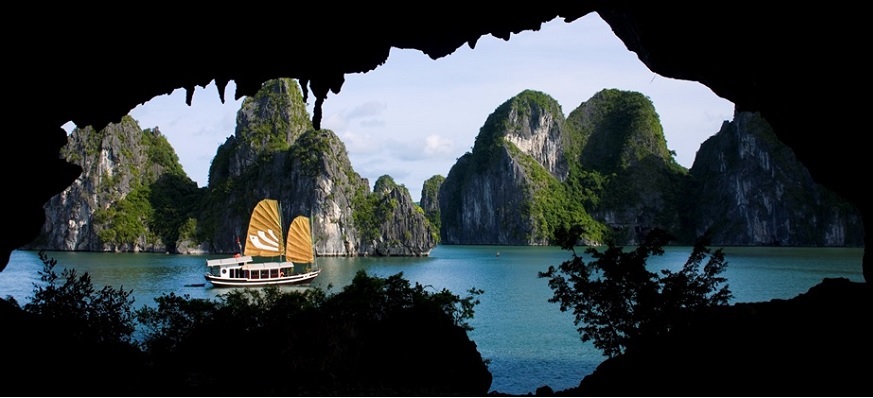
Trong Cave and Trinh Nu Cave
Beyond Tien Ong Cave and Me Cung Cave, archaeological sites have been discovered across nearly every part of Ha Long Bay. This widespread distribution demonstrates the vibrant and continuous development of a culture deeply shaped by its coastal and island environment. Numerous ancient artifacts, primarily labor tools and jewelry, have been found here. Notably, at Trinh Nu Cave, aside from traces of prehistoric inhabitants from the Ha Long culture dating back 4,000 years, archaeologists also discovered evidence of an ancient ceramic port in 2010. Various shards of pottery and earthenware from the Tran and Le dynasties were recovered in the area fronting the cave.
Artifacts excavated from these sites are preserved at the Quang Ninh Museum. In 2006, a portion of this collection was transferred to the Ha Long Bay Management Board for exhibition and public education regarding Ha Long culture and the values of the Ha Long Bay heritage. Later, when the Cua Van Floating Cultural Center was inaugurated, these archaeological artifacts were displayed interchangeably across these three locations.
Archaeological artifacts of the Ha Long Culture
The people of Ha Long were descendants of a unique prehistoric maritime culture, demonstrating a high degree of adaptation to the island and coastal environment. These ancient fishermen relied primarily on fishing and harvesting seafood for their livelihood. Complementing this, they engaged in traditional economic activities such as hunting, gathering, and, in later periods, agricultural cultivation. The Ha Long culture is recognized as one of the four most significant prehistoric maritime cultures in Vietnam, alongside the Hoa Loc culture (Thanh Hoa), Bau Cho culture (Quang Binh), and Xom Con culture (Khanh Hoa).
Today, the Quang Ninh Museum preserves numerous artifacts from the Ha Long culture. The prehistoric exhibition space vividly recreates the formation and brilliant development of this Northeastern regional culture. It showcases indigenous endogenous elements through collections such as the stepped-shoulder stone adzes, Ha Long jewelry, and porous pottery—a signature product endemic to the Ha Long culture.
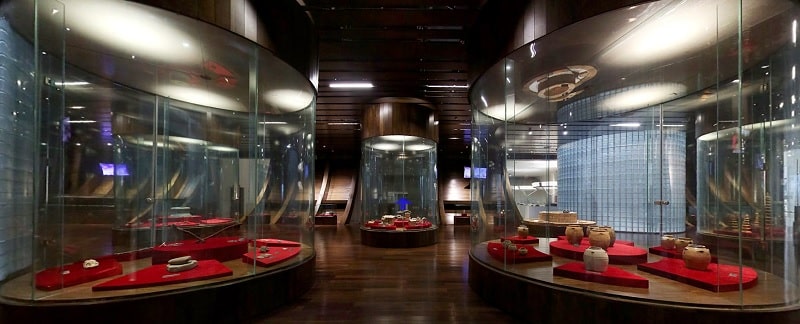
The ship-hull gallery, where artifacts from the Ha Long culture and the Dai Viet era are displayed.
According to Ms. Do Thanh Mai, Head of the Promotion Department at Quang Ninh Museum, the fundamental characteristic of the Ha Long culture lies in its advanced technique for crafting stone tools and production implements. The invention of these tools represented a pinnacle of craftsmanship; for instance, the stepped-shoulder stone adze exemplifies a high level of sophistication. This is evidenced by the practical labor and production efforts of the Ha Long people, who mastered the natural environment to forge the distinct values of their culture. While previous stone tools were often crudely finished, the Ha Long culture saw a dramatic leap in grinding and polishing techniques, resulting in implements of far greater utility and efficiency than those of preceding cultures. Additionally, the most iconic labor tools of this period include the various adzes, such as the single-shoulder adze, the balanced adze, and most notably, the stepped-shoulder adze displayed here. The collection also features remarkably sharp stone arrowheads and knives, which appear strikingly refined and demonstrate a meticulous attention to detail, mirroring the precision required for daily survival.
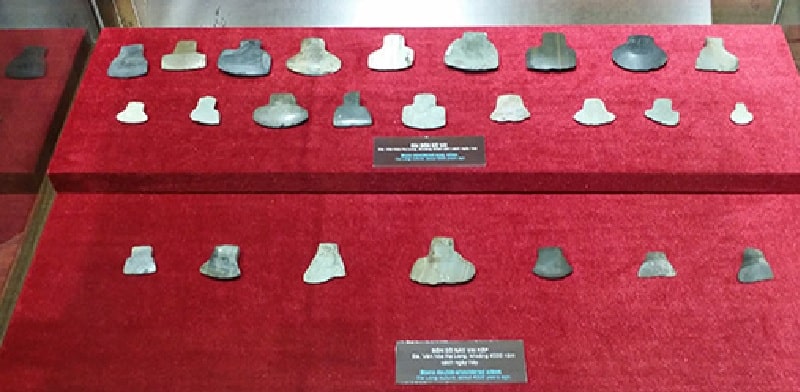
Stepped-shoulder and double-shouldered stone adzes, dating back 4,000 years.
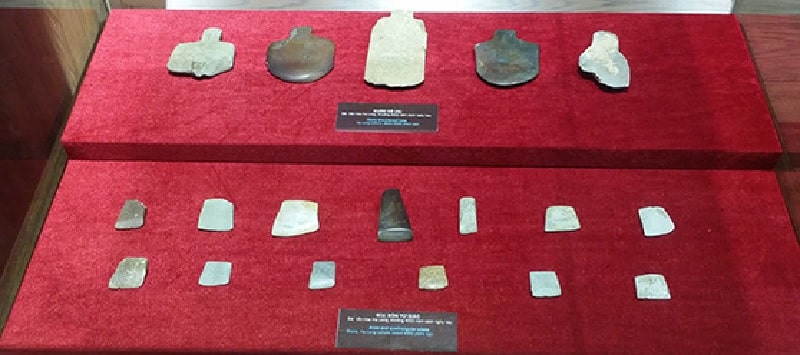
Shouldered hoes.
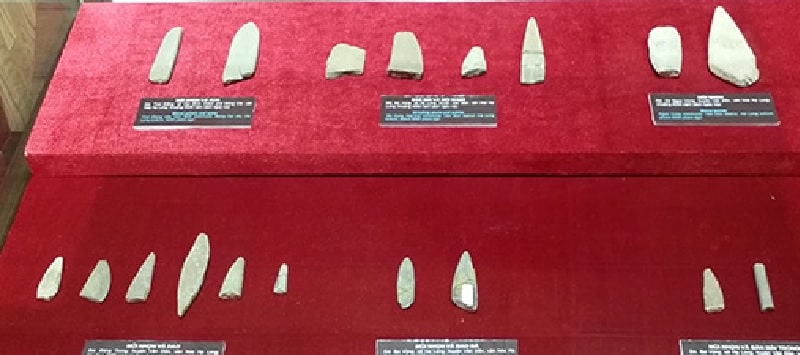
Stone arrowheads and saws.
The maritime nature of this culture is further reflected in their pottery, where crushed mollusk shells were mixed with sand and clay to create the characteristic porous ceramics typical of the Ha Long coastal region. Beyond the wave-pattern motifs that heavily reflect their marine surroundings, some pottery features impressions that suggest the ancient Vietnamese of this era had mastered the art of cultivating fibrous plants, spinning fibers to weave fishing nets, or creating lines for fishing.
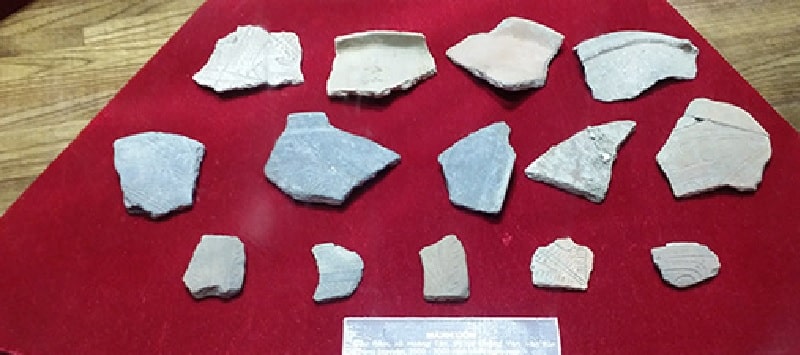
3,500-year-old porous pottery fragments.
Furthermore, prehistoric inhabitants crafted jewelry from stone, fish bones, and mollusk shells, which served as a medium for exchange with other cultures beyond the Ha Long region. The jewelry of this period is considered an invention that showcases the talent of the Ha Long people during Quang Ninh’s maritime era. Archaeological sites have revealed significant evidence of these adornments, demonstrating that the residents valued self-expression and body ornamentation. Scientists also suggest that these trinkets held spiritual significance. It is believed that women wore shell and mollusk jewelry to bring luck in gathering activities, while men donned stone or horn ornaments to ensure success in hunting. This belief system likely contributed to the widespread and flourishing diversity of jewelry in this era.
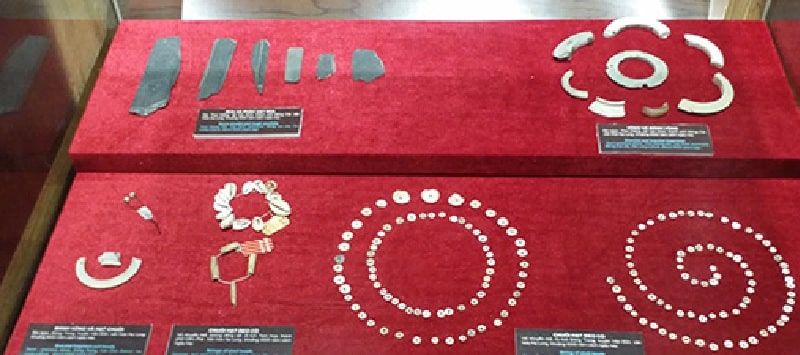
Jewelry crafted from seashells and horn.
Moving into the late stage of the Ha Long culture (3,500 – 3,000 years ago), the collections still feature legacy production tools like stepped-shoulder adzes, stone drills, and grinding stones. However, there is a visible evolution in technical sophistication, with tools becoming more finely crafted and intricately finished. This continuity demonstrates the superior functional efficiency of the stepped-shoulder adze throughout the culture’s lifespan. Notably, the collection of grinding stones exhibits immense diversity in size, shape, and material, with each stone serving a specific purpose for various labor implements. This variety highlights the advanced development and specialized nature of stone-tool usage during this period.
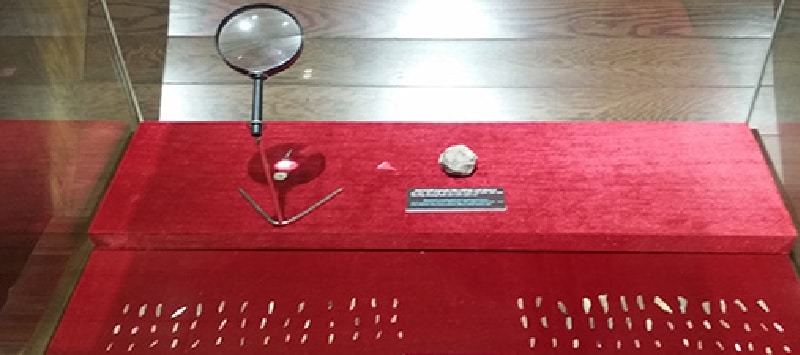
Drill bits and stone cores (raw material for drill bits).
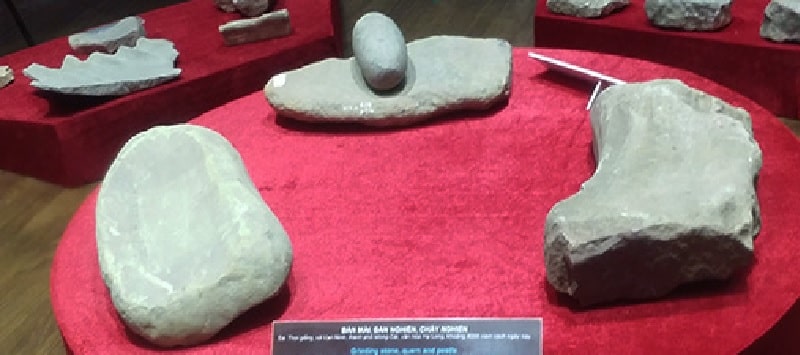
Grinding stones, sloped workbenches, and pestles.
As one of the earliest prehistoric maritime cultures discovered in Vietnam and Southeast Asia, the Ha Long culture holds a special place in ancient Vietnamese civilization and has had a profound influence on subsequent cultures. Though only broadly outlined here, the Ha Long culture remains a source of immense pride for the people of the Northeast. A thorough study of this culture within a broader context—while simultaneously preserving known sites and exploring new ones—is the key to deepening our understanding of Vietnam’s prehistoric maritime heritage.
Destinations where visitors can discover the values of Ha Long Culture
| Route | Price | Sightseeing Points |
|---|---|---|
| VHL1 | 310,000 VND/pax | Thien Cung Cave – Dau Go Cave – Stone Dog Islet – Ba Hang Area – Dinh Huong Islet – Trong Mai Islet (Fighting Cock Islet) |
| VHL2 | 310,000 VND/pax | Soi Sim Beach – Ti Top Island – Sung Sot Cave – Tung Sau Area – Me Cung Cave – Bo Nau Cave – Luon Cave – Trong Cave – Trinh Nu Cave – Dong Tien Lake |
| VHL3 | 260,000 VND/pax | Cua Van Floating Cultural Center – Tien Ong Cave – Ba Ham Lake – Ba Men Temple – Ang Du Area – Bamboo Forest |
| VHL4 | 260,000 VND/pax | Co Cave (Thien Canh Son) – Thay Cave – Cap La Cave – Vung Vieng Village – Tung Ang Ecological Zone – Cong Do Island – Hon Xep Park |
| VHL5 | 310,000 VND/pax | Thien Cung Cave – Dau Go Cave – Stone Dog Islet – Ba Hang – Dinh Huong Islet – Trong Mai Islet – Gia Luan Pier (Cat Ba – Hai Phong) |
| VHL6 | 150,000 VND/pax/trip | Chan Voi Islet – Ba Cua Area – Tung Lam Island – Cap Bai Islet (The final point of the journey connecting to Gia Luan, Lan Ha Bay – Hai Phong) |
| VHL7 | 600,000 VND/pax | Ha Long Bay tour covering routes VHL1-2-3-4 (Exclusively for exploration cruise vessels) |
| VHL8 | 70,000 VND/pax/trip | Tuan Chau International Passenger Port – Ha Long International Passenger Port – Nam Cau Trang Port |
Highlight destinations to experience Ha Long culture:
-
Cua Van Floating Cultural Center (VHL3, VHL7): This is the most authentic place to experience the living culture of Ha Long residents, from floating houses and traditional boats to their age-old daily customs.
-
Sung Sot Cave & Thien Cung Cave (VHL1, VHL2, VHL5, VHL7): These sites recount the legendary tales of dragons and reveal the geological history behind the formation of Ha Long Bay.
-
Ba Men Temple (VHL3, VHL7): A significant site reflecting the spiritual beliefs and local culture of the coastal inhabitants.
-
Vong Vieng Fishing Village (VHL4, VHL7): Another remarkable example of vibrant community life in the bay.
We hope this guide provides useful insights into the rich culture of Ha Long Bay. If you are looking to charter a cruise in Ha Long Bay to explore these heritage sites, please contact us for further details.