| Location: Tran Quoc Nghien Street, Hon Gai, Ha Long City
Opening Hours: All days of the week (8:00 AM – 12:00 PM and 1:00 PM – 5:00 PM) Admission Fees: + Adults: 40,000 VND per person/visit; + Students and trainees: 20,000 VND per person/visit (student ID required); + Children: 10,000 VND per person/visit. Reception Desk Hotline: 02033.825.031 |
Introduction to Quang Ninh Museum

Quang Ninh Museum
The museum was originally established in 1960 under the name “Hong Quang Zone History and Revolution Museum,” located at No. 5B Cau Cao. It bore witness to the nation’s turbulent history, particularly during the two U.S. Air Force wars of destruction against North Vietnam. Despite earnest efforts to evacuate and safeguard historical artifacts and documents, the building at 5B Cau Cao was entirely destroyed by bombs.
Undeterred by adversity, the museum persevered in its mission. In 1990, the Quang Ninh Provincial People’s Committee decided to relocate operations to the former headquarters of the Quang Ninh Import-Export Company at No. 165 Nguyen Van Cu Street (now National Highway 18A).
Then, in a remarkable renaissance in 2013, the Quang Ninh Museum and Library complex was inaugurated to celebrate the 50th anniversary of the province’s founding (October 30, 1963 – October 30, 2013). This striking complex quickly became a new architectural symbol of Quang Ninh, famously dubbed the “Black Pearl on the Shores of Ha Long Bay.” Featuring a bold and contemporary design, it was honored with the “Architecture of the Year” award on January 15, 2014—a prestigious accolade in Vietnamese architecture organized by the Ashui portal of the Vietnam Association for Urban Planning and Development.
The complex spans a total construction area of up to 24,000 m², comprising three main blocks: the Museum, the Library, and the Conference-Exhibition area. Uniquely, these three blocks are interconnected by an elevated skybridge system, creating an open, fluid, and harmonious architectural space.
Beyond its impressive scale and overarching design, the museum mesmerizes visitors with the distinct architecture of each block. Designed by renowned Spanish architect Salvador Pérez Arroyo, the overall structure draws direct inspiration from anthracite coal, the iconic mineral of Quang Ninh province. The exterior is encased in 14,000 m² of semi-tempered glass engineered to resist thermal breakage, transforming the building into a giant mirror that reflects the shimmering beauty of the Ha Long Bay natural heritage site.
Inside, the exhibition spaces are organized scientifically and modernly across three levels, housing and displaying over 20,000 original, representative artifacts. Each piece tells a story, serving as a historical witness that vividly and authentically recreates the panoramic tapestry of Quang Ninh’s history, culture, people, and nature across the ages.
Artifact Exhibition System at Quang Ninh Museum
Since its grand reopening in 2013, Quang Ninh Museum has established itself as an essential check-in spot for domestic and international travelers exploring Ha Long. In 2023, the museum welcomed an estimated 700,000 visitors, generating over 15 billion VND in ticket revenue, and proudly stands as the first provincial-level general museum in Vietnam to achieve financial self-sufficiency. Its exhibition layouts span both expansive outdoor grounds and immersive indoor galleries, leaving every visitor deeply impressed.
1. Outdoor Exhibition Area
The outdoor grounds showcase numerous colossal artifacts. Most notably, visitors will find a 28-tonne block of Anthracite coal measuring 3.6m x 2.8m x 2.2m (with a volume of 22m³) mined from a depth of -176 meters in April 2012. It holds a Vietnam Guinness Record as the largest monolithic block of Anthracite coal in the country. The outdoor zone also features stone sculptures, mine worker statues, and a collection of historical and modern military hardware including missile launchers, anti-aircraft guns, cannons, missiles, and fighter aircraft.
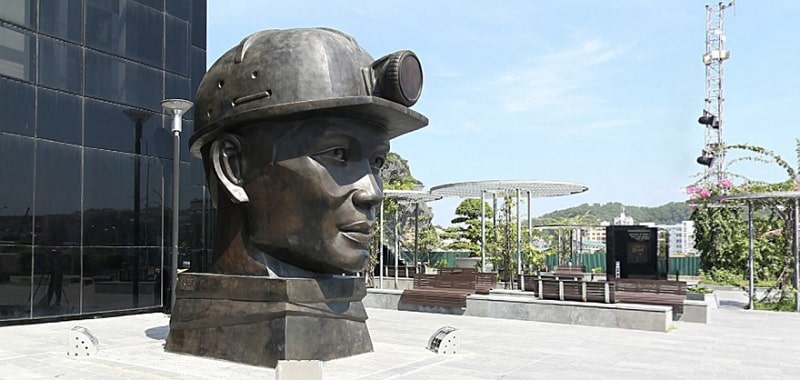
Statue of a Coal Miner
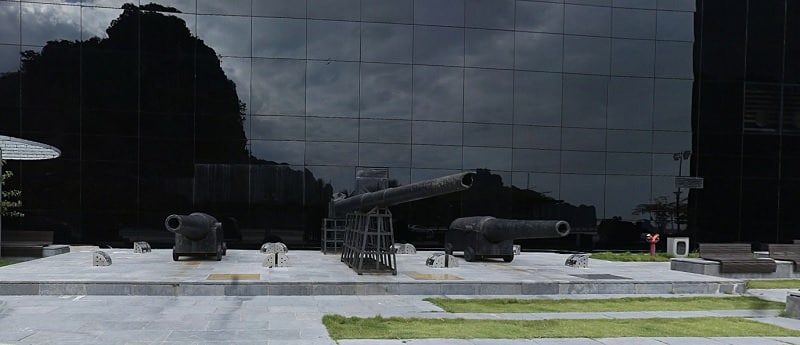
Ancient Cannon Artifact
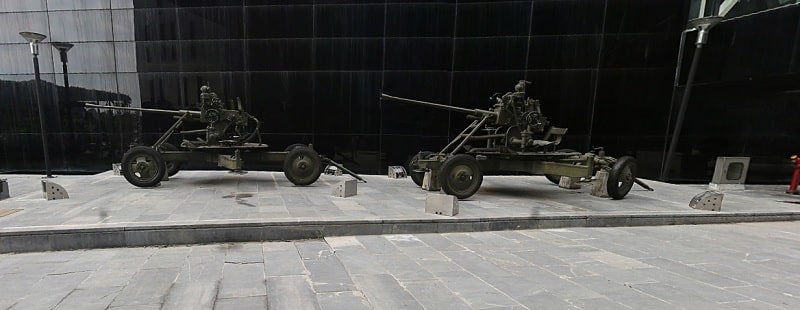
Artillery Vehicle from the Resistance Wars
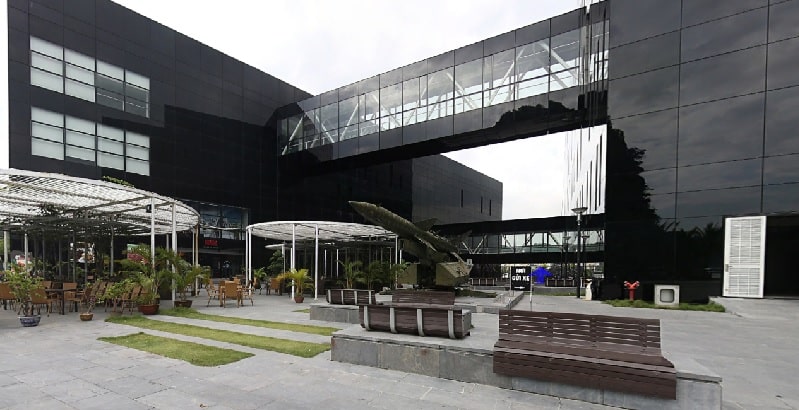
Missile Artifact
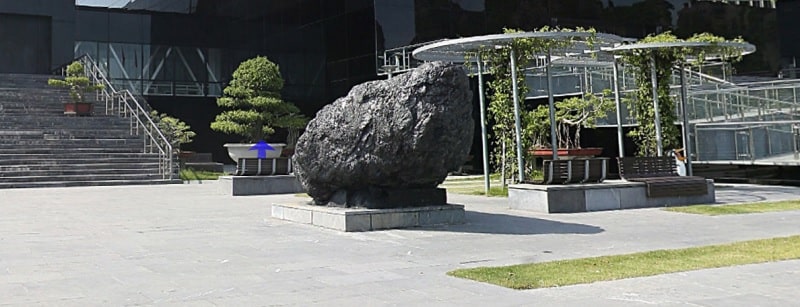
Guinness-Record Anthracite Coal Block
2. Indoor Exhibition Area
The indoor space comprises the three-story Museum block and the Conference block, offering visitors a comprehensive overview of Quang Ninh’s land and people through time. In stark contrast to the mysterious black exterior, the interior is a world of brilliant illumination that accentuates the showcased treasures. Each floor features a distinct theme, with exhibits narrating captivating, untold stories of the region’s landscape.
First Floor Exhibition Area: Focused on two main themes — “Biodiversity and Natural Resources” and “Fishing Gear and Seafood Harvesting in Quang Ninh.”
Located in the northeastern region of Vietnam, Quang Ninh boasts rugged hills, intricate islands, and a dense river network, resulting in abundant natural resources and rich biodiversity. These attributes are vividly portrayed on the museum’s first floor. Here, guests can explore Quang Ninh’s characteristic organisms and diverse geology through four striking, uniquely designed “mountain-shaped tubes.”
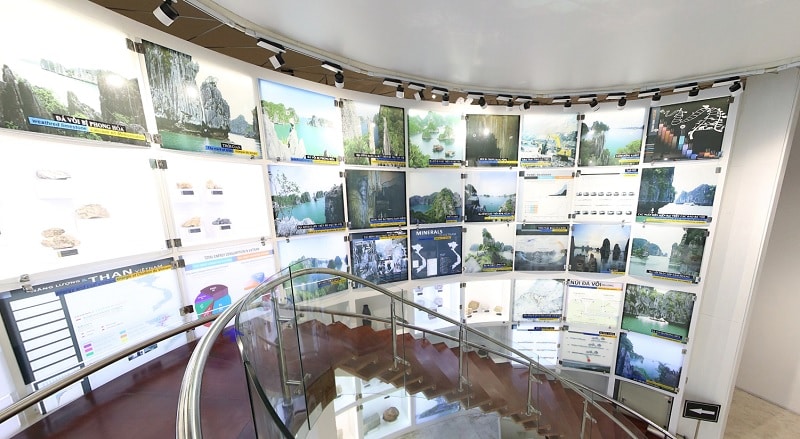
Mountain Tube No. 1
Mountain Tube No. 1 introduces Quang Ninh’s geology through specimens reflecting the Earth’s tectonic movements across various eras, including sedimentary samples from the Devonian, Carboniferous-Permian, Mesozoic, Triassic, and Quaternary Anthropogene systems.
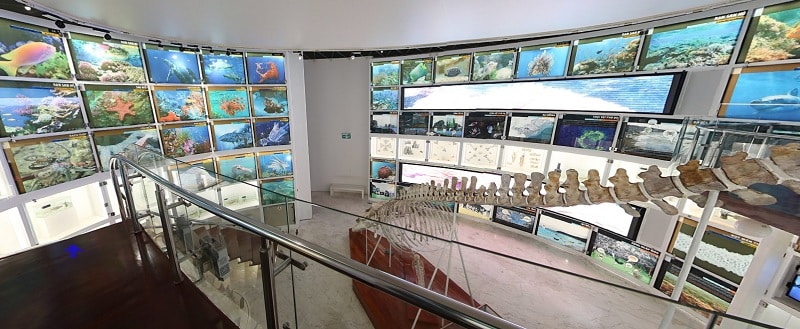
Mountain Tube No. 2
Mountain Tube No. 2 highlights Quang Ninh’s marine life. With 250 km of coastline stretching from northeast to southwest, the local waters teem with 137 seafood species across 73 families, including high-value economic catches and rare specialties such as Japanese threadfin bream, groupers, pomfrets, squids, pearl oysters, peanut worms (sa sung), sea cucumbers, and abalone—representative of the Gulf of Tonkin’s deep-water fauna.
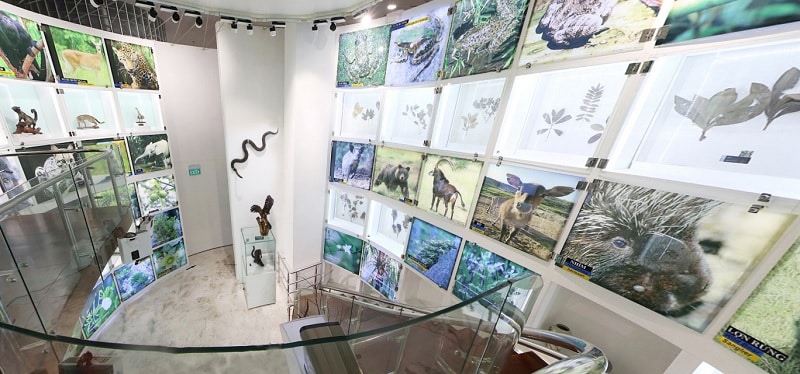
Mountain Tube No. 3
Mountain Tube No. 3 showcases the flora and fauna of Quang Ninh. The region’s plant and animal life is exceptionally rich due to diverse topographies, soils, climates, and human influences. Higher plants feature 250,000 species across 800 genera. Terrestrial, aquatic, and domesticated animals include typical species such as golden monkeys, Asian black bears, leopards, jungle cats, civets, and smooth-coated otters.
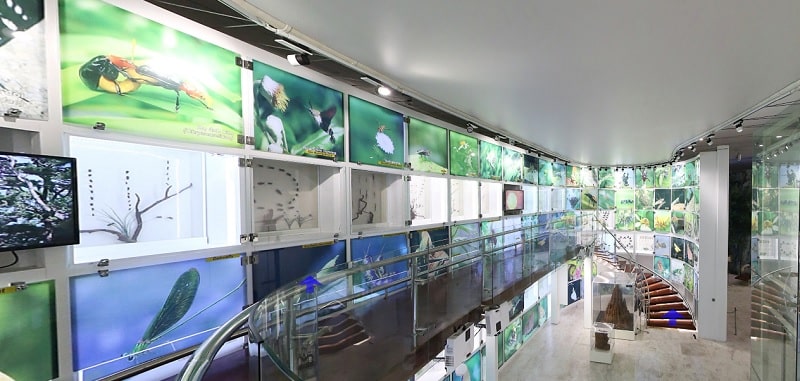
Mountain Tube No. 4
Mountain Tube No. 4 presents the distinctive insect life of Quang Ninh. Insects, the most populous creatures on Earth with 900,000 species, inhabit almost every environment on land, underground, in water, and in the air—numbering up to 10 billion per square kilometer. They are truly the dominant masters of our green planet.
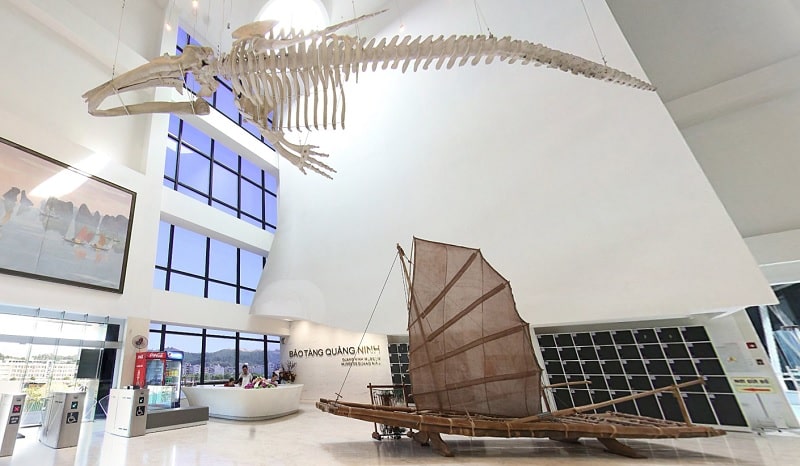
Whale Skeleton and Sailing Boat Model
Additionally, the first floor exhibits a vast array of fishing gear, reflecting fishing as a traditional livelihood in Quang Ninh. The striking sailboat model and the massive whale skeleton immediately capture visitors’ attention upon entry:
- This is the skeleton of a fin whale that washed ashore on Ngoc Vung Island in October 1994. Measuring over 20 meters long with a diameter of nearly 3 meters, it weighed approximately 50 tonnes.
- The “Ba Vat” sailing boat features batwing sails used for fishing or river and sea transport, with a cargo capacity ranging from 5 to 15 tonnes depending on the vessel’s size.
Second Floor Exhibition Area: Divided into Three Main Thematic Zones
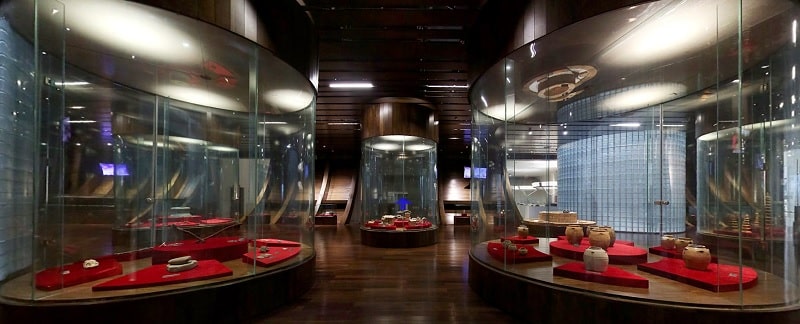
Hull-Shaped Exhibition Area on the Second Floor
The Hull-Shaped Zone: Designed in the evocative shape of a ship’s hull, this area displays artifacts spanning from prehistoric times to the Dai Viet era. These pieces hold immense historical and cultural value. The prehistoric section recreates the flourishing northeastern culture—the indigenous Ha Long Culture—featuring artifacts such as stepped rectangular stone axes, Ha Long jewelry, and cord-marked pottery dating back some 5,000 years.
The Metal Age in Quang Ninh marked a breakthrough in human cognition, showcasing unique craftsmanship through elite artifacts such as the Quang Chinh bronze drum, the Hoang Tan pottery jar, and a highly valuable collection of jade items.
Entering the Dai Viet era, ancient Quang Ninh residents established themselves as masters of the nation’s frontier. Exhibits feature 1st to 3rd-century ancient tombs, alongside wooden stakes from the Bach Dang River that mark the glorious military victories of the Vietnamese people against three Mongol invasions, ushering in the illustrious Dai Viet era and featuring the ancient Van Don trading port—Vietnam’s earliest international commercial hub.
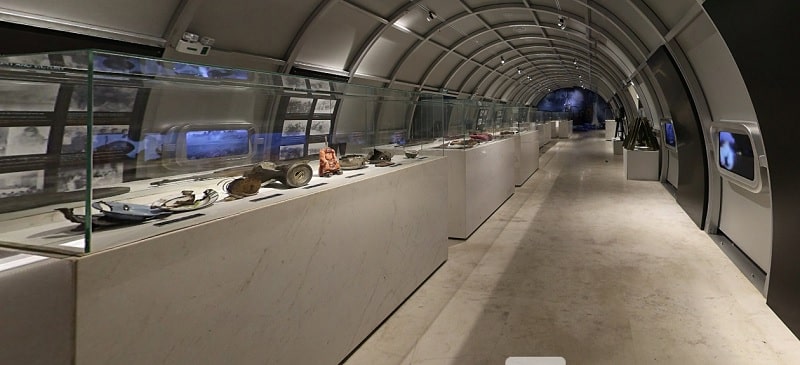
Resistance War Artifact Exhibition Area
Resistance War Artifact Zone: Though modest in size, this area is comprehensively organized. It displays artifacts associated with the armed forces and people of Quang Ninh during the resistance wars against French colonialism and U.S. imperialism. Here, visitors encounter historical testimonies of local bravery, such as items and imagery related to the Dong Trieu and Tran Hung Dao resistance bases established in April 1945—a testament to visionary Party leadership and working-class solidarity in the Northeast.
During the American War, Quang Ninh’s military and civilians left their mark on August 5, 1964. At 2:14 PM, multiple formations of U.S. aircraft attacked Hon Gai town, targeting the Cai Lan port and Vietnamese naval ships anchored at Cửa Lục. Quang Ninh’s forces united heroically, shooting down three enemy planes and capturing the first American pilot in Northern Vietnam.
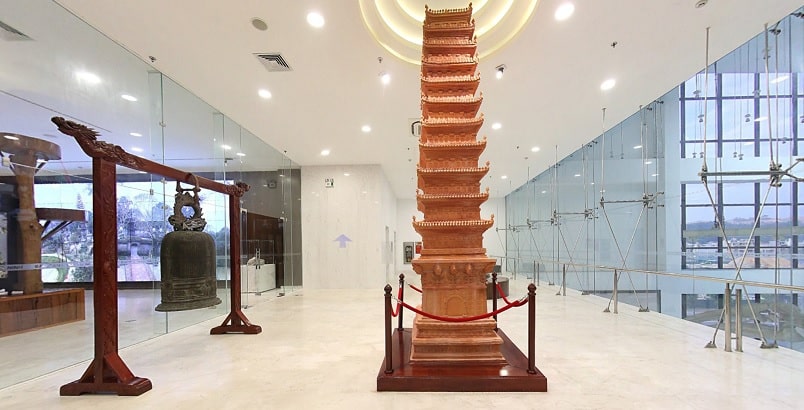
Yen Tu & Tran Dynasty Exhibition Area (Featuring a wooden tower, a temple bell, and a stone stele base)
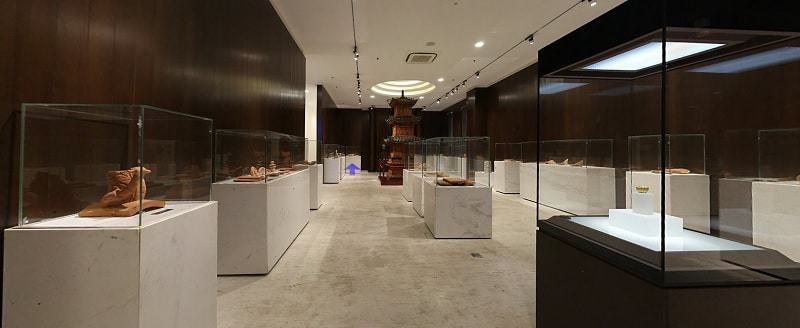
Tran Dynasty Artifacts (Roof tiles, water pipes, terracotta statues, bricks, etc.)
The Yen Tu and Tran Dynasty Zone comprises two spaces dedicated to Yen Tu and the Tran Dynasty. Artifacts here highlight the glorious artistic and architectural achievements of the Tran Dynasty, notably King-Monk Tran Nhan Tong and the Truc Lam Zen sect, which elevated Yen Tu into the Buddhist capital of the 13th-14th centuries and spread its influence throughout the Northeast. The special national relic site of the Tran Dynasty in Dong Trieu confirms the region as the ancestral homeland of the Tran kings before they relocated to Nam Định. Consequently, the dynasty chose this sacred land to build tombs for 11 imperial emperors, shaping a unique spiritual culture.
Third Floor Exhibition Area: Divided into Three Main Thematic Zones
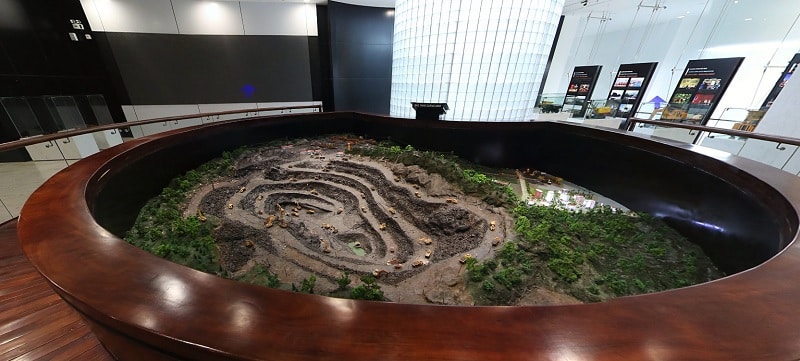
Open-Pit Coal Mining Diorama
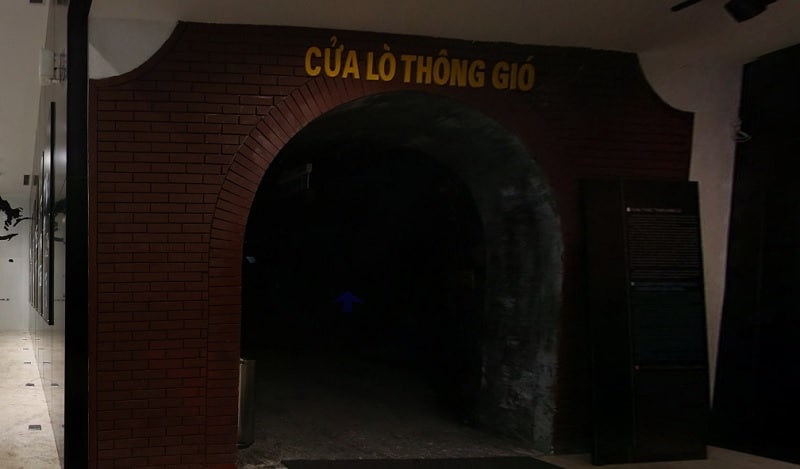
Simulated Underground Coal Mining Tunnel
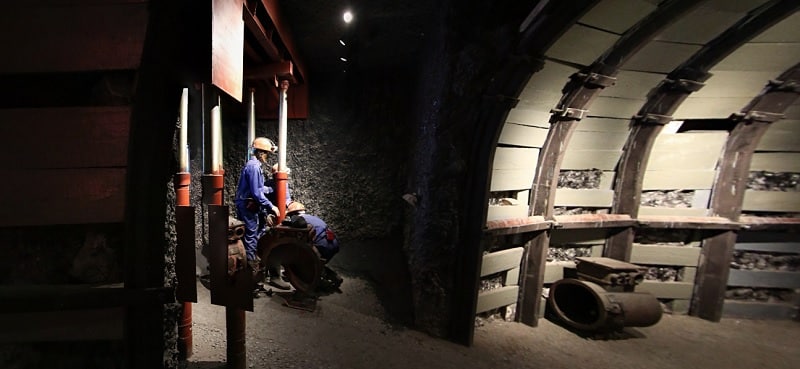
Mannequin Simulating an Underground Miner

Simulation of Coal Transport on Conveyor Belts
- The open-pit zone features a detailed diorama illustrating Vietnam’s open-cast mining methods from the French colonial era to the present day.
- The underground tunnel zone simulates a subterranean mining shaft, displaying characteristic equipment and historical artifacts used by miners during the revolutionary resistance.
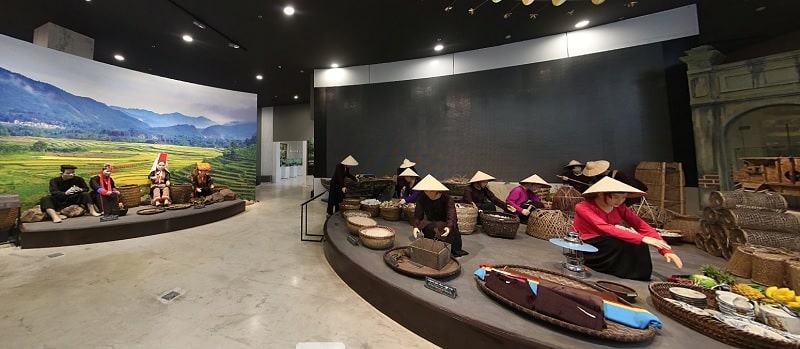
Ethnic Minority Exhibition Area
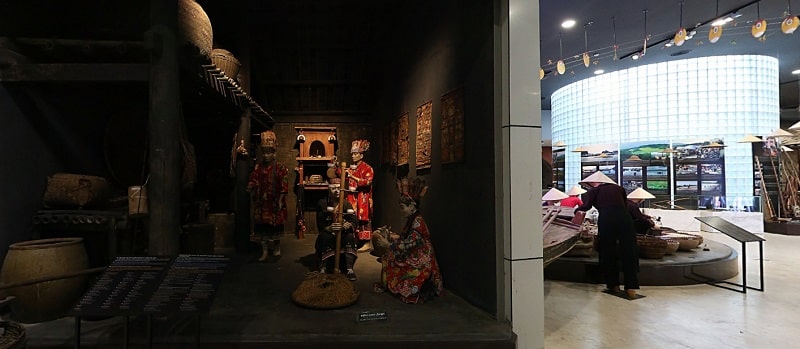
Ethnic Minority Exhibition Area
Ethnic Minority Zone: Designed as an open, versatile space featuring numerous small displays dedicated to the cultural heritage of Quang Ninh’s ethnic groups. Visitors can explore artifacts depicting the daily lives, cultures, and livelihoods of the Kinh, Tay, Dao, San Diu, and San Chi communities, which together form the rich multicultural mosaic of northeastern Vietnam.
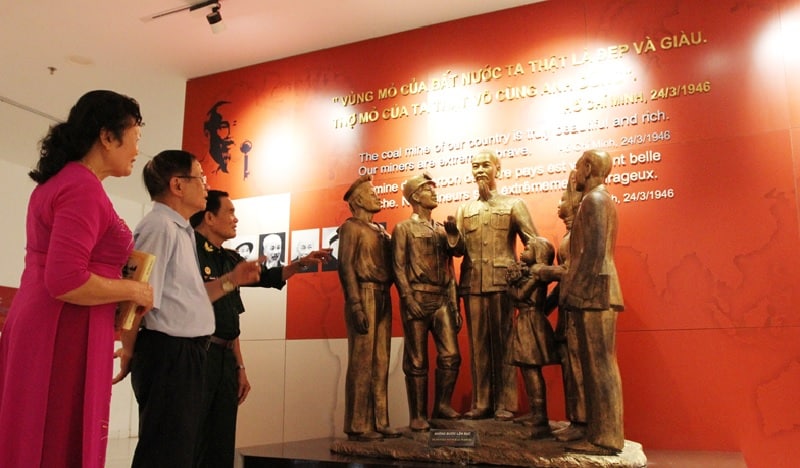
President Ho Chi Minh Exhibition Area
President Ho Chi Minh Zone: Adjacent to the ethnic minority area, this compact space details Uncle Ho’s revolutionary career, leadership, and cherished memories with the people of Quang Ninh. Connecting the ethnic and Ho Chi Minh spaces is the display area for the annual Ha Long Carnaval, held every April (the province’s tourism promotion month). Each year, Ha Long Carnaval offers fresh, captivating experiences, serving as a signature cultural product of Quang Ninh that conveys a message of convergence and diffusion.
Tips for Visiting Quang Ninh Museum
- Quang Ninh Museum is open to visitors daily, except for the last Monday of every month.
- You can hire a guide to accompany you through the museum. A guide well-versed in Ha Long’s history and culture will provide fascinating insights.
- Photography and filming inside the museum require an additional permit fee ranging from 100,000 VND to 500,000 VND, depending on the tour duration and equipment type.
- Do not touch artifacts inside the museum displays. Visitors are required to compensate for any damage caused to exhibits.
- Smoking, loud talking, or horseplay is strictly prohibited inside the museum.
- Keep the environment clean; do not litter on the museum grounds.
- Quang Ninh Museum stands as one of Ha Long City’s premier cultural landmarks. It draws large crowds not only for its educational value but also for its groundbreaking architecture. Alongside Sun World Ha Long, Ocean Park, and the Dolphin Palace, Quang Ninh Museum represents the dynamic spirit of modern Ha Long City.