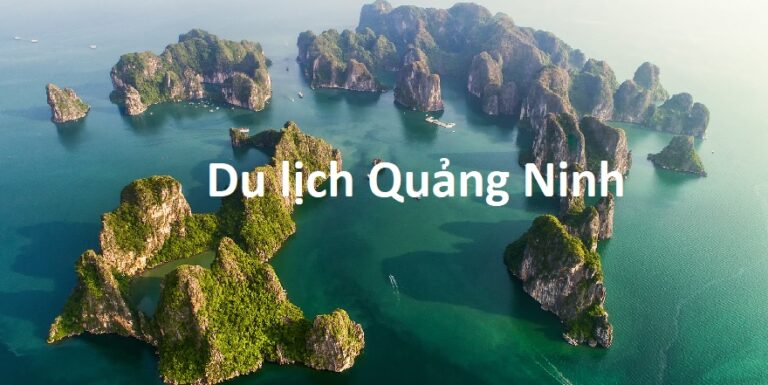
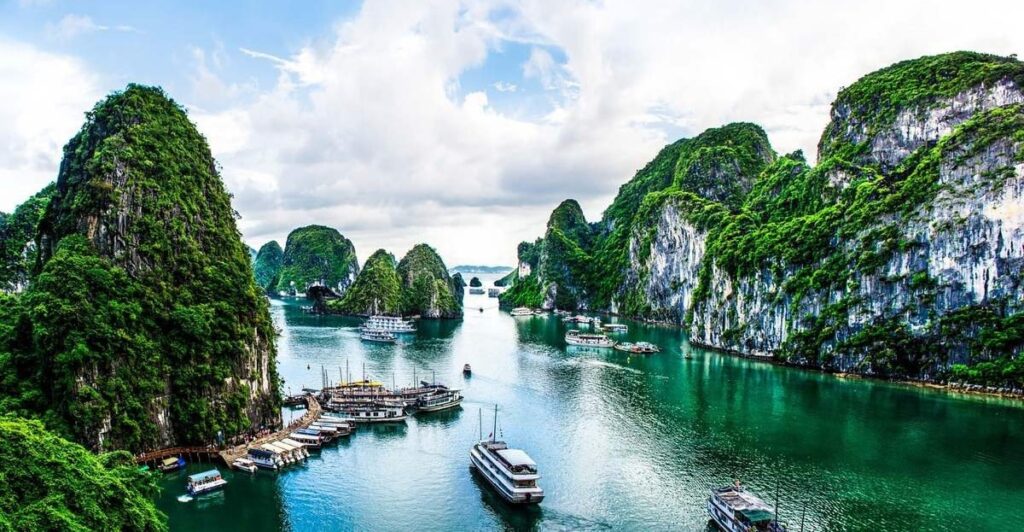
Ha Long Bay is one of the world’s most famous natural heritage sites, renowned for its thousands of spectacular islands and caves. Beyond its majestic natural scenery, Ha Long Bay boasts another unique feature: the floating fishing villages, which have long been home to local residents and offer a captivating experience for travelers eager to immerse themselves in local life. Join us as we explore the beauty and culture of the Ha Long Bay fishing villages in the following article.
An Introduction to the Residents of Ha Long Bay’s Fishing Villages
When mentioning Ha Long Bay, a UNESCO-recognized World Natural Heritage site, one immediately envisions a magnificent watercolor painting featuring thousands of limestone karsts in various shapes reflecting upon emerald waters. Yet, deeply hidden within this unique geological beauty lies another layer of heritage—a captivating “living heritage” embodied by the traditional fishing villages. Once the drifting homes for generations of fishermen, these communities not only showcased human ingenuity in adapting to the sea but also cultivated a distinct maritime culture, often described as the “soul” of Ha Long Bay. However, the landscape of Ha Long’s fishing villages has undergone profound and fundamental changes. A historical turning point occurred in 2014, when a relocation policy was implemented to improve residents’ living standards and preserve the heritage environment. Since then, the majority of the fishing community has moved ashore, beginning a new chapter filled with both opportunities and challenges. The ancient fishing villages, once bustling with daily life on the water, now exist primarily as preserved heritage attractions. To fully understand the value of these villages, we must reflect on both their glorious past and their turbulent present—a journey from vibrant fishing communities to cultural icons that must be protected and cherished in the heart of this wonder.
Following the relocation in 2014, the villages that once served as dense gathering spots for the Ha Long Bay fishing community transformed into historical and cultural landmarks. While the bustling water-based life of the past has faded, each old village area retains its own character, inviting travelers to explore. Cua Van Fishing Village, nestled deep in the core of Ha Long Bay about 20km from the shore, was once the largest and busiest village, often referred to as the “capital” of the fishing villages, home to over 300 households. This ancient village has been repeatedly honored by international magazines as one of the most beautiful ancient villages in the world. Today, Cua Van is a conservation area with several floating houses preserved alongside the Floating Cultural Center (currently closed for renovations). Visitors arriving via Sightseeing Route No. 3 often experience kayaking or bamboo boat rides to soak in the tranquil atmosphere. Vung Vieng Fishing Village, hidden in the quiet Bai Tu Long Bay area, lies further from the mainland (about 24-25km) and was previously home to approximately 50-60 households. It is famous for its pristine, peaceful scenery and unique pearl farming industry. Currently, the Vung Vieng area remains an attractive destination on Sightseeing Route No. 4 or overnight cruise itineraries, where guests can visit the pearl production workshop and paddle through the landscapes. Ba Hang Fishing Village is located quite close to the shore, just about 3km south of Tuan Chau Island and near famous caves like Thien Cung and Dau Go. Ba Hang was once a small fishing village with about 50 households, noted for its rustic beauty tucked against the cliffs. Today, visitors on Sightseeing Route No. 1 or No. 5 often stop here to experience bamboo boat rides or kayaking, navigating through water caves (at low tide) to view the remaining floating homes. Cong Dam Fishing Village, situated quite far from the mainland in Bai Tu Long Bay, is known as an ancient village that once housed about 120 people/households, celebrated for maintaining its near-pristine state and traditional culture. This area is often likened to an “outdoor geological museum” with many beautiful coral reefs. Today, Cong Dam is primarily accessed via long-stay overnight cruises and is an ideal spot for kayaking to explore nature and learn about marine ecosystem conservation efforts. Beside the floating villages of Quang Ninh, travelers are often introduced to Viet Hai Village. Although it belongs to Hai Phong (Cat Ba Island) and is a land-based settlement, Viet Hai is frequently included in itineraries exploring Lan Ha Bay (adjacent to Ha Long Bay), offering a different perspective on life in harmony with nature, distinct from the traditional floating fishing villages.
Cruise itineraries for exploring fishing villages in Halong Bay
| Route | Price | Attractions |
|---|---|---|
| VHL1 | 310,000 VND/person | Thien Cung Cave – Dau Go Cave – Stone Dog Islet – Ba Hang Cave – Incense Burner Islet – Fighting Cock Islet |
| VHL2 | 310,000 VND/person | Soi Sim Beach – Ti Top Island – Sung Sot (Surprise) Cave – Tung Sau Area – Me Cung Cave – Bo Nau Cave – Luon Cave – Trong (Drum) Cave – Trinh Nu (Virgin) Cave – Dong Tien Lake |
| VHL3 | 260,000 VND/person | Cua Van Floating Cultural Center – Tien Ong Cave – Ba Ham Lake – Ba Men Temple – Ang Du – Bamboo Forest |
| VHL4 | 260,000 VND/person | Co Cave (Thien Canh Son) – Thay Cave – Cap La Cave – Vung Vieng – Tung Ang Ecological Zone – Cong Do Island – Hon Xep Park |
| VHL5 | 310,000 VND/person | Thien Cung Cave – Dau Go Cave – Stone Dog Islet – Ba Hang – Incense Burner Islet – Fighting Cock Islet – Gia Luan Pier (Cat Ba – Hai Phong) |
| VHL6 | 150,000 VND/person/trip | Elephant Foot Islet – Ba Cua Area – Tung Lam Island – Cap Bai Islet (the final point of the journey bordering Gia Luan, Lan Ha Bay – Hai Phong) |
| VHL7 | 600,000 VND/person | Halong Bay sightseeing following routes VHL1-2-3-4 (applicable only to expedition cruises) |
| VHL8 | 70,000 VND/person/trip | Tuan Chau International Cruise Port – Halong International Cruise Port – Nam Cau Trang Port |
See more: 2025 Halong Bay Cruise Ticket Pricing and Charter Guide
The history of human habitation in Ha Long Bay is not merely a tale of the last few centuries; it is deeply rooted in thousands of years of history. Archaeological evidence confirms the continuous presence of humanity through renowned prehistoric cultures such as Soi Nhu (dating back at least 25,000 years), Cai Beo, and Ha Long. The fishing communities of modern-day floating villages are considered the direct successors to a legacy of adaptation and survival in this unique maritime environment that has endured for millennia. However, the formation of the famous floating villages we recognize today—such as Cua Van, Vung Vieng, and Ba Hang—is primarily traced back to the early 19th century. Research and records indicate that during this period, fishermen from nearby areas like Giang Vong (now Ha Khanh Ward), Truc Vong (now the Cai Lan area), and parts of Ha Nam (now Quang Yen Town, Quang Ninh) migrated to Ha Long Bay to exploit marine resources and seek safe refuge. Over 90% of the original inhabitants of these fishing villages originated from these specific regions. Additionally, a small portion (approximately 7%) arrived from other provinces in the Northern Delta, such as Thai Binh, Nam Dinh, Thanh Hoa, and Hai Duong, to establish their livelihoods. The development of these villages occurred organically. Initially, the sheltered lagoons and coves of the Bay served as temporary stopovers where fishing boats would congregate to escape storms. Gradually, drawn by convenience and safety, fishing families began to gather and construct rudimentary floating houses using available materials such as bamboo, timber, and palm leaves. From these small, scattered clusters, the fishing villages evolved and flourished over generations, forming unique communities with a history spanning hundreds of years adrift on the waters of Ha Long Bay.
To truly appreciate the heritage left behind by these fishing villages, one must reflect upon the vibrant tapestry of life and the unique culture that once thrived upon the water, particularly before the pivotal relocation process of 2014. It was a world apart, where life was intrinsically and harmoniously intertwined with the sea. The most defining feature was the floating houses, or nha be, built upon systems of buoyancy or traditional materials. From humble, temporary structures of bamboo and wood, residents gradually upgraded to more robust houseboats featuring flat or pitched roofs, eventually incorporating corrugated iron and reinforced shielding. For these fishermen, the boat was more than just a means of subsistence; it was their primary mode of transport and the cherished home for the entire family. Every aspect of daily life unfolded within this distinctive aquatic space. Fishing remained the core livelihood, defined by a nomadic rhythm of “here today, there tomorrow.” Alongside this, aquaculture in cages flourished, yielding significant economic gains at its peak. Notably, the pearl cultivation industry in the Vung Vieng and Tung Sau areas produced truly unique treasures. To endure the harshness of the sea, the fishermen often gathered into boat hamlets, fostering a strong spirit of solidarity and mutual support. These aquatic villages even maintained their own administrative structures, including unique systems of village elders (Ky muc), local officials (Ly dich), and boat registries. This floating existence forged a rich cultural identity, characterized by melodic folk songs such as love duets and sea shanties, alongside traditional celebrations like the Cau Ngu (Whale Worship) festival. As their standard of living improved, electricity, televisions, and radios began to appear. Despite the inherent challenges, the education of children remained a priority, epitomized by the iconic floating classrooms and ongoing efforts toward universal literacy. This entire vivid portrait of lifestyle and culture largely reflects the era prior to 2014, before the community underwent the most profound transformation in its history.
The year 2014 stands as a historic milestone, a turning point that fundamentally transformed the lives of fishing communities and the very landscape of the floating villages within Ha Long Bay. Amidst mounting concerns regarding the arduous living conditions of those dwelling at sea and the increasing pressure to protect the ecological integrity of the Ha Long Bay World Heritage site—particularly under the watchful eye of UNESCO regarding pollution risks—the Quang Ninh provincial authorities made the decisive move to relocate all fishing village households from the bay to permanent settlements on land. This policy pursued a dual objective: firstly, to fundamentally improve living standards for the fishing community, granting them better access to essential social services and providing stable, safer housing; and secondly, to mitigate the negative impacts of daily life and spontaneous aquaculture on the waters of the Heritage site. To implement this initiative, a consolidated resettlement area covering over 8 hectares was planned and constructed in Ha Phong Ward, Ha Long City (the Cai Xa Cong resettlement zone). Hundreds of families, totaling approximately 1,700 individuals from the floating villages, were moved ashore, with the process largely completed by mid-2014. Eligible households were granted land, provided with housing construction subsidies, and offered support programs for vocational transition. This historic relocation has undeniably yielded positive results, such as more stable living conditions, modern homes, and easier access to schooling for children. However, the “dream of land” has not always been seamless. Residents have faced challenges in adapting, securing suitable employment, and maintaining community cohesion and cultural identity in their new environment. The relocation policy, despite its noble intentions, has brought the fishing community face-to-face with profound change, bringing forth a complex interplay of both achievements and challenges.
Fishing Villages in Halong Bay Today
There were once 07 floating fishing villages in Halong Bay, but currently, only 4 are preserved: Ba Hang, Cong Dam, Vung Vieng, and Cua Van. Meanwhile, villages such as Hoa Cuong, Ba Ham, and Cong Tau no longer exist. Although these fishermen originate from different backgrounds, they share similar customs, cultural lifestyles of water-dwelling communities, common livelihood needs, and the traditional profession of marine fishing.
1. Cua Van Fishing Village: The Oldest and Most Famous Fishing Village in Halong
Cua Van Fishing Village is located in Hung Thang commune, in the center of Halong City, Quang Ninh Province, approximately 20km from the mainland. This fishing village has been voted one of the 16 most beautiful villages in the world. It offers a wealth of engaging activities such as fishing, boating, cultural performances, folk singing, and exploring Tien Ong Cave, the Fishing Lagoon, the Ba Ham Lake area, and more.
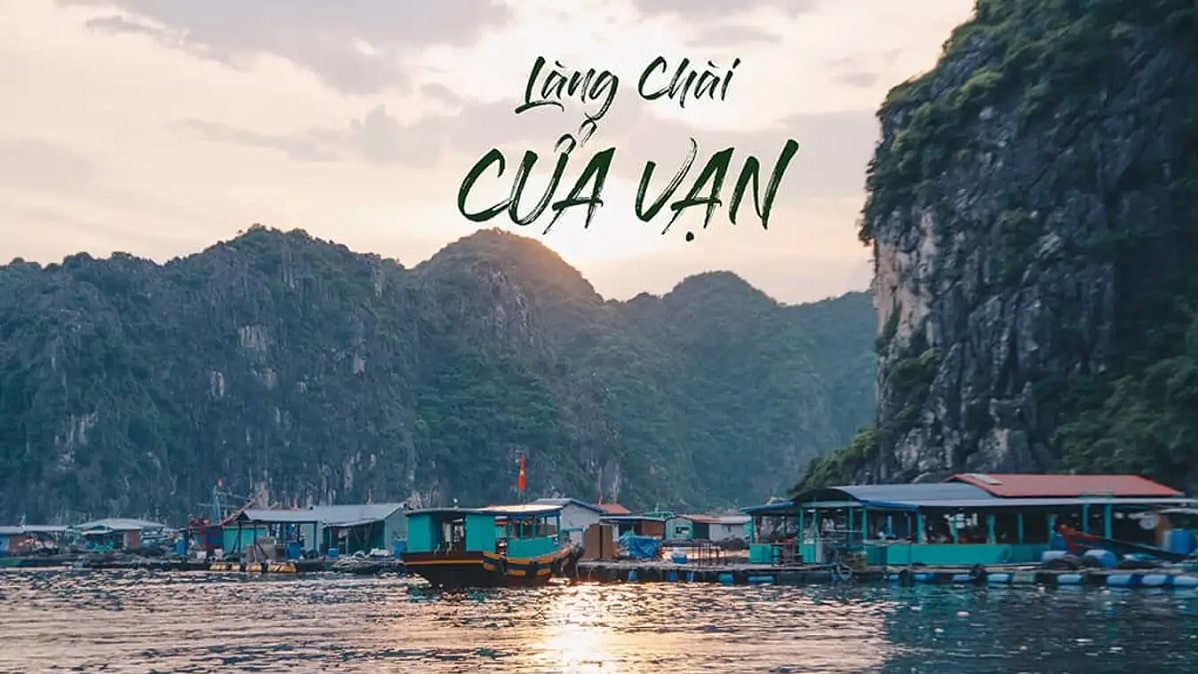
Cua Van fishing village
Cua Van Fishing Village is the descendant of two historical fishing villages, Truc Vong and Giang Vong. It is home to 176 fishing households. The floating raft houses create a timeless, tranquil landscape. To explore Cua Van, visitors can charter an overnight cruise and then freely discover the area by bamboo boat or kayak.
Visitors to Cua Van Fishing Village can enjoy fishing, boating, squid fishing, and hauling nets at night—unmissable experiences during your visit. If you are fortunate enough to arrive during a local festival, you can also enjoy traditional performances, folk songs, Cheo singing, and Gho singing. Furthermore, the destination offers countless fascinating activities such as mountain climbing, exploring Tien Ong Cave, the Fishing Lagoon, and the Ba Ham Lake area.
See more: Cua Van Fishing Village
2. Ba Hang Fishing Village: A Pristine Village with Breathtaking Scenery
Nestled at the foot of Dau Go Island, close to the Thien Cung Cave area, Ba Hang Fishing Village boasts stunning landscapes and is home to over 50 households engaged in fishing and aquaculture. Travelers visiting Ba Hang can experience life as an authentic local fisherman through activities such as rowing, casting nets, and savoring fresh seafood.
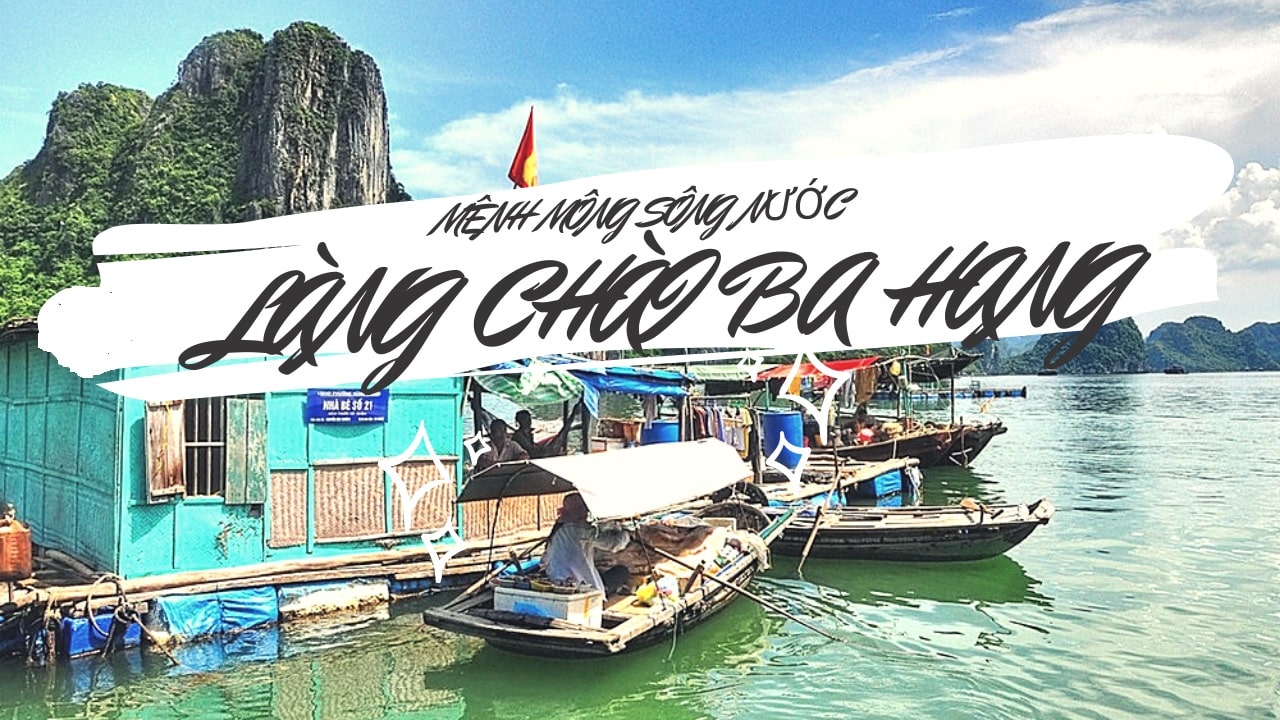
The village is named Ba Hang (Three Caves) because at high tide, water fills the caverns, allowing boats to easily navigate through them. When the tide recedes, three distinct arches emerge, welcoming visitors for exploration. In Ba Hang, travelers are not only captivated by the poetic natural scenery but can also cruise past majestic islets. Additionally, visitors get to step into the shoes of local fishermen with hands-on activities like rowing, net-casting, and tasting delicious seafood freshly caught by their own hands.
See more: Ba Hang Fishing Village
3. Vung Vieng Fishing Village: A Tranquil and Romantic Haven
Vung Vieng Fishing Village lies in the heart of Bai Tu Long Bay, approximately 24km from the mainland. Renowned for its peaceful ambiance and magnificent views, this village is a favorite among travelers exploring the Halong World Heritage site. Historically serving as a commercial trading route between the Vietnamese and Chinese, Vung Vieng invites visitors to discover Mon Key Island (Đảo Mặt Quỷ), the Bay Gieng area, the pristine forests of Van Don Island, and numerous hidden grottoes across Halong Bay.
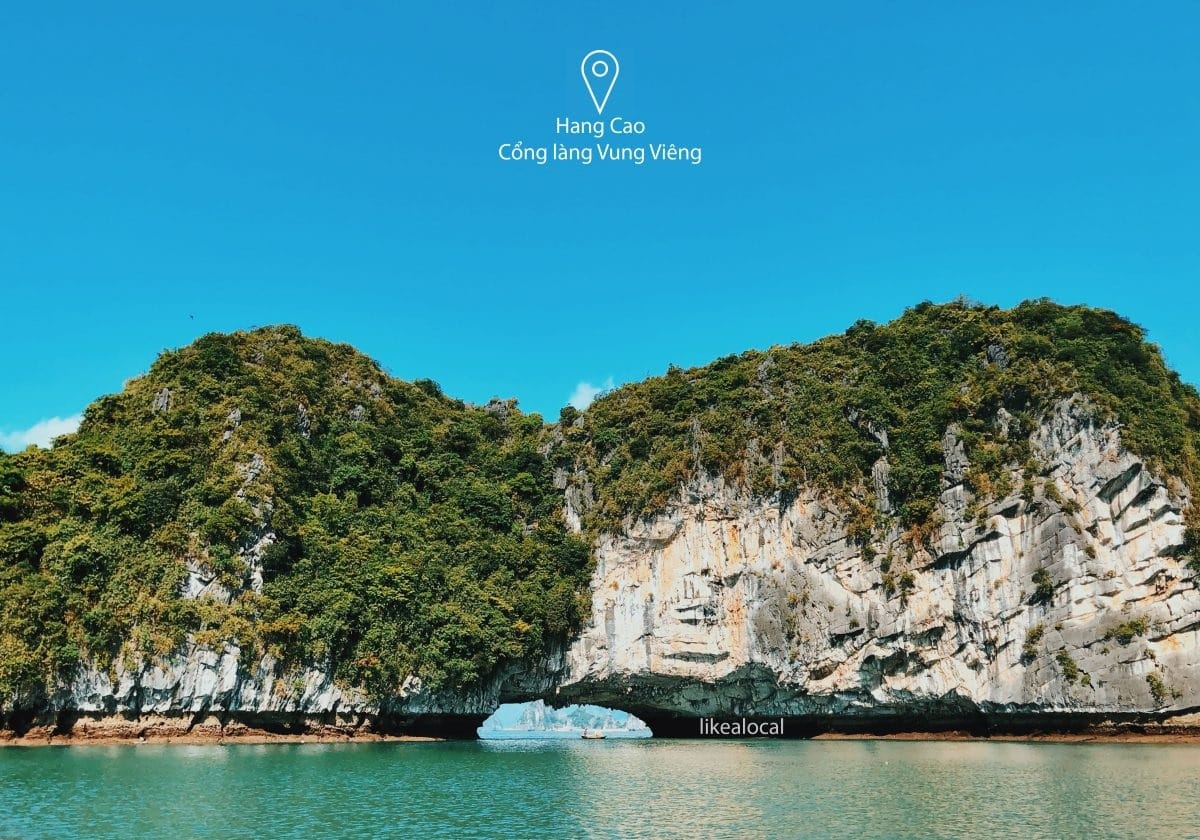 Cao Cave, the village gate symbol and majestic beauty[/caption>
Vung Vieng Fishing Village is home to about 50 households who sustain themselves through aquaculture and eco-tourism. The village even features a modest schoolhouse for the local children. Visitors can partake in activities such as fishing, swimming, kayaking, and relishing freshly prepared seafood. Furthermore, guests can tour the coral and marine conservation center to gain a deeper understanding of the region’s rich biodiversity.
See more: Vung Vieng Fishing Village
4. Cong Dam Fishing Village: A Picturesque Village Amidst Islets
Cong Dam Fishing Village is situated in the southwest of Bai Tu Long Bay, roughly 40km from the mainland. It is home to over 120 households totaling more than 600 residents. Surrounded by numerous picturesque islets, the village presents a canvas-like landscape. Guests visiting Cong Dam can engage in activities such as fishing, swimming, kayaking, and indulging in fresh seafood.
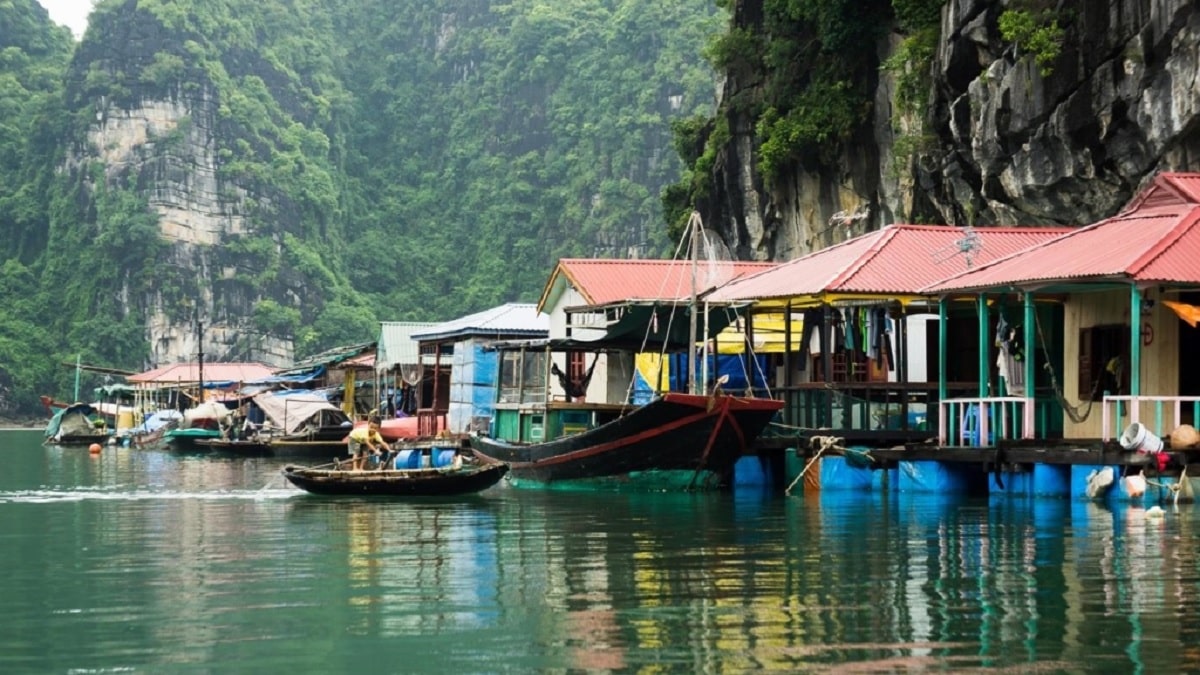 Cong Dam Fishing Village[/caption>
Cong Dam is renowned for an abundance of rare marine delicacies such as jellyfish, grouper, and tuna. In addition, the area shelters rare flora, including oil trees and ironwood trees. Travelers can explore the mangrove and coastal forests to witness the splendor of untamed nature.
See more: Cong Dam Fishing Village
Additionally, Viet Hai Village, although situated on Cat Ba Island in Hai Phong territory and close to Lan Hạ Bay, is frequently included in Halong Bay cruise itineraries. As a mainland settlement village, it offers a distinctive perspective of rural life closely tied to the sea.
The fishing villages in Halong Bay are unmissable destinations when traveling to Quang Ninh. They not only showcase majestic natural scenery but also preserve the unique culture and history of coastal communities. Visiting these Halong Bay fishing villages promises meaningful and fascinating experiences, connecting you deeply with both the local nature and its people. If you wish to charter a boat for a Halong Bay tour to explore these magnificent sights, please contact us for further details.