
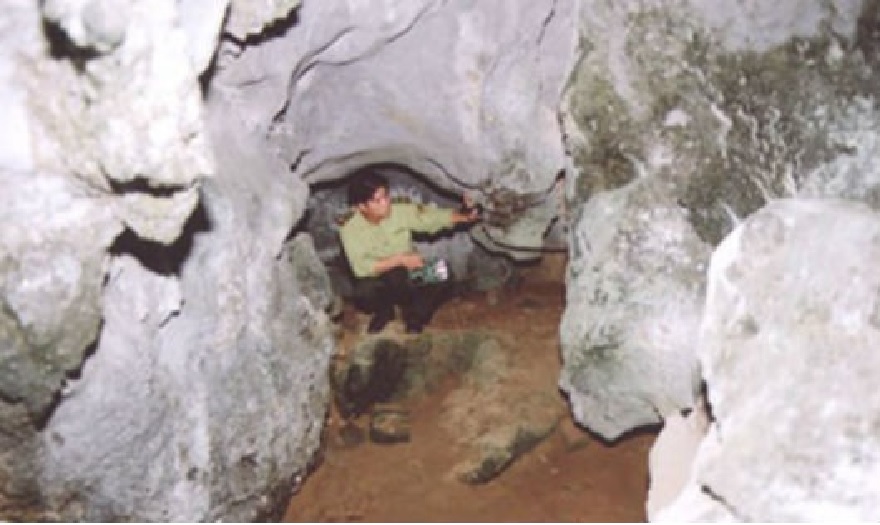
The Soi Nhu culture is one of the most ancient maritime cultures in Southeast Asia, dating back approximately 25,000 to 6,000 years. This culture reveals that prehistoric inhabitants in this region possessed a long history of adapting to challenging coastal environments and harnessing rich marine resources for their livelihoods. Furthermore, this culture demonstrates a high level of creativity and cultural diversity among prehistoric peoples in pottery making, stone tool production, jewelry crafting, and survival strategies.
See more: The legends and formation history of Ha Long Bay
What is the Soi Nhu culture?
The Soi Nhu culture is a prehistoric civilization dating back between 18,000 and 7,000 years, recognized as one of the oldest cultures in Vietnam and Southeast Asia. This culture is named after the Soi Nhu archaeological site in Bai Tu Long Bay, where it was discovered by Vietnamese archaeologists in 1964 and subsequently excavated in 1967.
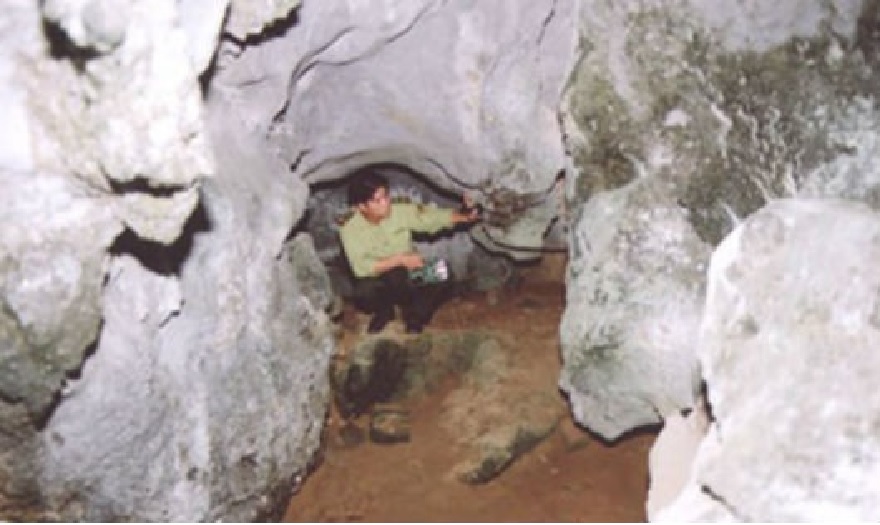
Dr. Ha Huu Nga surveying the archaeological site at Soi Nhu cave
One of the individuals who discovered and named the Soi Nhu culture is Dr. Ha Huu Nga, a Vietnamese archaeologist and professor at the Institute of Archaeology under the Vietnam Academy of Social Sciences. He was the first to propose the concept and defining characteristics of this culture during the conference on “New Archaeological Discoveries of 1996” (Social Sciences Publishing House, Hanoi, 1997). He also participated in the excavation of the Soi Nhu archaeological site, which spans approximately 2,000 m2 on a small, round island in Van Yen Commune, Van Don District, Quang Ninh Province. This site has provided invaluable data regarding the Soi Nhu culture, including stone, ceramic, bone, antler, and shell tools, as well as evidence of the daily lives of the Soi Nhu people.
The process of discovering and excavating the Soi Nhu archaeological site was long and complex; below are some highlights of this journey:
- In 1964, during an expedition in Bai Tu Long Bay, Van Don District, Quang Ninh, Vietnamese archaeologists discovered a cave containing numerous prehistoric relics. The cave was named Soi Nhu, after a type of plant that grows abundantly there. This marked the first awareness of a prehistoric culture in this region. Archaeologists documented the cave’s location and morphology, along with notable artifacts such as stone tools, ceramics, animal bones, and charcoal.
- In 1967, Vietnamese archaeologists conducted the first excavation of Soi Nhu cave. They excavated an area of approximately 100 square meters, yielding many precious artifacts. These included stone tools, ceramics, animal bones, charcoal, and traces of ancient human activity. The stone tools were classified into two types: rudimentary stone tools and polished stone tools. The rudimentary tools included sickles, edge knives, daggers, and bone implements. The polished tools included polished sickles, knives, axes, and more complex bone tools. The ceramics featured white or dark brown colors and ranged from 10 to 20 cm in size. The animal bones belonged to various species, such as mammoths, giraffes, antelopes, wild boars, and bears. The charcoal suggests that humans knew how to use fire for lighting, warmth, and cooking. Traces of human activity included hearths, seating areas, and sleeping spots. Archaeologists have since analyzed and compared these relics with those of other prehistoric cultures in the region and worldwide.
- In 1996, Dr. Ha Huu Nga of the Institute of Archaeology proposed the concept and characteristics of the Soi Nhu culture during the conference on “New Archaeological Discoveries of 1996.” He divided the Soi Nhu culture into three periods: early (25,000 – 15,000 years ago), middle (15,000 – 10,000 years ago), and late (10,000 – 6,000 years ago). He also asserted that the Soi Nhu culture is the precursor to maritime cultural groups belonging to the Malayo-Polynesian language family, playing a crucial role in the development of Southeast Asian rice-based civilizations.
Conclusion of Dr. Ha Huu Nga:
Refuting the perspective of Australian prehistorians represented by Peter Bellwood—who, in his 1985 book “Prehistory of the Indo-Malaysian Archipelago,” argued that the origins of Malayo-Polynesian cultures and Southeast Asian rice civilizations stemmed from the Yangshao and Longshan cultures of China—Dr. Ha Huu Nga affirms that the Cai Beo culture and the Ha Long culture, both descendants of the Soi Nhu culture, are the actual predecessors of the first maritime linguistic groups in Vietnam and Southeast Asia, later known as the Malayo-Polynesian language family. This approach aligns with the reality that 5,000–6,000 years ago, when sea levels were lower, one of the cradles of Southeast Asian maritime culture was the Cai Beo culture, which was widely distributed across Vietnam’s Ha Long Bay area and easily connected to other island systems in Southeast Asia. Dr. Ha Huu Nga utilized archaeological and linguistic evidence to substantiate his position.
Distinctive features of the Soi Nhu culture compared to others
1. The Soi Nhu culture was primarily distributed across the limestone island regions of Ha Long Bay, including Cat Ba Island and Bai Tu Long Bay. Soi Nhu cultural sites have also been identified in limestone caves along the coastal regions of these bays, specifically within Cam Pha, Ha Long City, Hoanh Bo district, Uong Bi town, Kinh Mon district (Hai Duong), and Thuy Nguyen district (Hai Phong).
2. This is a cave, river mouth, and coastal-terrace culture, where the cultural strata are composed primarily of mountain snail shells, stream snail shells, and various other freshwater mollusks. Alongside these components, there is a significant quantity of mammal bone remains. While rare, marine mollusk species are also present within the cultural deposits.
3. Unlike the Hoa Binh and Bac Son cultures, the cultural strata of Soi Nhu contain very few raw river pebbles, stone tools, flakes, or ceramics.
4. Some of the tools recovered lack a consistent form. The manufacturing technique is simple, relying primarily on single-faced flaking, fracturing methods, and showing minimal systematic or standardized refinement. It appears that many of the crude chopping and pounding tools were crafted from limestone, making them difficult to distinguish from naturally fractured limestone fragments or debris left by later inhabitants.
5. Compared to the contemporary Hoa Binh and Bac Son populations, the Soi Nhu inhabitants were likely more closely and directly linked to the sea. Evidence of marine exploitation has been discovered in the Soi Nhu, Tien Ong, and Bo Quoc caves; however, the dating of these remains requires further research.
6. Regarding the contemporary Hoa Binh and Bac Son cultures, the Soi Nhu culture appears to have had more frequent and favorable interactions and reciprocal influences with the Bac Son culture. This is reflected, in part, by the discovery of Bac Son-style polished-edge axes at Soi Nhu Cave and various other caves in Hoanh Bo and on Cat Ba Island. Tools featuring these polished edges, reminiscent of the Bac Son axe shape, are also commonly found at outdoor sites such as Hon Ngo and Nui Hua.
Historical periods of the Soi Nhu culture
The Soi Nhu culture is a prehistoric Vietnamese civilization discovered and excavated in Bai Tu Long Bay. According to Dr. Ha Huu Nga, a renowned Vietnamese archaeologist, the Soi Nhu culture dates back between 18,000 and 7,000 years, making it contemporary with the Hoa Binh and Bac Son cultures of Vietnam. The origins of the Soi Nhu culture may even trace back 25,000 years, aligning it with the Nguom culture of Thai Nguyen province. The Soi Nhu culture is categorized into three distinct phases—early, middle, and late—based on various archaeological sites found throughout Ha Long Bay and neighboring provinces.
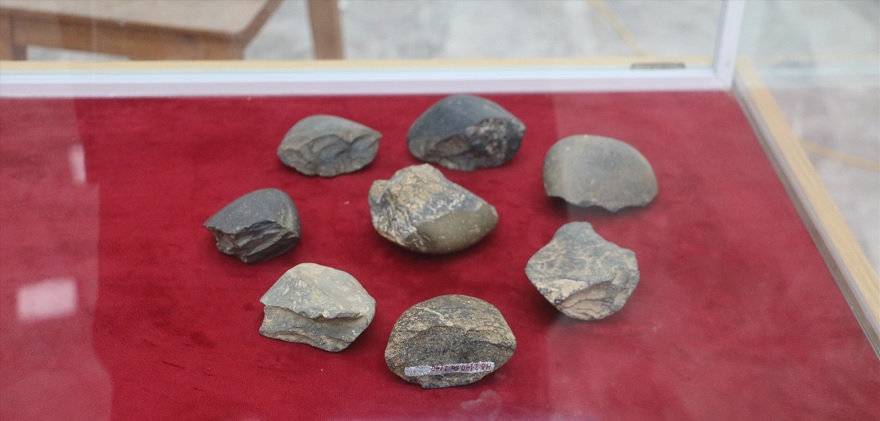
Early-stage stone tools (Illustrative photo)
The early phase (25,510 to 17,000 years ago) is characterized by stone tools, animal bones, and snail remains discovered in caves such as Ang Ma, Thien Long, Me Cung, Tra Gioi, and Hang Trong. The stone tools were primarily crafted from quartz or chalcedony and included flakes, scrapers, engraving tools, points, and knives. The animal bones belonged to various species, including deer, wild boar, monkeys, turtles, fish, and snails. The abundance of snail remains suggests that the people of this era relied heavily on marine resources for sustenance.
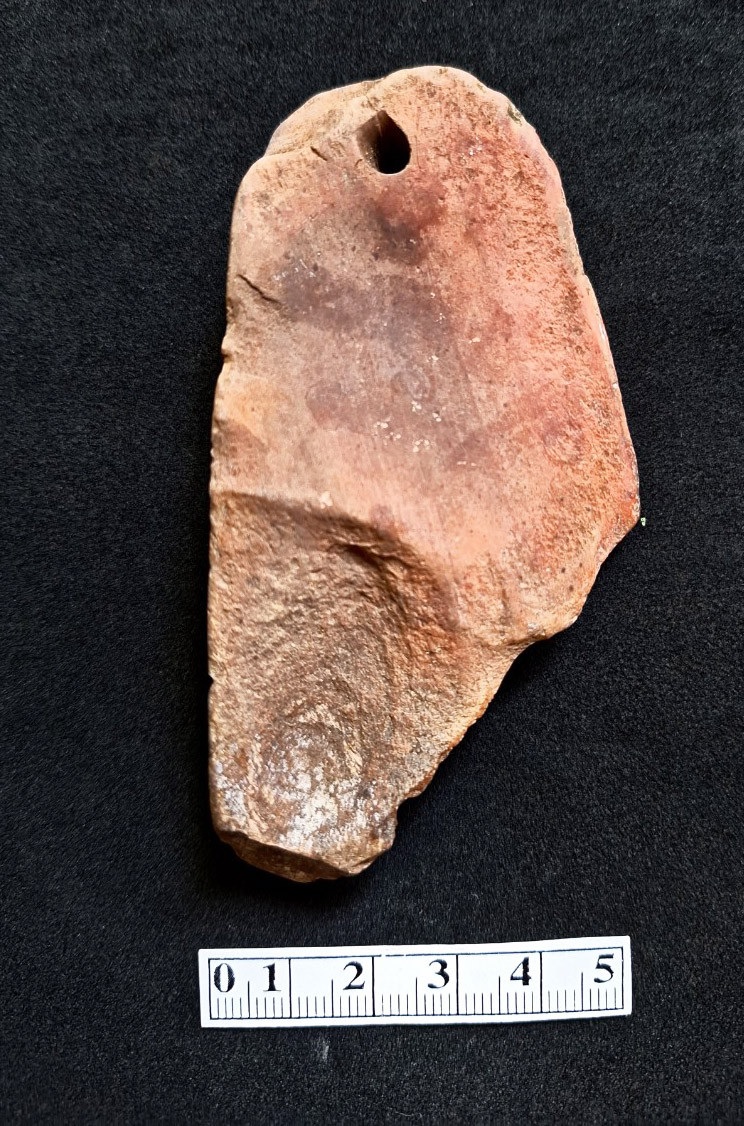
Middle-stage polished stone axe (Illustrative photo)
The middle phase (16,000 to 9,000 years ago) is defined by the emergence of ceramics, polished stone axes, and jewelry crafted from shells and animal teeth, discovered in sites such as Soi Nhu, Tien Ong, and Bo Quoc. The pottery from this period primarily consists of plain wares or those decorated with cord markings or incisions. Polished stone axes were typically fashioned from greenstone or basalt and were either oval or rectangular in shape. Jewelry included beads, pendants, rings, bracelets, and necklaces made from shells (such as oysters, clams, or snails) or animal teeth (such as those from deer or wild boar).
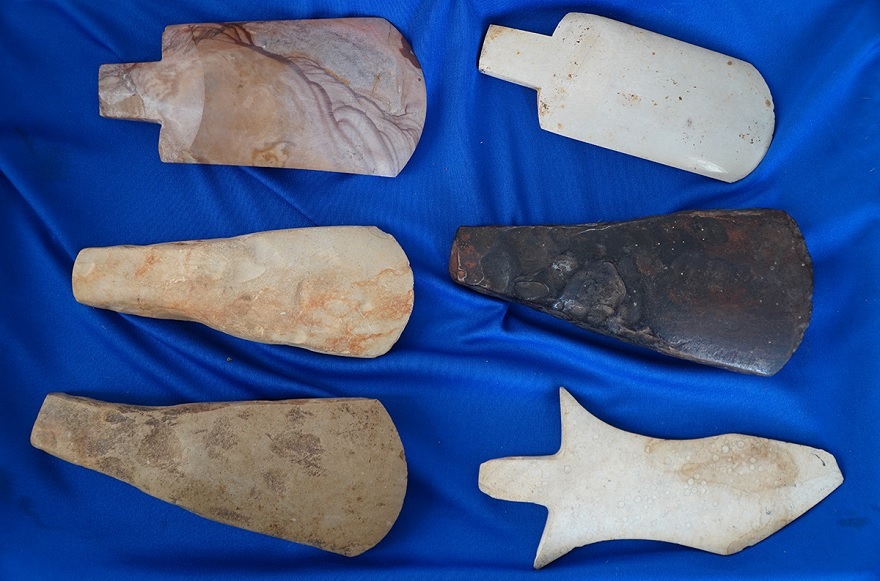
Late-stage geometric stone tools (Illustrative photo)
The late phase (8,000 to 6,000 years ago) is distinguished by a greater diversity of ceramic styles, geometric stone tools, and evidence of early agriculture and animal domestication found in mountain caves such as Dong Dang, Ha Lung, Hang Doi, and Phuong Nam. Ceramic styles include red-slipped pottery with geometric patterns or relief decorations. Stone tools evolved to include arrowheads in triangular, square, circular, and crescent shapes, crafted from quartz or chalcedony. Evidence of agriculture and animal husbandry includes botanical seeds (such as rice or millet) and domesticated animal remains (such as dog or pig bones).
Where to view Soi Nhu cultural relics?
Aside from the Soi Nhu archaeological site in Bai Tu Long Bay, Quang Ninh province, you can also visit historical museums across Vietnam to delve deeper into the Soi Nhu culture through the artifacts displayed there. Below are prominent museums featuring Soi Nhu cultural heritage that you may wish to explore:
- National Museum of Vietnamese History: This esteemed institution showcases numerous artifacts and models representing Vietnam’s ancient civilizations, including the Soi Nhụ culture. You can examine curated collections of pottery, stone tools, jewelry, and charcoal remains belonging to the Soi Nhu culture in Room 3 of the museum. The museum is located at 1 Trang Tien Street, Hoan Kiem District, Hanoi.
- Vietnam Centre for Prehistoric and Protohistoric Archaeology: Dedicated to researching and advancing archaeological projects in Vietnam, this center encompasses the study of the Soi Nhu culture. You can browse scholarly articles, books, and journals regarding the Soi Nhu culture at the center’s library. Visitors also have the opportunity to meet and converse with leading Vietnamese archaeologists, such as Dr. Ha Huu Nga, who led the excavation and research of the Soi Nhu culture. The center is situated at 61 Phan Chu Trinh Street, Hoan Kiem District, Hanoi.
- Quang Ninh Museum: Located at 165 Nguyen Van Cu Street, Ha Long City, this architectural masterpiece serves as the premier provincial museum of Quang Ninh. The museum features extensive exhibition halls dedicated to the history, culture, geology, and ecology of Quang Ninh province, including a comprehensive section on the Soi Nhu culture. You can view authentic pottery artifacts, stone tools, primitive jewelry, and charcoal fragments of the Soi Nhu civilization in Room 5.
các bài viết liên quan
[blog_posts style=”normal” type=”row” columns=”3″ columns__md=”1″ ids=”3466,3465,3532,3505,3428,3501″ show_date=”false” image_height=”56.25%”]