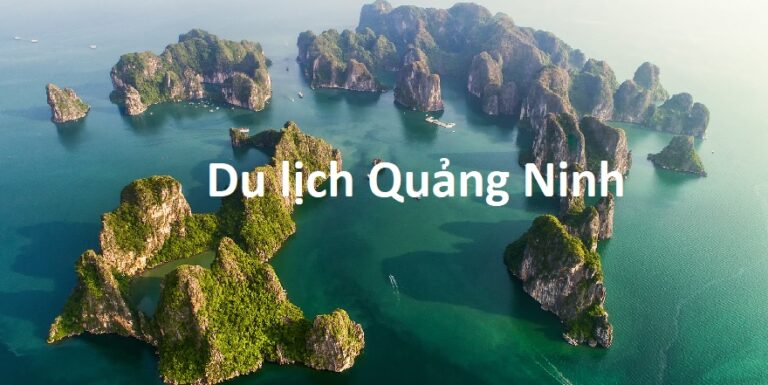
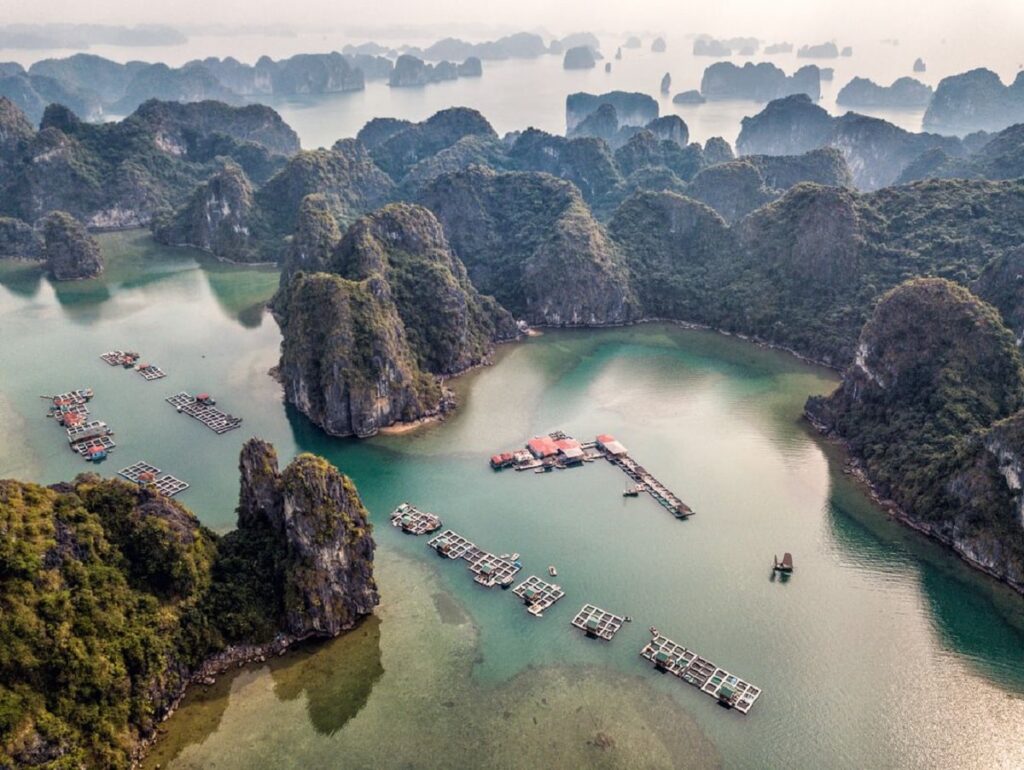
Quang Ninh has been graciously gifted by nature with breathtaking landscapes, cementing its reputation on the global tourism map. However, beyond the famous and well-trodden destinations like Ha Long Bay, Bai Tu Long Bay, and Co To Island, there remain numerous majestic, lesser-known gems. Among these is Vung Vieng fishing village, one of the four oldest floating villages in Quang Ninh province that still exists today. Upon arriving at Vung Vieng, you will be captivated not only by the grandiose scenery but also by the genuine warmth and hospitality of the local community. Discover this unique village to add a truly remarkable destination to your upcoming itinerary in Quang Ninh!
See more: Fishing villages in Ha Long Bay
Introduction to Vung Vieng fishing village
Vung Vieng fishing village, also known as Vong Vieng, is located within Bai Tu Long Bay, approximately 20km northeast of Tuan Chau Harbor—a journey of about 2 hours by boat. The village is a designated stop on Route 4 within Ha Long Bay, a popular itinerary for overnight cruises. This route holds special appeal for international travelers, blending spectacular scenery with authentic cultural experiences rooted in the heritage of the long-standing floating community. Below are the key activities and highlights of Vung Vieng fishing village.
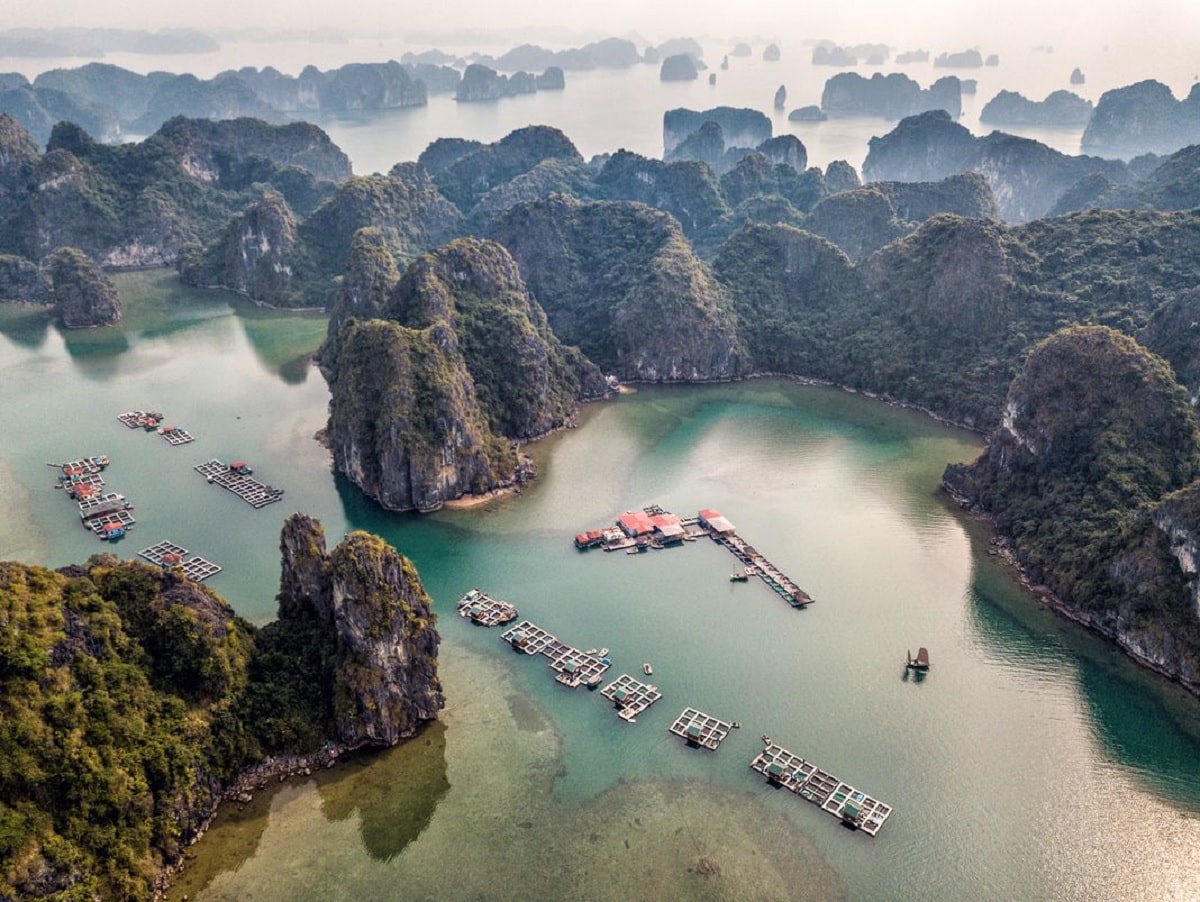
A glimpse of Vung Vieng
This area remains remarkably pristine and sparsely populated, offering a tranquil and airy escape. As one of the four fishing villages within the World Heritage site, Vung Vieng was once celebrated as one of the most beautiful fishing villages in the world, renowned for its landscape, its people, and its unique maritime customs. Archaeologists trace the origins of Vung Vieng back to the 19th century. Remnants of stone house foundations, still visible at low tide, suggest the area was once an inhabited shoreline. Notably, pottery and ceramics featuring patterns similar to Tho Ha ware have been discovered here. It is likely that Vung Vieng’s proximity to the historic Van Don trading port made it a natural hub for fishermen to anchor, gather, trade, and socialize.
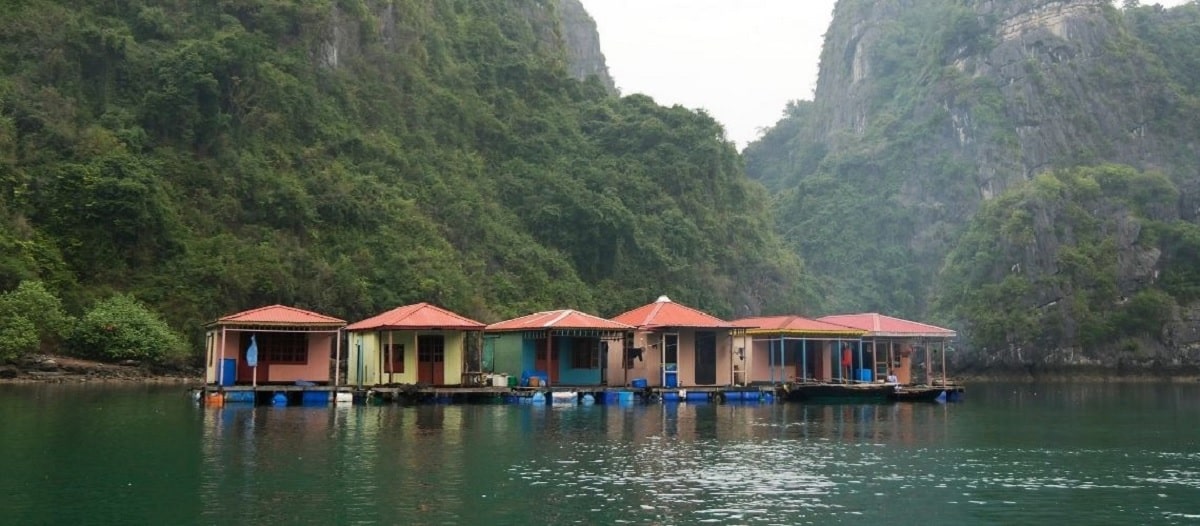
In the past, Vung Vieng was home to approximately 300 fishermen across several generations. Due to the hardships of life at sea and limited opportunities, the residents relied entirely on fishing for survival. Driven by necessity, many fishermen resorted to destructive practices, such as using prohibited gear or trading fish for explosives to maximize their catch. With a survivalist mindset focused on short-term gain, generations of villagers inadvertently contributed to the over-exploitation of rare marine species.
To address these challenges, the Ha Long Bay Management Board issued a directive in 2012 to relocate floating village residents to the mainland. They were provided with land and housing in the Ha Phong resettlement area (Quarter 8, Ha Phong Ward, Ha Long City). Quarter 8 houses 350 families—about 1,700 people. In its early years, this area was considered a sensitive zone for social security in Ha Long. As the city implemented strict bans on fishing within the bay to protect marine resources and foster tourism, local residents initially resisted.
Recognizing that these deep-seated, generations-old fishing habits could not be changed overnight, the Quang Ninh Fisheries Sub-Department collaborated with local ward authorities and community leaders to provide education and support. Their efforts have proven successful; violations have significantly decreased, and the use of prohibited fishing gear has been eradicated. Younger residents have been trained in aquaculture or transitioned into tourism, working as rowers to guide visitors through the wonders of Ha Long Bay. Older residents who were unable to change careers were provided access to preferential bank loans to upgrade their vessels for offshore fishing, allowing them to earn a living without encroaching on protected areas.
Costs and how to reach Vung Vieng fishing village
Vung Vieng Fishing Village is located on Sightseeing Route 4 of the Halong Bay cruise itinerary: Co Cave, Thay Cave, Cong Do Island area, Cap La Cave, Tung – Ang Cong Do ecological area, Hon Xep Park, and the Vung Vieng area. However, as this route is specifically designed for overnight cruises, there are no day-trip shared boats traveling here. Furthermore, large cruise ships are prohibited from approaching the Vung Vieng fishing village; therefore, to explore the village, guests must transfer to traditional bamboo boats or kayaks to get around. Below are the ways to visit Vung Vieng and the associated costs.
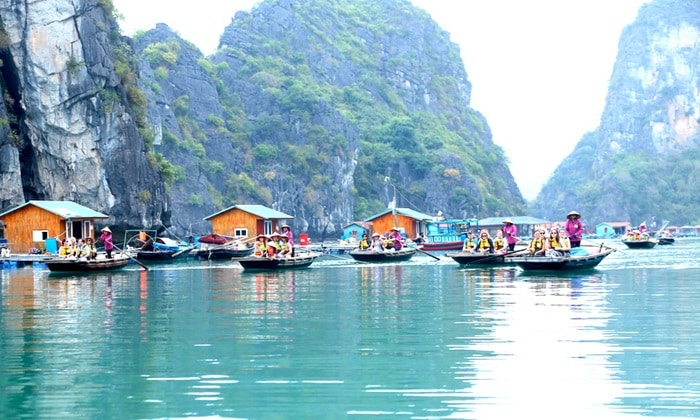
Visitors exploring Vung Vieng
- Overnight Halong Bay Cruise: This is the most popular choice for travelers. Because Route 4 features numerous attractions, this is the most relaxing way to sightsee without being pressured by time constraints. Furthermore, cruises always provide a team of experienced guides who will help guests discover and experience Vung Vieng to its fullest. However, the cost for a cruise is relatively high, starting from 2,000,000 VND per person depending on the 3 to 6-star vessel category.
- Private Boat Charter: Although there are no shared boat lines traveling to Vung Vieng, if you are short on time and only wish to visit for the day, you have the option of chartering a private boat. Since Vung Vieng is quite far, a typical excursion lasts at least 6 hours, with private boat rates starting from 2,700,000 VND per boat (48 seats) depending on the season. Additionally, guests will need to pay an entrance fee of 240,000 VND per person.
- Kayak/Bamboo Boat Rental Prices at Vung Vieng: 50,000 VND per person per hour.
Experiential Activities at Vung Vieng Fishing Village
Situated 20km offshore within the Vung He island cluster—a strictly protected zone of Ha Long Bay—the gateway to the Vung Vieng fishing village is a natural masterpiece. It features a colossal stone arch known as “Hang Cao,” a uniquely shaped tunnel cave that serves as a passageway through the karst formations of Bai Tu Long Bay. As you navigate the village gate by bamboo boat, a serene, rustic floating village emerges, cradled by layers of majestic mountains. The village is surrounded by towering limestone pillars that stand like fortress walls, shielding the small community from the ocean’s rough swells. These limestone islands, shaped by eons of tectonic movement and the persistent rhythmic erosion of the sea, create a breathtaking landscape. Covered in lush greenery, they resemble emeralds floating upon the water. Some of these islands are home to endemic species, including monkeys, hawks, and various sea birds; keep an eye on the azure skies, and you may catch a glimpse of falcons or seagulls soaring gracefully above.
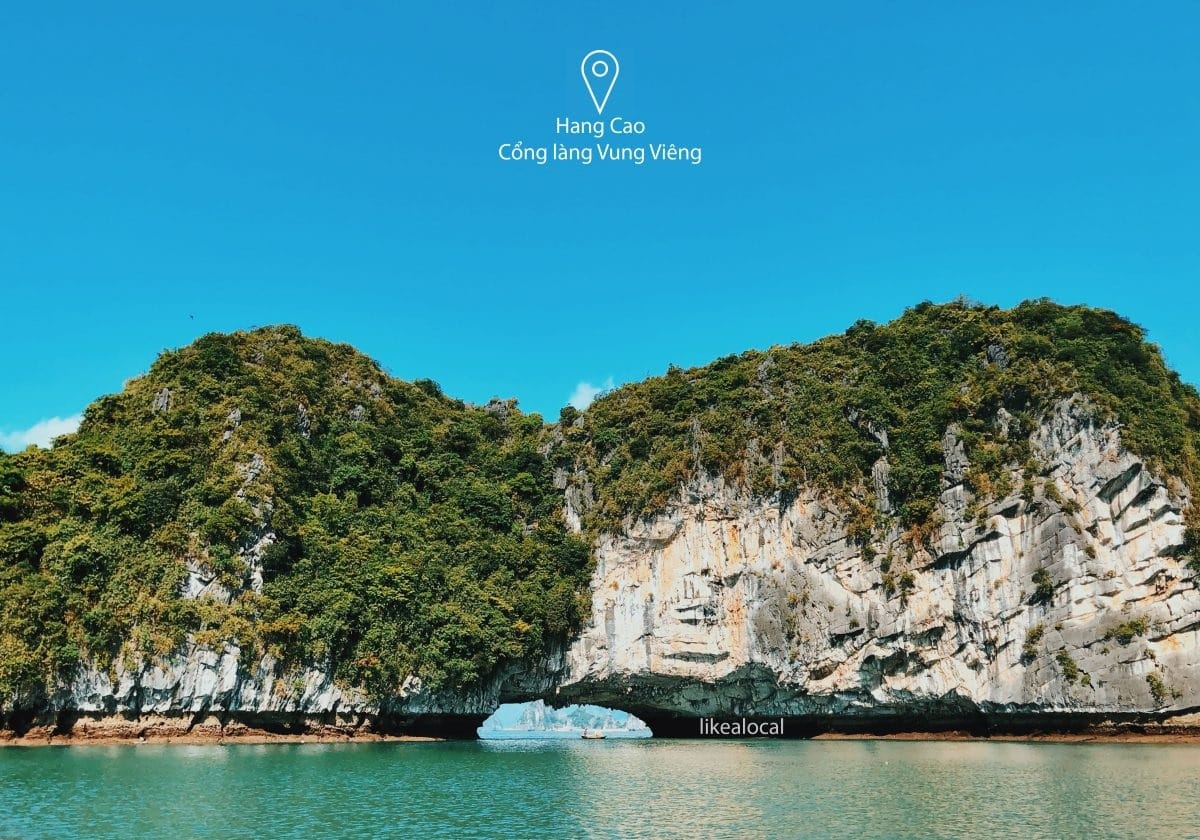
Hang Cao, the iconic village gateway and its majestic beauty
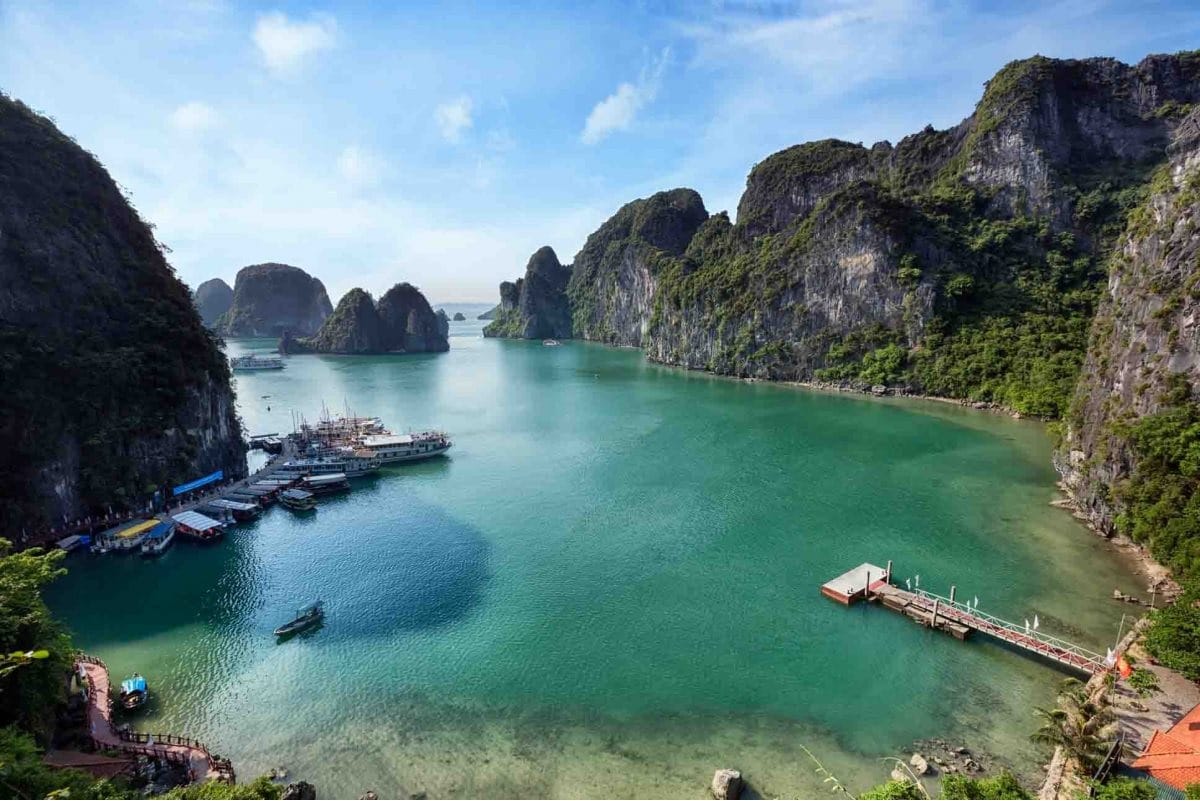
Limestone mountains surrounding the fishing village
A visit to Vung Vieng offers travelers more than just the sublime scenery of Ha Long Bay; it provides a profound opportunity to explore and experience the cultural heritage of a northeastern fishing village, thoughtfully preserved and maintained. The local fishermen here serve as both skilled oarsmen and insightful guides. During the peak season, from September to April of the following year, the village welcomes hundreds of visitors daily to share in this unique experience.
Visitors can explore the Vung Vieng area by bamboo boat rowed by former village fishermen or opt for a more intimate experience by kayaking themselves. On this journey, guests can admire the picturesque landscape while gaining deep insights into the daily lives, culture, and traditional beliefs of the ancient fishing communities of Ha Long Bay. The itinerary is flexible and can be customized based on your time and interests.
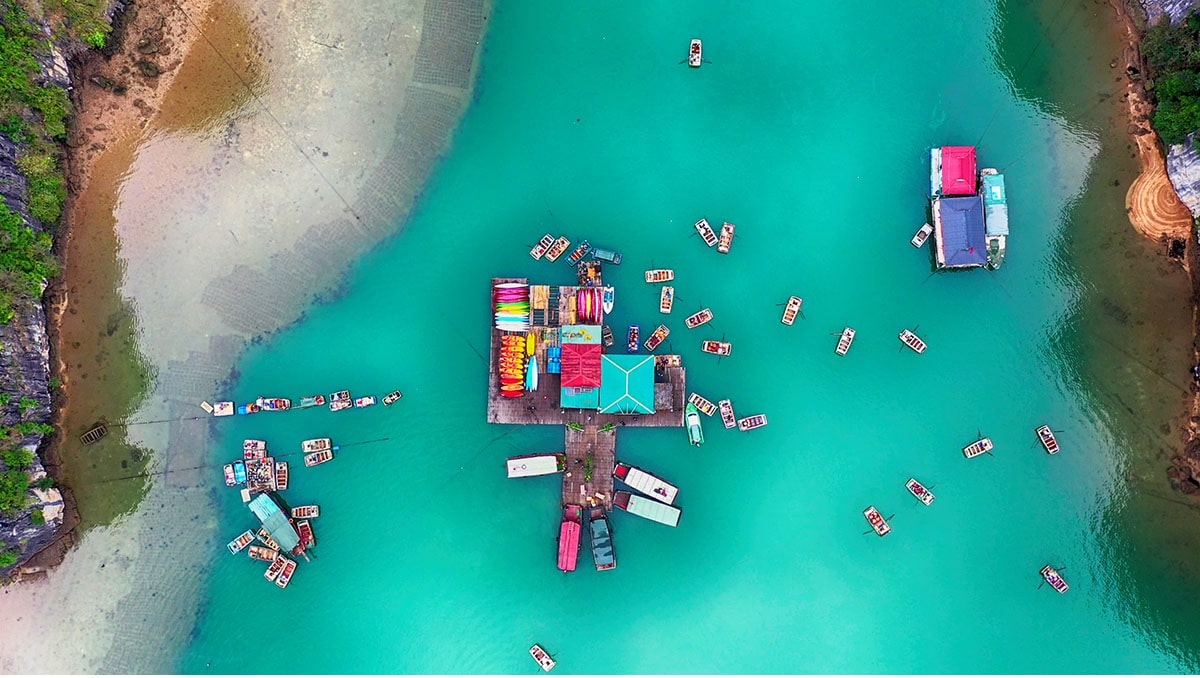
The tranquility of Vung Vieng fishing village
1. Explore the aquaculture farming zone
From the arrival point, a bamboo boat will take you deep into Vung Vieng, past charming floating houses bobbing gently on the water. The first stop is the sustainable aquaculture farming zone—a pilot project providing livelihoods for fishermen after their relocation to the mainland, perfectly integrated with responsible tourism in Ha Long Bay. Here, guests can learn about standardized, eco-friendly farming practices, hand-feed the fish, and observe the diverse species and sizes swimming within the pens.
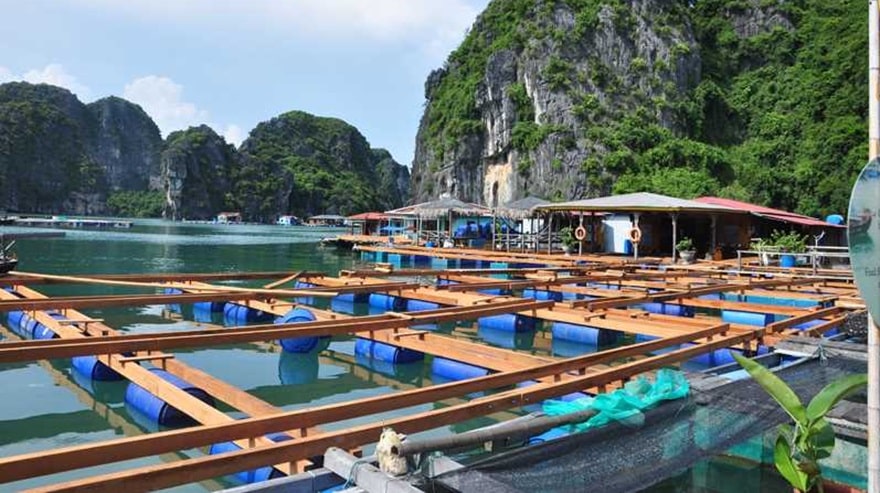
Vung Vieng aquaculture farming area
2. The Floating Classroom
Next, travelers will visit the floating classroom. The Ha Long Bay Fishing Village School Conservation Area is a floating structure with a wooden design comprising two classrooms, supported by buoys made from repurposed metal drums. Previously, this structure served as a school for children from the Vung Vieng and Cua Van fishing villages. Since the city of Ha Long relocated the floating village inhabitants to the mainland, the school is no longer active. The structure has since been converted into a museum, allowing visitors to view original teaching tools such as chalkboards, student desks, textbooks, and wall newspapers hand-decorated by the former students of Vung Vieng, all preserved in their original state.
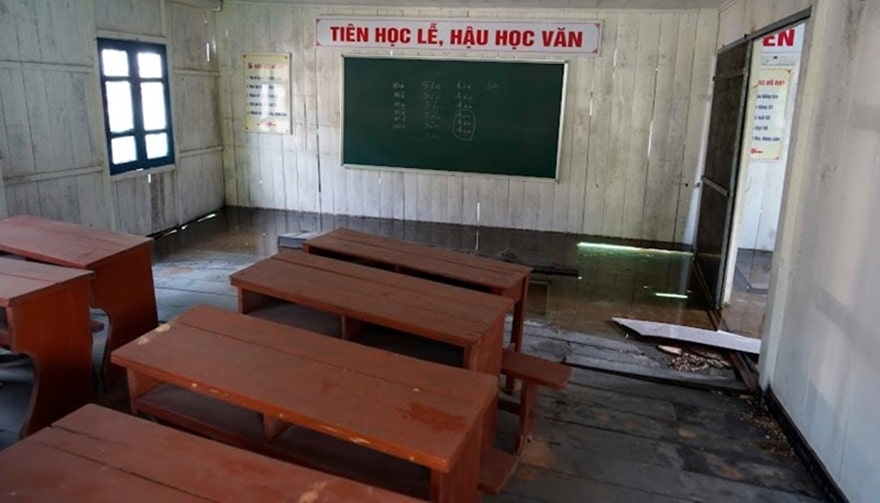
The classroom at Vung Vieng fishing village is severely dilapidated and awaiting repairs
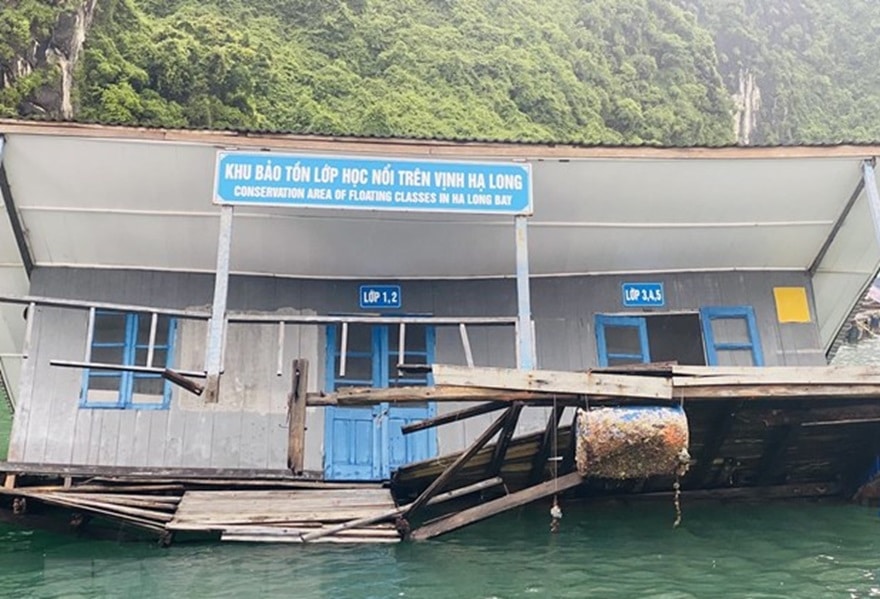
The Vung Vieng floating classroom conservation area in disrepair
However, since 2018, the floating school conservation area has shown significant signs of deterioration due to environmental exposure; the metal drums used as buoys have rusted, posing a risk of capsizing. The Ha Long Bay Management Board has repeatedly submitted requests to the authorities for renovation and repairs, but these have yet to be approved due to a lack of funding.
3. The Community House
From the floating classroom, visitors will proceed to the community house. As the largest and most magnificent floating structure in the historic Vung Vieng fishing village, this approximately 100 m2 space currently showcases regional souvenirs—including exquisite items crafted from pearls, seashells, wood, and traditional textiles—allowing guests to browse and select the perfect mementos for friends and family.
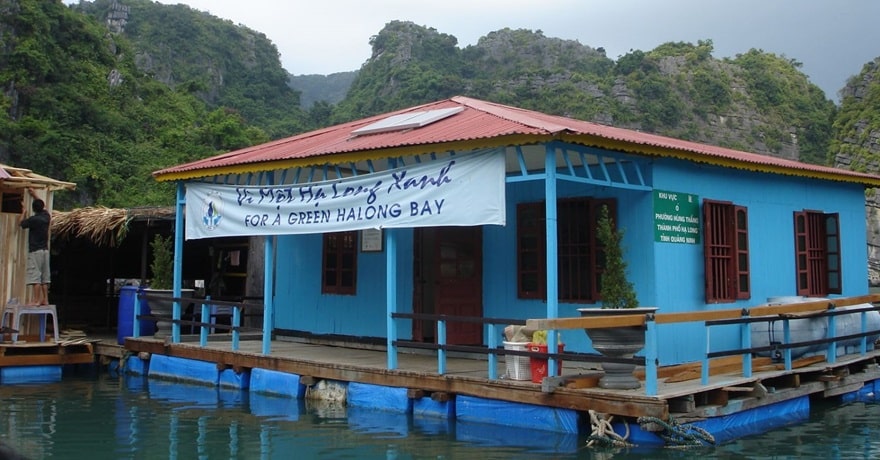
The Community House area
Adjacent to the community house lies the exhibition hall and experimental zone—a space that recreates the traditional aquaculture practices and the daily lives of the former Vung Vieng fishing community through evocative paintings and displays of historical fishing gear and household utensils.
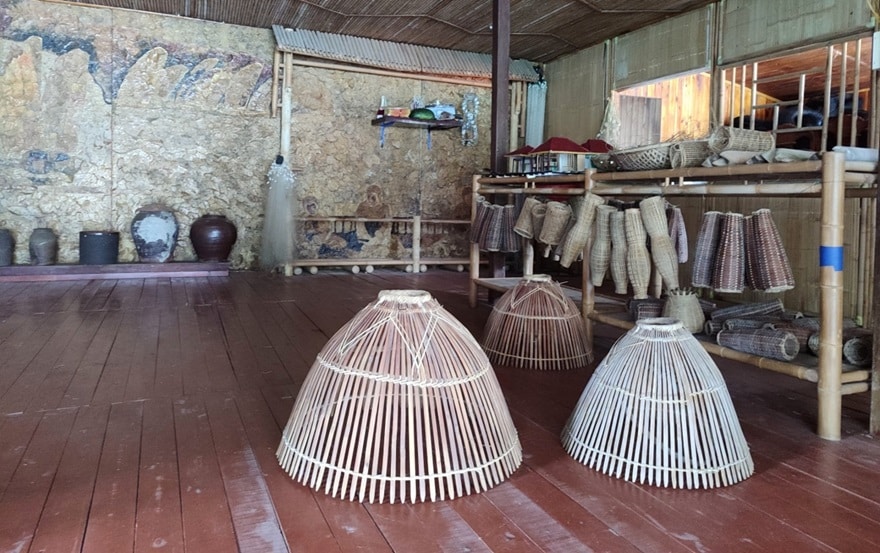
Fishing gear used by the Vung Vieng fishing village community
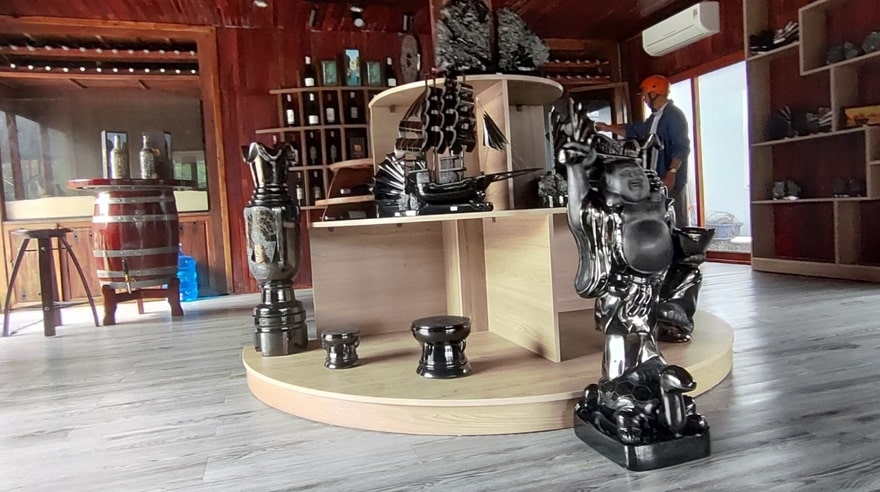
Display area featuring coal sculptures and artisanal souvenirs.
4. Explore the Pearl Farm
The final stop in Vung Vieng is the pearl cultivation zone managed by the Ha Long Pearl Joint Stock Company. The highlight of this visit is the opportunity to witness the meticulous process of creating a magnificent pearl, from initial cultivation to harvest, while learning about different pearl varieties from our expert guides. Pearl jewelry serves as an impeccable, high-value gift for those seeking a sophisticated keepsake from their Ha Long Bay journey.
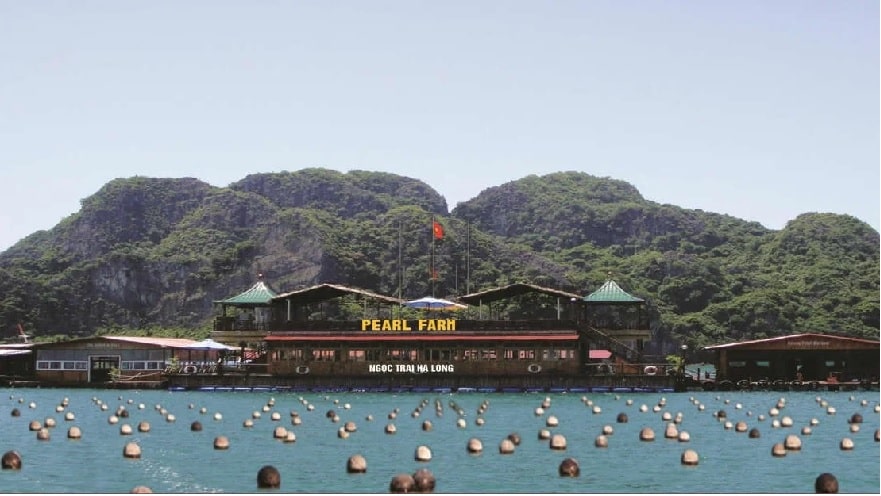
Pearl farming on the Bay.
5. Other immersive activities
Here, guests can engage in various activities such as traditional fishing with locals on a sailboat, rowing bamboo boats, kayaking, participating in dragon boat races on the bay, enjoying fresh local seafood, or watching pearl processing demonstrations. From Vung Vieng fishing village, visitors can also explore nearby islands such as Mat Quy and the Bay Gieng area, or enjoy a swim at the secluded beaches of Van Gio or Ngoc Vung island to fully appreciate the natural beauty bestowed upon this region.
Important notes for your visit to Vung Vieng Fishing Village
Vung Vieng Fishing Village is one of the most ancient and picturesque floating villages in Bai Tu Long Bay. Upon arrival, you will be captivated by the majestic beauty of the limestone islands, hidden caves, and the tranquil village life, while enjoying engaging activities such as kayaking, swimming, and pearl cultivation. To ensure a seamless and safe journey, please take note of the following tips:
- To reach Vung Vieng Fishing Village, you must travel by boat from Tuan Chau Marina or other designated departure points in Bai Tu Long Bay. From there, you will transfer to a bamboo boat or kayak to pass through the Hang Cao village gate, continuing for another 20 minutes to reach the heart of the community. We recommend selecting a cruise itinerary that allows ample time to explore the village at a leisurely pace.
- When visiting Vung Vieng Fishing Village, please respect the local way of life and culture. Avoid making excessive noise or infringing upon the residents’ privacy. It is courteous to ask for permission before taking photographs or recording videos.
- You can savor fresh, locally caught seafood at Vung Vieng. You may purchase seafood directly from the villagers or through your cruise service, which can then be prepared to your preference. Additionally, you may participate in pearl farming experiences and take home a beautiful souvenir.
- For an authentic immersion into maritime life, you may choose to stay overnight near Vung Vieng. Depending on your preference, you can experience a traditional floating homestay or retreat to the comforts of a modern luxury cruise. Enjoy breathtaking sunsets and sunrises over the bay, go night fishing, indulge in BBQ dinners, and connect with the warm, local community.
Other notable attractions near Vung Vieng Fishing Village
Beyond Vung Vieng Fishing Village, there are numerous other spectacular attractions to explore in the Ha Long Bay area. Here are a few recommendations:
- Sung Sot (Surprise) Cave: As one of the largest and most magnificent caves in Ha Long Bay, located on Bo Hon Island, this site is a must-visit. While the climb to the entrance is steep, you will be instantly overwhelmed by the grandeur of the interior. Sung Sot Cave features two vast chambers soaring 30 meters high, filled with intricately shaped limestone formations.
- Ti Top Island: This small yet iconic island is famed for its pristine white sand beach and crystal-clear waters. It is the perfect spot for swimming and water sports, or you can hike to the summit for a panoramic view of Ha Long Bay.
- Thien Cung (Heavenly Palace) Cave: Located on Dau Go Island, this expansive, deep cavern is renowned for its spectacular system of stalactites and stalagmites. These formations create vivid, natural sculptures reminiscent of dragons, phoenixes, and elephants, all steeped in legendary tales of an ancient prince and princess who once resided there.