The Historical Formation of Van Don Trade Port
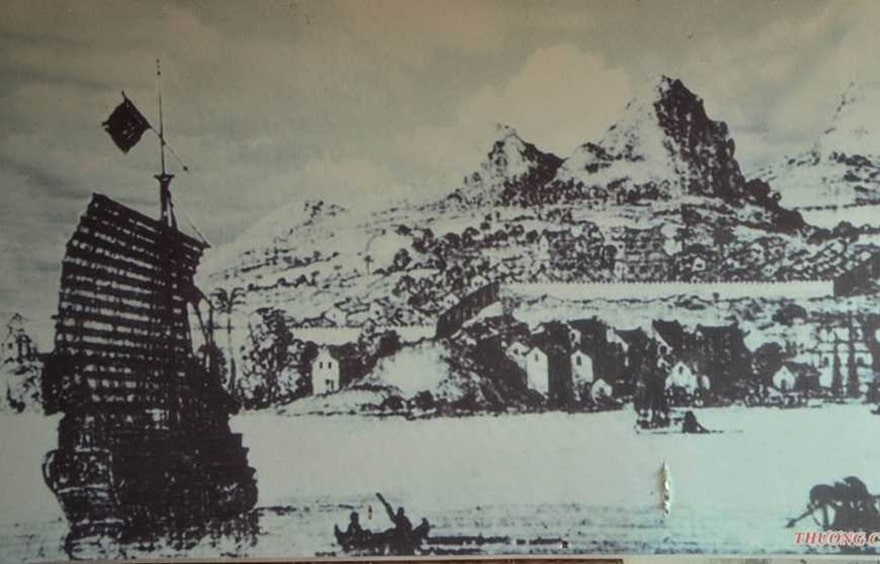
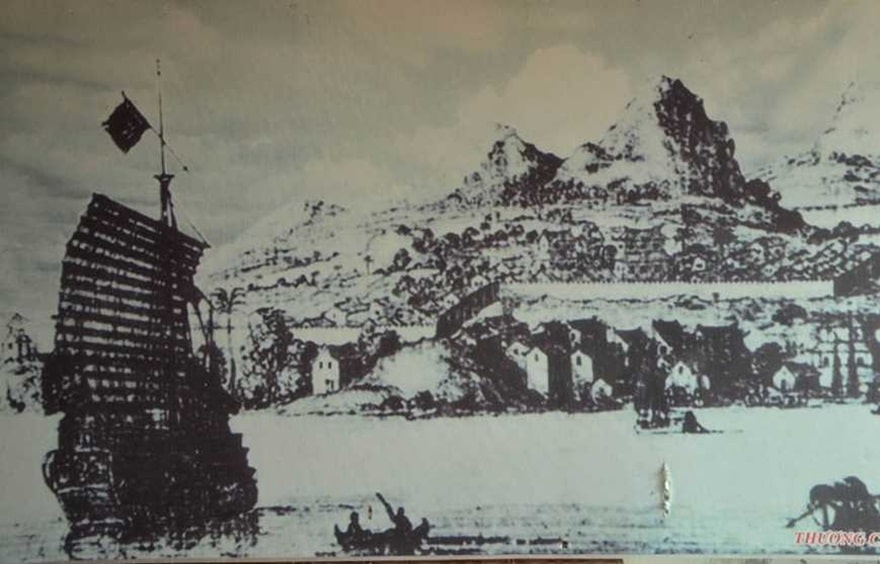
The ancient Van Don Trade Port
According to the “Dai Viet Su Ky Toan Thu” (Complete Annals of Dai Viet), merchant ships from Java (Indonesia), Siam, and Lo Lac (modern-day Thailand) arrived in Hai Dong (Quang Ninh) in ancient times to request permission to reside and trade. Consequently, in 1149, during the 10th year of the Dai Dinh reign, King Ly Anh Tong authorized the opening of the Van Don “Trang” (commercial station), officially establishing Van Don Trade Port—the first of its kind in the Northeast sea of Vietnam—complete with a system of docks, vessel control points, customs, tax collection facilities, and defensive bases. However, surveys and historical records indicate that this port had actually developed upon “predecessor” systems dating back at least 2,500 years. Elements of “maritime culture” first emerged in the late stages of the Soi Nhu culture, gained momentum during the Cai Beo culture, became more distinct in the Ha Long culture, and were further cultivated during the Dong Son period. This evolution continued through the Northern domination period and flourished particularly after Dai Viet became an independent sovereign nation. Since ancient times, the Vietnamese people have demonstrated a profound understanding of the natural conditions and unique geography of the “Dong Trieu arc” in relation to the sea and its tidal cycles. They utilized this knowledge in all facets of life, including both domestic and international maritime trade activities.
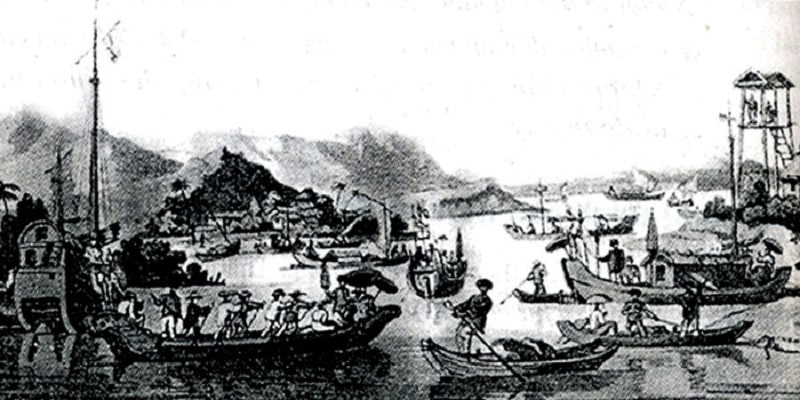
Trading activities at the ancient Van Don Trade Port
Van Don Trading Port flourished significantly, particularly during the Ly and Tran dynasties. During this era, the range of goods passing through the port was incredibly diverse, spanning from fine ceramics, spices, pearls, and agarwood to local specialties such as abalone, peanut worms, and sea cucumbers. Among these, pearls were the most renowned, frequently documented in historical annals as luxury items reserved exclusively for the nobility of the time. Furthermore, in the “An Nam Chi Luoc” (Brief History of An Nam) by Le Tac, red coral was mentioned as a prized commodity traded and offered as tribute to Chinese emperors throughout history.
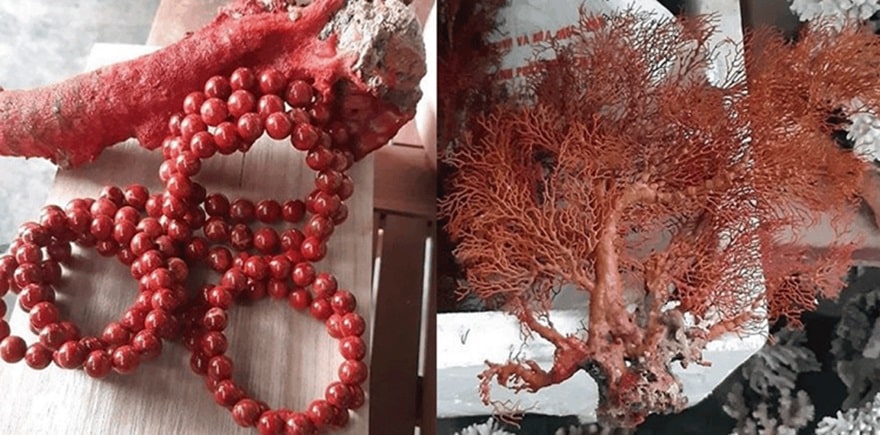
Red coral could be fashioned into exquisite jewelry such as bracelets and necklaces, making them ideal gifts for royalty in ancient times.
With the growth of trade, the Van Don post was elevated to the status of a District, and eventually, the Van Don Prefecture. Throughout the Ly, Tran, Le, and Mac dynasties, Van Don emerged as a large-scale international commercial hub. It served as a region of vital strategic importance, intrinsically linked to the history of our nation’s defense and development. Over seven centuries, from the mid-12th to the late 18th century, Van Don Trading Port was not only one of the most important economic centers of the Dai Viet nation but also a primary nexus for cultural exchange between Dai Viet and other Eastern civilizations.
While foreign trade during the Ly dynasty was exclusively state-run—with citizens prohibited from direct commercial dealings with foreigners, foreign vessels required to anchor at Van Don, and merchants restricted to specific locations under state surveillance—the Tran dynasty delegated the management and defense of Van Don to members of the royal family, notably Prince Nhan Hue, Tran Khanh Du. During this period, wooden fences were erected around the markets and critical coastal areas of the island, and Tran Khanh Du ordered his troops stationed at Van Don to prevent Chinese soldiers from infiltrating under the guise of trade. By the end of the 18th century, merchant ships were granted deeper access to the interior for trade. Consequently, locations such as Ben Nua in Ke Cho (Thang Long), Pho Hien (Hung Yen), and Hoi An (Quang Nam) rose to become the new centers of commerce. As a result, Van Don Trading Port lost its central economic role. By the beginning of the 19th century, Van Don entered a period of decline and eventually ceased all operations.
Archaeological findings at Van Don
Thanks to the tireless efforts of generations of domestic and international researchers over the past half-century, the historical image of the Van Don trading port has been gradually reconstructed. Archaeological surveys and explorations conducted over several decades reveal that the Van Don trading port was vast in scale, featuring a network of multiple wharves that facilitated simultaneous commercial activities across various locations.
This system of ancient wharves spanned an area of 200 square kilometers, stretching from the former Yen Hung land (now Quang Yen town) across the islands of Bai Tu Long Bay and Ha Long Bay all the way to the northern frontier of Mong Cai. Unlike renowned Vietnamese trading ports such as Pho Hien or Hoi An, which were primarily riverine ports, Van Don was a sophisticated island maritime port system. Furthermore, while the others functioned as single ports, Van Don operated as an extensive network of harbors, concentrated mainly around the areas of Cong Dong, Cong Tay, Thang Loi, Cai Lang, Cong Cai, Con Quy, Quan Lan, and beyond.
Archaeological exploration projects on Quan Lan Island and neighboring isles such as Cong Dong, Cong Tay, and Thang Loi have provided a relatively comprehensive picture of the scope of the Van Don trading port. Archaeologists have uncovered numerous relics and artifacts dating back thousands of years here. The richness and diversity of these materials demonstrate the port’s vast reach, with its wharves serving as hubs for international trade with countries across the globe.
Cong Tay Island Survey Site
Cong Tay Island, also known as Thua Cong, features a distinct area on the island where a wide variety of relics, particularly ceramics, have been discovered. The majority of these are indigenous artifacts, including earthenware and Vietnamese ceramics such as Ly dynasty celadon, Tran dynasty brown-glazed pottery, and Le dynasty blue-and-white porcelain. Additionally, a significant amount of foreign-origin pottery was found—most notably high-quality Chinese celadon and blue-and-white porcelain. Based on these archaeological findings, combined with the site’s sheltered, safe position for anchoring vessels, researchers have identified this area as a crucial wharf for the trading port during the 14th and 15th centuries.
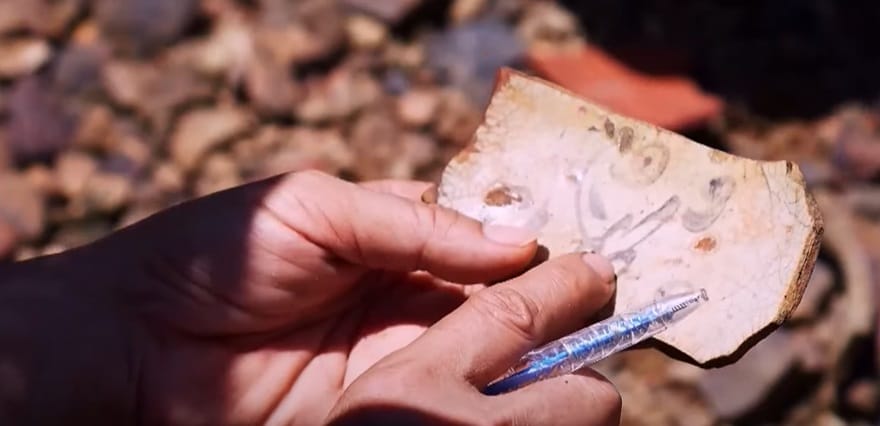
Vietnamese ceramic and porcelain fragments on Cong Tay Island
As an international port and trading hub, Van Don served as a central convergence point for goods, not only from the surrounding islands but also from various major economic centers. It maintained deep connections with the most significant economic corridors of the Dai Viet kingdom, of which the primary and most vital axis was the link between the Van Don trading port and the imperial capital, Thang Long.
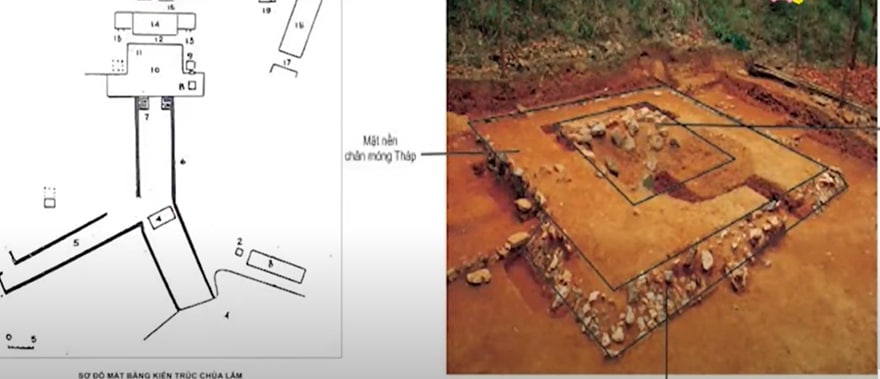
Architectural floor plan of Lam Pagoda
Beyond the identified boat anchorages and ceramic refuse sites, archaeologists have discovered numerous traces of architectural structures and pagodas built during the Tran Dynasty, densely distributed across this island. Among these, the Lam Pagoda ruins and the Van Don stupa have been excavated, revealing their structure and scale. The density of these architectural remains suggests that this area was not only a bustling trade zone but also a heavily populated historical center where residents gathered into organized villages and communities.
Survey Site: Cai Lang Wharf
Located in the northeast of Quan Lan Island, Cai Lang Wharf once served as the heart of the ancient Van Don trading port. Despite nearly a millennium of transformation, the bustling veneer of the old port has faded. Yet, this ancient harbor remains a treasure trove, still scattered with thousands of pottery shards from various dynasties—a silent testament to the millions of merchant ships that once dropped anchor here.
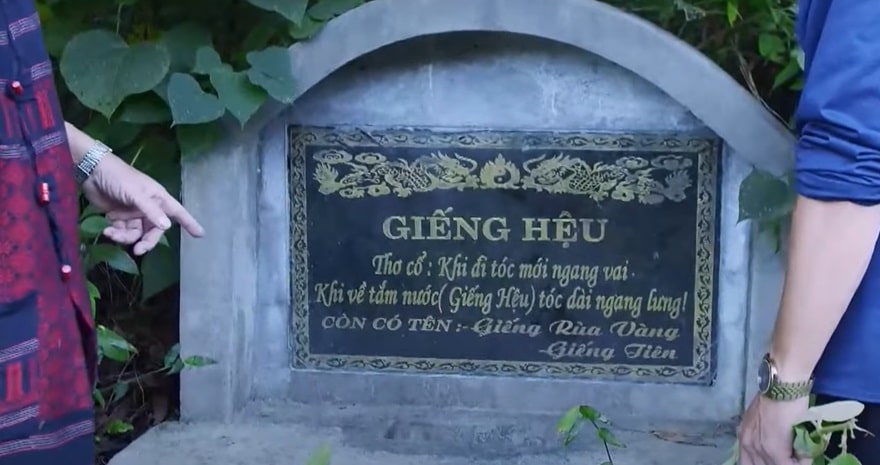
Heu Well – an ancient well from the Ly Dynasty on Cai Lang Island
The name “Cai Lang” translates to “Great Village,” reflecting its dense population and the prosperous lives of inhabitants who traded with incoming vessels. Their wealth allowed for the construction of numerous shrines and temples. Notably, the Cai Lang area still preserves the foundations of the Quan Lan Communal House, an ancient shrine over 300 years old dedicated to King Ly Anh Tong (who founded the Van Don administrative unit), and the Heu Well—an ancient freshwater well dating back to the Ly Dynasty, which provided water for both domestic use and merchant crews from home and abroad.
Survey Site: Cong Cai Area
At this site, archaeologists have unearthed foundations of wharves and large stone blocks believed to have been used as ship-mooring bollards in centuries past. These finds, alongside various ancient ceramic artifacts, confirm that this location served as a crucial transit point for trade within the ancient Van Don port.

Stone block believed to have been used as a ship mooring
The artifacts unearthed here provide further insight into the Cai Lang area. While previous, smaller-scale excavations in Cai Lang revealed traces from the Ly and Tran dynasties, recent findings have yielded clearer results. Notably, in the area where Tran Khanh Du trained his troops—likely his rallying point—a dense concentration of Tran-era ceramic relics has been discovered. Additionally, coins spanning from the Northern Song Dynasty to the Le Canh Hung era have been unearthed in this vicinity.
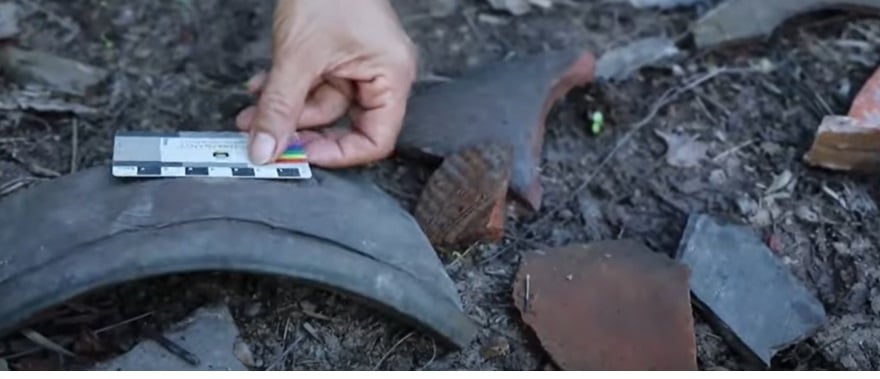
Ancient ceramic artifacts found in abundance at Cong Cai area
Archaeological excavations and historical surveys indicate that there were many active wharf locations, both along the coast and on the surrounding islands. Furthermore, the Van Don trading port must be understood as a location with a long-standing history of human habitation, which laid the foundation for the Ha Long Culture across Bai Tu Long Bay and Ha Long Bay. The Ha Long Culture existed thousands of years before the common era and maintained exchanges with regions across Southeast Asia, ultimately making Van Don the natural choice to become a premier trading port.
Where exactly was the center of the Van Don trading port?
- Zone 1 encompasses the Cong Dong – Cong Tay archipelago, which served as the primary economic, cultural, and diplomatic hub of Van Don during the Ly and Tran dynasties.
- Zone 2 includes the Hai Van archipelago, which played a vital role in security and customs enforcement, overseeing the trade of high-value goods for Zone 1 while facilitating economic exchanges with the outside world. From the late 15th to the early 16th century, this zone gradually superseded Cong Dong – Cong Tay to become the largest and most critical center of Van Don, maintaining this prominence until the early 18th century.
- Zone 3 comprises various other port facilities in Ngoc Vung commune, both of which were instrumental in international trade and provided security for the southern flank of the trading port. Together, these three zones formed the bedrock of political, economic, and social life throughout the seven centuries of the Van Don trading port’s existence and development.
Exhibited Artifacts
Currently, the valuable relics recovered from Van Don through various archaeological surveys are preserved on the second floor of the Quang Ninh Museum. Each artifact on display offers a glimpse into the flourishing era of the Van Don trading port. Among these is the Van Don Stupa, discovered in Thang Loi commune during the excavation of Lam Pagoda. The restoration model reveals a structure standing over 15 meters tall with at least 11 tiers, showcasing the quintessential artistic architecture of the late 13th to early 14th-century Tran period, complete with decorative motifs including bodhi leaves, dragons, phoenixes, and guardian statues.
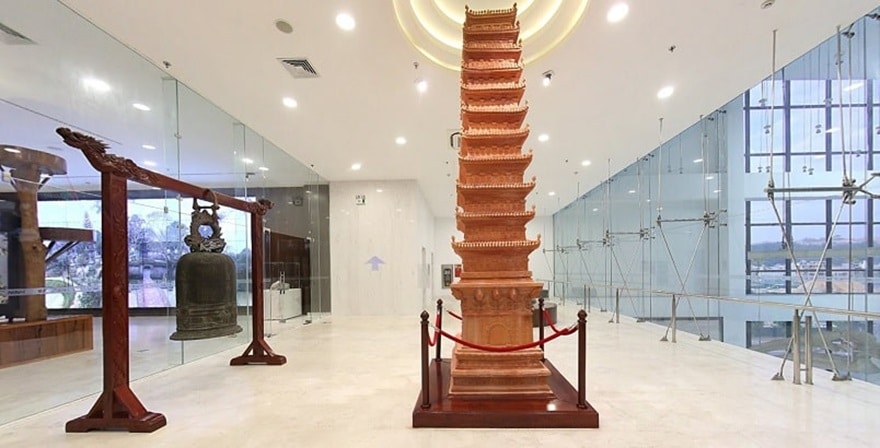
The Van Don Stupa at the Quang Ninh Museum